Understanding the dimensions and specifications of LED displays is crucial for professionals and enthusiasts in the digital signage and display technology industries. One common measurement that often arises is “2.5 in in mm,” a phrase that relates to the conversion of inches to millimeters, especially when discussing pixel pitch or module size in LED displays. This article delves into the significance of this measurement, how it applies to LED display technology, and why it matters for various applications.
What Does 2.5 Inches Mean in Millimeters?
Before exploring the technical aspects of LED displays, it’s important to clarify the basic conversion between inches and millimeters. The inch is a unit of length commonly used in the United States, while millimeters are part of the metric system, widely used internationally and in technical fields.
One inch equals exactly 25.4 millimeters. Therefore, 2.5 inches can be converted as follows:
2.5 inches × 25.4 mm/inch = 63.5 mm
This means that 2.5 inches is equivalent to 63.5 millimeters. This conversion is fundamental when specifying the size of LED display components, such as pixel pitch, module dimensions, or cabinet sizes, especially when manufacturers or clients use different measurement systems.
Why Is This Conversion Important for LED Displays?
LED displays are composed of numerous tiny light-emitting diodes arranged in a grid. The distance between these diodes, known as the pixel pitch, is often measured in millimeters. Pixel pitch directly influences the resolution and viewing distance of the display.
When manufacturers or clients specify pixel pitch in inches, converting to millimeters ensures precision in design and compatibility with other system components. For example, a 2.5-inch pixel pitch would be unusually large for an LED display, but understanding the exact millimeter equivalent allows designers to compare it accurately with standard pixel pitches like 2.5 mm or 5 mm.
Moreover, the significance of accurate measurements extends beyond mere conversions; it plays a crucial role in the overall performance and visual quality of the display. A smaller pixel pitch, measured in millimeters, typically indicates a higher resolution, which is essential for applications requiring detailed images, such as digital signage in retail environments or high-definition video walls in control rooms. Conversely, larger pixel pitches may be sufficient for less detailed content or for displays viewed from greater distances, where the human eye cannot discern individual pixels.
Additionally, understanding these measurements can help in the selection of appropriate display technologies for specific environments. For instance, outdoor LED displays often utilize larger pixel pitches to accommodate longer viewing distances, while indoor displays benefit from smaller pixel pitches to deliver crisp visuals in close quarters. This nuanced understanding of measurement conversions not only aids in technical specifications but also enhances the overall user experience by ensuring that the right display technology is employed for the intended purpose.
Understanding Pixel Pitch and Its Impact on LED Display Quality
Pixel pitch is one of the most critical parameters in LED display technology. It refers to the center-to-center distance between two adjacent pixels (LED clusters). Smaller pixel pitches mean more pixels per unit area, resulting in higher resolution and sharper images. This is particularly important in applications where image clarity and detail are paramount, such as in medical imaging or high-end advertising where every pixel contributes to the overall visual impact.
Typical Pixel Pitches and Their Applications
LED displays come in various pixel pitches, typically ranging from 0.9 mm to 20 mm or more. Here’s how different pixel pitches are used:
- Fine Pixel Pitch (0.9 mm to 2.5 mm): Used for indoor applications such as control rooms, broadcast studios, and retail displays where viewers are close to the screen. These displays can showcase intricate details and vibrant colors, making them ideal for environments where high-definition content is essential.
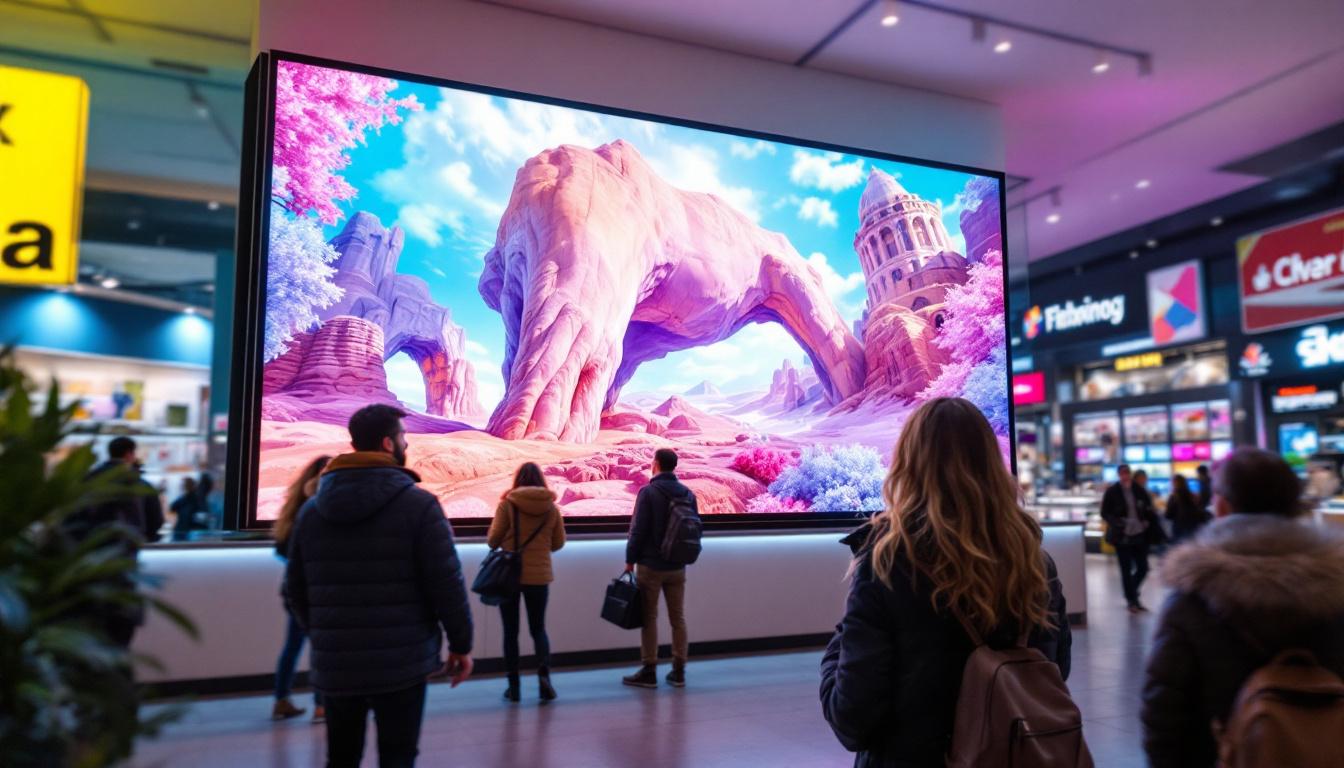
- Medium Pixel Pitch (2.5 mm to 6 mm): Suitable for indoor and semi-outdoor environments like conference halls, shopping malls, and airports. They strike a balance between resolution and cost, providing a clear image while being more budget-friendly than fine pixel pitch displays.
- Large Pixel Pitch (6 mm and above): Designed for outdoor displays like billboards and stadium screens where viewers are farther away. These displays are engineered to be robust and weather-resistant, ensuring visibility even in bright sunlight or adverse weather conditions.
When the term “2.5 in in mm” is mentioned, it might be a misinterpretation or confusion between pixel pitch in inches and millimeters. A 2.5 mm pixel pitch is common and represents a high-resolution indoor LED display, while 2.5 inches (63.5 mm) would be impractically large for pixel pitch but could relate to module or cabinet dimensions. Understanding these distinctions is crucial for designers and engineers when specifying the right display for a project.
How Pixel Pitch Influences Viewing Distance
The optimal viewing distance for an LED display is closely linked to its pixel pitch. A general rule of thumb is that the minimum viewing distance (in meters) is approximately equal to the pixel pitch (in millimeters) multiplied by 1.5 to 2. This relationship ensures that viewers can appreciate the full quality of the display without perceiving the individual pixels, which can detract from the overall viewing experience.
For example, a 2.5 mm pixel pitch display has an ideal viewing distance of about 3.75 to 5 meters. This ensures viewers see a smooth, clear image without noticing individual pixels. Additionally, understanding this relationship can help in designing spaces where LED displays are integrated, ensuring that the audience is positioned optimally for the best visual experience. For venues such as theaters or auditoriums, careful consideration of both pixel pitch and seating layout can significantly enhance audience engagement and satisfaction.
LED Display Module and Cabinet Sizes: Where Does 2.5 Inches Fit?
Besides pixel pitch, LED display components are often measured by module and cabinet sizes. These dimensions are crucial for installation, maintenance, and integration with other systems.
Typical Module Sizes in LED Displays
LED modules are the building blocks of a display. They contain a fixed number of pixels arranged in rows and columns. Module sizes vary widely depending on pixel pitch and manufacturer design.
For instance, a common module size for a 2.5 mm pixel pitch display might be 160 mm × 160 mm (approximately 6.3 inches × 6.3 inches). This size balances ease of handling with sufficient pixel density.
In this context, 2.5 inches (63.5 mm) might represent the length or width of smaller components within the module, such as the PCB or LED cluster spacing, but it is not typically used to describe the entire module size.
Cabinet Dimensions and Their Importance
LED display cabinets house multiple modules and provide structural support, power distribution, and cooling. Cabinets are designed to be modular and scalable, allowing for large video walls of various sizes.
Cabinet sizes are often standardized, with common dimensions such as 500 mm × 500 mm or 640 mm × 640 mm. The 2.5-inch measurement (63.5 mm) could relate to internal component spacing or mounting features but is unlikely to describe cabinet dimensions directly.
LED Display Technology: Beyond Size and Measurement
While understanding measurements like 2.5 inches in millimeters is important, LED display technology encompasses many other factors that affect performance, durability, and user experience.
Brightness and Color Accuracy
Brightness levels in LED displays are measured in nits (cd/m²). Outdoor displays typically require brightness levels of 5,000 nits or higher to combat sunlight glare, while indoor displays function well at 800 to 1,200 nits.
Color accuracy is achieved through precise calibration and high-quality LEDs. Fine pixel pitch displays, such as those with 2.5 mm spacing, offer superior color gradients and smoother images, making them ideal for environments where visual fidelity is paramount.
Refresh Rate and Viewing Comfort
The refresh rate, measured in hertz (Hz), indicates how many times per second the display updates its image. Higher refresh rates reduce flicker and motion blur, enhancing viewing comfort, especially for video content.
Modern LED displays typically feature refresh rates of 3,000 Hz or higher, suitable for broadcast and live event applications.
Energy Efficiency and Lifespan
LED technology is known for its energy efficiency compared to traditional display technologies. Advances in LED chip manufacturing and power management have extended the lifespan of displays to over 100,000 hours of operation.
Choosing the right pixel pitch and module size, such as a 2.5 mm pitch, can also impact energy consumption, as finer pitches require more LEDs and potentially more power.
Choosing the Right LED Display: Factors to Consider
When selecting an LED display, understanding measurements like 2.5 inches in millimeters is just one part of the decision-making process. Other critical factors include:
- Application Environment: Indoor or outdoor use dictates brightness, pixel pitch, and weatherproofing requirements.
- Viewing Distance: Determines optimal pixel pitch for clear image quality.
- Resolution Needs: Higher resolution demands finer pixel pitch and more modules.
- Budget Constraints: Smaller pixel pitches and larger displays increase costs.
- Installation Space: Physical dimensions of modules and cabinets must fit the intended location.
Consulting with LED display manufacturers and specialists can help tailor solutions that balance these factors effectively.
Conclusion
The phrase “2.5 in in mm” highlights the importance of understanding unit conversions and their relevance in LED display technology. Converting 2.5 inches to 63.5 millimeters is straightforward but essential for accurate communication and specification in the industry.
More importantly, recognizing how measurements like pixel pitch, module size, and cabinet dimensions influence display quality and application suitability empowers buyers and designers to make informed decisions. Whether specifying a 2.5 mm pixel pitch for a high-resolution indoor display or considering the physical dimensions of display components, precision in measurement and terminology is key.
As LED technology continues to evolve, staying informed about these technical details will ensure optimal performance, longevity, and viewer satisfaction in digital display projects.
Discover LumenMatrix’s Advanced LED Display Solutions
Ready to elevate your visual displays with precision and innovation? LumenMatrix offers a comprehensive range of LED display solutions tailored to meet your unique needs. From captivating Indoor LED Wall Displays to dynamic Outdoor LED Wall Displays, and from versatile Vehicle LED Displays to engaging LED Sports Displays, our products are designed to revolutionize visual communication. Experience the difference with our Custom LED Displays, All-in-One LED Displays, and LED Transparent Displays, each crafted to deliver unparalleled clarity and impact. Check out LumenMatrix LED Display Solutions today and transform your space into a mesmerizing visual experience.