When working with LED displays, understanding the precise measurements and specifications is crucial for designers, engineers, and installers alike. One common measurement that often arises is the conversion of 0.9 inches to millimeters, especially when dealing with pixel pitch—the distance between the centers of two adjacent pixels in an LED display. This article delves into the significance of this conversion, explores how it relates to LED display technology, and explains why accurate measurement is essential for optimal display performance.
Understanding the Basics: What Is 0.9 Inches in Millimeters?
Before diving into LED display specifics, it’s important to clarify the conversion between inches and millimeters. The inch is a unit of length commonly used in the United States and a few other countries, while the millimeter is part of the metric system, widely used internationally and in scientific contexts.
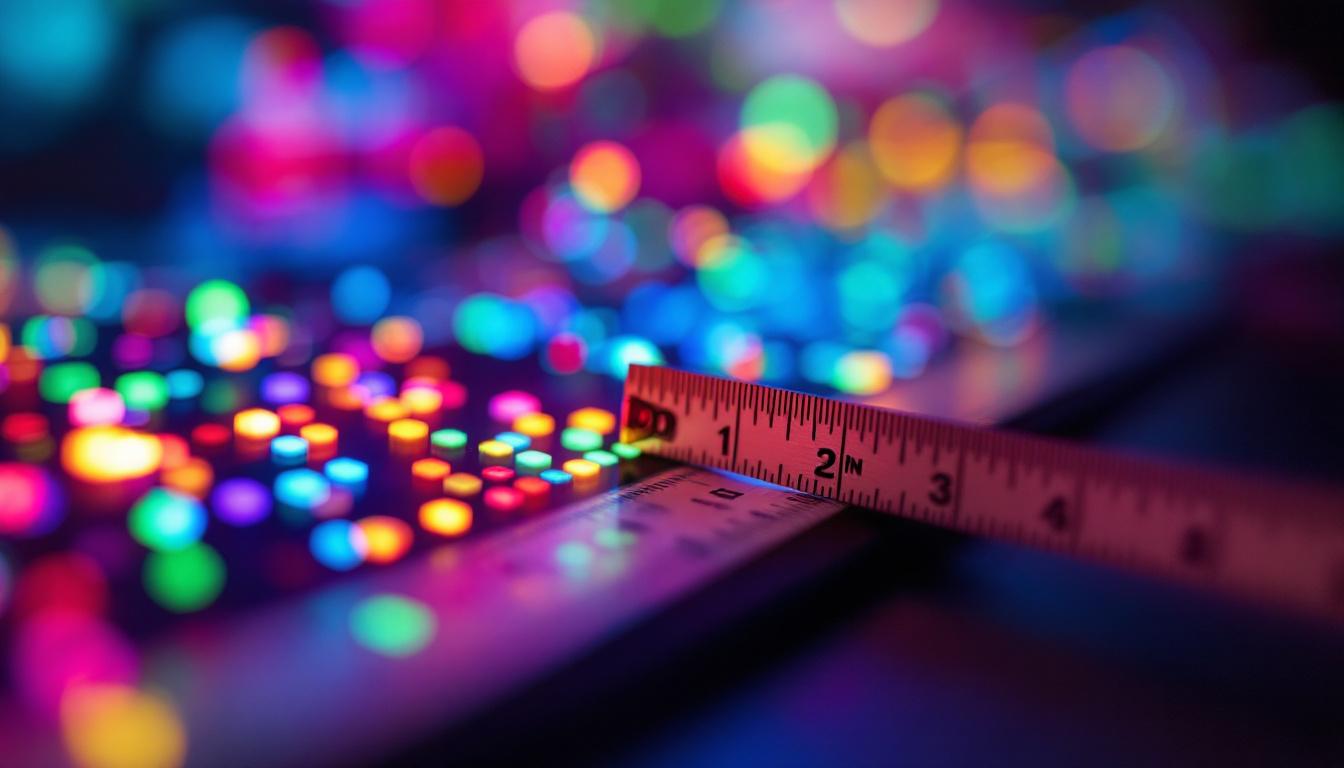
One inch equals exactly 25.4 millimeters. Therefore, converting 0.9 inches to millimeters involves a simple multiplication:
0.9 inches × 25.4 mm/inch = 22.86 mm
This means that 0.9 inches is equivalent to 22.86 millimeters. This conversion is fundamental when specifying or interpreting the pixel pitch of LED displays, which is often expressed in millimeters.
Understanding these measurements is crucial, especially in industries where precision is key, such as electronics and manufacturing. For instance, when designing a circuit board or selecting components for an LED display, engineers must ensure that all measurements are accurate to avoid compatibility issues. The pixel pitch, which refers to the distance from the center of one pixel to the center of the adjacent pixel, directly influences the display’s resolution and clarity. A smaller pixel pitch means higher resolution, allowing for more detailed images and sharper text, which is particularly important in applications such as digital signage and broadcasting.
Moreover, knowing how to convert between these units can also aid in international collaboration. As businesses increasingly operate on a global scale, engineers and designers often encounter specifications in both metric and imperial units. Being adept at these conversions not only streamlines communication but also enhances the efficiency of project development. For example, if a designer in Europe specifies a display with a pixel pitch of 2 mm, a U.S.-based engineer needs to quickly understand how that translates into inches to ensure the components fit seamlessly into the overall design.
Pixel Pitch Explained: Why 0.9 Inches Matters in LED Displays
What Is Pixel Pitch?
Pixel pitch refers to the distance from the center of one LED pixel to the center of the next. It determines the resolution and clarity of the display. The smaller the pixel pitch, the higher the pixel density, resulting in sharper and more detailed images.
Pixel pitch is typically measured in millimeters. For example, a 0.9 mm pixel pitch means that the LEDs are spaced 0.9 millimeters apart. However, sometimes specifications or older documentation might use inches, making conversions necessary.
Why Is 0.9 Inches Pixel Pitch Uncommon?
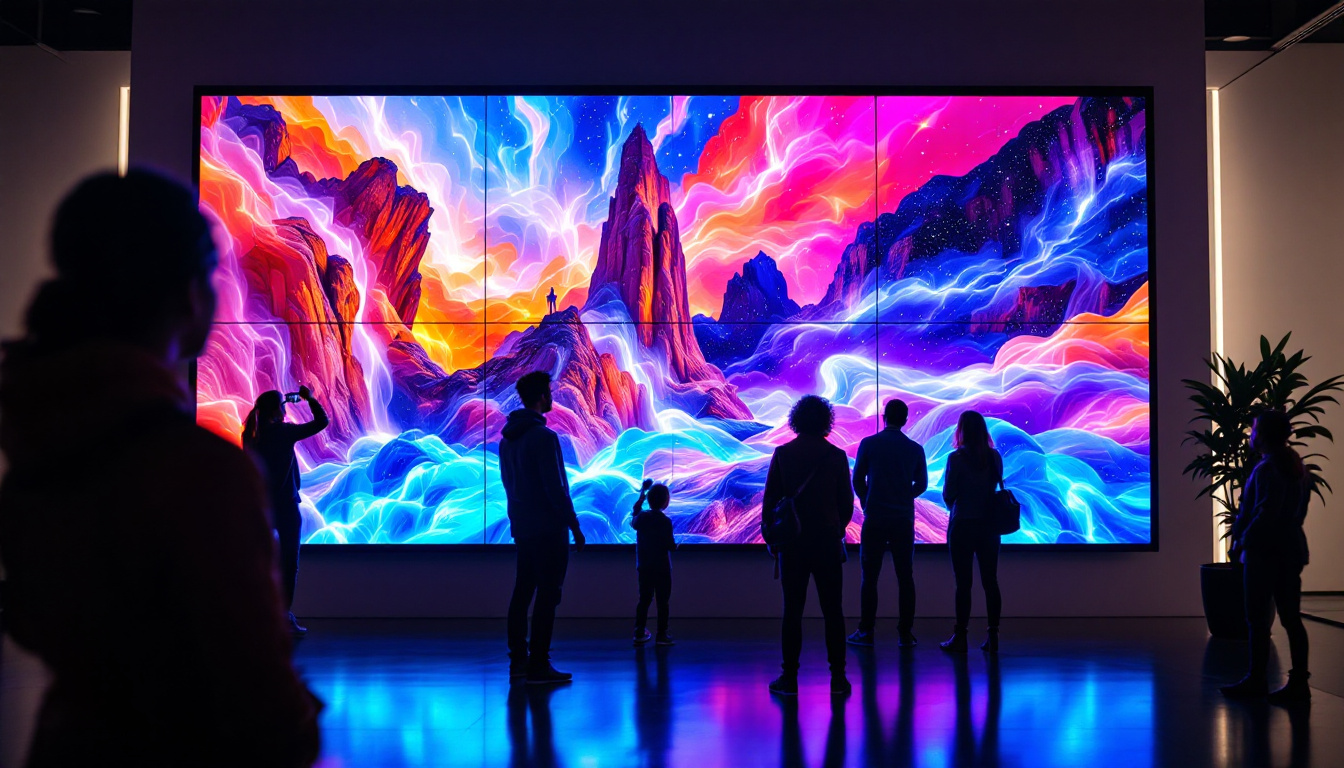
While 0.9 millimeters is a common fine pixel pitch for high-resolution indoor LED displays, 0.9 inches (22.86 mm) is quite large for pixel pitch. Displays with a pixel pitch of around 0.9 inches are generally used for large outdoor screens where viewers are far away, such as stadium displays or billboard signage.
To put this into perspective, a 0.9-inch pixel pitch corresponds to a much lower pixel density compared to 0.9 mm. This means the image will not be as sharp when viewed up close but will be perfectly clear from a distance. The design of such displays often takes into account the viewing distance; for instance, a viewer standing 100 feet away will perceive the image as cohesive and vibrant, despite the larger pixel pitch.
Moreover, larger pixel pitches like 0.9 inches can significantly reduce production costs, making them an attractive option for large-scale advertising. The trade-off between resolution and cost is a crucial consideration for businesses looking to maximize their return on investment. Additionally, these displays are often designed to withstand outdoor elements, featuring durable materials and weatherproofing that ensure longevity and consistent performance, even in harsh conditions.
Applications of 0.9 Inch (22.86 mm) Pixel Pitch LED Displays
Outdoor Advertising and Billboards
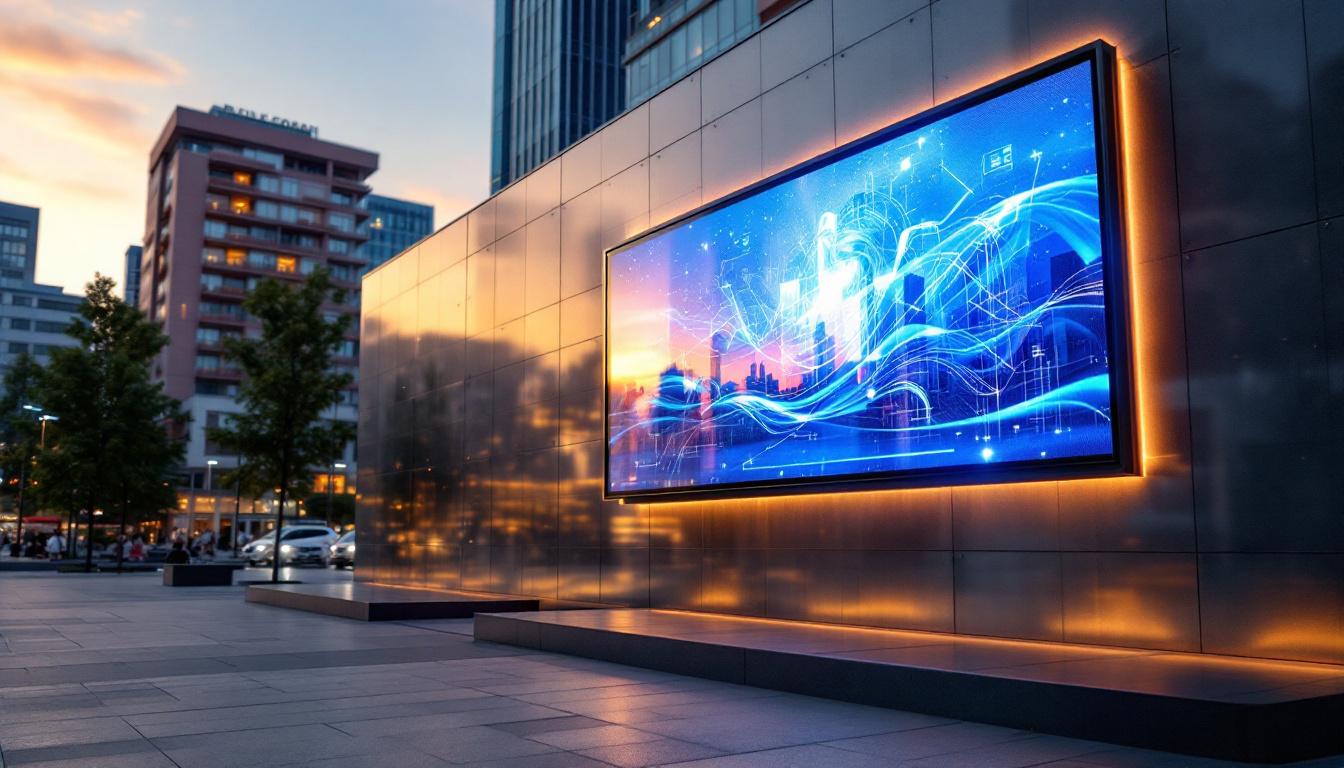
Large outdoor LED displays often use pixel pitches ranging from 10 mm to 30 mm, depending on the viewing distance. A 0.9-inch (22.86 mm) pixel pitch fits well within this range and is ideal for billboards and roadside advertising where viewers are typically hundreds of feet away.
These displays are designed to maximize visibility and brightness rather than ultra-fine detail. The larger pixel pitch allows for more robust LEDs that can withstand harsh weather conditions and intense sunlight.
Sports Arenas and Stadium Screens
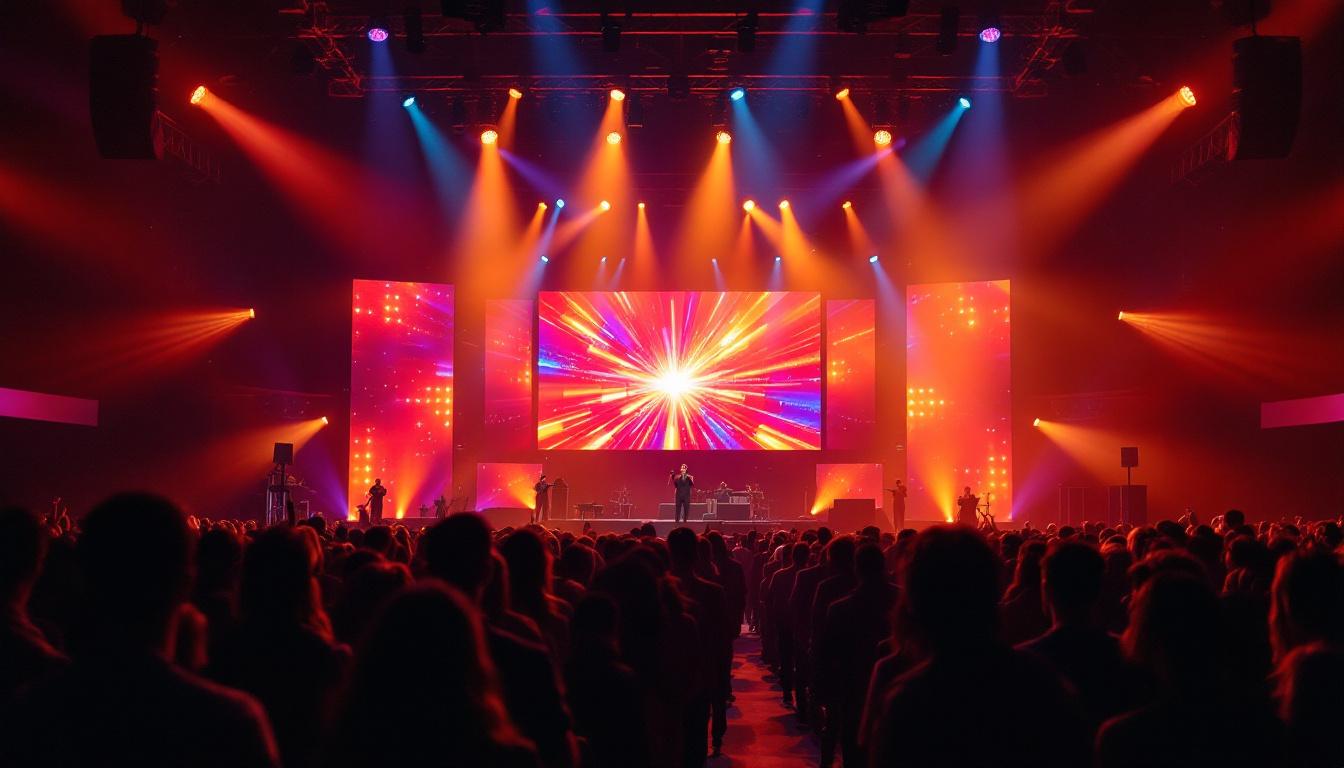
Stadiums require massive LED screens to display scores, replays, and advertisements to large audiences. A 0.9-inch pixel pitch is suitable for such environments, balancing cost and visibility.
Because spectators are seated far from the screens, the lower pixel density does not negatively impact the viewing experience. Instead, the focus is on brightness, durability, and size.
Transportation Hubs and Public Information Displays
Airports, train stations, and bus terminals often use large LED displays with pixel pitches around 20 to 25 mm (close to 0.9 inches) for flight information and announcements. These displays need to be readable from a distance and under various lighting conditions.
In these contexts, the 0.9-inch pixel pitch provides an effective balance between visibility and cost-efficiency.
Comparing 0.9 Inch Pixel Pitch to Other Common Pixel Pitches
Fine Pixel Pitch Displays (Below 2 mm)
Displays with pixel pitches below 2 mm, such as 0.9 mm or 1.2 mm, are considered fine pitch LED displays. These are used primarily indoors for applications requiring high resolution, such as control rooms, broadcast studios, and retail environments.
The 0.9 mm pixel pitch is especially popular for indoor LED walls, offering near-4K resolution in relatively small screen sizes. This level of detail is impossible with a 0.9-inch pixel pitch display.
Medium Pixel Pitch Displays (2 mm to 10 mm)
Medium pixel pitch LED displays are versatile and can be used both indoors and outdoors. They are often found in conference rooms, shopping malls, and smaller outdoor venues.
Pixel pitches in this range provide a good balance between resolution and cost, making them a popular choice for many commercial applications.
Large Pixel Pitch Displays (Above 10 mm)
Pixel pitches above 10 mm, including the 0.9-inch (22.86 mm) pitch, are designed for large-scale outdoor displays where viewers are far away. These displays prioritize brightness and durability over fine detail.
They are typically less expensive per square meter than fine pitch displays, making them ideal for large advertising campaigns and public information screens.
Technical Considerations When Working with 0.9 Inch Pixel Pitch LED Displays
Brightness and Power Consumption
LED displays with larger pixel pitches, such as 0.9 inches, generally consume less power per square meter compared to fine pitch displays because they have fewer LEDs per unit area. However, they require higher brightness levels to be visible in daylight conditions, which can increase power consumption.
Modern LED technology has improved energy efficiency, with many outdoor LED displays offering brightness levels exceeding 5,000 nits, ensuring visibility even in direct sunlight.
Viewing Distance and Image Quality
The optimal viewing distance for a 0.9-inch pixel pitch LED display is significantly greater than that for fine pitch displays. A general rule of thumb is that the minimum viewing distance in meters is roughly 1.5 to 2 times the pixel pitch in millimeters.
For a 22.86 mm pixel pitch, this translates to a minimum viewing distance of approximately 34 to 46 meters (around 110 to 150 feet). Closer than this, the image may appear pixelated or blurry.
Installation and Maintenance
Due to their larger size, 0.9-inch pixel pitch LED modules are physically bigger and heavier than fine pitch modules. This affects installation logistics, requiring sturdy mounting structures and careful alignment to maintain image uniformity.
Maintenance is also simplified because the larger LEDs are easier to access and replace, which is an advantage for outdoor displays exposed to environmental wear.
Industry Trends and Future Outlook
Shift Toward Higher Resolution and Smaller Pixel Pitches
The LED display industry continues to push toward finer pixel pitches, driven by demand for higher resolution and immersive visual experiences. Indoor displays with pixel pitches as low as 0.5 mm are now commercially available, though at a higher cost.
Despite this trend, large pixel pitch displays like those with a 0.9-inch pitch remain essential for outdoor applications where size and viewing distance dictate the requirements.
Technological Innovations
Advancements in LED technology, such as mini-LEDs and micro-LEDs, promise to improve brightness, energy efficiency, and lifespan. These technologies may eventually blur the lines between pixel pitch categories, allowing for larger displays with finer resolution and better performance.
Additionally, improvements in calibration and image processing software enhance the visual quality of large pixel pitch displays, making them more versatile.
Conclusion
Converting 0.9 inches to millimeters (22.86 mm) is a straightforward but essential step in understanding LED display specifications, particularly pixel pitch. A 0.9-inch pixel pitch LED display is designed for large-scale outdoor applications where viewers are far away, balancing visibility, durability, and cost.
While fine pitch displays with pixel pitches under 2 mm dominate indoor and close-view applications, 0.9-inch pixel pitch displays continue to play a vital role in outdoor advertising, sports arenas, and public information systems.
Understanding these measurements and their implications helps professionals select the right LED display technology for their specific needs, ensuring optimal performance and viewer experience.
Discover the Perfect LED Display Solution with LumenMatrix
Ready to elevate your visual communication with a state-of-the-art LED display? LumenMatrix offers a comprehensive range of LED solutions tailored to your needs, whether it’s for vibrant outdoor advertising, dynamic sports arenas, or engaging public information systems. Experience the difference in clarity, durability, and performance with our Indoor and Outdoor LED Wall Displays, Vehicle LED Displays, and more. Check out LumenMatrix LED Display Solutions today and transform your space into a captivating visual experience.