The world of LED displays is vast and varied, ranging from massive stadium screens to compact digital clocks. Among the many configurations, the 2×2 times 2×2 matrix LED display stands out for its simplicity and versatility. This article delves into the fundamentals of this matrix configuration, exploring its design, operation, applications, and advantages. Whether you are an electronics enthusiast, a student, or a professional working with LED displays, understanding this matrix type can provide valuable insights into efficient LED control and display technology.
Understanding the Basics of LED Matrix Displays
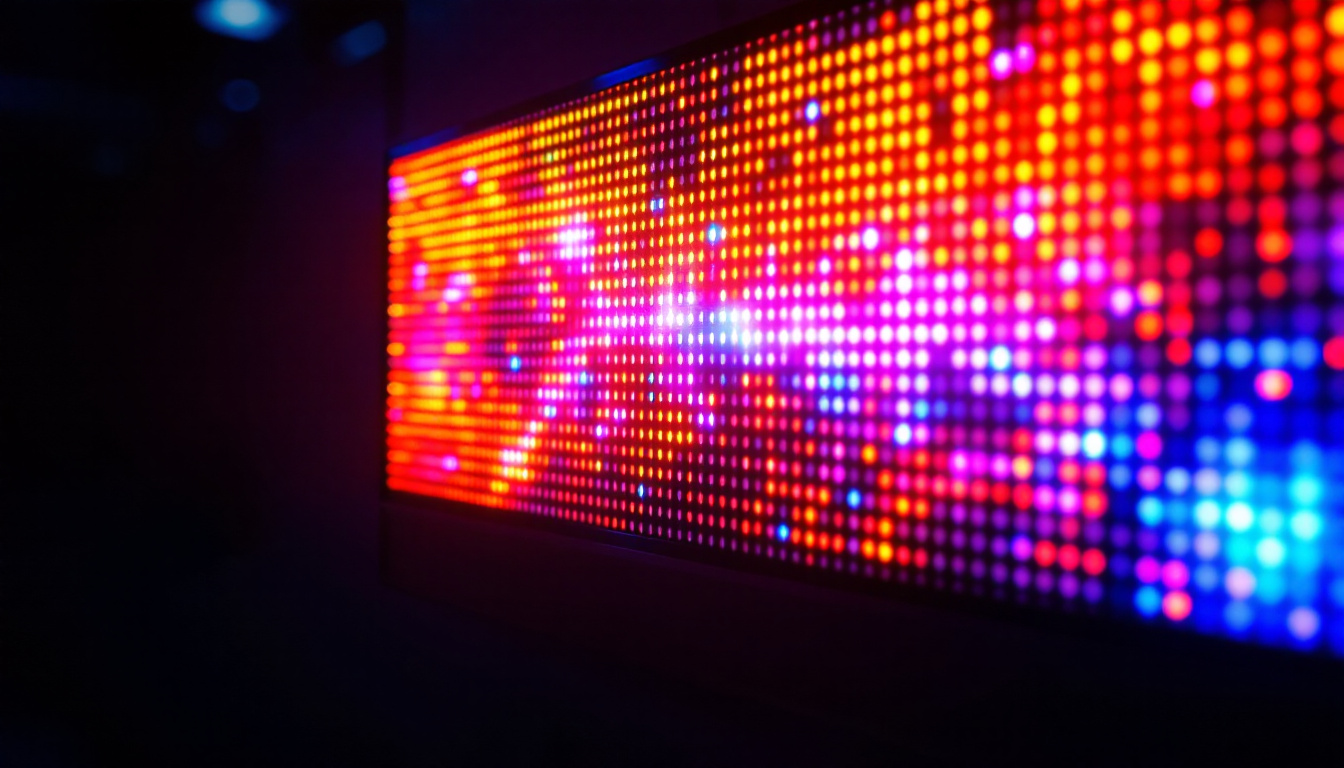
LED matrix displays consist of multiple LEDs arranged in a grid format, typically rows and columns. This arrangement enables the control of each LED individually through a combination of row and column signals, significantly reducing the number of input/output pins required compared to controlling each LED separately.
In a matrix configuration, LEDs are connected in such a way that each LED is positioned at the intersection of a specific row and column. By activating the appropriate row and column lines, the corresponding LED lights up. This principle allows for complex patterns, characters, and animations to be displayed using relatively few control lines. The versatility of LED matrices makes them ideal for a variety of applications, from simple text displays to intricate graphics, making them a popular choice in both consumer electronics and industrial settings.
What Does 2×2 Times 2×2 Mean?
The notation “2×2 times 2×2” refers to a matrix formed by combining two 2×2 LED matrices. Essentially, you have two smaller matrices, each with 2 rows and 2 columns, arranged in a larger matrix configuration. This results in a total of 4 rows and 4 columns, or 16 individual LEDs.
To clarify, the first “2×2” indicates the size of each smaller matrix, while the “times 2×2” shows how many such matrices are combined horizontally and vertically. This modular approach is common in LED display design, allowing easy scaling and customization. For instance, by stacking or arranging multiple 2×2 matrices, designers can create larger displays that can be tailored to specific needs, such as signage in public spaces or decorative lighting in events. Additionally, the ease of assembly and flexibility in design means that hobbyists and professionals alike can experiment with various configurations, leading to innovative uses in art installations and interactive displays.
How the 2×2 Times 2×2 Matrix LED Display Works
Controlling a 2×2 times 2×2 matrix involves managing the rows and columns to selectively illuminate specific LEDs. Each LED is connected between a row line and a column line, and by applying voltage to a particular row and grounding a particular column (or vice versa), the LED at their intersection lights up.
Row and Column Scanning
One of the most efficient ways to control a matrix LED display is through multiplexing or scanning. In this method, rows or columns are activated one at a time in rapid succession while the corresponding columns or rows are set to display the desired pattern. This rapid scanning creates the illusion that multiple LEDs are lit simultaneously, even though only one row or column is active at any given moment.
For a 2×2 times 2×2 matrix, the controller cycles through each of the 4 rows, activating the appropriate columns for each row. The persistence of vision in the human eye blends these rapid activations into a stable image.
Wiring and Circuit Considerations
In a 2×2 times 2×2 matrix, there are 4 rows and 4 columns, resulting in 8 control lines. This is significantly fewer than the 16 lines that would be needed if each LED were controlled individually. This reduction simplifies the wiring and the complexity of the control circuitry.
However, multiplexing requires careful timing and current management. Since only a fraction of LEDs are lit at any instant, the current through each LED during its active period must be higher to maintain brightness. This necessitates components that can handle peak currents and appropriate resistor selection to prevent damage.
Applications of 2×2 Times 2×2 Matrix LED Displays
The 2×2 times 2×2 matrix LED display is widely used in various applications where compactness and simplicity are essential. Its modularity makes it ideal for prototyping and educational purposes, as well as for specific commercial uses.
Educational Tools and Prototyping
Due to its manageable size and straightforward wiring, the 2×2 times 2×2 matrix is a popular choice in electronics education. It helps students understand the principles of multiplexing, LED control, and matrix addressing without overwhelming complexity.
Many microcontroller development kits include small LED matrices of this size to facilitate learning and experimentation. For example, Arduino and Raspberry Pi enthusiasts often use these matrices to create simple displays, scrolling text, or basic animations.
Wearable and Portable Devices
Small LED matrices like the 2×2 times 2×2 configuration are commonly found in wearable technology, such as fitness trackers, smart badges, and small notification displays. Their low power consumption and compact footprint make them suitable for battery-powered devices.
In these applications, the matrix can display icons, numbers, or simple messages, providing essential feedback to users without requiring large or power-hungry screens.
Indicator Panels and Status Displays
Another practical use is in indicator panels for machinery or consumer electronics. The 2×2 times 2×2 matrix can represent status indicators, error codes, or operational modes in a clear and visible manner.
For example, industrial control panels might use such matrices to show system states or warnings, where a few LEDs can convey critical information quickly and reliably.
Advantages and Limitations of the 2×2 Times 2×2 Matrix LED Display
Every technology comes with its strengths and weaknesses. Understanding these helps in selecting the right display type for your project or application.
Advantages
- Reduced Wiring Complexity: Compared to individual LED control, the matrix reduces the number of control lines significantly, simplifying circuit design.
- Scalability: The modular nature allows easy expansion by combining multiple 2×2 matrices to create larger displays.
- Cost-Effective: Fewer components and simpler control logic reduce overall costs, making it ideal for budget-sensitive projects.
- Low Power Consumption: Multiplexing ensures only a subset of LEDs is active at any time, conserving power.
Limitations
- Brightness Variation: Because LEDs are only on for a fraction of the time during multiplexing, perceived brightness can be lower unless higher current pulses are used.
- Complex Timing Requirements: Multiplexing demands precise timing control to avoid flicker and ensure stable images.
- Limited Resolution: The 2×2 times 2×2 matrix provides only 16 LEDs, which restricts the complexity of images or text that can be displayed.
- Potential Ghosting Effects: Without proper diode isolation or driving techniques, unintended LEDs may light up, causing ghost images.
Designing and Programming a 2×2 Times 2×2 Matrix LED Display
Creating a functional 2×2 times 2×2 matrix LED display involves both hardware and software considerations. From selecting components to writing control code, each step is crucial for optimal performance.
Hardware Components
The essential hardware elements include:
- LEDs: High-quality LEDs with consistent brightness and color.
- Microcontroller: Devices like Arduino, PIC, or STM32 are commonly used to control the matrix.
- Resistors: Current-limiting resistors to protect LEDs.
- Transistors or Driver ICs: For switching rows and columns, especially when higher currents are involved.
- Power Supply: Stable voltage source matching LED and microcontroller requirements.
Programming Techniques
Programming the matrix involves scanning through rows or columns and setting the corresponding outputs to display the desired pattern. Key programming concepts include:
- Multiplexing Loop: A continuous loop that activates each row sequentially while setting column outputs.
- Delay Management: Ensuring the scanning frequency is high enough (typically above 60 Hz) to prevent flicker.
- Data Mapping: Converting desired images or characters into row-column activation patterns.
- Brightness Control: Using techniques such as pulse-width modulation (PWM) to adjust LED brightness.
Example: Displaying a Simple Pattern
Consider displaying a diagonal line across the 4×4 LED matrix. The microcontroller would activate row 1 and column 1, then row 2 and column 2, and so on, cycling rapidly to create the visual effect.
This simple example illustrates the power of matrix control and how even a small number of LEDs can create meaningful visual information.
Future Trends and Innovations in LED Matrix Displays
While the 2×2 times 2×2 matrix is a foundational concept, LED display technology continues to evolve rapidly. Innovations are pushing the boundaries of resolution, color depth, and interactivity.
Integration with IoT and Smart Systems
LED matrices are increasingly integrated into Internet of Things (IoT) devices, enabling remote control, dynamic content updates, and smart notifications. Small matrix displays can communicate with cloud services, enhancing their functionality in smart homes and wearable devices.
Advancements in Miniaturization and Efficiency
Emerging LED technologies, such as micro-LEDs, promise even smaller and more efficient displays. This could lead to ultra-compact matrix displays with higher brightness and color fidelity, suitable for next-generation wearable tech and augmented reality devices.
Enhanced Software and Control Algorithms
Improved algorithms for multiplexing, brightness control, and color management are making LED matrix displays more versatile and visually appealing. Adaptive scanning techniques reduce power consumption and enhance display quality.
Conclusion
The 2×2 times 2×2 matrix LED display is a fundamental building block in the world of LED technology. Its straightforward design, efficient control mechanism, and versatility make it an excellent choice for various applications, from education to wearable devices and industrial indicators.
Understanding this matrix configuration provides a solid foundation for exploring more complex LED display systems. As technology advances, the principles behind the 2×2 times 2×2 matrix remain relevant, demonstrating the enduring value of efficient, modular design in electronic displays.
Discover the Future of LED Displays with LumenMatrix
Ready to take your visual displays to the next level? Explore LumenMatrix’s innovative LED display solutions, where cutting-edge technology meets creative design. From vibrant Indoor LED Walls to dynamic Outdoor Displays and beyond, LumenMatrix offers a wide range of products that will transform your space and captivate your audience. Embrace the future of visual communication with our advanced LED modules, tailored to deliver your message with unparalleled clarity and impact. Check out LumenMatrix LED Display Solutions today and see how we can illuminate your world.