Understanding weight conversions is essential in many fields, from fitness and healthcare to manufacturing and logistics. One common conversion is between kilograms (kg) and pounds (lbs), especially when dealing with international standards or consumer products. This article explores the conversion of 63.2 kilograms to pounds and delves into how LED displays can be used effectively to present such measurements in real time.
Understanding the Kilogram to Pound Conversion
Weight measurement systems vary globally, with the metric system predominating in most countries and the imperial system still widely used in the United States and a few other places. Kilograms and pounds are the primary units of mass in these systems, respectively. Knowing how to convert between them is crucial for accuracy and clarity.
The Mathematical Conversion
The conversion factor between kilograms and pounds is fixed: 1 kilogram equals approximately 2.20462 pounds. This value is derived from the international agreement on the pound and kilogram standards. To convert kilograms to pounds, multiply the kilogram value by this factor.
For example, converting 63.2 kg to pounds involves the following calculation:
63.2 kg × 2.20462 = 139.363 pounds
Thus, 63.2 kilograms is equivalent to approximately 139.36 pounds when rounded to two decimal places.
Why Accurate Conversion Matters
Precision in weight conversion is not just academic; it has real-world implications. In healthcare, medication dosages often depend on patient weight, and errors can lead to serious consequences. In logistics, accurate weight measurement ensures proper shipping costs and compliance with regulations. Even in fitness, understanding body weight in familiar units helps individuals track progress effectively.
Moreover, the importance of accurate conversions extends into various fields such as nutrition, where dietary recommendations may be based on weight. For instance, a nutritionist might prescribe a specific protein intake based on a person’s weight in kilograms, which then needs to be communicated to clients who may only understand pounds. This can create confusion if conversions are not handled correctly, potentially leading to dietary imbalances or misunderstandings about health goals.
In global commerce, weight conversions can influence pricing strategies and market competitiveness. For example, a product sold in kilograms may need to be accurately converted to pounds for marketing in the U.S. market. Miscalculating these conversions could result in pricing errors that impact profitability or customer trust. Thus, mastering the conversion between kilograms and pounds is essential not only for personal understanding but also for professional success in various industries.
LED Displays: The Modern Solution for Weight Presentation
With the rise of digital technology, LED (Light Emitting Diode) displays have become the standard for presenting numerical data, including weight measurements. Their clarity, energy efficiency, and adaptability make them ideal for various applications. As industries continue to evolve, the integration of LED technology into weight measurement systems has revolutionized how data is displayed, making it more accessible and user-friendly.
How LED Displays Work
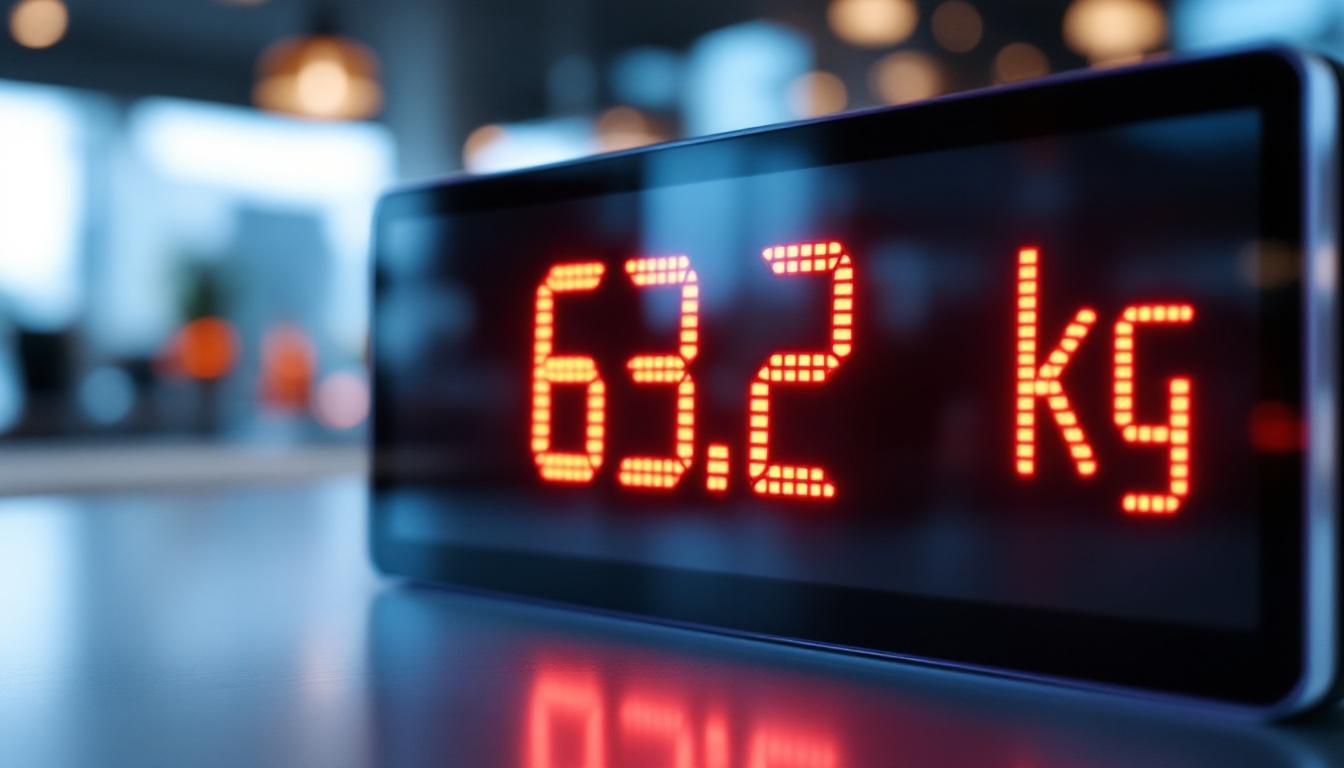
LED displays consist of numerous tiny light-emitting diodes arranged to form digits and characters. When powered, these diodes illuminate to show numbers clearly, even in bright or low-light environments. The technology behind LEDs allows for sharp contrast and vibrant colors, enhancing readability. Additionally, the rapid response time of LED displays ensures that weight readings are updated almost instantaneously, which is crucial in environments where precision is key, such as in laboratories or during high-speed production lines.
Advantages of Using LED Displays for Weight Measurement
LED displays offer several benefits that make them preferable for showing weight data:
- Visibility: High brightness levels ensure readings are visible from a distance or in poor lighting.
- Durability: LEDs are robust and long-lasting, reducing maintenance costs.
- Energy Efficiency: LEDs consume less power than traditional display technologies.
- Customization: Displays can be programmed to show different units, such as kg or lbs, or even toggle between them.
Moreover, the modular nature of LED displays allows for easy scalability. Businesses can start with a basic setup and expand their display systems as needed, accommodating growth without a complete overhaul. This flexibility is particularly beneficial for industries that experience fluctuating demands or seasonal spikes in activity.
Applications of LED Displays in Weight Measurement
LED displays are used extensively in various industries to show weight data clearly and accurately:
- Industrial Scales: Factories and warehouses use LED displays on scales to monitor product weights and ensure quality control.
- Healthcare Equipment: Medical scales with LED readouts provide quick and precise weight measurements for patients.
- Fitness Devices: Many modern scales and gym equipment feature LED displays to help users track their weight and performance metrics.
- Retail and Grocery Stores: LED displays on weighing machines help customers and staff read product weights easily.
In addition to these applications, LED displays are increasingly being integrated into smart devices, allowing for remote monitoring and data logging. For instance, in agricultural settings, farmers can use LED-equipped scales to track the weight of produce in real-time, enabling better inventory management and reducing waste. Furthermore, the integration of IoT technology with LED displays can facilitate automated alerts for weight thresholds, ensuring timely actions are taken in various operational contexts.
Converting 63.2 Kg to Lbs: Practical Examples and Display Considerations
Now that the conversion and display technology are understood, it’s helpful to consider practical scenarios where 63.2 kg might be displayed as pounds on an LED screen.
Fitness and Personal Health Monitoring
Imagine a fitness enthusiast weighing themselves on a digital scale. If the scale is set to pounds, the LED display will convert and show the equivalent of 63.2 kg as approximately 139.36 lbs. This instantaneous conversion helps users who are more familiar with pounds to understand their weight without manual calculation.
Some advanced scales allow toggling between units, making LED displays an essential interface for this functionality. The clarity of the LED ensures users can quickly read their weight, encouraging consistent tracking and motivation.
Industrial Weighing Systems
In manufacturing or shipping, goods might be weighed in kilograms but billed or logged in pounds, depending on the destination country. An LED display integrated into the weighing system can automatically convert and show the weight in pounds, such as 139.36 lbs for 63.2 kg, reducing human error and speeding up processing times.
For example, a pallet weighing 63.2 kg will display 139.36 lbs on the LED screen, allowing workers to verify shipment weights quickly and accurately.
Healthcare Settings
Hospitals and clinics often deal with patients from diverse backgrounds, some of whom may be more comfortable with pounds rather than kilograms. Medical scales equipped with LED displays can switch units seamlessly, ensuring that weight data is accessible and understandable to all.
For instance, a patient weighing 63.2 kg will see their weight displayed as 139.36 lbs if the system is set to imperial units, aiding in clear communication between healthcare providers and patients.
Technical Considerations for LED Weight Displays
Implementing an LED display to show weight conversions involves several technical factors to ensure accuracy, usability, and reliability.
Precision and Rounding
While the exact conversion of 63.2 kg is 139.363 lbs, most LED displays round to two decimal places or even whole numbers for simplicity. The choice depends on the application’s precision requirements. For medical or scientific use, more decimal places might be necessary, whereas retail scales might round to the nearest pound.
Unit Switching and User Interface
Modern LED weight displays often include buttons or touchscreen interfaces allowing users to switch between kg and lbs. This feature requires the display’s firmware to perform real-time conversions and update the display instantly without lag.
Clear labeling on the LED screen is crucial to avoid confusion. Indicators such as “kg” or “lbs” next to the numbers help users understand the unit being displayed.
Integration with Sensors and Software
LED displays do not operate in isolation; they are part of a system that includes load cells or sensors measuring the actual weight. The sensor data is processed by a microcontroller or software that calculates the weight and converts units as needed.
Ensuring synchronization between sensor readings and LED display output is vital to prevent discrepancies. Calibration routines and regular maintenance help maintain accuracy over time.
Future Trends in Weight Display Technology
As technology advances, LED displays continue to evolve, incorporating new features and improving user experience.
Smart Displays and Connectivity
Integration with smartphones and cloud services allows LED weight displays to transmit data wirelessly for tracking and analysis. Users can monitor their weight trends over time through apps, making health management more proactive.
Enhanced Visuals and Customization
Emerging LED technologies offer higher resolution, color options, and dynamic displays that can show graphs or additional information alongside weight. This can be particularly useful in gyms or health clinics where motivational messages or personalized feedback enhance user engagement.
Eco-Friendly and Energy-Efficient Designs
With growing environmental awareness, LED displays are being designed to consume even less power and use sustainable materials. This aligns with broader efforts to reduce the carbon footprint of electronic devices.
Conclusion
Converting 63.2 kilograms to pounds results in approximately 139.36 lbs, a straightforward calculation essential in many practical scenarios. LED displays play a crucial role in presenting this information clearly and efficiently across various industries, from healthcare to manufacturing.
The combination of accurate conversion, user-friendly LED technology, and evolving smart features ensures that weight measurement and display remain reliable and accessible. Whether for personal health monitoring or industrial applications, understanding how to convert and display weight data correctly is invaluable.
As LED technology continues to advance, users can expect even more intuitive and versatile weight display solutions that meet the demands of a globalized and health-conscious society.
Explore Cutting-Edge Weight Display Solutions
Ready to experience the precision and clarity of modern LED display technology in your weight measurement applications? Discover LumenMatrix’s innovative range of LED display modules, designed to elevate your visual communication and data presentation. From the gym to the laboratory, our versatile solutions like Indoor and Outdoor LED Wall Displays, Vehicle LED Displays, and Custom LED Displays ensure your weight data is showcased with unparalleled brightness and accuracy. Embrace the future of weight display technology with LumenMatrix and check out LumenMatrix LED Display Solutions today.