Game LCD Monitor: LED Display Explained
In the rapidly evolving world of gaming, the display technology behind your monitor plays a critical role in shaping your overall experience. Whether you’re a casual gamer or a competitive esports enthusiast, understanding the nuances of LCD and LED display technologies can help you make informed decisions when selecting a gaming monitor. This article delves into the intricacies of game LCD monitors with LED displays, explaining how they work, their advantages and disadvantages, and what to look for when purchasing one.
Understanding LCD and LED Technologies
What is an LCD Monitor?
LCD stands for Liquid Crystal Display. These monitors use liquid crystals that do not emit light directly but instead manipulate light passing through them to create images. The core component of an LCD monitor is a backlight, which shines through the liquid crystals and color filters to produce the visible image on the screen.
Originally, LCD monitors used cold cathode fluorescent lamps (CCFL) as backlighting. However, modern LCD monitors primarily use LED backlighting, which is more energy-efficient, thinner, and capable of delivering better color accuracy and contrast. The transition from CCFL to LED technology has revolutionized the design and functionality of displays, allowing manufacturers to create sleeker profiles and reduce energy consumption significantly. This shift has also enabled the development of high-definition displays that cater to a variety of applications, from professional graphic design to casual gaming.
What Does LED Mean in LCD Monitors?
LED stands for Light Emitting Diode. In the context of LCD monitors, LEDs are used as the source of backlighting. This is why many monitors are marketed as “LED monitors” even though the display technology is still LCD-based. The LEDs provide the light that passes through the liquid crystals to form images. The use of LED technology has not only improved the brightness and color range of displays but has also contributed to longer lifespans and reduced heat output, making them more environmentally friendly.
There are two main types of LED backlighting in gaming monitors:
- Edge-Lit LED: LEDs are placed along the edges of the screen, and light is diffused across the display. This allows for thinner monitors but can sometimes lead to uneven brightness.
- Direct or Full-Array LED: LEDs are placed directly behind the screen in a grid pattern, allowing for better control of brightness and contrast, especially when paired with local dimming technology.
In addition to these types, advancements in LED technology have introduced features such as HDR (High Dynamic Range), which enhances the contrast between the darkest and lightest parts of an image, providing a more lifelike viewing experience. This is particularly beneficial for content creators and gamers who require precise color representation and detail in their visuals. Furthermore, the integration of smart technologies in some LED monitors allows for dynamic adjustments based on ambient lighting conditions, ensuring optimal viewing regardless of the environment.
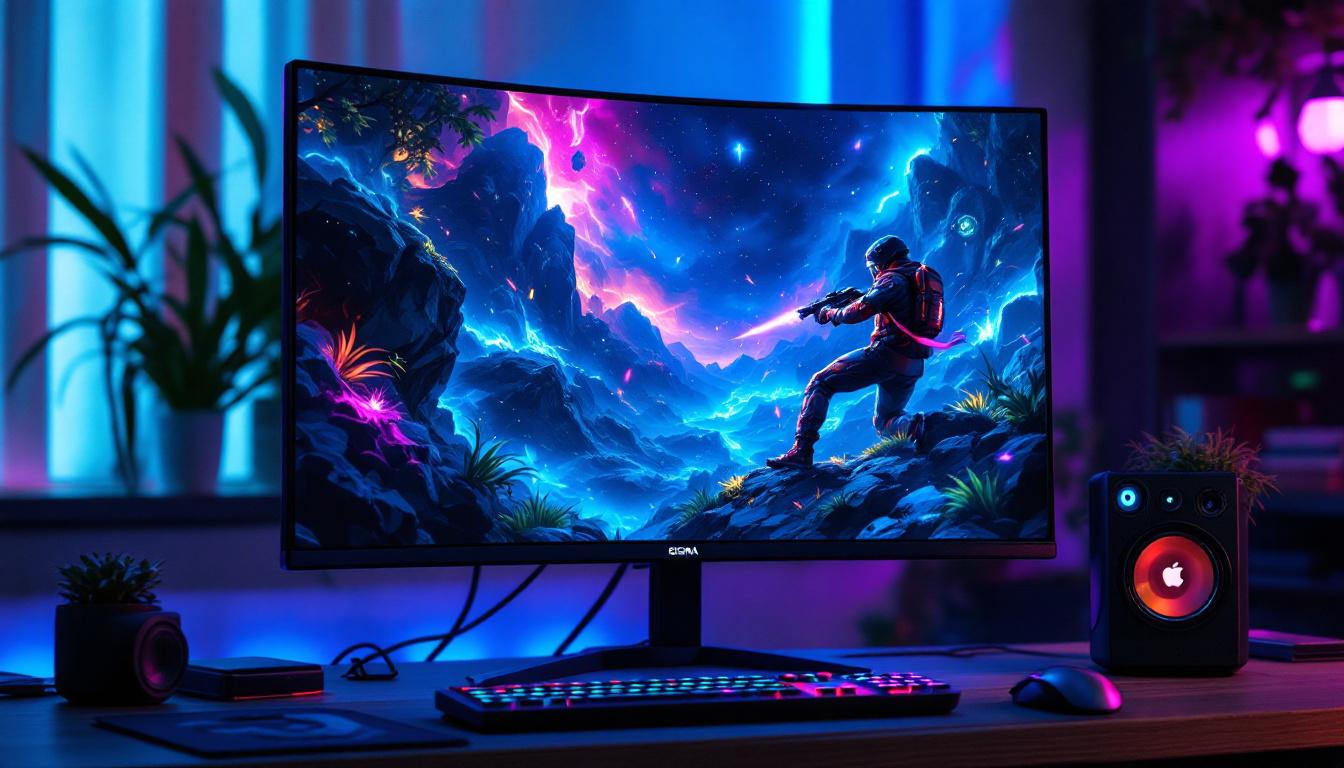
As the market for LCD and LED monitors continues to evolve, manufacturers are also exploring innovative designs that incorporate curved screens and ultra-wide formats. These designs aim to enhance immersion and provide a more engaging experience for users, whether for gaming, watching movies, or professional work. The competition among brands has led to rapid advancements in display technology, ensuring that consumers have access to a wide range of options that cater to their specific needs and preferences.
Why LED-Backlit LCD Monitors Are Popular for Gaming
Improved Response Times and Refresh Rates
One of the most critical factors for gaming monitors is how quickly they can update the image on the screen. LED-backlit LCD monitors typically offer faster response times compared to older CCFL-backlit models. Response time refers to how quickly a pixel can change from one color to another, usually measured in milliseconds (ms).
Modern gaming monitors often boast response times as low as 1ms, which helps reduce motion blur and ghosting effects during fast-paced gameplay. Additionally, LED-backlit LCD monitors support high refresh rates, with many models offering 120Hz, 144Hz, or even 240Hz refresh rates. Higher refresh rates allow for smoother animations and more fluid motion, which is crucial for competitive gaming.
Energy Efficiency and Slim Design
LED backlighting consumes significantly less power than CCFL backlighting, making LED-backlit LCD monitors more energy-efficient. This not only reduces electricity bills but also contributes to a cooler operating temperature, which can prolong the lifespan of the monitor’s components.
The compact size of LEDs allows manufacturers to produce thinner and lighter monitors. For gamers who value a sleek setup or have limited desk space, LED-backlit LCD monitors offer an attractive combination of performance and design.
Enhanced Color Accuracy and Contrast
LED backlighting can deliver better color reproduction and higher contrast ratios compared to older technologies. Some high-end gaming monitors utilize advanced LED backlighting techniques such as local dimming, where specific zones of LEDs can be dimmed or brightened independently. This feature enhances the depth of blacks and the vibrancy of colors, creating a more immersive visual experience.
Additionally, many gaming monitors with LED backlighting support wide color gamuts like DCI-P3 or Adobe RGB, which are important for gamers who also engage in content creation or prefer richer colors in their games.
Key Features to Consider in a Gaming LCD Monitor with LED Display
Panel Type: TN, IPS, or VA?
The type of LCD panel used in a monitor significantly impacts image quality, viewing angles, and response times. The three main panel types are:
- Twisted Nematic (TN): Known for the fastest response times (as low as 1ms) and high refresh rates, TN panels are favored by competitive gamers. However, they tend to have poorer color accuracy and limited viewing angles.
- In-Plane Switching (IPS): IPS panels offer superior color accuracy and wider viewing angles, making them ideal for immersive gaming and content creation. Historically, IPS panels had slower response times, but recent advancements have narrowed this gap.
- Vertical Alignment (VA): VA panels provide the best contrast ratios and deeper blacks, which enhance dark scenes in games. Their response times are generally slower than TN but better than IPS in some cases.
Refresh Rate and Response Time
For gaming, a high refresh rate and low response time are paramount. A refresh rate of 144Hz or higher is recommended for smooth gameplay, especially in fast-paced genres like first-person shooters or racing games. Response times under 5ms are desirable to minimize motion blur and ghosting.
It’s important to note that the advertised response time is often the grey-to-grey (GtG) measurement, which may differ from real-world performance. Reading user reviews and professional tests can provide a better understanding of actual monitor responsiveness.
Adaptive Sync Technologies: G-Sync and FreeSync
Screen tearing and stuttering can disrupt gameplay, especially when the frame rate output by the graphics card does not match the monitor’s refresh rate. Adaptive sync technologies help eliminate these issues:
- NVIDIA G-Sync: A proprietary technology compatible with NVIDIA GPUs, G-Sync synchronizes the monitor’s refresh rate with the GPU’s frame rate to provide smooth visuals.
- AMD FreeSync: An open standard supported by AMD GPUs, FreeSync offers similar benefits and is often available on more affordable monitors.
Many modern gaming monitors support both technologies or have variable refresh rate (VRR) features, making them versatile choices regardless of your GPU brand.
Resolution and Screen Size
Resolution determines the sharpness and clarity of the image. Common resolutions for gaming monitors include Full HD (1920×1080), Quad HD (2560×1440), and 4K UHD (3840×2160). While higher resolutions provide more detail, they also demand more powerful hardware to maintain high frame rates.
Screen size preferences vary among gamers. A 24-27 inch monitor is popular for competitive gaming due to the balance of size and pixel density, while larger monitors (32 inches and above) are favored for immersive single-player experiences.
Pros and Cons of LED-Backlit LCD Gaming Monitors
Advantages
- Energy Efficiency: LED backlighting consumes less power than older CCFL technology.
- Better Image Quality: Enhanced color accuracy, contrast, and brightness.
- Faster Response Times: Ideal for reducing motion blur in fast-paced games.
- Sleek Design: Thinner and lighter monitors that fit modern gaming setups.
- Wide Availability: A broad range of models at various price points.
Disadvantages
- Backlight Bleeding: Some LED-backlit LCDs may suffer from uneven lighting, especially edge-lit models.
- Viewing Angles: TN panels have limited viewing angles, which can affect color consistency.
- Price Premium: High-end IPS or VA panels with advanced LED backlighting can be expensive.
- Not True OLED: LED-backlit LCDs cannot achieve the perfect blacks and infinite contrast ratios of OLED displays.
Future Trends in Gaming Display Technology
The gaming monitor market continues to innovate rapidly. While LED-backlit LCDs remain the standard, emerging technologies are pushing boundaries:
Mini-LED and Micro-LED
Mini-LED technology uses thousands of tiny LEDs for backlighting, enabling more precise local dimming and improved contrast. This results in better HDR performance and deeper blacks than traditional LED-backlit LCDs.
Micro-LED, still in early stages, promises self-emissive pixels like OLED but without burn-in issues, potentially revolutionizing gaming displays in the coming years.
Higher Refresh Rates and Resolutions
Monitors with refresh rates exceeding 240Hz and resolutions beyond 4K are becoming more accessible. These advancements cater to gamers seeking ultra-smooth and highly detailed visuals, although they require powerful GPUs to fully utilize.
Integration of HDR and Wide Color Gamut
High Dynamic Range (HDR) support is increasingly common in gaming monitors, providing brighter highlights and richer colors. Combined with wide color gamut support, HDR enhances immersion and visual fidelity.
Conclusion
LED-backlit LCD monitors dominate the gaming display market due to their balance of performance, image quality, and affordability. Understanding the underlying technology helps gamers choose the right monitor tailored to their needs—whether it’s ultra-fast response times for competitive play or vibrant colors and contrast for immersive storytelling.
As display technology evolves, gamers can look forward to even more impressive monitors that push the limits of visual performance. For now, selecting a gaming LCD monitor with LED backlighting that offers the right combination of panel type, refresh rate, resolution, and adaptive sync technology will ensure a satisfying and competitive gaming experience.
Explore the Future of Gaming Displays with LumenMatrix
Ready to elevate your gaming experience with the latest in LED display technology? Discover LumenMatrix’s innovative solutions, from Indoor and Outdoor LED Wall Displays to specialized options like Vehicle, Sports, and Floor LED Displays. Our mission is to transform your visual communication and gaming setup with displays that offer unparalleled clarity, vibrancy, and engagement. Don’t settle for less—check out LumenMatrix LED Display Solutions today and step into the future of immersive gaming.