Understanding measurements across different units is essential in many fields, from construction and design to technology and everyday life. One common conversion that often arises is between meters and feet. This article focuses on the specific conversion of 2.6 meters to feet, with a particular emphasis on its relevance in LED display technology. By exploring this conversion in detail, readers will gain a clearer understanding of how size measurements impact LED display design, installation, and performance.
Understanding the Meter-to-Feet Conversion
The metric system, which uses meters as a unit of length, is the standard measurement system in most countries worldwide. In contrast, the imperial system, which uses feet, is still widely used in the United States and a few other regions. Converting between these two systems is crucial for accurate communication and implementation in various industries. For instance, in fields such as construction, architecture, and international trade, professionals often encounter specifications in both metric and imperial units, making conversion an essential skill for effective collaboration.
Basic Conversion Formula
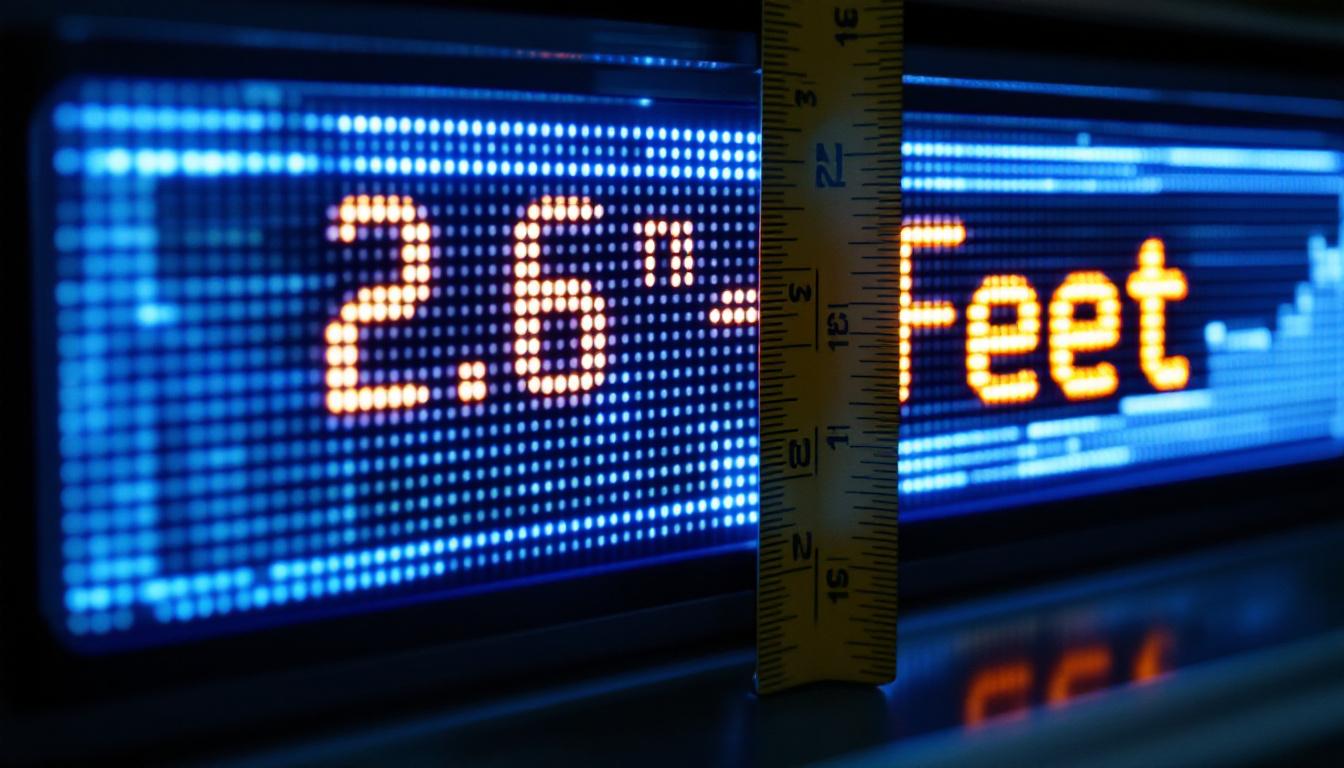
One meter is equivalent to approximately 3.28084 feet. This conversion factor allows for precise calculations when converting meters to feet or vice versa. Therefore, to convert 2.6 meters to feet, the calculation is:
2.6 meters × 3.28084 = 8.53018 feet
Rounding this to two decimal places, 2.6 meters equals approximately 8.53 feet. This value is essential for professionals who need to translate metric measurements into imperial units accurately. In addition to basic conversions, understanding how to manipulate these figures can aid in more complex calculations, such as determining area or volume, where multiple dimensions are involved. This versatility in measurement is particularly advantageous in fields like engineering and physics, where precise dimensions are critical.
Why Precision Matters
In many applications, especially in technology and engineering, even small discrepancies in measurement can lead to significant issues. For example, when designing an LED display panel, the exact dimensions determine how the display fits into a space, how it aligns with other components, and how viewers perceive the image quality. Therefore, understanding and applying precise conversions like 2.6 meters to 8.53 feet ensures that projects proceed smoothly without costly errors or adjustments. Furthermore, in industries such as aviation and automotive design, where safety is paramount, accurate conversions can mean the difference between a successful project and a catastrophic failure. Engineers and designers must rely on precise measurements to ensure that every component fits perfectly, thus maintaining the integrity and safety of the final product.
Moreover, the importance of accurate conversions extends beyond technical fields. In everyday life, individuals may find themselves needing to convert measurements for various purposes, such as home improvement projects, cooking, or travel. For instance, a recipe might list ingredients in grams, while a home cook in the U.S. may prefer to measure in ounces or cups. Understanding how to convert these measurements accurately not only enhances the cooking experience but also ensures that the final dish turns out as intended. Similarly, travelers venturing into countries that use the metric system must quickly adapt to new measurements for distance, height, and weight, making familiarity with these conversions a valuable skill in a globalized world.
The Role of Measurements in LED Display Technology
LED (Light Emitting Diode) displays have become ubiquitous in advertising, entertainment, and information dissemination. Their sizes vary widely, from small indoor screens to massive outdoor billboards. Measurement conversions play a critical role in the design, manufacturing, and installation of these displays.
LED Display Sizes and Their Importance
The size of an LED display is often specified in meters, particularly in countries using the metric system. However, when these displays are exported or installed in regions using the imperial system, the size must be converted to feet for clarity and compatibility.
For instance, a 2.6-meter tall LED display might be installed in a shopping mall or stadium. Knowing that this height translates to approximately 8.53 feet helps architects and installers visualize the display’s scale relative to the environment. Additionally, the size of the display can significantly impact its visibility and effectiveness. A larger display not only captures attention but also allows for more detailed images and text, making it essential for high-traffic areas where clear communication is key.
Pixel Pitch and Viewing Distance
Another critical aspect influenced by size measurements is pixel pitch—the distance between the centers of adjacent pixels on an LED display. Pixel pitch is typically measured in millimeters but relates directly to the overall dimensions of the display. Understanding the total size in feet or meters helps determine optimal viewing distances and image clarity.
For example, a larger display with a 2.6-meter height might have a pixel pitch of 10 mm, making it suitable for viewing from several meters away. Converting the display’s height to feet allows international clients and installers to assess whether the display meets their spatial and visual requirements. Furthermore, the pixel pitch not only affects the viewing distance but also influences the overall resolution of the display. A finer pixel pitch means higher resolution, which is particularly important for applications requiring detailed graphics, such as in control rooms or high-end retail environments. Understanding these measurements ensures that the display can deliver the intended visual experience, whether it’s for a concert, a sports event, or a corporate presentation.
Practical Applications of the 2.6 Meters to Feet Conversion in LED Displays
Beyond theoretical knowledge, the conversion of 2.6 meters to feet has practical implications in various stages of LED display projects. From design and manufacturing to installation and maintenance, knowing the exact size in both units ensures seamless collaboration and execution.
Design and Engineering
Designers and engineers often work with CAD (Computer-Aided Design) software that may default to either metric or imperial units depending on the region or client specifications. When designing an LED display that measures 2.6 meters in height, converting this measurement to feet (8.53 feet) allows for accurate scaling within the software, ensuring that all components fit together correctly.
This conversion also aids in structural engineering calculations, such as determining the load-bearing capacity of mounting frames or supports, which may be specified in imperial units. Additionally, understanding the dimensions in both metric and imperial systems facilitates communication among international teams, allowing for a smoother workflow and reducing the chances of miscommunication that can arise from unit discrepancies.
Manufacturing and Production
Manufacturers sourcing materials or components from different countries must ensure that all parts conform to the correct dimensions. For example, a frame designed to hold a 2.6-meter LED panel must be fabricated with precise measurements, often requiring conversions to feet and inches for suppliers accustomed to imperial units.
Accurate conversions reduce the risk of manufacturing errors, delays, and increased costs, contributing to the overall efficiency of the production process. Moreover, as manufacturers often deal with bulk orders, understanding the conversion can help in optimizing material usage and minimizing waste, which is not only cost-effective but also environmentally friendly. This attention to detail in the manufacturing phase can significantly enhance the overall quality of the final product.
Installation and Setup
During installation, technicians and contractors frequently use imperial units for measurements, especially in the United States. Knowing that 2.6 meters equals approximately 8.53 feet helps installers prepare the site, arrange scaffolding, and position the display accurately.
Furthermore, when integrating the LED display with existing infrastructure, precise measurements prevent misalignments and ensure optimal visibility and safety. The importance of accurate height measurements cannot be overstated, as even minor discrepancies can lead to significant issues in viewing angles and audience engagement. Additionally, understanding the height in feet can assist in compliance with local building codes and regulations, which often specify requirements in imperial units, ensuring that installations are not only effective but also legally compliant.
Common Challenges and Tips for Accurate Measurement Conversion
Despite the straightforward formula for converting meters to feet, several challenges can arise in practice. Awareness of these issues and strategies to overcome them can facilitate smoother processes in LED display projects.
Rounding Errors and Their Impact
Rounding numbers too early or inconsistently can introduce errors that accumulate over large measurements or multiple components. For example, rounding 8.53018 feet to 8.5 feet might seem minor, but when multiplied across several panels or structural elements, the discrepancy can become significant.
To minimize such errors, it is advisable to maintain as many decimal places as practical during calculations and only round the final result when necessary.
Unit Confusion in Multinational Projects
Projects involving teams from different countries may encounter confusion due to varying unit preferences. Clear communication and documentation specifying the units used for all measurements can prevent misunderstandings.
Using dual-unit labels (e.g., 2.6 meters / 8.53 feet) in drawings, specifications, and instructions helps ensure that everyone involved has a consistent understanding.
Utilizing Digital Tools for Conversion
Modern digital tools and apps provide quick and accurate unit conversions, reducing the risk of human error. Incorporating these tools into workflows can streamline the process and improve accuracy.
For instance, CAD software often includes built-in unit converters, allowing designers to input dimensions in one unit and view them in another seamlessly.
Conclusion: The Importance of Accurate Measurement Conversion in LED Displays
Converting 2.6 meters to feet, which equals approximately 8.53 feet, is more than a simple mathematical exercise. In the context of LED display technology, this conversion plays a vital role in design accuracy, manufacturing precision, and installation success.
Understanding and applying precise measurement conversions ensures that LED displays meet their intended specifications, fit perfectly within their environments, and deliver optimal performance. Whether working on a small indoor screen or a large outdoor billboard, professionals must be adept at navigating between metric and imperial units to achieve seamless results.
By appreciating the significance of these conversions and employing best practices to maintain accuracy, stakeholders in the LED display industry can enhance collaboration, reduce errors, and ultimately create more effective and visually stunning displays.
Discover LumenMatrix’s Advanced LED Display Solutions
Ready to take your visual displays to the next level? LumenMatrix offers a comprehensive range of LED display modules designed to transform any space into a dynamic visual experience. Whether you’re looking for an Indoor LED Wall Display, a vibrant Outdoor LED Wall Display, or specialized solutions like Vehicle LED Displays and LED Sports Displays, LumenMatrix has the cutting-edge technology to meet your needs. Elevate your brand visibility and captivate your audience with our Floor LED Displays, Custom LED Displays, and All-in-One LED Display solutions. Experience the future of visual communication with our LED Transparent Displays and make a lasting impact. Check out LumenMatrix LED Display Solutions today and see your message come to life with clarity and impact.