In today’s technology-driven world, display screens are everywhere—from smartphones and televisions to digital billboards and wearable devices. Among the most popular display technologies are LCD (Liquid Crystal Display) and LED (Light Emitting Diode) displays. While these terms are often used interchangeably, understanding how they work and how to effectively use or implement them can be crucial for engineers, designers, and tech enthusiasts alike.
Understanding the Basics: What Is LCD?
Liquid Crystal Display (LCD) technology has been a staple in the display industry for decades. At its core, an LCD uses liquid crystals that do not emit light directly. Instead, these crystals manipulate light passing through them to create images.
LCD panels consist of several layers, including polarizing filters, glass substrates, and the liquid crystal layer sandwiched in between. When an electric current is applied, the orientation of the liquid crystals changes, controlling the amount of light that passes through each pixel. This modulation creates the images we see on the screen.
One key characteristic of LCDs is that they require a backlight to illuminate the display since the liquid crystals themselves do not produce light. Traditionally, cold cathode fluorescent lamps (CCFLs) were used as backlights, but modern LCDs predominantly use LED backlighting for better efficiency and color accuracy.
Common Applications of LCD Technology
LCDs are widely used in devices where power efficiency and sharp image quality are essential. Examples include laptop screens, computer monitors, calculators, and digital watches. The technology’s ability to produce crisp images with relatively low power consumption has made it a preferred choice in many consumer electronics.
Moreover, the versatility of LCD technology extends beyond personal devices to larger applications, such as televisions and digital signage. In the realm of televisions, LCDs have evolved to support high-definition and 4K resolutions, providing viewers with stunning visual experiences. Digital signage, often seen in retail environments and public transport systems, leverages LCD technology for vibrant displays that can easily be updated with new information, advertisements, or announcements. This adaptability makes LCDs not only a practical choice for everyday use but also a dynamic solution for businesses looking to engage customers effectively.
Additionally, advancements in LCD technology have led to the development of specialized types, such as IPS (In-Plane Switching) and TN (Twisted Nematic) panels. IPS panels are renowned for their superior color accuracy and wider viewing angles, making them ideal for professional graphic design and photography. On the other hand, TN panels are favored in gaming due to their faster response times, allowing for smoother motion during fast-paced action. The ongoing innovation in LCD technology continues to enhance user experiences across various fields, ensuring that this display technology remains relevant in an ever-evolving digital landscape.
What Is LED Display? Clarifying the Terminology
LED stands for Light Emitting Diode, a semiconductor device that emits light when an electric current passes through it. When people refer to LED displays, they often mean displays that use LEDs as the light source or as the pixels themselves.
There are two primary types of LED displays:
- LED-backlit LCD Displays: These are essentially LCD panels that use LEDs as their backlight source instead of traditional CCFLs. This combination offers improved brightness, contrast, and energy efficiency.
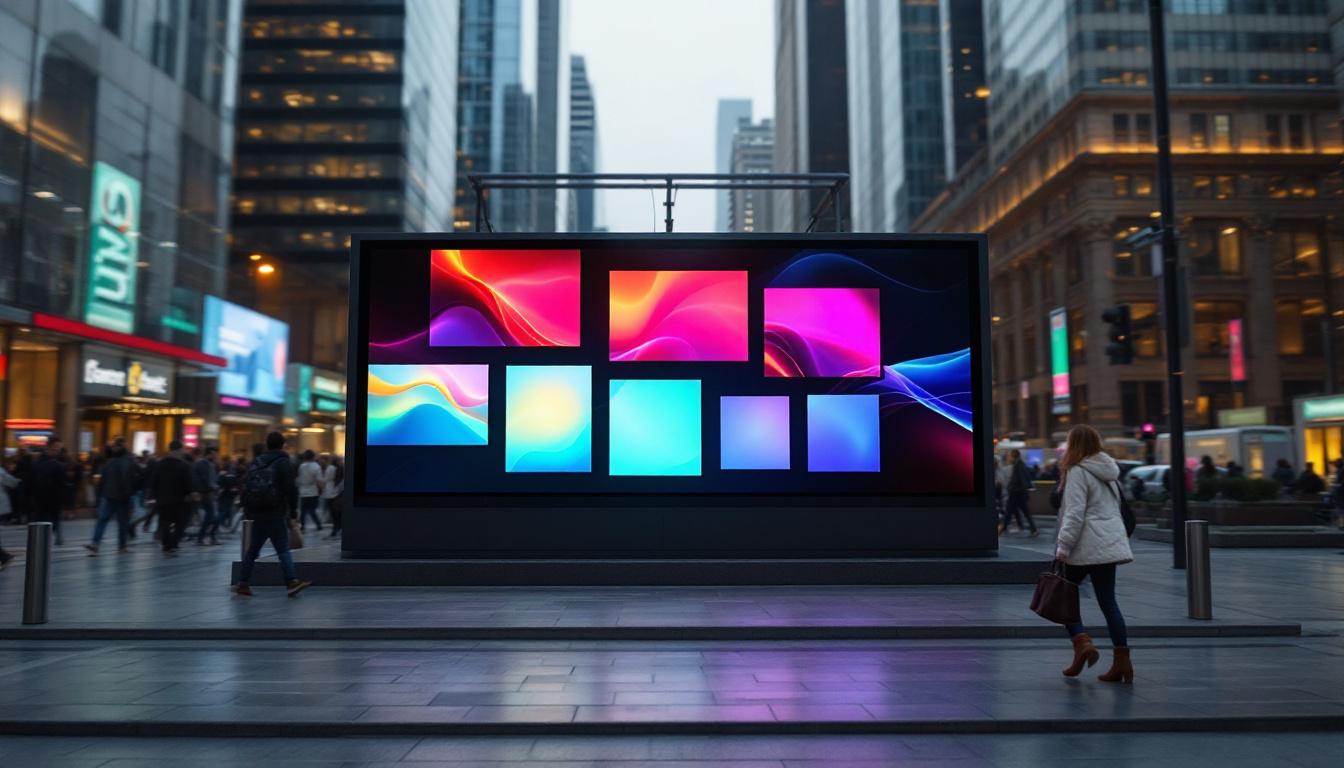
- Direct LED Displays (or LED Video Walls): These displays use individual LEDs as pixels, capable of producing their own light and color. They are commonly used in large-scale outdoor screens, stadium displays, and digital signage.
Understanding this distinction is important because the term “LED display” can refer to very different technologies depending on the context.
Advantages of LED Technology
LEDs are highly efficient light sources with a long lifespan. They offer superior brightness and contrast ratios, making them ideal for displays that need to be visible in bright environments. Additionally, LEDs can be made very small, allowing for high-resolution displays with excellent color accuracy.
Another significant advantage of LED technology is its versatility. LED displays can be configured in various shapes and sizes, making them suitable for a wide range of applications, from small handheld devices to massive outdoor billboards. This adaptability allows designers and advertisers to create eye-catching displays that can fit into any environment, whether it be a corporate office, a retail store, or a bustling city square. Furthermore, the modular nature of many LED systems means that they can be easily expanded or reconfigured as needs change, providing a long-term solution for dynamic visual communication.
Moreover, LED technology is also more environmentally friendly compared to traditional display technologies. LEDs consume less power, which not only reduces energy costs but also minimizes the carbon footprint associated with their use. Many LED displays are designed to be recyclable, contributing to a more sustainable lifecycle. As the demand for greener technology continues to grow, LED displays are increasingly becoming the preferred choice for businesses and organizations looking to enhance their visual impact while being conscious of their environmental responsibilities.
How Does an LED-Backlit LCD Work?
Most modern LCD screens are actually LED-backlit LCDs. This means the display panel itself is an LCD, but the light source behind it is composed of LEDs rather than older fluorescent lamps.
LED backlighting can be implemented in two main ways:
- Edge-Lit LED: LEDs are placed along the edges of the screen, and light is diffused across the panel. This design allows for thinner screens and is common in laptops and televisions.
- Direct-Lit or Full-Array LED: LEDs are placed directly behind the LCD panel in a grid pattern. This setup allows for local dimming, where specific zones of LEDs can be dimmed or brightened independently, improving contrast and black levels.
The combination of liquid crystals modulating the light and the LED backlight providing illumination results in vibrant, energy-efficient displays suitable for a wide range of applications.
Benefits of LED-Backlit LCDs
Compared to CCFL-backlit LCDs, LED-backlit models offer several advantages:
- Energy Efficiency: LEDs consume less power, extending battery life in portable devices.
- Improved Brightness and Contrast: LEDs can achieve higher brightness levels and deeper blacks, enhancing image quality.
- Thinner Panels: LED backlighting enables slimmer designs, which is critical for modern consumer electronics.
- Environmentally Friendly: LEDs do not contain mercury, unlike CCFLs, making disposal safer.
How to Do LCD: Practical Guide to Using and Implementing LCD and LED Displays
Whether you are building a project, designing a product, or simply want to understand how to work with LCD and LED displays, there are several important considerations and steps to follow.
Selecting the Right Display Type
Choosing between an LCD, LED-backlit LCD, or direct LED display depends on your application’s needs:
- For portable devices: LED-backlit LCDs are usually preferred due to their balance of image quality and power efficiency.
- For large outdoor signage: Direct LED displays are ideal because of their high brightness and durability.
- For desktop monitors and TVs: LED-backlit LCDs with local dimming provide excellent picture quality.
Understanding Resolution and Pixel Density
Resolution refers to the number of pixels displayed on the screen, typically given as width × height (e.g., 1920×1080). Pixel density, measured in pixels per inch (PPI), affects image sharpness. Higher pixel density results in crisper images but may increase power consumption and cost.
When selecting or designing a display, consider the viewing distance and use case. For example, a smartphone requires a higher pixel density than a large billboard viewed from afar.
Interfacing and Driving the Display
Driving an LCD or LED display involves controlling the pixels through an electronic interface. This typically requires a microcontroller or graphics processing unit (GPU) capable of sending signals to the display driver circuitry.
Common interfaces include:
- SPI/I2C: Used for smaller, simpler LCD modules.
- LVDS (Low-Voltage Differential Signaling): Common in laptop and monitor displays for high-speed data transfer.
- HDMI/DisplayPort: Used for high-definition video output on TVs and monitors.
Understanding the interface and driver requirements is essential for successful integration.
Power Considerations
Displays can be power-hungry components, especially large or high-brightness models. Efficient power management is crucial to prolong battery life in portable devices and reduce energy consumption in stationary setups.
LED-backlit LCDs offer significant power savings over older technologies, but designers should still consider backlight brightness, refresh rates, and usage patterns to optimize power usage.
Calibration and Color Accuracy
For applications requiring precise color reproduction, such as graphic design or medical imaging, display calibration is vital. Calibration involves adjusting the display settings to ensure colors are rendered accurately according to standardized color profiles.
Many professional displays come factory-calibrated, but additional software tools and hardware colorimeters can be used to fine-tune performance.
Emerging Trends and Innovations in LCD and LED Displays
The display industry is continuously evolving, with new technologies enhancing performance, efficiency, and user experience.
Mini-LED and Micro-LED Technologies
Mini-LED is an advancement in LED backlighting where thousands of tiny LEDs provide local dimming with much finer control. This technology offers improved contrast and brightness compared to traditional LED-backlit LCDs.
Micro-LED takes this further by using microscopic LEDs as individual pixels, combining the benefits of OLED (organic LED) displays—such as self-emission and high contrast—with the longevity and brightness of inorganic LEDs. Although still emerging, micro-LED displays promise revolutionary improvements in display quality.
Flexible and Transparent Displays
Innovations in LCD and LED materials have enabled flexible and transparent displays. These technologies open new possibilities for wearable devices, automotive dashboards, and augmented reality applications.
Energy Efficiency and Sustainability
With increasing focus on environmental impact, manufacturers are investing in more energy-efficient display technologies and sustainable materials. LED-backlit LCDs already contribute to this trend by reducing power consumption and hazardous waste.
Conclusion: Choosing and Using LCD and LED Displays Effectively
Understanding the distinctions between LCD and LED display technologies is crucial for making informed decisions in design, purchasing, and implementation. LCDs rely on liquid crystals to modulate light, while LEDs serve as efficient light sources or self-emitting pixels depending on the display type.
Modern LED-backlit LCDs combine the strengths of both technologies, delivering high-quality visuals with energy efficiency. Meanwhile, direct LED displays dominate in large-scale and outdoor applications due to their brightness and durability.
By considering factors such as application requirements, resolution, interface, power consumption, and calibration, users and designers can select and implement the optimal display solution. Staying informed about emerging technologies like mini-LED and micro-LED will also help anticipate future advancements in the display landscape.
Discover Cutting-Edge LED Display Solutions with LumenMatrix
Ready to elevate your visual communication with the latest in display technology? LumenMatrix is at the forefront of LED innovation, offering a diverse range of LED display modules designed to captivate and engage your audience. From stunning Indoor and Outdoor LED Wall Displays to dynamic Vehicle and Sports LED Displays, our solutions are tailored to meet your unique needs. Experience the transformative power of LED Poster Displays, Floor LED Displays, Custom LED Solutions, All-in-One LED Displays, and LED Transparent Displays. Embrace the future of digital signage with LumenMatrix and create unforgettable visual experiences. Check out LumenMatrix LED Display Solutions today and see your brand shine like never before.