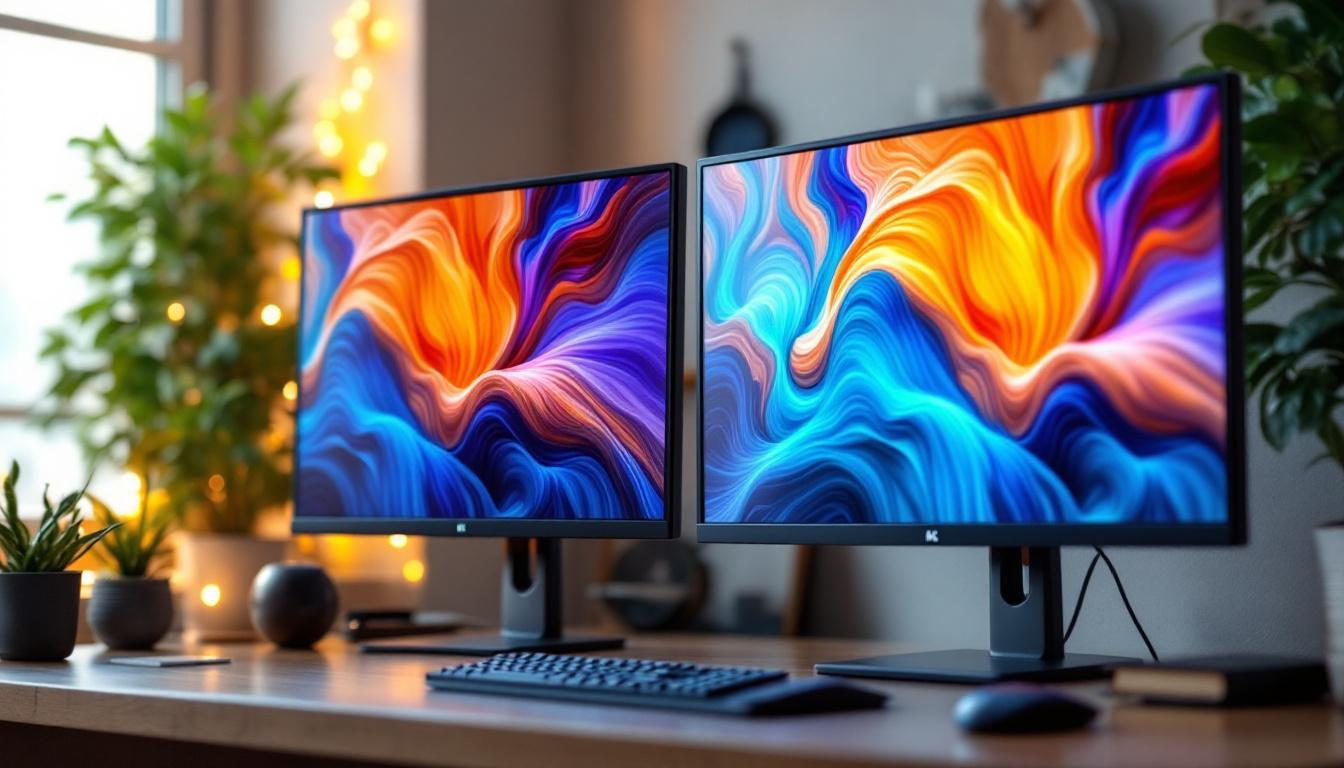
Choosing the right monitor can be a daunting task, especially with the variety of display technologies available today. Among the most common types are LED and LCD monitors. While these terms are often used interchangeably, they refer to different aspects of display technology. This article aims to clarify the distinctions between LED and LCD monitors, explain how LED displays work, and guide you in making an informed decision based on your needs.
Understanding LCD Technology
LCD stands for Liquid Crystal Display, a technology that has been the foundation for flat-panel monitors for decades. Unlike older cathode-ray tube (CRT) monitors, LCDs use liquid crystals to modulate light and create images on the screen.
At its core, an LCD monitor consists of several layers: a backlight, polarizing filters, glass substrates, and liquid crystals sandwiched between them. The liquid crystals do not emit light themselves; instead, they control the passage of light from the backlight to form images. By adjusting the orientation of these crystals with electric currents, the monitor can display different colors and shades.
Historically, LCD monitors used cold cathode fluorescent lamps (CCFLs) as their backlight source. These lamps provide uniform illumination but come with drawbacks such as higher power consumption, bulkier design, and limited lifespan compared to newer technologies.
In recent years, the evolution of LCD technology has led to the incorporation of LED (Light Emitting Diode) backlighting, which has significantly improved the performance and efficiency of LCD displays. LED backlighting not only reduces power consumption but also allows for thinner designs, making modern monitors sleeker and more aesthetically pleasing. Additionally, LED technology can enhance color accuracy and contrast ratios, resulting in a more vibrant viewing experience. This shift has made LCDs more competitive against other display technologies, such as OLED, which also offers impressive color reproduction and deeper blacks.
Moreover, advancements in LCD technology have led to the development of various types of displays, including IPS (In-Plane Switching) and TN (Twisted Nematic) panels. IPS panels are known for their superior color consistency and wide viewing angles, making them ideal for graphic design and professional applications. On the other hand, TN panels are often favored for gaming due to their faster response times, although they may sacrifice color accuracy and viewing angles. As a result, consumers now have a wider array of options to choose from, catering to different needs and preferences in both professional and recreational settings.
What Does LED Mean in Monitors?
LED stands for Light Emitting Diode, a semiconductor device that emits light when an electric current passes through it. In the context of monitors, LED refers primarily to the type of backlighting used rather than the display technology itself.
Most modern “LED monitors” are actually LCD panels illuminated by LED backlights instead of CCFLs. This distinction is crucial because it means that LED monitors are a subset of LCD monitors, but with improved backlighting technology.
LED backlighting offers several advantages over CCFLs, including better energy efficiency, slimmer designs, longer lifespan, and the ability to produce brighter and more vibrant images.
Types of LED Backlighting
LED backlighting comes in two main configurations: Edge-Lit and Full-Array (also known as Direct-Lit).
- Edge-Lit LED: LEDs are placed along the edges of the screen, and light is diffused across the display. This design allows for thinner monitors but can sometimes lead to uneven brightness or light bleed.
- Full-Array LED: LEDs are distributed evenly behind the entire screen, enabling more precise control of brightness and contrast through local dimming zones. This results in better picture quality, especially in darker scenes.
Comparing LED and LCD Monitors: Key Differences
Given that LED monitors are essentially LCD monitors with LED backlighting, the comparison often centers on the backlight type and its impact on performance and user experience.
Image Quality and Color Accuracy
LED backlighting generally provides better brightness and contrast ratios compared to CCFL backlighting. Full-array LED monitors with local dimming can achieve deeper blacks and more vivid colors, which is particularly beneficial for watching movies, gaming, and professional photo or video editing.
However, the panel type (such as IPS, TN, or VA) plays a significant role in color accuracy and viewing angles, independent of the backlight. For example, an IPS panel with LED backlighting typically offers superior color reproduction and wider viewing angles than a TN panel with the same backlight.
Energy Efficiency and Environmental Impact
LED backlit monitors consume less power than their CCFL counterparts. According to energy consumption studies, LED monitors can use up to 30-40% less electricity, making them more environmentally friendly and cost-effective over time.
Additionally, LEDs do not contain mercury, unlike CCFLs, which makes LED monitors safer to dispose of and less harmful to the environment.
Design and Form Factor
The compact size of LEDs allows manufacturers to produce thinner and lighter monitors. Edge-lit LED monitors, in particular, can be incredibly slim, making them ideal for modern workspaces and minimalist setups.
In contrast, CCFL backlights require more space, resulting in bulkier monitors. This difference also influences portability and ease of installation.
Lifespan and Durability
LED backlights typically have a longer lifespan, often exceeding 50,000 hours of usage, compared to around 30,000 hours for CCFL backlights. This means LED monitors can maintain brightness and color quality longer without noticeable degradation.
Moreover, LEDs are more durable and less prone to flickering or failure, contributing to a more reliable user experience.
When to Choose an LED Monitor Over an LCD (CCFL) Monitor
Given the advantages of LED backlighting, most new monitors on the market now use LED technology. However, understanding when to prioritize LED monitors can help users make better purchasing decisions.
For Gamers and Multimedia Enthusiasts
Gamers benefit from LED monitors due to their higher refresh rates, better contrast ratios, and faster response times. Full-array LED monitors with local dimming enhance visual immersion by delivering deeper blacks and more vibrant colors, which is critical for modern games with complex graphics.
Similarly, movie watchers and content creators appreciate the improved color accuracy and brightness that LED monitors provide.
For Office and Everyday Use
LED monitors are also ideal for office environments because of their energy efficiency and slimmer designs. They reduce electricity costs and take up less desk space, contributing to a cleaner and more ergonomic workspace.
Additionally, many LED monitors come with features like flicker-free technology and blue light filters, which help reduce eye strain during long hours of use.
Budget Considerations
While LED monitors generally cost more upfront than older CCFL-backlit LCDs, the price gap has narrowed significantly. The long-term savings from lower energy consumption and longer lifespan often justify the initial investment.
Moreover, as CCFL monitors become rarer, the availability of replacement parts and service support diminishes, making LED monitors a more practical choice.
Common Misconceptions About LED and LCD Monitors
Despite widespread use, several misconceptions persist around LED and LCD monitors. Clarifying these can help consumers avoid confusion.
LED Monitors Are Not a Separate Display Technology
Many people assume LED monitors are fundamentally different from LCD monitors. In reality, LED monitors are a type of LCD monitor that uses LED backlighting instead of CCFLs. The display panel technology remains liquid crystal-based.
OLED vs LED: Different Technologies
It is important not to confuse LED monitors with OLED (Organic Light Emitting Diode) monitors. OLED displays emit light at the pixel level without a backlight, offering superior contrast and color accuracy. However, OLED monitors are still relatively expensive and less common for general computing use compared to LED-backlit LCDs.
LED Backlighting Does Not Guarantee Superior Panel Quality
While LED backlighting improves brightness and efficiency, the overall image quality also depends on the LCD panel type and manufacturing quality. A high-quality CCFL-backlit IPS panel may outperform a low-end LED-backlit TN panel in color accuracy and viewing angles.
Future Trends in Monitor Display Technology
Display technology continues to evolve rapidly, with LED-backlit LCDs currently dominating the market. However, emerging technologies promise to reshape how monitors perform and look.
Mini-LED and Micro-LED
Mini-LED technology uses thousands of tiny LEDs as backlighting, enabling even more precise local dimming and higher contrast ratios. This technology is gaining traction in high-end monitors and TVs, offering near-OLED levels of performance with improved brightness and lifespan.
Micro-LED takes this further by using microscopic LEDs that function as individual pixels, eliminating the need for a backlight and potentially surpassing OLED in brightness and durability. While still in development, Micro-LED displays could revolutionize the monitor market in the coming years.
Advancements in OLED and QLED
OLED monitors are becoming more affordable and available, especially for professional use where color accuracy is paramount. Meanwhile, QLED (Quantum Dot LED) technology enhances LED-backlit LCD monitors by using quantum dots to improve color and brightness.
These advancements offer consumers a broader range of choices tailored to specific needs, from gaming and entertainment to professional content creation.
Conclusion: Making the Right Choice Between LED and LCD Monitors
Understanding the relationship between LED and LCD technologies is essential for selecting the right monitor. Essentially, LED monitors are LCD monitors with LED backlighting, offering benefits such as improved energy efficiency, slimmer designs, and better image quality compared to older CCFL-backlit LCDs.
When choosing a monitor, consider factors like panel type, backlighting configuration, intended use, and budget. For most users today, LED-backlit LCD monitors provide an excellent balance of performance, efficiency, and cost.
As display technologies continue to advance, staying informed about new developments like Mini-LED, Micro-LED, and OLED will help ensure that your next monitor purchase meets your evolving needs and expectations.
Explore Cutting-Edge LED Display Solutions with LumenMatrix
Ready to experience the future of display technology? LumenMatrix is at the forefront of LED innovation, offering a wide range of advanced LED display modules designed to take your visual communication to the next level. Whether you’re looking for an Indoor LED Wall Display, an eye-catching Outdoor LED Wall Display, or specialized solutions like Vehicle LED Displays and LED Sports Displays, LumenMatrix has the perfect fit for your needs. Elevate your brand’s visibility and captivate your audience with our stunning LED Poster Displays, Floor LED Displays, and Custom LED solutions. Embrace the revolution in digital signage and create unforgettable visual experiences. Check out LumenMatrix LED Display Solutions today and transform the way you share your message.