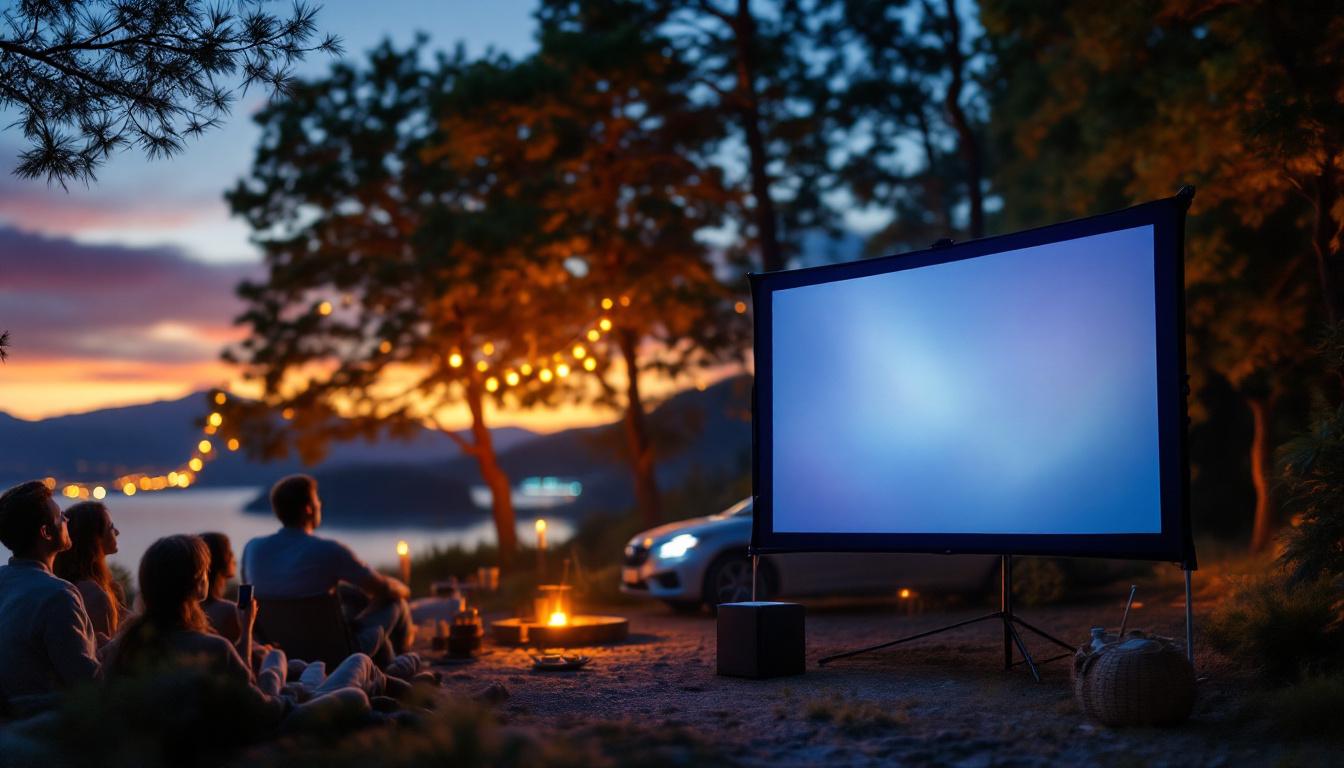
In the rapidly evolving world of visual technology, portable projector screens have become essential tools for professionals, educators, and entertainment enthusiasts alike. With the rise of LED display technology, the market now offers a range of options that redefine the traditional projector screen experience. This article delves into the best portable projector screens available today, with a special focus on LED displays—explaining their benefits, considerations, and how they compare to conventional screens.
Understanding Portable Projector Screens
What Makes a Projector Screen Portable?
Portability in projector screens refers to the ease with which the screen can be transported, set up, and packed away. Unlike fixed screens mounted on walls, portable screens are designed for mobility, often featuring lightweight materials, collapsible frames, or inflatable options. This flexibility makes them ideal for business presentations, outdoor movie nights, or classrooms where fixed installations are impractical.
The best portable projector screens strike a balance between size, weight, and durability. They are typically constructed from materials that provide a smooth, reflective surface while resisting wrinkles and damage during transport. Common types include tripod screens, pull-up screens, and folding screens, each catering to different portability and setup preferences.
Why Screen Quality Matters
The quality of the projector screen significantly influences the clarity, brightness, and color accuracy of the projected image. A high-quality screen enhances contrast and reduces glare, ensuring that viewers receive a vivid and immersive experience. For portable screens, maintaining this quality while ensuring ease of use is a key challenge manufacturers address through innovative materials and designs.
When selecting a portable projector screen, factors such as gain (reflectivity), viewing angle, and surface texture should be considered. These characteristics determine how well the screen performs in various lighting conditions and viewing environments.
Introduction to LED Display Technology
What Are LED Displays?
LED (Light Emitting Diode) displays are a type of flat panel display technology that uses an array of light-emitting diodes to create images. Unlike traditional projector screens that rely on an external projector to cast an image, LED displays are self-illuminating, meaning each pixel emits its own light. This fundamental difference offers several advantages in terms of brightness, color accuracy, and contrast.
LED displays come in various forms, including direct-view LED walls commonly used in large venues and smaller, portable LED panels designed for mobile use. The latter has gained popularity as a portable projector screen alternative due to its superior image quality and ease of setup.
How LED Displays Compare to Traditional Projector Screens
While traditional projector screens depend on ambient light and projector output, LED displays generate their own light, resulting in brighter images that are visible even in well-lit environments. This makes LED displays particularly useful for outdoor events or rooms with significant ambient light where traditional projectors might struggle.
Additionally, LED displays offer higher contrast ratios and more vibrant colors because they can turn individual pixels completely off to achieve true blacks. In contrast, projector screens reflect projected light and cannot achieve the same level of contrast, often resulting in washed-out images in bright settings.
Benefits of Using LED Displays as Portable Projector Screens
Superior Brightness and Image Quality
One of the most significant advantages of LED displays is their exceptional brightness. Portable LED screens can reach brightness levels upwards of 1,000 nits or more, compared to traditional projectors that typically output between 1,500 to 3,000 lumens but lose brightness due to ambient light and screen reflectivity. This means LED displays maintain vivid images even in daylight or brightly lit rooms.
Moreover, LED displays provide consistent image quality without the need for frequent calibration or adjustments. The uniformity of light emission across the screen ensures that every part of the image is equally bright and sharp.
Portability and Ease of Setup
Modern portable LED displays are designed with mobility in mind. Many models feature modular panels that can be quickly assembled and disassembled, often without specialized tools. Some units come with integrated stands or protective cases that double as transport containers, making them convenient for on-the-go use.
Compared to setting up a projector, which involves positioning the device, adjusting focus, and managing cables, LED displays offer a plug-and-play experience. This ease of use saves time and reduces technical difficulties during events or presentations.
Durability and Longevity
LED technology is known for its durability and long lifespan. Portable LED displays are built to withstand the rigors of transport and frequent setup, often featuring robust frames and protective coatings. Unlike projector bulbs, which have limited lifespans and can be costly to replace, LED panels can operate for tens of thousands of hours with minimal maintenance.
This longevity translates to lower total cost of ownership over time, making LED displays a cost-effective investment for frequent users.
Considerations When Choosing a Portable LED Display
Resolution and Pixel Pitch
Resolution refers to the number of pixels displayed on the screen, while pixel pitch is the distance between the centers of two adjacent pixels. For portable LED displays, these factors determine image sharpness and viewing distance. A smaller pixel pitch means higher resolution and better image quality at closer viewing distances.
For presentations or events where viewers are close to the screen, choosing a display with a pixel pitch of 2.5mm or less is advisable. For larger audiences or outdoor use, a pixel pitch of 4mm to 6mm may suffice, balancing image quality and cost.
Size and Aspect Ratio
The size of the LED display should align with the intended use and venue. Portable LED screens range from compact 32-inch panels to expansive modular walls exceeding 100 inches diagonally. Consider the space available and the number of viewers to determine the optimal size.
Aspect ratio is also important, with 16:9 being the standard for most video content. Ensuring the LED display matches the content’s aspect ratio prevents distortion and maximizes viewing comfort.
Connectivity and Compatibility
Modern portable LED displays offer a variety of input options, including HDMI, DisplayPort, USB, and wireless connections. Compatibility with laptops, smartphones, and other media sources is crucial for seamless presentations and media playback.
Some LED displays also support advanced features like 4K resolution, HDR content, and integrated media players, enhancing versatility and future-proofing the investment.
Popular Portable LED Displays in the Market
Modular LED Video Walls
Modular LED video walls consist of individual panels that can be combined to create screens of various sizes and shapes. Brands specializing in professional AV equipment offer lightweight, easy-to-assemble panels designed for portability. These systems are ideal for trade shows, concerts, and corporate events where customization and scalability are important.
For example, some modular systems feature magnetic attachments and quick-lock mechanisms, allowing a small team to set up a large display in under an hour.
All-in-One Portable LED Screens
All-in-one portable LED screens integrate the display, stand, and control system into a single unit. These are perfect for users who prioritize quick setup and minimal technical complexity. Many models come with built-in batteries, enabling hours of operation without external power sources.
Such units are popular among educators and mobile presenters who need reliable, high-quality displays without the hassle of multiple components.
Foldable and Rollable LED Displays
Innovations in flexible LED technology have led to foldable and rollable displays that can be packed into compact forms for transport. These displays use bendable substrates and advanced circuitry to maintain image quality even when folded.
Though currently more expensive, these options represent the cutting edge in portable LED display technology and are expected to become more accessible in the coming years.
Comparing LED Displays to Traditional Portable Projector Screens
Cost Considerations
One of the primary barriers to adopting portable LED displays has been cost. Traditional portable projector screens paired with projectors are generally more affordable upfront. However, when factoring in maintenance, replacement bulbs, and the need for controlled lighting environments, LED displays can offer better value over time.
For organizations or individuals requiring frequent use and high image quality, investing in a portable LED display can be financially sensible.
Image Quality and Viewing Environment
LED displays outperform traditional projector setups in ambient light conditions, making them suitable for a wider range of environments. Projectors require dim or dark rooms to achieve optimal image quality, while LED displays maintain clarity in daylight or brightly lit spaces.
However, for very large audiences or venues, high-lumen projectors combined with large portable screens may still be the preferred solution due to scalability and cost.
Setup and Maintenance
LED displays generally require less setup time and technical know-how compared to projectors, which need alignment, focus adjustments, and sometimes complex wiring. Maintenance for LED displays is also simpler, with fewer consumable parts.
That said, LED displays can be heavier and bulkier than some lightweight projector screens, so users should consider transportation logistics.
Future Trends in Portable Projection and LED Technology
Integration with Smart Technologies
As smart technology advances, portable LED displays are increasingly integrating features such as wireless casting, voice control, and AI-driven image optimization. These innovations aim to enhance user experience and streamline operation, making portable displays more intuitive and accessible.
Advancements in MicroLED and MiniLED
Emerging display technologies like MicroLED and MiniLED promise even higher brightness, better contrast, and thinner form factors. These developments could lead to more compact, energy-efficient, and affordable portable LED displays in the near future.
Environmental Considerations
With growing emphasis on sustainability, manufacturers are focusing on eco-friendly materials and energy-efficient designs. Portable LED displays consume less power than traditional projectors, aligning with green initiatives and reducing operational costs.
Conclusion: Choosing the Best Portable Projector Screen for Your Needs
The landscape of portable projector screens is evolving, with LED displays emerging as a compelling alternative to traditional projection setups. Their superior brightness, image quality, and ease of use make them ideal for a variety of applications, from business presentations to outdoor entertainment.
When selecting the best portable projector screen, consider factors such as viewing environment, budget, portability requirements, and desired image quality. LED displays offer a future-proof solution with long-term benefits, though traditional projector screens remain viable for specific use cases and budgets.
Ultimately, understanding the capabilities and limitations of LED displays compared to traditional screens empowers users to make informed decisions that enhance their visual experiences.
Discover LumenMatrix’s Advanced LED Display Solutions
Ready to elevate your visual experience with the latest in LED display technology? Look no further than LumenMatrix, a leader in innovative LED solutions. From captivating Indoor and Outdoor LED Wall Displays to dynamic Vehicle and Sports LED Displays, LumenMatrix offers a comprehensive range of products designed to make your brand shine. Whether you’re looking for a Custom LED Display, an All-in-One solution, or the striking clarity of a Transparent LED Display, LumenMatrix has the technology to transform your space and engage your audience. Check out LumenMatrix LED Display Solutions today and step into the future of visual communication.