Woodworking enthusiasts and professionals alike often face the decision between using a traditional hand planer or an electric planer for their projects. Both tools serve the essential purpose of smoothing and shaping wood surfaces, but they differ significantly in operation, precision, and features. One of the modern advancements in electric planers is the integration of LED displays, which add a layer of control and convenience previously unavailable in manual tools.
This article explores the differences between hand planers and electric planers, with a special focus on how LED displays enhance the functionality of electric planers. Understanding these distinctions can help woodworkers make informed choices tailored to their specific needs, improving both efficiency and craftsmanship.
Understanding the Basics: What Are Hand Planers and Electric Planers?
The Traditional Hand Planer
A hand planer is a manual woodworking tool designed to shave thin layers of wood from a surface, creating a smooth, flat finish. It typically consists of a sharp blade mounted in a wooden or metal body, which the user pushes or pulls across the wood. The depth of cut is adjusted by altering the blade’s position, allowing for precise control over material removal.
Hand planers have been used for centuries and remain popular among woodworkers who appreciate the tactile feedback and control they provide. They are especially favored for fine finishing work, small adjustments, and situations where electricity is unavailable or impractical. The simplicity of a hand planer allows for a deeper connection to the craft, as users can feel the grain of the wood and adjust their technique accordingly. Many woodworkers also enjoy the challenge of mastering the hand planer, as it requires skill and practice to achieve the desired results.
Additionally, hand planers come in various sizes and designs, each suited for different tasks. For instance, a block plane is ideal for trimming end grain, while a jack plane is versatile for general smoothing and flattening. The choice of wood for the body of the hand planer can also influence its performance; traditional wooden planers often provide a warm, comfortable grip, while metal-bodied versions offer durability and precision. Enthusiasts often restore vintage hand planers, appreciating their craftsmanship and the stories they carry from the past.
The Modern Electric Planer
Electric planers, on the other hand, are powered tools that automate the process of shaving wood. Equipped with a motor-driven rotating blade, electric planers can remove material quickly and with less physical effort than hand planers. These tools are ideal for larger projects or when significant amounts of wood need to be removed efficiently.
Electric planers come with adjustable depth settings and various features designed to improve accuracy and ease of use. They are commonly used in construction, cabinetry, and furniture-making where speed and consistency are critical. Many models also include dust collection systems, which help maintain a cleaner workspace by minimizing wood shavings and debris. This feature is particularly beneficial in professional settings, where efficiency and cleanliness are paramount.
Moreover, electric planers can vary significantly in power and design, catering to different user needs. Some models are lightweight and portable, making them suitable for on-site jobs, while others are more robust, designed for heavy-duty applications. Advanced electric planers may also incorporate technology such as variable speed controls and ergonomic handles, enhancing user comfort and control. As woodworking technology continues to evolve, electric planers are becoming increasingly sophisticated, integrating features that allow for even greater precision and versatility in woodworking projects.
Key Differences Between Hand Planers and Electric Planers
Precision and Control
Hand planers excel in providing fine control over the cutting process. Because the user manually guides the blade, it is easier to make subtle adjustments and achieve a smooth finish. This level of precision is particularly important for delicate or detailed woodworking tasks.
Electric planers, while fast, can sometimes be less forgiving. The motor’s power can lead to uneven cuts if not handled carefully. However, modern electric planers with advanced features, such as LED displays, help mitigate this issue by allowing users to monitor and adjust settings with greater accuracy.
Speed and Efficiency
Electric planers significantly outperform hand planers in terms of speed. The motorized blade can remove large amounts of material in a fraction of the time it would take manually. This makes electric planers the preferred choice for professionals working on large-scale projects or when time constraints are a factor.
Hand planers, while slower, offer the advantage of quiet operation and no reliance on power sources. They are also less likely to cause damage to the wood from excessive force or speed, making them suitable for finishing touches.
Physical Effort and Ergonomics
Using a hand planer requires considerable physical effort and skill, especially when working on hard or dense woods. Prolonged use can lead to fatigue, which may affect the quality of the work.
Electric planers reduce physical strain by automating the cutting process. Ergonomic designs and lightweight materials further enhance user comfort. However, they require careful handling to avoid mistakes caused by the tool’s power.
The Role of LED Displays in Electric Planers
What Does the LED Display Show?
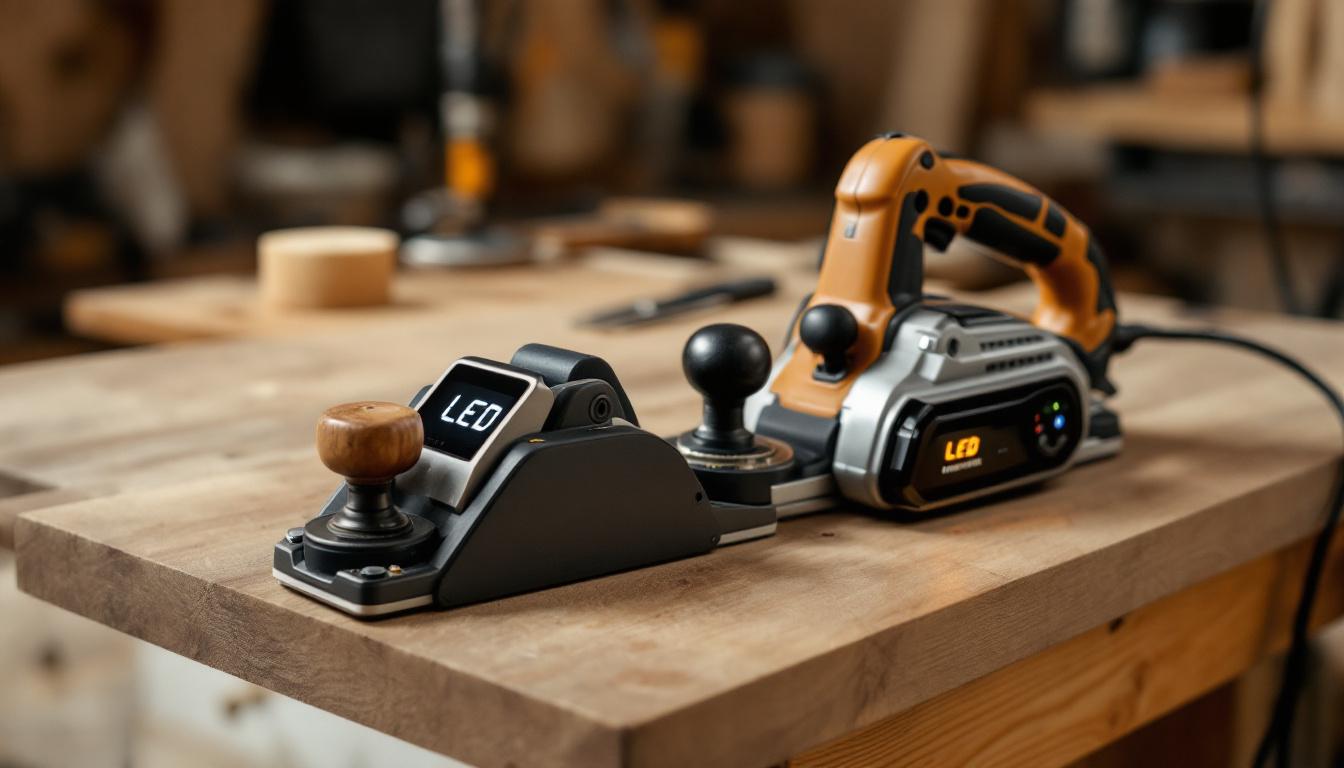
One of the most significant innovations in electric planers is the integration of LED displays. These displays provide real-time information about the tool’s settings and operational status. Common data shown on LED screens include:
- Cutting depth adjustments
- Battery life or power status
- Blade speed or motor RPM
- Error messages or maintenance alerts
This information allows users to make precise adjustments on the fly, ensuring better control over the planing process.
Enhancing Accuracy and Consistency
LED displays contribute to improved accuracy by enabling users to set exact cutting depths digitally rather than relying on manual dials or visual estimates. This precision is crucial when working on projects that demand uniform thickness or smoothness.
Furthermore, consistency across multiple passes or different workpieces is easier to maintain with LED-guided settings. This reduces material waste and the need for rework, saving both time and money.
Improving User Experience and Safety
LED displays also enhance the overall user experience by providing clear, easy-to-read information. This reduces guesswork and helps beginners understand tool settings better, shortening the learning curve.
From a safety perspective, LED indicators can alert users to potential issues such as blade wear or overheating, prompting timely maintenance and reducing the risk of accidents.
Comparing Practical Applications: When to Choose Hand or Electric Planers
Ideal Use Cases for Hand Planers
Hand planers are best suited for tasks that require delicate touch and fine detail. Examples include:
- Trimming door edges for a perfect fit
- Creating chamfers or decorative edges
- Working on small or intricate pieces
- Projects in remote locations without power access
The portability and simplicity of hand planers make them indispensable for precision work and finishing touches.
Ideal Use Cases for Electric Planers with LED Displays
Electric planers equipped with LED displays are ideal for larger projects where speed and accuracy are paramount. Typical scenarios include:
- Flattening large wooden boards or panels
- Removing old paint or finishes quickly
- Adjusting thicknesses for cabinetry or furniture components
- Professional construction or remodeling jobs requiring consistent results
The LED display’s precision settings and alerts help maintain quality while maximizing productivity.
Maintenance and Longevity: How LED Displays Influence Care
Monitoring Tool Health
Electric planers with LED displays often include diagnostic features that inform users about blade sharpness, motor temperature, and battery condition. This proactive feedback encourages timely maintenance, extending the tool’s lifespan.
Hand planers, while simpler, require regular blade sharpening and body care. However, they lack built-in indicators, so maintenance depends entirely on the user’s experience and observation.
Ease of Troubleshooting
When issues arise, LED displays can provide error codes or warnings that help users identify problems quickly. This reduces downtime and repair costs.
In contrast, troubleshooting hand planers typically involves manual inspection and trial-and-error, which can be time-consuming.
Cost Considerations and Value for Money
Initial Investment
Hand planers are generally more affordable upfront, with prices ranging from $20 to $150 depending on quality and brand. They require no electricity or batteries, making them cost-effective for occasional use.
Electric planers, especially those with advanced LED displays, can cost between $100 and $400 or more. The higher price reflects the added technology, power, and convenience.
Long-Term Value
For hobbyists or those working on small projects, a hand planer may offer better value due to its low maintenance and simplicity. However, for professionals or frequent users, the time saved and precision gained with an electric planer featuring an LED display can justify the higher initial cost.
Additionally, the LED display’s ability to prevent errors and extend tool life contributes to long-term savings.
Conclusion: Choosing the Right Planer for Your Needs
Both hand planers and electric planers have distinct advantages that cater to different woodworking requirements. Hand planers provide unmatched control and finesse, making them ideal for detailed, small-scale work and finishing. Electric planers, enhanced by LED displays, offer speed, precision, and user-friendly features that improve productivity and consistency on larger projects.
Understanding the role of LED displays in electric planers is crucial for modern woodworkers seeking to leverage technology for better results. These displays not only provide valuable real-time information but also enhance safety and maintenance practices.
Ultimately, the choice between a hand planer and an electric planer with an LED display depends on the specific demands of the project, the user’s skill level, and budget considerations. By weighing these factors carefully, woodworkers can select the tool that best supports their craftsmanship and efficiency.
Discover the Future of Woodworking with LumenMatrix LED Displays
As you consider the right planer for your woodworking projects, remember that precision and efficiency are key to outstanding results. LumenMatrix is at the forefront of LED display technology, offering innovative solutions that can transform your workspace. Whether you’re looking to enhance visibility in your workshop with an Indoor LED Wall Display or captivate clients with a Custom LED Display showcasing your craftsmanship, LumenMatrix has the tools to elevate your woodworking artistry. Check out LumenMatrix LED Display Solutions today and experience the impact of advanced visual communication in your professional or hobbyist endeavors.