In today’s fast-paced world, time management is more crucial than ever. Whether in offices, schools, hospitals, or homes, having a clear and reliable clock is essential. Large digital wall clocks with LED displays have become increasingly popular due to their visibility, accuracy, and modern aesthetics. This article explores the technology behind large LED digital wall clocks, their benefits, and how to choose the right one for your needs.
Understanding LED Displays in Digital Wall Clocks
What is an LED Display?
LED stands for Light Emitting Diode, a semiconductor device that emits light when an electric current passes through it. LED displays in digital clocks use multiple tiny LEDs arranged in segments or matrices to form numbers and sometimes additional information such as temperature or date.
Unlike traditional LCD or analog clocks, LED displays are self-illuminating, meaning they don’t require a backlight to be visible. This attribute makes them exceptionally bright and easy to read from a distance or in low-light conditions. The vibrant colors of LEDs can also enhance visibility, with red, green, and blue being the most common hues used in digital clocks. This variety allows manufacturers to create visually striking designs that can fit seamlessly into various environments, from homes to offices and public spaces.
Types of LED Displays Used in Large Wall Clocks
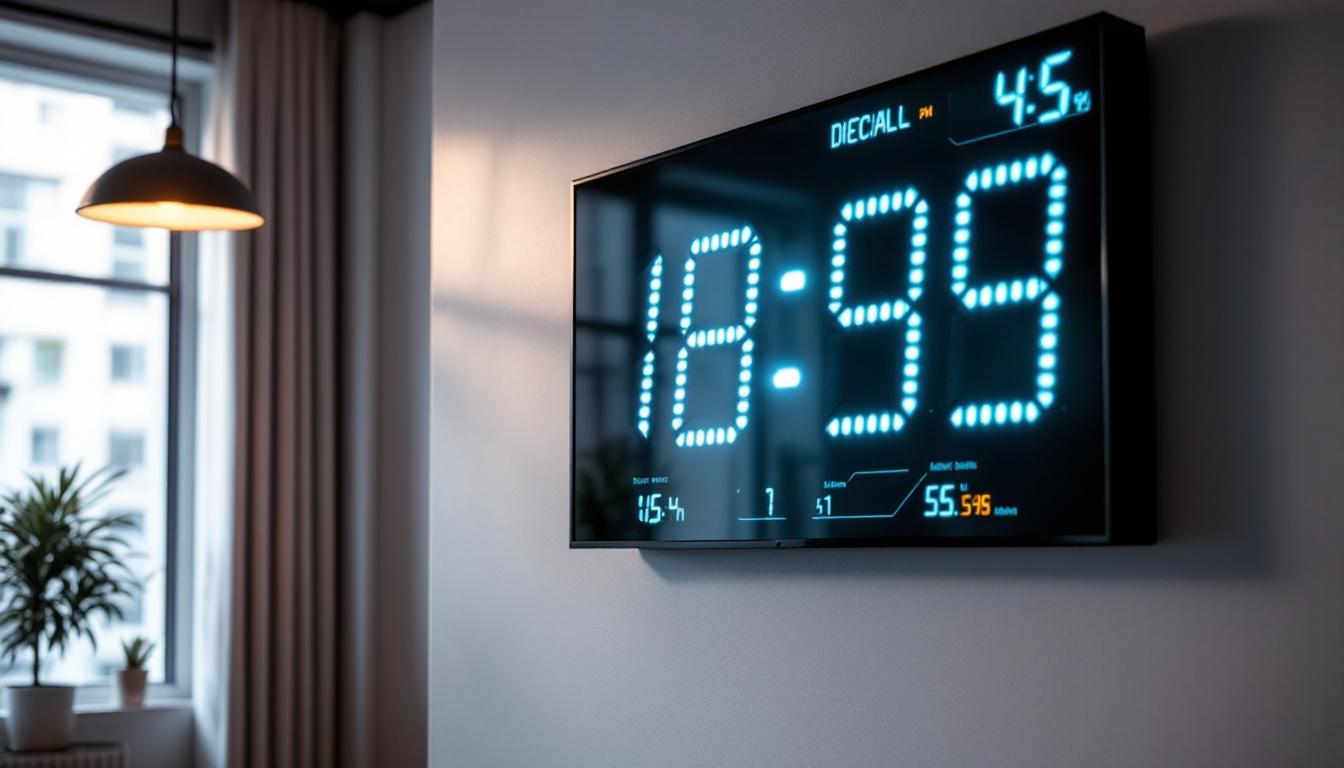
There are primarily two types of LED displays used in large digital wall clocks: seven-segment and dot matrix displays. Seven-segment displays are the most common for showing numerical digits, consisting of seven individual LED bars arranged to form numbers 0-9. Dot matrix displays, on the other hand, use a grid of LEDs that can display not only numbers but also letters and symbols, offering greater versatility.
For large wall clocks, seven-segment LED displays are often preferred due to their clarity and simplicity. However, some modern clocks incorporate dot matrix displays to show additional information such as day, date, or even scrolling messages. The ability to customize the content displayed on a dot matrix screen makes it an attractive option for businesses or public venues that wish to convey real-time information, such as countdowns or event schedules. Furthermore, advancements in technology have led to the development of high-resolution LED displays that can present intricate graphics and animations, transforming a simple timepiece into an engaging focal point in any setting.
Advantages of Large LED Digital Wall Clocks
Enhanced Visibility and Readability
One of the most significant advantages of large LED digital wall clocks is their superior visibility. The bright, glowing digits are easy to read even from across a large room or in dim lighting. This makes them ideal for public spaces such as airports, schools, conference rooms, and hospitals where quick and accurate time reading is essential.
Studies show that LED displays can be seen clearly up to 50 feet away or more, depending on the size of the digits and ambient lighting conditions. This far surpasses the readability of traditional analog clocks or smaller digital displays.
Energy Efficiency and Longevity
LED technology is renowned for its energy efficiency. Compared to incandescent or fluorescent lighting, LEDs consume significantly less power, which translates to lower electricity bills and a reduced environmental footprint. For large wall clocks that operate 24/7, this efficiency is a major benefit.
Additionally, LEDs have a long lifespan, often exceeding 50,000 hours of continuous use. This durability means that large LED digital wall clocks require minimal maintenance and replacement, making them a cost-effective choice over time.
Precision and Synchronization Features
Modern large digital wall clocks often incorporate advanced features such as radio-controlled time synchronization or network time protocol (NTP) connectivity. These features ensure that the clock always displays the exact time, automatically adjusting for daylight saving changes and time zone differences.
For environments where precise timing is critical—such as hospitals, broadcasting studios, or manufacturing plants—this level of accuracy is invaluable. It eliminates the need for manual adjustments and reduces the risk of errors caused by incorrect time display.
Key Features to Consider When Choosing a Large LED Digital Wall Clock
Display Size and Digit Height
The primary factor in selecting a large digital wall clock is the size of the display and the height of the digits. Digit height typically ranges from 1 inch to over 6 inches, with larger digits offering better visibility from greater distances.
For example, a 4-inch digit height is generally readable up to 40 feet, making it suitable for medium-sized rooms. For large halls or outdoor use, digits of 6 inches or more are recommended. It’s important to assess the viewing distance and room size before making a purchase.
Brightness and Adjustable Settings
Brightness is crucial for ensuring the clock is visible without causing glare or discomfort. Many large LED clocks come with adjustable brightness settings or ambient light sensors that automatically dim the display in darker environments and brighten it during the day.
This feature not only enhances readability but also conserves energy and prolongs the lifespan of the LEDs. When shopping, look for clocks with multiple brightness levels or automatic adjustment capabilities.
Power Source and Backup Options
Most large LED digital wall clocks are powered by AC adapters, but some models also offer battery backup to maintain timekeeping during power outages. This is especially important in critical environments like hospitals or emergency response centers where continuous operation is necessary.
Battery backup can range from simple internal batteries to more sophisticated uninterruptible power supplies (UPS) that keep the clock running seamlessly during outages. Understanding your power needs will help you select a clock with the appropriate backup features.
Additional Functionalities
Many large LED digital wall clocks today come with extra features that enhance their utility. These may include:
- Date and Day Display: Shows the current date and day of the week alongside the time.
- Temperature Display: Displays indoor or outdoor temperature readings.
- Alarm and Timer Functions: Useful for classrooms, gyms, or industrial settings.
- Remote Control: Allows users to adjust settings without physically accessing the clock.
- Network Synchronization: Enables multiple clocks to display the same time across a facility.
Choosing a clock with the right combination of these features depends on the intended use and environment.
Applications of Large LED Digital Wall Clocks
Commercial and Industrial Settings
In offices, factories, and warehouses, large LED digital clocks help maintain schedule adherence and improve productivity. Their high visibility ensures that employees can easily check the time without interrupting their workflow. In manufacturing plants, synchronized clocks help coordinate shifts and breaks, which is vital for operational efficiency.
Educational Institutions
Schools and universities benefit from large LED clocks in classrooms, auditoriums, and hallways. Clear time displays help students and teachers manage class durations and transitions effectively. Some clocks with countdown timers are used during exams to keep track of remaining time.
Healthcare Facilities
Hospitals and clinics require precise and reliable timekeeping for medication schedules, shift changes, and patient monitoring. Large LED digital clocks provide clear visibility in busy, often dimly lit environments. The ability to synchronize multiple clocks ensures consistency throughout the facility.
Public Spaces and Transportation Hubs
Airports, train stations, and bus terminals use large LED clocks to keep travelers informed and on schedule. The bright, easy-to-read displays reduce confusion and help maintain punctuality. In some cases, these clocks are integrated with public announcement systems and information boards.
Maintenance and Care for Large LED Digital Wall Clocks
Cleaning and Dusting
To maintain optimal visibility, it’s important to regularly clean the clock’s surface. Use a soft, dry cloth or a slightly damp microfiber cloth to remove dust and smudges. Avoid harsh chemicals or abrasive materials that could damage the LED display.
Checking Power and Connections
Ensure that power adapters and cables are securely connected and free from damage. For clocks with battery backups, periodically check and replace batteries to prevent interruptions during power outages.
Software Updates and Synchronization Checks
For clocks with network synchronization or radio-controlled features, it’s advisable to verify that the clock is correctly receiving signals and updating time accurately. Some models may require occasional firmware updates, which can usually be done via USB or network connection.
Future Trends in Large LED Digital Wall Clocks
Integration with Smart Home and IoT Systems
The future of large LED digital wall clocks is closely linked to the rise of smart homes and the Internet of Things (IoT). Newer models are being designed to integrate seamlessly with home automation systems, allowing users to control and customize their clocks via smartphone apps or voice assistants like Alexa and Google Assistant.
Enhanced Customization and Display Options
Advancements in LED technology are enabling clocks to offer more customizable displays, including color changes, animations, and personalized messages. This flexibility is particularly appealing for commercial spaces seeking to combine functionality with branding or aesthetic appeal.
Energy Harvesting and Sustainable Designs
With growing emphasis on sustainability, future LED clocks may incorporate energy harvesting technologies such as solar panels or kinetic energy converters. These innovations could further reduce reliance on external power sources and enhance the environmental friendliness of digital clocks.
Conclusion
Large digital wall clocks with LED displays represent a perfect blend of technology, functionality, and design. Their bright, clear digits, energy efficiency, and advanced features make them ideal for a wide range of environments—from corporate offices and schools to hospitals and public transportation hubs.
Understanding the technology behind LED displays, the benefits they offer, and the key features to consider can help consumers make informed decisions when selecting a large digital wall clock. As technology continues to evolve, these clocks will become even more integrated, customizable, and sustainable, ensuring they remain a vital tool for timekeeping in the modern world.
Discover LumenMatrix’s Advanced LED Display Solutions
As you consider the benefits and applications of large digital wall clocks with LED displays, LumenMatrix stands at the forefront of this technology, offering a wide array of innovative LED display solutions. Whether you’re looking to enhance your corporate office, educational institution, healthcare facility, or public space, LumenMatrix’s commitment to revolutionizing visual communication aligns with your needs for clarity, engagement, and design. To see how our LED display modules can transform your environment and captivate your audience, Check out LumenMatrix LED Display Solutions today.