In the world of digital displays and high-resolution video transmission, DisplayPort 1.4 stands out as a significant milestone. As LED displays continue to dominate both consumer and professional markets, understanding the specifications and capabilities of DisplayPort 1.4 is essential for anyone seeking to optimize their visual experience. This article delves into the technical details of DisplayPort 1.4, explains how it supports LED displays, and highlights why it remains relevant in today’s fast-evolving display technology landscape.
Understanding DisplayPort 1.4: An Overview
DisplayPort is a digital display interface developed by the Video Electronics Standards Association (VESA). Since its introduction, it has evolved through multiple iterations, each enhancing bandwidth, resolution support, and feature sets. DisplayPort 1.4, released in March 2016, brought several advancements that made it a preferred choice for high-performance displays, including those using LED technology.
Key Specifications of DisplayPort 1.4
DisplayPort 1.4 supports a maximum bandwidth of 32.4 Gbps, which is a substantial increase over the previous 1.2 version’s 21.6 Gbps. This bandwidth enables the transmission of ultra-high-definition video and audio signals with minimal latency and compression.
One of the standout features of DisplayPort 1.4 is its support for Display Stream Compression 1.2 (DSC), a visually lossless compression technology. DSC allows DisplayPort 1.4 to handle 8K resolutions at 60Hz or 4K at 120Hz without compromising image quality, which is particularly important for LED displays that demand high pixel density and refresh rates. Furthermore, the support for High Dynamic Range (HDR) content enhances the viewing experience by providing a wider range of colors and contrast, making images appear more vibrant and lifelike.
Compatibility and Backward Support
DisplayPort 1.4 maintains backward compatibility with previous versions, ensuring that devices supporting older DisplayPort standards can still connect, albeit without the enhanced features of 1.4. This compatibility is crucial in environments where multiple generations of hardware coexist, such as in professional studios or gaming setups. Additionally, the inclusion of Multi-Stream Transport (MST) allows users to daisy-chain multiple monitors from a single DisplayPort output, which is particularly beneficial for users who require expansive desktop real estate for multitasking or immersive gaming experiences.
Moreover, DisplayPort 1.4 also supports Adaptive Sync technology, which synchronizes the refresh rate of the display with the frame rate of the graphics card. This feature significantly reduces screen tearing and stuttering, providing a smoother visual experience during fast-paced gaming or high-action video playback. As gaming technology continues to advance, the ability to leverage such features becomes increasingly important for gamers seeking the ultimate performance from their setups. The versatility and robust capabilities of DisplayPort 1.4 make it an essential component in modern display technology, catering to both casual users and professionals alike.
How DisplayPort 1.4 Enhances LED Display Performance
LED displays, whether in monitors, televisions, or digital signage, benefit immensely from the capabilities of DisplayPort 1.4. The interface’s high bandwidth and advanced features directly impact the clarity, color accuracy, and refresh rates achievable on LED panels.
Supporting Higher Resolutions and Refresh Rates
Modern LED displays often feature resolutions ranging from 4K (3840×2160) to 8K (7680×4320). DisplayPort 1.4’s bandwidth and DSC technology enable these displays to operate at native resolutions with high refresh rates, such as 60Hz for 8K or up to 120Hz for 4K. This combination is vital for applications like gaming, video editing, and professional content creation, where smooth motion and sharp detail are paramount.
Furthermore, the ability to support variable refresh rates (VRR) through DisplayPort 1.4 enhances the gaming experience by eliminating screen tearing and stuttering. This is particularly beneficial for fast-paced games where every frame counts, allowing gamers to enjoy a seamless visual experience. Coupled with technologies like G-Sync and FreeSync, DisplayPort 1.4 ensures that gamers can enjoy fluid motion without sacrificing image quality, making it an essential feature for any serious gaming setup.
Improved Color Depth and HDR Support
DisplayPort 1.4 supports up to 10-bit color depth per channel, which translates to over a billion colors. This capability is essential for LED displays that aim to deliver vivid, lifelike images. Additionally, DisplayPort 1.4 includes support for High Dynamic Range (HDR) metadata transport, allowing compatible displays to render scenes with greater contrast and brightness ranges.
HDR standards such as HDR10 and Dolby Vision benefit from this support, enabling LED displays to showcase content with enhanced realism and depth. This is particularly noticeable in dark scenes and highlights, where the increased dynamic range prevents loss of detail. The result is a viewing experience that captures the full spectrum of colors and brightness levels, making movies and games more immersive than ever. As content creators increasingly adopt HDR techniques, the importance of DisplayPort 1.4 in delivering these stunning visuals cannot be overstated.
Multi-Stream Transport (MST) for Multi-Display Setups
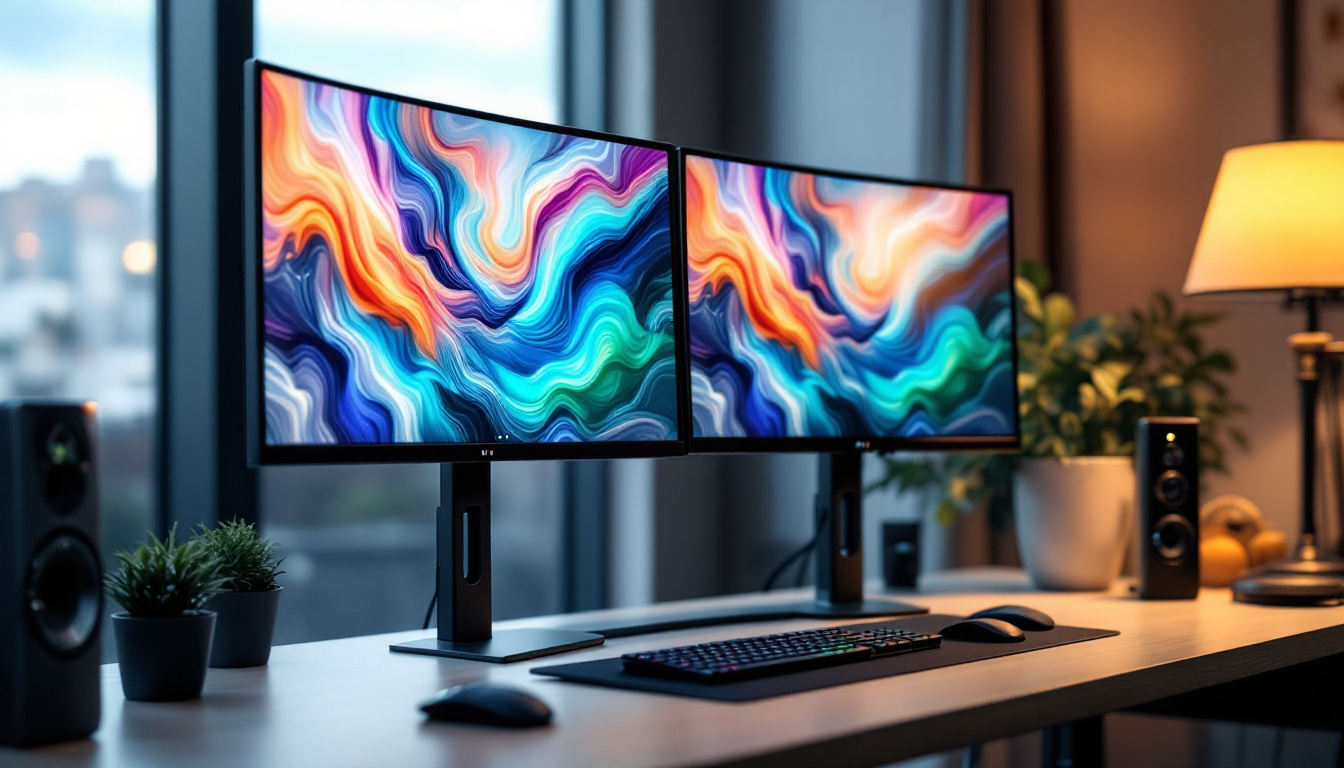
DisplayPort 1.4 includes Multi-Stream Transport (MST), a feature that allows multiple independent displays to connect through a single DisplayPort output. This is invaluable for professionals who rely on multi-monitor configurations, such as financial traders, video editors, and software developers.
MST enables daisy-chaining of LED monitors, reducing cable clutter and simplifying workspace setups. The high bandwidth of DisplayPort 1.4 ensures that each display receives sufficient data to maintain high resolution and refresh rate without degradation. Additionally, this feature supports the seamless transition of windows and applications across screens, enhancing productivity and workflow efficiency. As more users adopt multi-monitor setups for multitasking and immersive experiences, the role of DisplayPort 1.4 in facilitating these configurations becomes increasingly significant, allowing users to maximize their screen real estate without compromising on performance.
Technical Deep Dive: DisplayPort 1.4 and LED Display Integration
To fully appreciate how DisplayPort 1.4 supports LED displays, it’s important to understand the technical interplay between the interface and the display technology.
Signal Transmission and LED Panel Requirements
LED displays rely on precise timing and data integrity to illuminate pixels accurately. DisplayPort 1.4 transmits data packets using a differential signaling method called Transition Minimized Differential Signaling (TMDS), which reduces electromagnetic interference and preserves signal quality over longer cable lengths.
This reliable transmission is critical for LED panels, which often have high pixel counts and require consistent refresh rates to avoid flicker or ghosting effects. The 32.4 Gbps bandwidth ensures that the massive amount of pixel data can be sent without bottlenecks.
Display Stream Compression (DSC) and Its Impact
DSC 1.2, integrated into DisplayPort 1.4, is a visually lossless compression algorithm that reduces the data rate by up to 3:1. This compression allows for higher resolutions and refresh rates without requiring prohibitively expensive cables or hardware.
For LED displays, DSC means that ultra-high resolutions like 8K at 60Hz are achievable on consumer-grade equipment. Without DSC, transmitting such high-resolution signals would require multiple cables or interfaces, complicating setup and increasing costs.
HDR Metadata and Color Accuracy
DisplayPort 1.4’s ability to carry HDR metadata ensures that LED displays receive the necessary information to adjust brightness, contrast, and color mapping dynamically. This metadata includes parameters like maximum and average light levels, which the display uses to optimize image rendering scene-by-scene.
Accurate HDR metadata transmission is essential for professional color grading and content creation, where precise color representation can affect the final output quality.
Practical Applications and Use Cases
DisplayPort 1.4’s features have made it a staple in various industries and applications that demand high-quality LED display performance.
Gaming and Esports
Gamers benefit from DisplayPort 1.4’s support for high refresh rates and resolutions. Competitive esports titles often require displays running at 144Hz or higher to ensure smooth gameplay and reduce input lag. DisplayPort 1.4 can handle 4K at 120Hz, making it ideal for high-end gaming monitors with LED backlighting.
Additionally, technologies like Variable Refresh Rate (VRR) and Adaptive Sync, supported over DisplayPort, help eliminate screen tearing and stuttering, enhancing the gaming experience.
Professional Content Creation
Video editors, graphic designers, and photographers rely on accurate color reproduction and high resolutions. DisplayPort 1.4’s 10-bit color depth and HDR support allow LED displays to render images and videos with exceptional fidelity, closely matching real-world colors and lighting conditions.
Multi-monitor setups facilitated by MST enable professionals to expand their workspace seamlessly, improving productivity and workflow efficiency.
Digital Signage and Commercial Displays
In commercial environments, LED displays are used for digital signage, advertising, and information dissemination. DisplayPort 1.4’s ability to drive multiple high-resolution displays from a single source simplifies installation and maintenance.
The support for HDR and wide color gamuts ensures that advertising content is vibrant and eye-catching, maximizing viewer engagement.
Future Outlook and Alternatives
While DisplayPort 1.4 remains robust, newer standards like DisplayPort 2.0 have emerged, offering even greater bandwidth and capabilities. However, DisplayPort 1.4 continues to be widely adopted due to its balance of performance and compatibility.
Comparing DisplayPort 1.4 with HDMI 2.1
HDMI 2.1, a competing interface, also supports 8K resolution and high refresh rates, with a maximum bandwidth of 48 Gbps. However, DisplayPort 1.4’s DSC and MST features provide unique advantages, particularly in multi-display setups and professional environments.
Choosing between DisplayPort 1.4 and HDMI 2.1 often depends on the specific use case, device compatibility, and desired features.
Emerging Technologies and LED Displays
As LED display technology advances, including microLED and miniLED innovations, the demand for high-bandwidth interfaces like DisplayPort 1.4 will continue to grow. These emerging display types offer improved brightness, contrast, and energy efficiency, which benefit from the advanced signaling and compression capabilities of DisplayPort 1.4.
Conclusion
DisplayPort 1.4 represents a pivotal technology in the evolution of digital display interfaces, especially when paired with LED display technology. Its high bandwidth, support for high resolutions and refresh rates, advanced compression, and HDR metadata transport make it a versatile and powerful standard.
Whether for gaming, professional content creation, or commercial digital signage, DisplayPort 1.4 ensures that LED displays perform at their best, delivering stunning visuals and smooth performance. Understanding its specifications and capabilities empowers users to make informed decisions when selecting display hardware and configuring their setups for optimal results.
Explore Cutting-Edge LED Display Solutions with LumenMatrix
Ready to experience the full potential of DisplayPort 1.4 with top-tier LED displays? LumenMatrix is at the forefront of LED display innovation, offering a wide array of solutions designed to elevate your visual communication. From captivating Indoor and Outdoor LED Wall Displays to dynamic Vehicle and Sports LED Displays, each product is crafted to deliver unparalleled clarity and impact. Discover the transformative power of LED Poster Displays, Floor LED Displays, and the versatility of Custom and All-in-One LED solutions, including the pioneering LED Transparent Display. Embrace the future of digital signage with LumenMatrix and create experiences that resonate. Check out LumenMatrix LED Display Solutions today and see your vision come to life in brilliant detail.