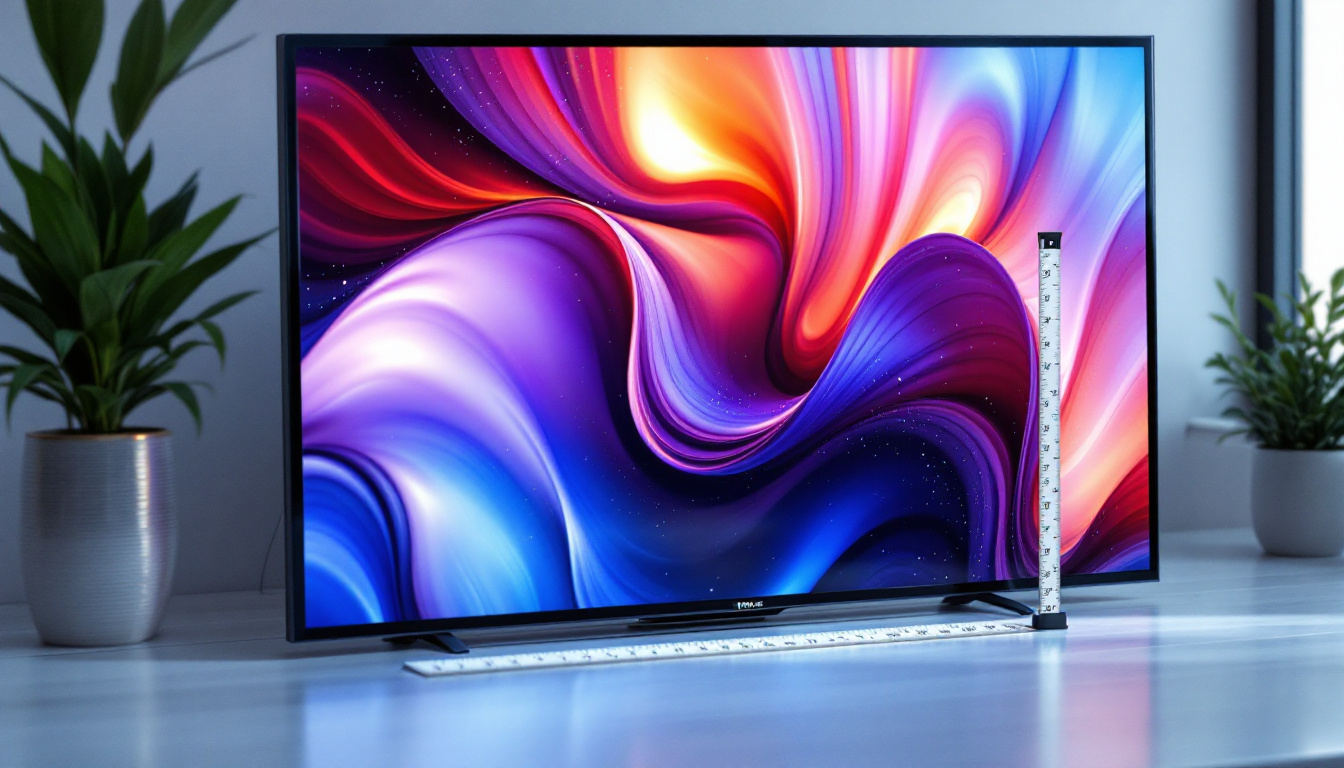
Understanding measurements is fundamental in various fields, from construction and design to technology and manufacturing. One common conversion that often arises is translating inches into feet. This is especially relevant when dealing with large-scale items like LED displays, where dimensions can be crucial for installation, viewing experience, and spatial planning.
This article explores the conversion of 198 inches into feet, delves into the significance of these measurements in the context of LED displays, and explains why accurate dimensioning matters for both consumers and professionals.
Converting Inches to Feet: The Basic Calculation
Inches and feet are both units of length commonly used in the United States and other countries that follow the imperial system. To convert inches to feet, it’s essential to know the relationship between these units:
- 1 foot = 12 inches
Given this, converting inches to feet involves dividing the number of inches by 12.
Calculating 198 Inches in Feet
Using the conversion formula:
Feet = Inches ÷ 12
For 198 inches:
198 ÷ 12 = 16.5 feet
Therefore, 198 inches equals 16.5 feet.
Why This Conversion Matters
While the calculation is straightforward, understanding this conversion is critical when dealing with large objects or spaces. For example, in the LED display industry, screen sizes are often specified in inches, but installation spaces or architectural plans might use feet. Being able to quickly and accurately convert between these units ensures proper fit and optimal use of space.
Moreover, this conversion is not only applicable in construction and design but also in various fields such as sports and automotive industries. For instance, the dimensions of a basketball court are often given in feet, while the height of a player might be listed in inches. This can lead to confusion if one is not adept at converting between the two. Additionally, understanding these conversions can be beneficial for DIY enthusiasts who may need to measure materials or spaces accurately to ensure their projects come together seamlessly.
Furthermore, in the realm of education, teaching students how to convert between inches and feet can enhance their understanding of measurement and proportional relationships. This foundational skill is vital not only in mathematics but also in practical applications such as cooking, crafting, and woodworking, where precise measurements can significantly impact the final outcome. Thus, mastering the conversion between these two units can empower individuals in a variety of everyday situations.
LED Displays: Dimensions and Their Importance
LED displays have become ubiquitous in advertising, entertainment, and information dissemination. Their sizes vary dramatically, from small indoor panels to massive outdoor billboards. Knowing the exact dimensions is essential for several reasons.
Size Specifications in LED Displays
Manufacturers typically list LED display sizes diagonally in inches, similar to televisions. However, the physical width and height are often needed for installation and design purposes. For instance, a display that measures 198 inches diagonally might translate into specific width and height dimensions depending on the aspect ratio.
Understanding these dimensions helps in planning the installation location, ensuring structural support, and optimizing viewing angles. Additionally, the size of the display can significantly impact the viewer’s experience; larger displays can attract more attention and provide a more immersive viewing experience, especially in crowded environments like shopping malls or stadiums.
Example: A 198-Inch LED Display
Consider a 198-inch LED display with a 16:9 aspect ratio, which is common for video content. To find the width and height in feet, the following steps are taken:
- Calculate the width and height in inches using the aspect ratio.
- Convert those measurements from inches to feet.
The aspect ratio 16:9 means for every 16 units of width, there are 9 units of height.
First, calculate the diagonal in terms of width and height:
Diagonal² = Width² + Height²
Let width = 16x and height = 9x.
Then:
(16x)² + (9x)² = (198)²
256x² + 81x² = 39,204
337x² = 39,204
x² = 39,204 ÷ 337 ≈ 116.33
x ≈ √116.33 ≈ 10.79
Width = 16x = 16 × 10.79 ≈ 172.64 inches
Height = 9x = 9 × 10.79 ≈ 97.11 inches
Now convert these to feet:
Width: 172.64 ÷ 12 ≈ 14.39 feet
Height: 97.11 ÷ 12 ≈ 8.09 feet
This means a 198-inch diagonal LED display with a 16:9 aspect ratio is approximately 14.4 feet wide and 8.1 feet tall.
Such dimensions are not just numbers; they play a crucial role in the overall design and effectiveness of the display. For example, in a retail setting, a display of this size can be strategically placed to capture the attention of passersby, showcasing promotional content or dynamic advertisements that engage customers. The large surface area allows for high-resolution images and videos that can be viewed clearly from a distance, making it an invaluable tool for marketers aiming to maximize visibility and impact.
Moreover, the placement of such a display must also consider the surrounding environment. Factors such as ambient light, viewer distance, and potential obstructions can influence how effectively the content is perceived. A well-placed 198-inch LED display can transform a mundane space into an interactive experience, drawing in audiences and enhancing the overall atmosphere of the venue.
The Practical Implications of LED Display Dimensions
Knowing the exact dimensions of an LED display is not just academic; it has real-world consequences for installation, performance, and user experience.
Installation Considerations
Large LED displays require careful planning for installation. The physical footprint must fit within the designated space, and structural support must accommodate the weight and size. For example, a 198-inch display measuring over 14 feet wide demands a sturdy mounting surface and sufficient clearance around it.
Additionally, electrical and data connections must be planned to reach the display without interference or signal loss. This often involves routing cables through walls or ceilings, which can add complexity to the installation process. Furthermore, the choice of mounting hardware is crucial; using inadequate supports can lead to safety hazards or damage to the display. Professionals typically conduct site surveys to assess the environment and ensure that all installation requirements are met before the display arrives on-site.
Viewing Distance and Experience
The size of an LED display directly impacts the optimal viewing distance. A larger screen allows viewers to see finer details from farther away, which is why outdoor billboards are often massive. Conversely, indoor displays need to balance size with the typical distance of the audience to avoid pixelation or eye strain.
For a 198-inch display, the recommended minimum viewing distance is generally about 1.5 to 2 times the diagonal size, meaning viewers should ideally be 25 to 33 feet away to fully appreciate the image quality. This consideration is particularly important in venues like theaters or conference rooms, where audience engagement is critical. The arrangement of seating in relation to the display can significantly influence how effectively the content is absorbed, making it essential for event planners to consider both the size of the display and the layout of the space.
Content Creation and Resolution
Dimension knowledge also affects content creation. Designers must create visuals that match the display’s resolution and aspect ratio to avoid distortion. For a 198-inch LED display, content should be optimized for the specific pixel pitch and resolution to ensure crisp, clear images.
Moreover, the creative process must take into account the viewing environment. For instance, bright outdoor displays may require high-contrast visuals to stand out against sunlight, while indoor displays can utilize more subtle color palettes. The dynamic nature of LED technology also allows for animated content, which can enhance viewer engagement. However, designers must be cautious about the pacing and complexity of animations, as overly busy visuals can detract from the message being conveyed. Understanding the dimensions and capabilities of the display is essential for creating effective and captivating content that resonates with the audience.
Common Uses of Large LED Displays
Large LED displays measuring around 198 inches or more are popular in several sectors. Understanding their dimensions helps stakeholders choose the right display for their needs.
Advertising and Marketing
Billboards and digital signage often use large LED displays to capture attention. A 198-inch display offers a significant visual impact, suitable for busy urban areas, shopping malls, or stadiums.
Advertisers benefit from the ability to display dynamic, colorful content that can be updated in real-time, unlike traditional static billboards.
Events and Entertainment
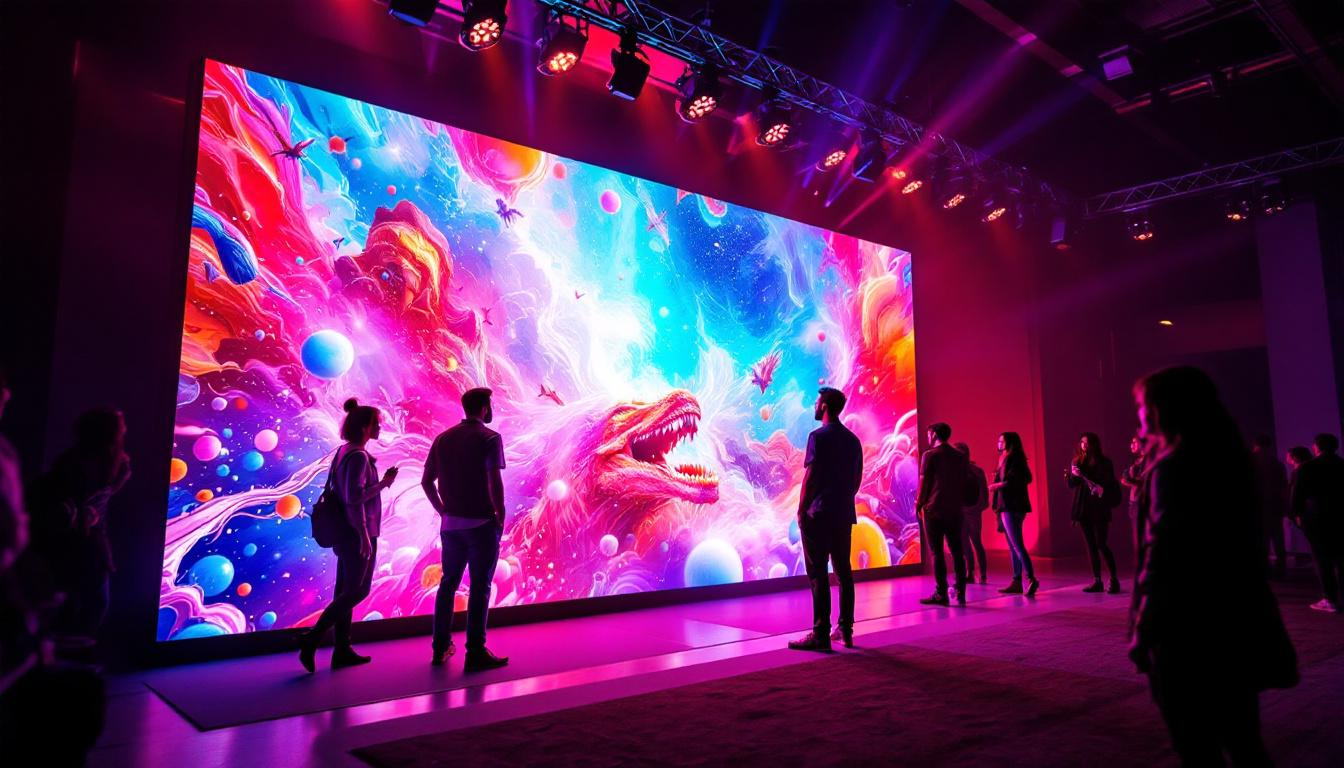
Concerts, conferences, and sporting events use large LED screens to provide clear visuals to large audiences. A 198-inch display can serve as a main screen or part of a video wall, enhancing the overall experience.
Its size allows performers and speakers to be seen clearly, even from a distance, while also displaying supplementary content like lyrics, statistics, or live feeds.
Corporate and Educational Settings
In corporate boardrooms or educational auditoriums, large LED displays facilitate presentations and interactive sessions. The 198-inch size strikes a balance between visibility and space requirements, ensuring that content is accessible to all attendees.
Factors Influencing LED Display Size Choice
Choosing the right LED display size involves more than just converting inches to feet. Several factors influence the decision-making process.
Space Availability
The physical space where the display will be installed dictates the maximum size. A 198-inch display requires a room or outdoor area that can accommodate its 16.5-foot diagonal length comfortably.
Budget Constraints
Larger displays typically cost more, both in terms of initial purchase and installation. Maintenance and energy consumption also increase with size. Therefore, budget considerations often balance the desire for a large display with financial realities.
Purpose and Audience
The intended use and target audience impact size choice. For example, a display meant for close-up viewing in a retail store might be smaller than one designed for outdoor advertising visible from hundreds of feet away.
Resolution and Pixel Pitch
Pixel pitch—the distance between LED pixels—affects image clarity. Larger displays with finer pixel pitch offer better resolution but at higher cost. The size must be matched with appropriate resolution to ensure quality visuals.
Conclusion
Converting 198 inches to feet reveals that this measurement equals 16.5 feet, a useful reference when dealing with large-scale items like LED displays. Understanding the dimensions of LED screens, especially those around this size, is crucial for installation, content creation, and user experience.
Whether for advertising, entertainment, or corporate use, knowing how to interpret and apply these measurements ensures that LED displays meet their intended purpose effectively. Accurate conversions and dimension awareness help professionals and consumers alike make informed decisions, leading to successful projects and satisfied audiences.
In summary, 198 inches equals 16.5 feet, and when applied to LED displays, this dimension translates into significant physical size that must be carefully considered in planning and usage.
Explore Cutting-Edge LED Display Solutions with LumenMatrix
Now that you understand the significance of converting inches to feet for LED displays, take the next step in enhancing your visual communication with LumenMatrix. As a leading innovator in LED display technology, we offer a wide range of solutions, including Indoor and Outdoor LED Wall Displays, Vehicle LED Displays, LED Poster Displays, LED Sports Displays, Floor LED Displays, Custom LED Displays, All-in-One LED Displays, and LED Transparent Displays. Our mission is to create captivating visual experiences that empower businesses to communicate with impact. Check out LumenMatrix LED Display Solutions today and revolutionize the way you engage with your audience.