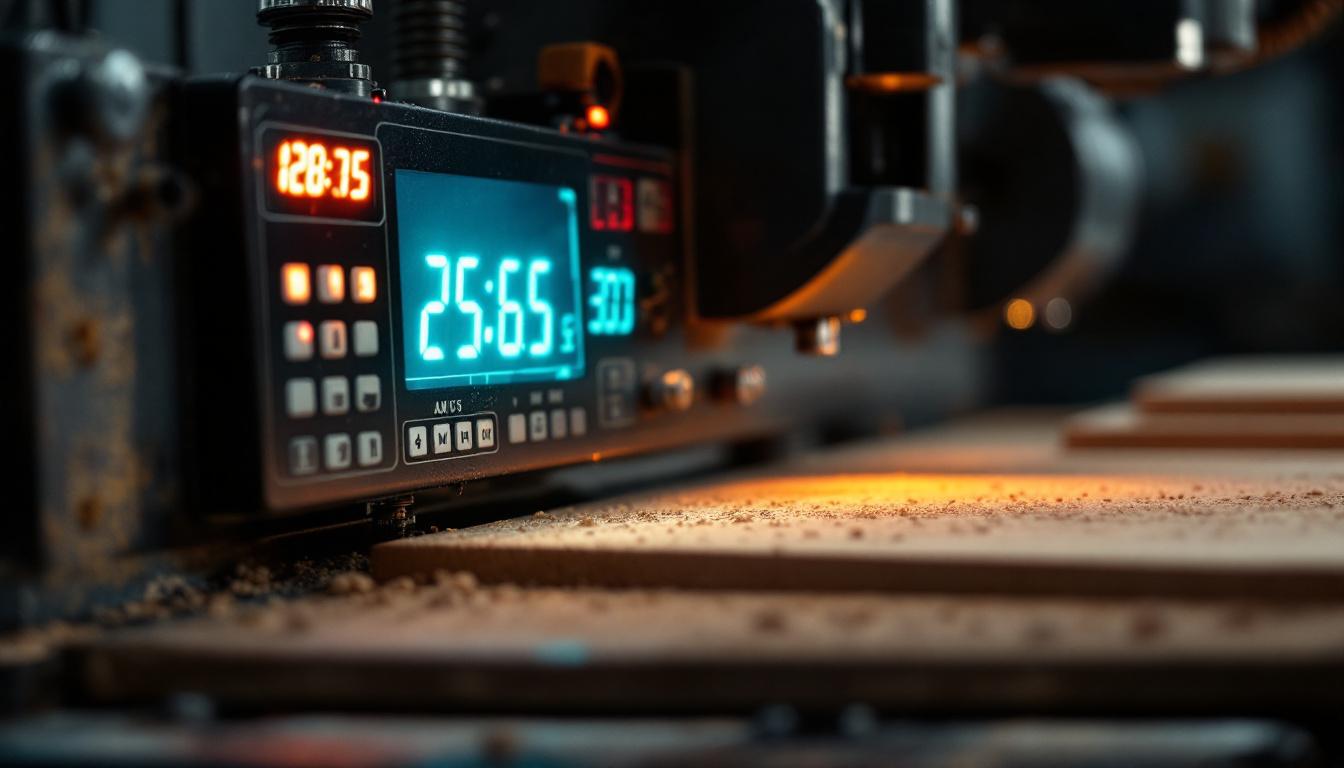
In the realm of woodworking and manufacturing, industrial planers play a crucial role in shaping, smoothing, and sizing wood materials to precise specifications. As technology advances, these machines have become increasingly sophisticated, integrating digital interfaces such as LED displays to enhance usability, accuracy, and efficiency. This article delves into the significance of LED displays on industrial planers, explaining their functions, benefits, and how they contribute to modern woodworking operations.
Understanding the Industrial Planer
Before exploring the LED display component, it is essential to understand what an industrial planer is and its role in manufacturing. An industrial planer is a heavy-duty machine designed to trim boards to a consistent thickness and create smooth surfaces. Unlike handheld or portable planers, industrial versions are built for high-volume production environments, capable of handling large pieces of lumber with precision and speed. This capability makes them a cornerstone in industries where efficiency and quality are non-negotiable, such as in the production of high-end furniture and cabinetry.
These machines typically feature powerful motors, adjustable cutting heads, and feeding mechanisms that allow for continuous operation. They are indispensable in furniture manufacturing, cabinetry, flooring production, and other industries where wood quality and uniformity are paramount. In fact, the use of an industrial planer can significantly reduce labor costs and production time, as they automate what would otherwise be a labor-intensive process. The precision of these machines also minimizes waste, making them a more sustainable choice for wood processing.
Key Functions of an Industrial Planer
The primary purpose of an industrial planer is to reduce the thickness of a wood board while ensuring the surface is flat and smooth. This is achieved by feeding the wood through rotating blades that shave off thin layers. Operators can adjust the depth of cut to meet specific thickness requirements. Additionally, many planers include features such as automatic thickness control, feed speed adjustment, and safety mechanisms to protect both the operator and the machine. These advanced features not only enhance the efficiency of the planing process but also contribute to the overall safety and reliability of the equipment.
Moreover, modern industrial planers often come equipped with digital interfaces that allow for precise control and monitoring of the machining process. This technology enables operators to set parameters with great accuracy, ensuring that each board meets exact specifications. Some models even integrate with computer-aided design (CAD) systems, allowing for seamless transitions from design to production. This level of integration not only streamlines operations but also enhances the ability to produce custom orders, catering to the diverse needs of clients in various sectors. As industries continue to evolve, the role of the industrial planer remains crucial in maintaining high standards of craftsmanship and efficiency in wood processing.
The Role of LED Displays in Industrial Planers
LED (Light Emitting Diode) displays have become a standard feature on many modern industrial planers. These digital interfaces replace traditional analog gauges and manual dials, offering a more intuitive and precise way to monitor and control the machine’s settings. The integration of LED displays aligns with the broader trend of digital transformation in manufacturing, where real-time data and user-friendly controls are critical for productivity and quality assurance.
What Information Does the LED Display Provide?
Typically, the LED display on an industrial planer shows a range of operational data, including:
- Thickness Measurement: Real-time thickness of the wood as it passes through the planer, often displayed in millimeters or inches.
- Cutting Depth Adjustment: The current setting for how much material the blades will remove in a single pass.
- Feed Speed: The speed at which the wood is fed into the machine, which affects surface finish and throughput.
- Blade Speed or RPM: Some advanced models display the rotational speed of the cutting blades.
- Error Messages and Alerts: Notifications related to machine status, maintenance needs, or safety warnings.
By providing these details clearly and instantly, LED displays help operators make informed decisions and adjustments without interrupting the workflow. This immediacy not only enhances the operator’s ability to respond to changing conditions but also contributes to maintaining the quality of the finished product. For instance, if the thickness measurement indicates a deviation from the desired specification, the operator can quickly adjust the cutting depth, ensuring that the wood is processed correctly and efficiently.
Advantages of Using LED Displays on Industrial Planers
The adoption of LED displays brings several tangible benefits to woodworking operations:
- Enhanced Accuracy: Digital readouts reduce human error associated with reading analog gauges or manually setting controls. Operators can achieve precise thickness settings down to fractions of a millimeter.
- Improved Efficiency: Quick access to operational data allows faster adjustments and reduces downtime. This is particularly important in high-volume production where every second counts.
- User-Friendly Interface: LED displays often feature backlighting and clear numeric or graphical representations, making them easy to read even in poorly lit workshop environments.
- Data Logging and Connectivity: Some industrial planers with LED displays also support data export or integration with factory management systems, enabling better tracking of production metrics and maintenance schedules.
- Safety Enhancements: Real-time alerts on the LED screen can warn operators of potential issues such as blade wear, feed jams, or overheating, helping to prevent accidents and equipment damage.
Furthermore, the ability to log data over time allows for trend analysis, which can be invaluable for predictive maintenance. By analyzing patterns in machine performance, operators can anticipate when maintenance is required, thereby minimizing unexpected breakdowns and extending the lifespan of the equipment. This proactive approach not only saves costs associated with repairs but also enhances overall production reliability. Additionally, the integration of LED displays with IoT (Internet of Things) technology is paving the way for smarter manufacturing environments, where machines communicate with each other and with operators, creating a seamless workflow that maximizes efficiency and minimizes waste.
How LED Displays Improve Operational Workflow
Integrating LED displays into industrial planers transforms the operator’s interaction with the machine. Instead of relying on guesswork or repetitive manual measurements, operators receive continuous feedback that streamlines the entire process from setup to production.
Setup and Calibration Made Simple
Setting up an industrial planer traditionally involved manually adjusting knobs and verifying measurements with external tools such as calipers or micrometers. With LED displays, operators can input desired thickness values directly on the control panel and watch the machine adjust accordingly. This reduces setup time and ensures consistency across multiple boards.
Real-Time Monitoring for Quality Control
During operation, the LED display provides continuous updates on thickness and feed speed, allowing operators to detect deviations early. For example, if a board is feeding unevenly or the cutting depth drifts due to blade wear, the display will reflect these changes immediately. Operators can then pause the machine to make corrections, minimizing waste and rework.
Maintenance and Troubleshooting
LED displays also serve as diagnostic tools. Many planers are equipped with sensors that monitor blade condition, motor temperature, and other critical parameters. When an issue arises, the display shows error codes or messages that guide maintenance personnel to the root cause quickly. This proactive approach reduces unplanned downtime and extends the lifespan of the equipment.
Choosing an Industrial Planer with the Right LED Display Features
Not all LED displays are created equal. When selecting an industrial planer, it is important to consider the quality and functionality of the digital interface in relation to the specific needs of the operation.
Display Resolution and Visibility
A high-resolution LED display with adequate brightness and contrast ensures that information is easily readable under various lighting conditions. Some models offer adjustable brightness or anti-glare coatings to enhance visibility in bright workshops or near windows.
Interface Complexity and User Experience
Depending on the operator’s expertise and production requirements, the LED display interface can range from simple numeric readouts to full-color graphical touchscreens. While more advanced interfaces offer greater control and customization, they may require additional training. Balancing complexity with usability is key to maximizing productivity.
Connectivity and Integration Capabilities
Modern industrial environments increasingly rely on interconnected systems for monitoring and analytics. Planers with LED displays that support USB ports, Ethernet connections, or wireless communication enable seamless integration with factory management software. This connectivity facilitates data-driven decision-making and predictive maintenance strategies.
Durability and Environmental Resistance
Industrial woodworking environments can be dusty, humid, and prone to temperature fluctuations. LED displays designed with rugged enclosures and protective coatings ensure reliable operation over time. IP-rated displays offer resistance to dust and moisture, which is particularly important in sawmills and outdoor facilities.
Future Trends in Industrial Planer Displays
As Industry 4.0 and smart manufacturing continue to evolve, LED displays on industrial planers are expected to become even more advanced. Emerging trends include:
Touchscreen Interfaces with Advanced Controls
Touchscreen LED displays allow operators to interact with the machine more intuitively, using gestures and menus to adjust settings, view diagnostics, and access help resources. This can reduce training time and improve operational accuracy.
Augmented Reality (AR) Integration
Some manufacturers are exploring AR overlays that project planer data directly onto the workpiece or operator’s glasses, enhancing situational awareness and enabling hands-free operation.
Artificial Intelligence and Predictive Analytics
Future LED display systems may incorporate AI algorithms that analyze operational data in real-time, predicting blade wear or machine faults before they occur. This proactive maintenance approach can significantly reduce downtime and improve production efficiency.
Remote Monitoring and Control
With the rise of the Industrial Internet of Things (IIoT), LED displays could be linked to cloud-based platforms, allowing managers and technicians to monitor planer performance remotely and make adjustments without being physically present.
Conclusion
LED displays have revolutionized the way industrial planers are operated, offering enhanced precision, efficiency, and safety. By providing real-time data and intuitive controls, these digital interfaces empower operators to maintain consistent quality and optimize production workflows. As technology advances, the integration of smart features and connectivity will further elevate the capabilities of industrial planers, making them indispensable tools in modern woodworking and manufacturing environments.
For businesses seeking to improve their woodworking operations, investing in industrial planers equipped with advanced LED displays is a strategic decision that can yield significant returns in productivity, quality, and operational insight.
Discover LumenMatrix’s Advanced LED Display Solutions
Ready to take your woodworking and manufacturing operations to the next level? LumenMatrix offers a comprehensive range of LED display modules designed to integrate seamlessly with industrial planers and other machinery. Our innovative solutions, from Indoor and Outdoor LED Wall Displays to specialized options like Vehicle and Sports LED Displays, are crafted to enhance your brand’s visibility and captivate your audience. Embrace the future of visual communication with LumenMatrix’s cutting-edge technology. Check out LumenMatrix LED Display Solutions today and transform your business with unparalleled clarity and impact.