In recent years, the display technology landscape has witnessed remarkable advancements, with curved monitors emerging as a popular choice among professionals, gamers, and multimedia enthusiasts alike. Among these, the largest curved LED monitors have garnered significant attention for their immersive viewing experience and cutting-edge features. This article delves into the world of large curved LED monitors, explaining their technology, benefits, and what to consider when choosing one.
Understanding Curved LED Monitors
Curved LED monitors combine two key technologies: LED backlighting and a curved screen design. LED (Light Emitting Diode) technology uses an array of tiny light-emitting diodes to illuminate the screen, offering superior brightness, contrast, and energy efficiency compared to traditional LCD displays. The curvature of the screen is designed to match the natural curve of the human eye, reducing distortion and providing a more immersive viewing experience.
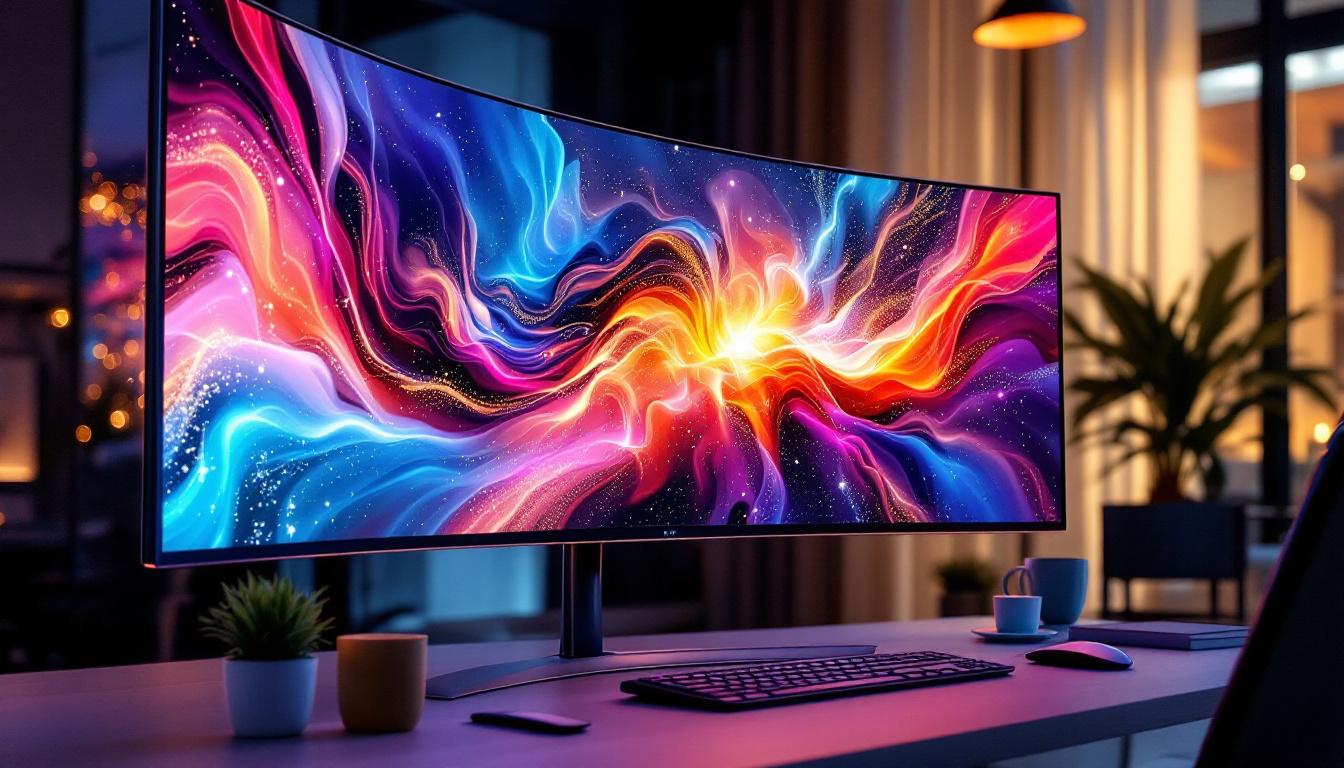
The curvature is measured in terms of radius, such as 1800R or 3000R, where a smaller number indicates a more pronounced curve. For large monitors, a gentle curve (higher radius) is often preferred to maintain image consistency across the wide display area. This design not only enhances the aesthetic appeal of the monitor but also helps in reducing glare and reflections, making it easier to focus on the content displayed.
How LED Technology Enhances Curved Displays
LED backlighting has revolutionized display quality by enabling thinner screens with better color accuracy and higher contrast ratios. In curved monitors, LED technology ensures uniform brightness across the entire screen, which is crucial given the wider viewing angles involved. Additionally, LED displays consume less power and have longer lifespans compared to older CCFL-backlit LCDs. The energy efficiency of LED technology not only benefits users by reducing electricity bills but also contributes to a more sustainable environment by minimizing electronic waste.
Modern LED curved monitors often incorporate advanced panel technologies such as IPS (In-Plane Switching) or VA (Vertical Alignment), each offering distinct advantages in color reproduction and response times. The IPS panels are particularly favored for their superior color consistency and wider viewing angles, making them ideal for graphic design and photo editing. On the other hand, VA panels excel in delivering deeper blacks and higher contrast ratios, which can enhance the experience for gamers and movie enthusiasts. This combination of LED backlighting and panel technology ensures that even the largest curved monitors deliver sharp, vibrant images with minimal distortion. Furthermore, many manufacturers are now integrating features like adaptive sync technology, which synchronizes the refresh rate of the monitor with the graphics card, reducing screen tearing and providing a smoother gaming experience.
The Appeal of the Largest Curved Monitors
Large curved monitors, typically ranging from 34 inches to over 50 inches, offer a unique blend of expansive screen real estate and immersive curvature. These displays are particularly attractive for users who require multitasking capabilities, detailed visual work, or an enhanced gaming experience.
Immersive Viewing Experience
The curvature of large monitors wraps around the viewer’s field of vision, creating a sense of depth and immersion that flat screens cannot match. This is especially beneficial for gaming and multimedia consumption, where peripheral vision engagement enhances realism and enjoyment.
For professionals working in video editing, 3D modeling, or financial trading, the immersive effect reduces eye strain by minimizing the need to constantly shift focus across a wide flat screen. The curved design helps maintain a consistent focal distance, making long hours in front of the monitor more comfortable.
Moreover, the enhanced viewing angles provided by curved monitors allow for a more uniform color and brightness across the entire screen. This is crucial for graphic designers and photographers who rely on accurate color representation for their work. The curvature also means that reflections from ambient light sources are less distracting, allowing users to focus on their tasks without interference.
Enhanced Productivity Through Screen Real Estate
Large curved monitors offer ample screen space to run multiple applications side-by-side without the bezels that come with multi-monitor setups. This seamless workspace facilitates efficient multitasking, allowing users to keep reference materials, communication tools, and work documents visible simultaneously.
Studies have shown that increased screen space can improve productivity by reducing the time spent switching between windows and applications. The curvature further aids this by keeping all parts of the screen within the natural field of view, reducing neck and eye movement.
In addition to these advantages, many large curved monitors come equipped with features like picture-in-picture mode, which allows users to view content from multiple sources at once. This can be particularly useful for professionals who need to monitor live data feeds while working on reports or presentations. The ability to customize the layout of windows on a single screen can lead to a more organized workflow, fostering creativity and efficiency in various tasks.
Key Features to Consider in the Largest Curved LED Monitors
When selecting a large curved LED monitor, several critical factors influence the overall experience and suitability for specific use cases. Understanding these features helps buyers make informed decisions aligned with their needs.
Screen Size and Aspect Ratio
The largest curved monitors typically range from 34 inches up to 55 inches or more. Ultrawide aspect ratios such as 21:9 or even 32:9 are common, offering panoramic views that are ideal for immersive gaming and extensive multitasking.
While bigger screens provide more space, they also require adequate desk space and appropriate viewing distance to avoid discomfort. For example, a 49-inch ultrawide monitor with a 32:9 aspect ratio is roughly equivalent to two 27-inch monitors side-by-side but without the bezel gap.
Resolution and Image Quality
Resolution is paramount in large monitors to maintain sharpness and clarity. Common resolutions for large curved monitors include 3440×1440 (WQHD) for 34-inch models and 5120×1440 (Dual QHD) for 49-inch ultrawide displays. Higher resolutions ensure that images and text remain crisp despite the increased screen size.
Color accuracy is another vital consideration, especially for creative professionals. Monitors with factory calibration, wide color gamut support (such as AdobeRGB or DCI-P3), and HDR (High Dynamic Range) capability provide superior image fidelity.
Refresh Rate and Response Time
For gamers and video editors, refresh rate and response time significantly impact the user experience. High refresh rates (120Hz, 144Hz, or higher) allow for smoother motion rendering, reducing blur and input lag during fast-paced scenes.
Response time, measured in milliseconds, indicates how quickly pixels can change color. Lower response times (1ms to 4ms) are preferable to minimize ghosting effects, particularly in competitive gaming environments.
Connectivity and Ergonomics
Large curved monitors often come equipped with a variety of ports, including HDMI, DisplayPort, USB-C, and USB hubs, enabling easy connection to multiple devices. USB-C with Power Delivery is increasingly popular for its ability to transmit video, data, and power over a single cable.
Ergonomic features such as height adjustment, tilt, swivel, and VESA mount compatibility are essential for customizing the viewing angle and reducing physical strain. Given the size and weight of large monitors, sturdy stands and flexible mounting options are critical.
Examples of the Largest Curved LED Monitors on the Market
Several manufacturers have pushed the boundaries of curved monitor size and technology, offering models that cater to diverse professional and entertainment needs.
SAMSUNG Odyssey Neo G9
The Samsung Odyssey Neo G9 is a 49-inch ultrawide curved monitor with a 32:9 aspect ratio and a 1000R curvature, designed to envelop the viewer’s field of vision fully. It features a 5120×1440 Dual QHD resolution, a 240Hz refresh rate, and Quantum Mini LED backlighting, delivering exceptional brightness and contrast.
This monitor is particularly favored by gamers for its rapid response time and immersive display, but it also serves well for content creators who benefit from the expansive workspace and color accuracy.
LG UltraGear 38GN950-B
LG’s UltraGear 38GN950-B is a 38-inch curved LED monitor with a 3840×1600 resolution and a 2300R curvature. It supports a 144Hz refresh rate and HDR600, making it a versatile option for gaming and professional use.
Its Nano IPS panel offers wide color gamut coverage and excellent color accuracy, appealing to photographers and designers who require precise color reproduction.
Dell UltraSharp U4021QW
Dell’s UltraSharp U4021QW is a 40-inch curved monitor with a 5120×2160 resolution and a subtle 2300R curve. Designed with productivity in mind, it features extensive connectivity options, factory-calibrated color accuracy, and a sleek design suitable for office environments.
This model is ideal for professionals who need a large, high-resolution display for multitasking, data analysis, and creative workflows.
Choosing the Right Largest Curved LED Monitor for Your Needs
Selecting the ideal large curved monitor depends on the intended use, budget, and workspace constraints. Gamers prioritize refresh rates and response times, while creative professionals focus on color accuracy and resolution. Office users may value ergonomics and connectivity.
It is also important to consider the viewing distance and desk space. For example, a 49-inch ultrawide monitor requires a viewing distance of approximately 2 to 3 feet to fully appreciate the curvature without straining the eyes or neck.
Budget considerations are equally important, as the largest curved LED monitors with premium features often come with a higher price tag. However, investing in a high-quality display can lead to improved productivity, reduced eye fatigue, and a more enjoyable user experience.
Conclusion: The Future of Large Curved LED Displays
The largest curved LED monitors represent the forefront of display technology, blending immersive design with advanced LED backlighting to deliver unparalleled visual experiences. As panel technologies continue to evolve, we can expect even larger, higher-resolution, and more color-accurate curved displays to enter the market.
Whether for gaming, professional work, or entertainment, these monitors offer a compelling option for users seeking expansive screen real estate combined with ergonomic and visual benefits. Understanding the technology and key features helps consumers make informed choices and fully leverage the potential of these impressive displays.
Discover the Future of Immersive Displays with LumenMatrix
Ready to elevate your visual experience with the latest in curved LED display technology? LumenMatrix is at the forefront of innovation, offering a wide array of cutting-edge LED display solutions that are perfect for any application, from gaming and professional environments to dynamic advertising and public installations. Embrace the future of visual communication with our Indoor and Outdoor LED Wall Displays, Vehicle LED Displays, and more. Check out LumenMatrix LED Display Solutions today and transform your space with unparalleled clarity and impact.