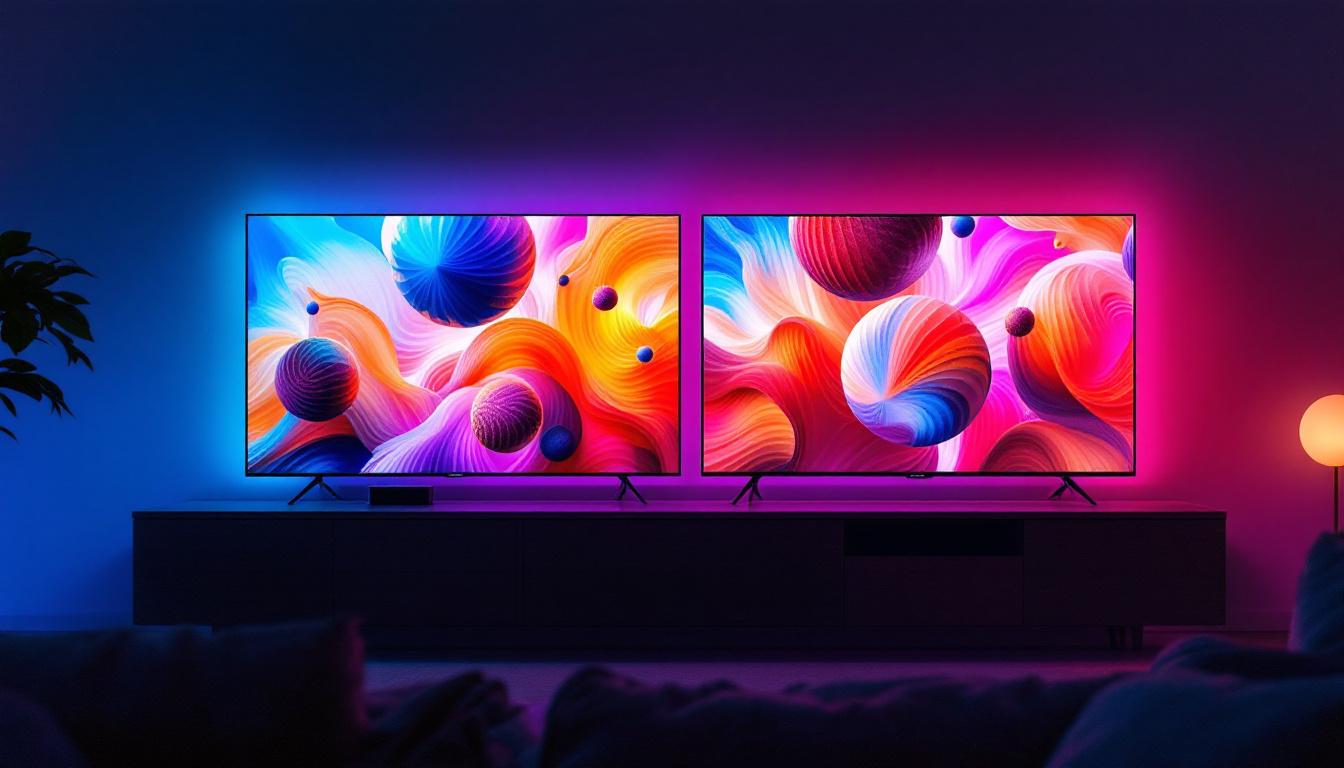
When shopping for a new television, one of the most common questions consumers face is the difference between LCD and LED TVs. The terms are often used interchangeably, but there are important distinctions that affect picture quality, energy consumption, and overall viewing experience. Understanding these differences can help buyers make an informed decision and select a TV that best fits their needs and budget.
Understanding the Basics: What Are LCD and LED TVs?
LCD TVs: The Foundation of Modern Displays
LCD stands for Liquid Crystal Display. These TVs use a panel made up of millions of tiny liquid crystals that can be manipulated to block or allow light through, creating images on the screen. However, liquid crystals do not emit light themselves, so LCD TVs require a backlight to illuminate the display.
Traditionally, LCD TVs used cold cathode fluorescent lamps (CCFLs) as their backlighting source. These fluorescent tubes provided the necessary light but had limitations in terms of brightness, energy efficiency, and the ability to produce deep blacks. As technology advanced, manufacturers began to explore alternative backlighting solutions to overcome these challenges, leading to the development of more sophisticated display technologies that enhance the viewing experience.
Moreover, the color accuracy and viewing angles of LCD TVs have also seen improvements over the years. Techniques such as in-plane switching (IPS) have been developed to allow for better color reproduction and wider viewing angles, making it easier for viewers to enjoy content from various positions in a room. This adaptability has made LCD TVs a popular choice for family settings and social gatherings, where multiple viewers may be watching from different angles.
LED TVs: An Evolution in Backlighting Technology
LED TVs are essentially LCD TVs that use Light Emitting Diodes (LEDs) as their backlighting source instead of CCFLs. This shift in backlighting technology has led to significant improvements in picture quality and energy efficiency. The use of LEDs not only allows for brighter displays but also enables thinner TV designs, which have become a hallmark of modern aesthetics in home entertainment.
LED backlighting can be implemented in two main ways: edge-lit and full-array. Edge-lit LED TVs place LEDs around the edges of the screen, while full-array LED TVs have LEDs spread evenly behind the entire screen. Full-array models often come with local dimming, which allows specific areas of the screen to dim independently, enhancing contrast and black levels. This capability is particularly beneficial when watching content with high dynamic range (HDR), as it allows for a more lifelike representation of shadows and highlights.
Furthermore, the introduction of quantum dot technology in some LED TVs has taken picture quality to another level. Quantum dots are tiny semiconductor particles that emit specific colors when illuminated by a light source. By incorporating quantum dots into the display, manufacturers can achieve a broader color spectrum and improved brightness, resulting in more vibrant and realistic images. This innovation has made LED TVs not only a practical choice for everyday viewing but also a compelling option for cinephiles and gamers who demand the best visual performance from their screens.
Key Differences Between LCD and LED TVs
Backlighting Technology and Picture Quality
The most fundamental difference lies in the backlighting method. While both LCD and LED TVs use liquid crystal displays, the type of backlight impacts the overall viewing experience.
LED backlighting offers better brightness control, higher contrast ratios, and improved color accuracy compared to CCFL backlighting. This translates into more vibrant images, deeper blacks, and a more dynamic picture. For example, a full-array LED TV with local dimming can achieve contrast ratios upwards of 1,000,000:1, whereas traditional LCD TVs with CCFL backlighting typically max out around 1,000:1. Additionally, the advancements in LED technology have led to the development of Quantum Dot displays, which further enhance color reproduction by using nanocrystals to produce a wider color gamut. This means that viewers can enjoy a more lifelike and immersive experience, especially when watching high-definition content or films with rich visual storytelling.
Energy Efficiency and Environmental Impact
LED TVs are generally more energy-efficient than their CCFL-backlit LCD counterparts. LEDs consume less power and generate less heat, which not only reduces electricity bills but also contributes to a lower environmental footprint.
According to the U.S. Department of Energy, LED-backlit TVs can use up to 30-50% less energy than older CCFL-backlit LCD models. This efficiency is especially important for consumers looking to reduce energy consumption without compromising on picture quality. Furthermore, the longer lifespan of LED lights—often rated for over 50,000 hours—means that fewer resources are consumed over time for replacements, making LED TVs a more sustainable choice in the long run. As consumers become increasingly conscious of their environmental impact, opting for energy-efficient technologies like LED can contribute to a more sustainable future.
Design and Thickness
LED backlighting allows manufacturers to produce thinner and lighter TVs compared to CCFL-backlit LCDs. Edge-lit LED TVs, in particular, can be incredibly slim, making them ideal for wall mounting and modern living spaces where aesthetics matter.
The slimmer design does not just improve appearance; it also enhances heat dissipation, which can contribute to the longevity of the TV. Moreover, the sleek profiles of LED TVs have led to innovative design trends, such as ultra-thin bezels and minimalist stands, allowing these devices to blend seamlessly into contemporary home décor. Some models even feature customizable frames or ambient lighting that can change based on the content being displayed, further enhancing the viewing experience and making the television a centerpiece of the room rather than just an appliance. As technology continues to evolve, we can expect even more advancements in design that prioritize both functionality and style.
Types of LED Backlighting: Edge-Lit vs. Full-Array
Edge-Lit LED TVs
Edge-lit LED TVs place LEDs along the edges of the screen, shining light across the display using light guides. This design enables ultra-thin panels and is typically more affordable.
However, edge-lit models can suffer from uneven brightness and less effective local dimming, which may result in less impressive black levels and contrast. This is particularly noticeable in dark scenes where light bleeding can occur.
Full-Array LED TVs
Full-array LED TVs have a grid of LEDs positioned directly behind the entire screen. This allows for more precise control of brightness in different areas, known as local dimming.
Local dimming significantly improves contrast by dimming LEDs in dark areas of the image while keeping bright areas illuminated. This technology enhances picture depth and detail, making full-array LED TVs a preferred choice for cinephiles and gamers seeking superior image quality.
Is OLED a Better Alternative?
How OLED Differs from LED and LCD
While this article focuses on LCD and LED TVs, it’s worth mentioning OLED (Organic Light Emitting Diode) technology, which represents a different approach altogether. Unlike LCD and LED TVs, OLED panels emit their own light at the pixel level, eliminating the need for a backlight.
This self-emissive property allows OLED TVs to achieve perfect blacks, infinite contrast ratios, and excellent viewing angles. However, OLEDs tend to be more expensive and can be susceptible to burn-in under certain conditions.
LED vs. OLED: Which Should You Choose?
For consumers on a budget or those prioritizing brightness and longevity, LED-backlit LCD TVs remain an excellent choice. They deliver bright images suitable for well-lit rooms and are less prone to image retention.
OLED TVs excel in dark room environments and offer superior picture quality but come at a premium price. The choice ultimately depends on viewing habits, budget, and preferences.
Practical Considerations When Choosing Between LCD and LED TVs
Budget Constraints
LED TVs, especially edge-lit models, are often more affordable than OLEDs and even some premium LCD TVs with advanced features. For most consumers, an LED TV offers the best balance of price and performance.
When comparing LCD TVs with CCFL backlighting to LED-backlit models, the latter is generally preferred due to better performance and energy savings, even if the initial cost is slightly higher.
Room Lighting and Viewing Environment
LED TVs typically perform better in bright rooms because of their higher brightness capabilities. If the TV will be used in a well-lit living room or kitchen, an LED TV is likely the better option.
Conversely, if the viewing environment is a dark home theater, an OLED or a full-array LED TV with local dimming will provide superior contrast and black levels.
Screen Size and Usage
For larger screen sizes (55 inches and above), LED TVs with full-array backlighting are recommended to maintain uniform brightness and contrast across the panel.
Smaller TVs may not benefit as much from full-array backlighting, making edge-lit LED or standard LCD models a cost-effective choice for bedrooms or secondary rooms.
Future Trends in TV Display Technology
Mini-LED and Micro-LED Innovations
Recent advancements have introduced Mini-LED and Micro-LED technologies, which further refine backlighting precision. Mini-LED TVs use thousands of tiny LEDs for backlighting, allowing for even more granular local dimming and improved contrast.
Micro-LED technology takes this a step further by using microscopic LEDs as individual pixels, combining the benefits of OLED’s self-emissive properties with the brightness and longevity of LEDs. While still emerging, these technologies promise to redefine TV display quality in the coming years.
8K Resolution and HDR Enhancements
Alongside backlighting improvements, 8K resolution TVs and advanced High Dynamic Range (HDR) formats are becoming more mainstream. These features enhance detail and color range, making the quality of the backlighting system even more critical to fully appreciate the benefits.
Conclusion: Making the Right Choice
Understanding the difference between LCD and LED TVs primarily comes down to the type of backlighting used. LED TVs, which are essentially LCD TVs with LED backlighting, offer better picture quality, energy efficiency, and design flexibility compared to older CCFL-backlit LCD models.
Choosing between edge-lit and full-array LED TVs depends on budget and desired picture quality, with full-array models providing superior contrast through local dimming.
While OLED and emerging technologies like Mini-LED and Micro-LED offer exciting alternatives, LED-backlit LCD TVs remain the most popular and practical choice for most consumers today.
Ultimately, the best TV is one that fits your viewing environment, budget, and personal preferences, delivering an enjoyable and immersive entertainment experience.
Discover the Future of Visual Experience with LumenMatrix
As you consider the vast landscape of LCD and LED TV options, we invite you to explore the innovative world of LumenMatrix. Our commitment to excellence in LED display technology ensures that whether you’re looking for an Indoor LED Wall Display, a dynamic Outdoor LED Wall Display, or any of our specialized solutions like Vehicle, Sports, or Floor LED Displays, you’ll find a product designed to transform your viewing experience. Embrace the revolution in visual communication with LumenMatrix’s cutting-edge digital signage and LED display solutions. Check out LumenMatrix LED Display Solutions today and see your world in a whole new light.