The moiré pattern effect is a fascinating optical phenomenon that often surprises viewers when interacting with digital displays, especially LED screens. Whether you’re a display technology enthusiast, a digital signage professional, or simply curious about why certain screens produce strange wavy patterns, understanding the moiré effect is essential. This article delves deep into the moiré pattern effect as it relates to LED displays, exploring its causes, implications, and solutions.
What Is the Moiré Pattern Effect?
The moiré pattern effect is an interference pattern that occurs when two repetitive grids or patterns overlap at certain angles or with slightly different sizes. The result is a new, often larger and more complex pattern that is visually distinct from the original grids. This effect can appear as wavy lines, ripples, or concentric circles, and it can be quite distracting or aesthetically intriguing depending on the context.
In the context of LED displays, moiré patterns emerge when the pixel grid of the screen interacts with another repetitive pattern, such as the pixel arrangement of a camera sensor, printed materials, or even the viewer’s own vision. The interference between these grids creates the illusion of movement or distortion that isn’t actually present in the source image.
Historical Context and Everyday Examples
The term “moiré” originates from the French word for a type of textile with a rippled or watered appearance. Historically, moiré patterns were noticed in fabrics and wallpapers before being studied in optics and digital imaging. Today, moiré effects are commonly observed not only in LED displays but also in photography, printing, and even architecture.
For example, when photographing a person wearing a finely striped shirt, the camera sensor’s pixel grid can clash with the stripes, producing a moiré pattern in the photo. Similarly, when viewing an LED display through a camera or under certain lighting conditions, the moiré effect can become visible. This phenomenon is not limited to clothing; it can also manifest in various surfaces, such as the intricate designs of carpets or the fine lines of architectural blueprints. Artists and designers often play with moiré patterns intentionally, using them to create dynamic visual effects that engage viewers and challenge their perception.
Moreover, the moiré effect has practical implications in fields such as printing and digital media. Graphic designers must be aware of this phenomenon to avoid unintended visual artifacts in their work, especially when dealing with halftone images or intricate patterns. In some cases, software tools are employed to minimize or eliminate moiré patterns during the editing process. Understanding the science behind moiré patterns not only helps in avoiding visual pitfalls but also opens up new avenues for creative expression, as artists can manipulate these patterns to evoke specific emotions or reactions from their audience.
How Moiré Patterns Occur in LED Displays
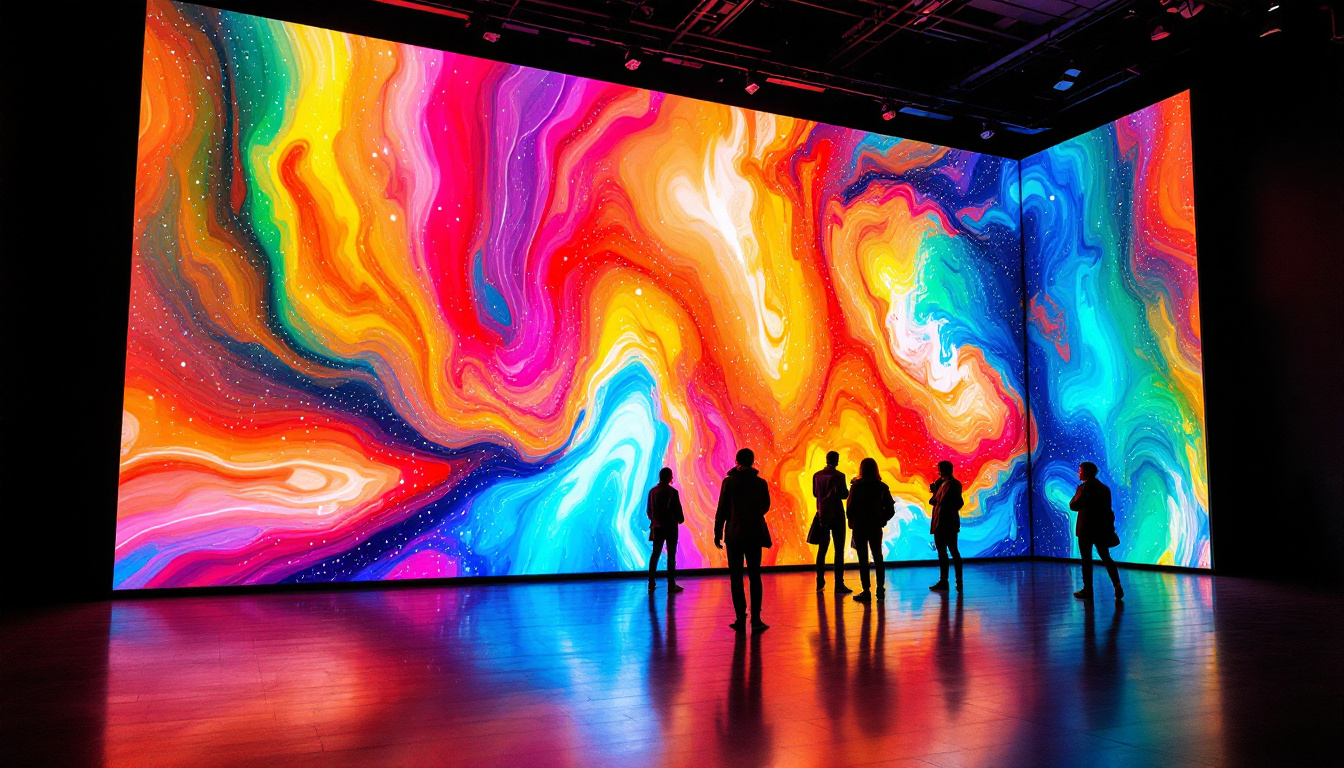
LED displays consist of a matrix of tiny light-emitting diodes arranged in a grid. Each LED acts as a pixel or subpixel, combining to form the images and videos we see. The uniform spacing and repetitive nature of this grid make it susceptible to moiré interference when overlaid with other periodic patterns.
Pixel Pitch and Its Role
One of the key factors influencing moiré patterns in LED displays is the pixel pitch — the distance between the centers of adjacent LEDs. Pixel pitch determines the display’s resolution and viewing distance requirements. A smaller pixel pitch means higher resolution and finer detail, which generally reduces the likelihood of visible moiré patterns.
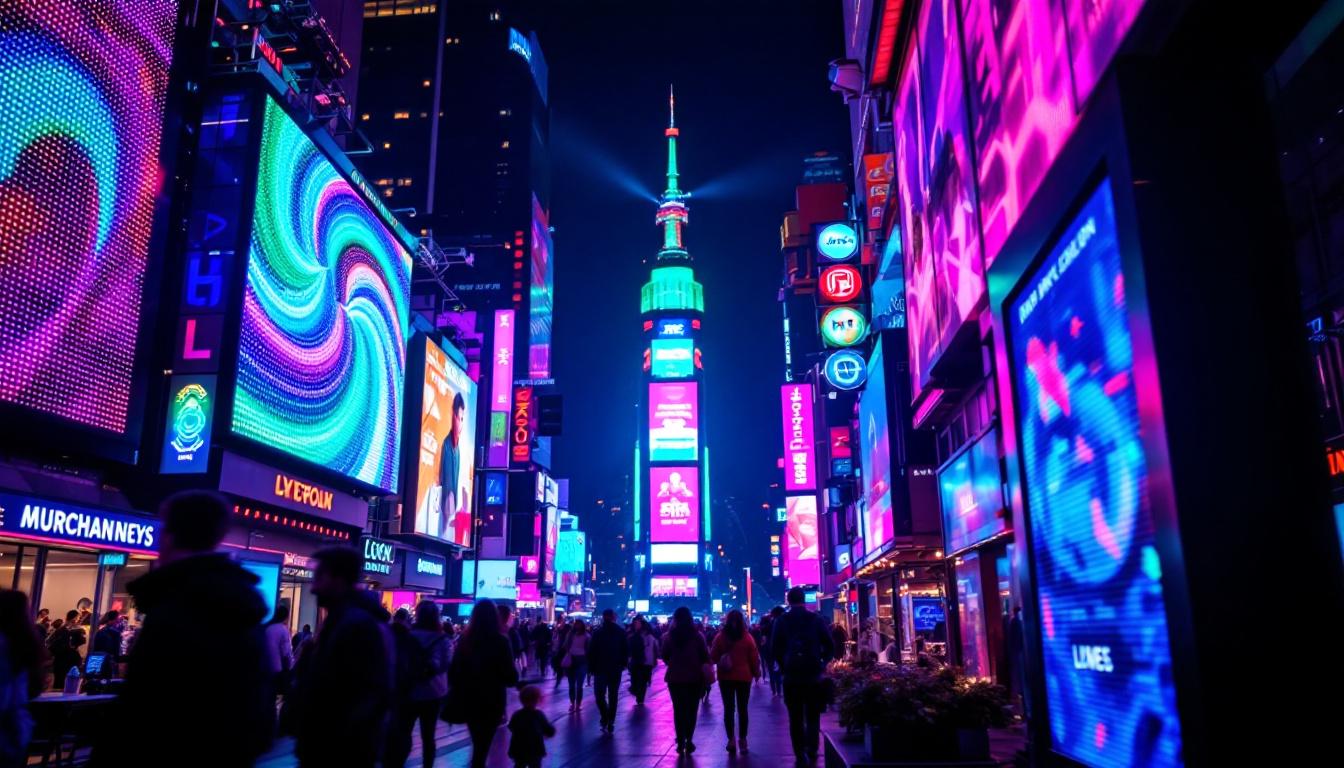
However, when the pixel pitch of the LED display interacts with the pixel grid of a camera sensor or another patterned surface, moiré can still occur. This is especially common in large outdoor LED billboards or digital signage, where the viewing distance is variable, and cameras are frequently used for capturing or monitoring content.
Interaction with Camera Sensors
Cameras capture images through a sensor that also has a pixel grid. When filming or photographing an LED display, the sensor’s pixel grid can interfere with the LED grid, producing moiré patterns in the recorded image. This is a major challenge in live broadcasting and event coverage, where LED walls are widely used.
High-end broadcast cameras often include optical low-pass filters (OLPFs) designed to reduce moiré by slightly blurring the image at the sensor level. However, this comes at the cost of some image sharpness. Newer camera technologies and software algorithms also aim to detect and mitigate moiré during post-processing.
Viewing Angle and Distance Effects
The angle and distance from which an LED display is viewed significantly impact the visibility of moiré patterns. At certain angles, the overlapping grids align in ways that enhance the moiré effect. Conversely, changing the viewing distance can either amplify or diminish the pattern’s visibility.
For example, standing very close to a large LED screen might reveal the individual LEDs and their grid structure, making moiré patterns more noticeable. From a typical viewing distance, these patterns often disappear or become negligible.
Why Understanding Moiré Patterns Matters for LED Display Users
For professionals working with LED displays—whether in advertising, broadcasting, event production, or retail—moiré patterns can pose significant challenges. Recognizing and managing this effect is crucial for ensuring high-quality visual experiences.
Impact on Visual Quality and Brand Perception
Moiré patterns can degrade the perceived quality of displayed content by introducing unwanted artifacts that distract viewers. For brands using LED displays for advertising or messaging, this can dilute the impact of their campaigns and negatively affect brand perception.
In retail environments, where LED displays are used for dynamic signage and promotions, moiré patterns can reduce the clarity and attractiveness of visuals, potentially affecting customer engagement and sales.
Challenges in Live Broadcasting and Event Production
In live events, LED walls are often used as dynamic backdrops or information displays. Camera operators and production teams must carefully manage moiré effects to avoid distracting patterns on broadcast feeds. Failure to do so can result in poor image quality and viewer complaints.
Understanding how moiré arises allows production professionals to plan camera angles, distances, and equipment choices to minimize the effect. Additionally, software tools and hardware filters can be employed to reduce moiré during live capture.
Techniques to Minimize or Eliminate Moiré Patterns on LED Displays
Fortunately, several strategies and technologies have been developed to reduce or eliminate moiré patterns in LED displays, ensuring clearer and more consistent image quality.
Optimizing Pixel Pitch and Display Resolution
Choosing LED displays with an appropriate pixel pitch for the intended viewing distance is fundamental. Higher resolution displays with smaller pixel pitches reduce the chance of moiré by minimizing the visibility of the individual LED grid.
For example, indoor LED displays often use pixel pitches as small as 1.2 mm to 2.5 mm, while outdoor displays typically have larger pitches ranging from 4 mm to 10 mm or more. Selecting the right pixel pitch based on application and viewing distance helps mitigate moiré effects.
Using Anti-Moiré Filters and Optical Solutions
Some LED display manufacturers integrate anti-moiré filters or specialized diffusion layers into the screen design. These layers slightly blur or scatter the emitted light to disrupt the regular grid pattern, reducing interference with external grids such as camera sensors.
Additionally, camera operators can use optical low-pass filters to minimize moiré during capture. These filters reduce high-frequency detail that causes interference but must be balanced against the need for sharpness.
Content Design and Software Corrections
Designing content with moiré in mind can also help. Avoiding highly repetitive patterns or fine lines that align with the LED grid reduces the likelihood of moiré. Content creators can use software tools to preview and adjust visuals before deployment.
Advanced image processing algorithms now exist that detect and suppress moiré artifacts in real-time, both in cameras and display controllers. These software solutions analyze the image signal and selectively reduce interference patterns without compromising overall image quality.
Adjusting Viewing Conditions
In some cases, simply adjusting the viewing angle or distance can minimize moiré visibility. For installations where viewers remain stationary, positioning the display and seating to avoid problematic angles can be effective.
For dynamic environments, such as concerts or trade shows, combining this approach with other mitigation techniques ensures the best possible visual experience.
Future Trends and Innovations in Moiré Pattern Management
As LED display technology continues to evolve, new approaches to managing moiré patterns are emerging, driven by advances in materials science, optics, and digital processing.
MicroLED and Higher Pixel Density Displays
MicroLED technology, which uses microscopic LEDs to create displays with extremely high pixel densities, promises to virtually eliminate moiré patterns due to the near-continuous nature of the light-emitting surface. These displays offer superior brightness, contrast, and color accuracy, making them ideal for applications where moiré is a concern.
Adaptive and Smart Display Systems
Future LED displays may incorporate sensors and adaptive algorithms that monitor viewing conditions and dynamically adjust pixel output or apply real-time corrections to suppress moiré. Such intelligent systems could optimize image quality for each viewer’s position and environmental factors.
Improved Camera and Capture Technologies
On the capture side, camera manufacturers are developing sensors with variable pixel architectures and enhanced processing capabilities to reduce moiré without sacrificing detail. Integration of AI-driven image enhancement will further help broadcasters and content creators manage moiré in live and recorded footage.
Conclusion
The moiré pattern effect is an intrinsic challenge in LED display technology due to the inherent nature of pixel grids and their interaction with other repetitive patterns. Understanding the causes and implications of moiré is critical for anyone involved in designing, deploying, or capturing LED display content.
By employing a combination of optimized hardware design, optical solutions, content strategies, and advanced software processing, moiré patterns can be effectively minimized or eliminated. As display technology advances, the visual clarity and quality of LED screens will continue to improve, offering richer and more immersive experiences free from distracting interference patterns.
For professionals and consumers alike, staying informed about moiré and its management ensures better decision-making and a deeper appreciation of the complex interplay between technology and human perception in modern digital displays.
Explore Cutting-Edge LED Display Solutions with LumenMatrix
Ready to elevate your visual experience and eliminate the distraction of moiré patterns? LumenMatrix is at the forefront of LED display innovation, offering a wide array of solutions tailored to your needs. From captivating Indoor and Outdoor LED Wall Displays to dynamic Vehicle and Sports LED Displays, our technology is designed to enhance engagement and deliver your message with unparalleled clarity. Discover how our Custom, All-in-One, and Transparent LED Displays can transform your visual communication. Check out LumenMatrix LED Display Solutions today and step into the future of digital signage.