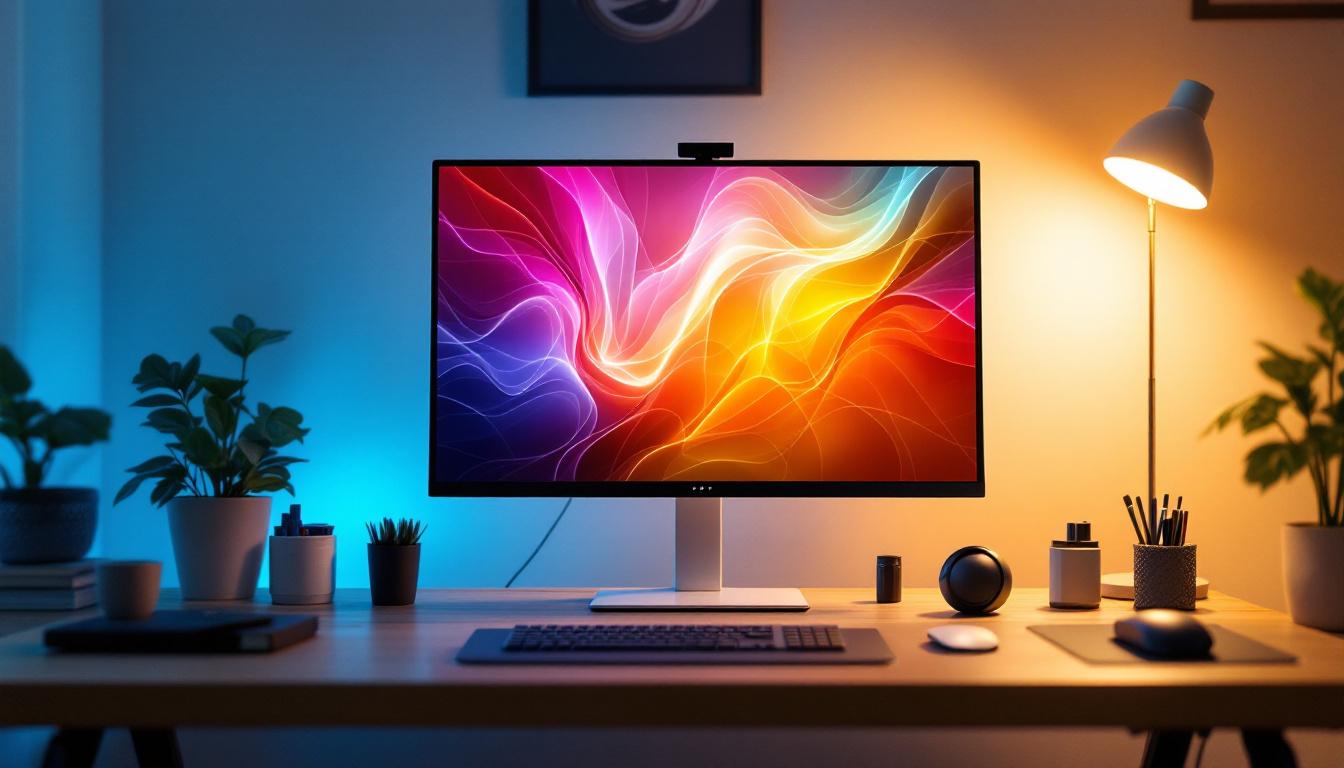
In today’s digital age, the quality and clarity of your monitor can significantly impact your computing experience, whether for work, gaming, or entertainment. One key factor that defines this quality is the monitor resolution, especially in LED displays, which dominate the market. Understanding the most common monitor resolutions and the technology behind LED displays can help consumers make informed decisions when purchasing or upgrading their screens.
Understanding Monitor Resolution: What Does It Mean?
Monitor resolution refers to the number of pixels displayed on the screen, typically represented as width × height. For example, a resolution of 1920 × 1080 means the screen displays 1,920 pixels horizontally and 1,080 pixels vertically. The total number of pixels directly influences the sharpness and clarity of the image.
Higher resolutions provide more detail and allow for larger workspaces on the screen, but they also require more powerful hardware to drive them effectively. Conversely, lower resolutions may appear less sharp but demand less from the graphics card and system resources.
It’s important to note that resolution is distinct from screen size; two monitors of different sizes can share the same resolution but will differ in pixel density, affecting perceived image sharpness.
Moreover, monitor resolution plays a crucial role in various applications, from gaming to graphic design. For gamers, a higher resolution can enhance the immersive experience, allowing for more detailed environments and smoother gameplay. On the other hand, graphic designers often rely on high-resolution displays to ensure that their work is crisp and accurate, which is essential when dealing with intricate designs or high-quality images. The advent of 4K and even 8K resolutions has pushed the boundaries of visual fidelity, making it possible to see details that were previously lost in lower resolutions.
In addition to resolution, other factors such as refresh rate and color accuracy also contribute to the overall viewing experience. A monitor with a high refresh rate can display smoother motion, which is particularly beneficial for fast-paced gaming or video editing. Similarly, color accuracy is paramount for professionals in fields like photography and videography, where true-to-life colors are essential. As technology continues to advance, the interplay between resolution, refresh rate, and color fidelity will shape the future of display technology, offering users an increasingly rich and engaging visual experience.
LED Display Technology: A Brief Overview
LED, or Light Emitting Diode, displays have become the standard for modern monitors due to their energy efficiency, brightness, and color accuracy. Unlike older LCDs that used cold cathode fluorescent lamps (CCFL) for backlighting, LED displays use an array of LEDs to illuminate the screen.
This advancement allows for thinner panels, better contrast ratios, and improved color reproduction. Additionally, LED backlighting can be implemented in various ways, such as edge-lit or full-array, influencing the display’s uniformity and local dimming capabilities.
Understanding LED technology is crucial because it affects how resolutions are rendered and perceived, especially when paired with features like HDR (High Dynamic Range) and higher refresh rates common in gaming and professional monitors.
One of the most significant benefits of LED displays is their ability to produce deeper blacks and brighter whites, which enhances the overall viewing experience. This is particularly important in applications such as video editing and graphic design, where color accuracy is paramount. The full-array local dimming feature, for instance, allows specific zones of the screen to dim or brighten independently, resulting in a more dynamic range of colors and improved contrast. This technology has made LED displays a favorite among professionals who require precision in their work.
Moreover, the evolution of LED technology has led to the emergence of OLED (Organic Light Emitting Diode) displays, which take the advantages of traditional LED displays even further. OLED panels can achieve true blacks since each pixel emits its own light and can be turned off completely, eliminating any light bleed. This characteristic not only enhances contrast but also allows for a wider viewing angle, making OLED displays ideal for collaborative environments where multiple viewers may be watching from different angles. As the technology continues to advance, we can expect even more innovative applications and improvements in display quality, further solidifying the role of LED and its derivatives in our digital lives.
Most Common Monitor Resolutions in Use Today
1080p (Full HD) – The Ubiquitous Standard
1920 × 1080, commonly known as 1080p or Full HD, remains the most widespread resolution worldwide. It strikes a balance between image clarity and system requirements, making it ideal for everyday computing, streaming, and gaming.
According to recent market analyses, over 60% of monitors sold fall into the 1080p category, reflecting its popularity among budget-conscious consumers and professionals alike. The resolution supports crisp text and detailed images on screens ranging from 21 to 27 inches.
Its compatibility with most graphics cards and media content also contributes to its dominance. However, as screen sizes increase beyond 27 inches, pixel density decreases at 1080p, which can lead to less sharp images.
1440p (Quad HD) – The Sweet Spot for Gamers and Professionals
With a resolution of 2560 × 1440, 1440p, or Quad HD, offers a significant step up in clarity and workspace compared to 1080p. It is especially popular among gamers and creative professionals who require sharper images and more screen real estate without the hardware demands of 4K.
1440p monitors typically range from 27 to 32 inches, providing a comfortable pixel density that enhances detail without overwhelming graphics cards. Recent surveys show a growing adoption rate, with about 20-25% of new monitor purchases falling into this category.
Many gaming monitors at 1440p also feature higher refresh rates (120Hz and above), making this resolution a favored choice for competitive gaming where both visual fidelity and smooth performance are crucial.
4K UHD (Ultra HD) – The Pinnacle of Clarity
4K UHD resolution, at 3840 × 2160 pixels, offers four times the pixel count of 1080p, delivering incredibly sharp and detailed images. This resolution is becoming increasingly common in professional environments such as video editing, graphic design, and CAD applications, where precision is paramount.
While 4K monitors are more expensive and demand powerful GPUs to run smoothly, their adoption is accelerating. Market data indicates that 4K monitors now account for approximately 10-15% of sales, with a steady upward trend as prices continue to decrease.
4K displays are also popular among high-end entertainment setups, providing stunning visuals for movies and gaming. However, users should ensure their operating system and applications support scaling to avoid tiny interface elements.
Other Resolutions Worth Mentioning
While 1080p, 1440p, and 4K dominate the market, other resolutions cater to niche needs. For example, 1600 × 900 and 1366 × 768 are common in budget laptops and smaller monitors, offering acceptable clarity at lower costs.
On the high end, 5K (5120 × 2880) and ultrawide resolutions like 3440 × 1440 provide expansive workspaces favored by professionals in video editing and multitasking. Ultrawide monitors, in particular, have gained traction for their immersive experience and productivity benefits.
Factors Influencing the Choice of Monitor Resolution
Screen Size and Pixel Density
The interplay between screen size and resolution determines pixel density, measured in pixels per inch (PPI). Higher PPI values mean sharper images. For example, a 24-inch 1080p monitor has a PPI around 92, while a 27-inch 1440p monitor has about 109 PPI, resulting in noticeably crisper visuals.
Choosing a resolution that matches the screen size is essential to avoid pixelation or overly small interface elements. Users who prioritize sharpness should consider higher resolutions on larger screens.
Use Case and Performance Requirements
Different tasks demand different resolutions. Gamers often prefer 1440p or 1080p with high refresh rates for smooth gameplay, while professionals in creative fields may opt for 4K for detailed work. General office use and web browsing can be comfortably handled by 1080p monitors.
Additionally, higher resolutions require more powerful graphics hardware to maintain performance, especially in gaming and 3D applications. Understanding the balance between resolution and system capability is crucial for an optimal experience.
Budget Considerations
Price remains a significant factor in monitor selection. While 1080p monitors are affordable and widely available, 1440p and 4K displays command higher prices due to advanced panel technology and increased pixel counts.
Consumers should weigh the benefits of higher resolution against the cost and their specific needs. Sometimes, investing in a better GPU to support a higher resolution monitor is necessary, which adds to the overall expense.
Future Trends in Monitor Resolutions and LED Technology
The monitor industry continues to evolve rapidly, with trends pointing toward even higher resolutions and improved LED technologies. 8K monitors (7680 × 4320) are emerging, although they remain niche due to extreme hardware demands and limited content availability.
Advances in mini-LED and micro-LED backlighting promise better contrast ratios, brightness, and energy efficiency, enhancing the viewing experience across all resolutions. Additionally, adaptive sync technologies like NVIDIA G-Sync and AMD FreeSync are becoming standard, improving visual smoothness.
As remote work and digital content creation grow, demand for versatile monitors with excellent resolution and color accuracy will likely increase, driving innovation and wider adoption of high-resolution LED displays.
Conclusion
Choosing the right monitor resolution involves understanding the balance between screen size, pixel density, use case, performance requirements, and budget. LED display technology underpins these resolutions, offering improved brightness, color accuracy, and energy efficiency compared to older technologies.
1080p remains the most common resolution due to its affordability and versatility, but 1440p and 4K are gaining traction among gamers and professionals seeking enhanced clarity and workspace. As technology advances, higher resolutions and improved LED backlighting will continue to shape the future of monitor displays.
By staying informed about the most common monitor resolutions and the capabilities of LED technology, consumers can make well-informed decisions that enhance their digital experience for years to come.
Explore Cutting-Edge LED Display Solutions with LumenMatrix
As you consider upgrading your digital experience with the right monitor resolution, remember that the underlying technology makes all the difference. LumenMatrix, a leader in LED display innovation, offers a comprehensive range of LED display modules designed to bring your visual communication to life. From captivating Indoor LED Wall Displays to dynamic Outdoor LED Wall Displays and beyond, our solutions are tailored to meet your needs. Elevate your brand’s visibility and create immersive visual experiences with our state-of-the-art LED technology. Check out LumenMatrix LED Display Solutions today and see how we can transform your space with clarity and impact.