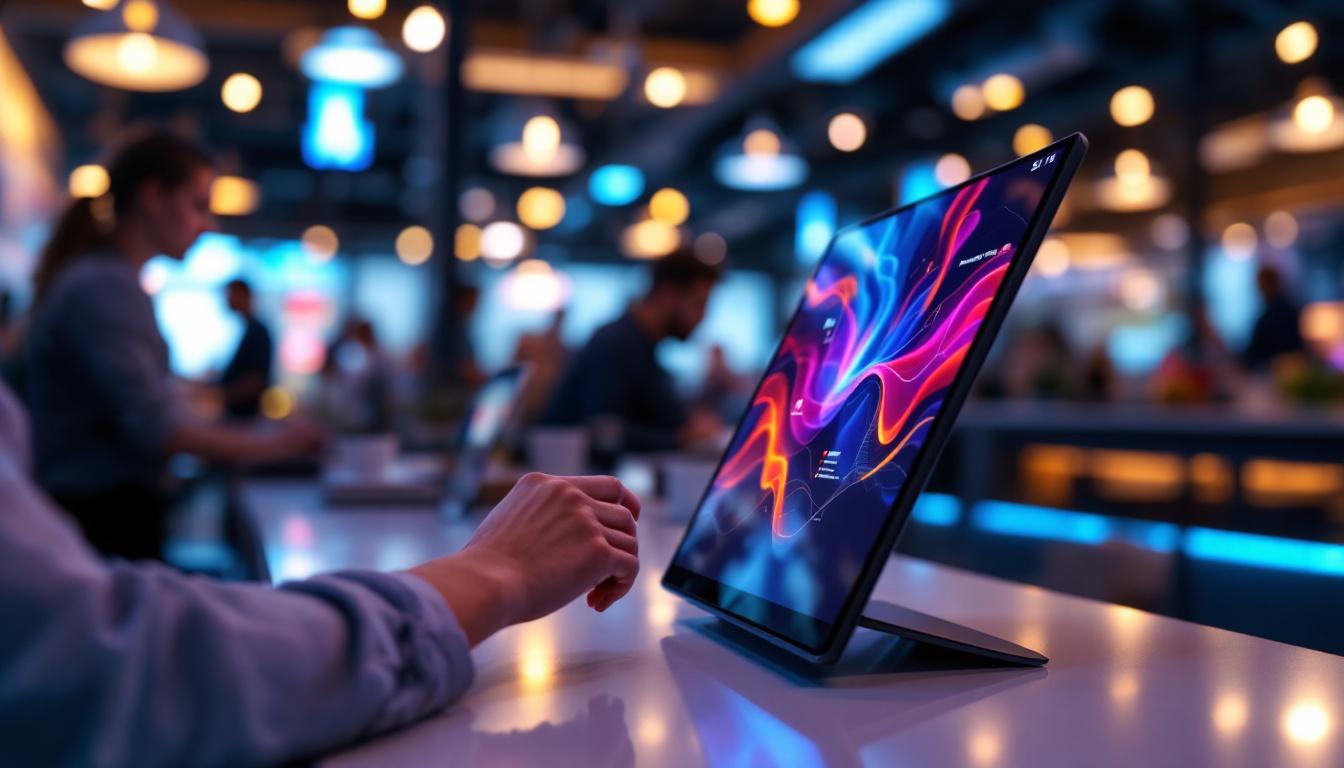
In an era where technology is rapidly evolving, portable touch screen devices with LED displays have become integral to both personal and professional environments. From mobile workstations to interactive kiosks and digital signage, the demand for compact, efficient, and visually appealing displays continues to surge. This article explores the fundamentals of portable touch screen LED displays, their technology, applications, and the factors that influence their performance and usability.
Understanding LED Display Technology
What is an LED Display?
LED, or Light Emitting Diode, displays utilize an array of tiny light-emitting diodes to produce images. Unlike traditional LCDs that rely on backlighting, LED displays generate their own light, offering superior brightness, contrast, and energy efficiency. This self-illumination capability makes LED displays particularly suitable for portable devices that require vivid visuals even in brightly lit environments.
Modern LED displays come in various forms, including direct-view LED panels and LED-backlit LCDs. Direct-view LED displays consist of individual LEDs arranged in a grid, each acting as a pixel, while LED-backlit LCDs use LEDs as a light source behind a liquid crystal layer. Portable touch screen devices typically employ LED-backlit LCDs due to their balance of image quality, power consumption, and cost. Additionally, advancements in LED technology have led to the development of OLED (Organic Light Emitting Diode) displays, which offer even greater flexibility in design and superior color reproduction, making them increasingly popular for high-end portable devices.
Key Advantages of LED Displays in Portable Devices
LED displays offer several advantages that make them ideal for portable touch screen devices:
- Brightness and Visibility: LED displays can achieve high brightness levels, often exceeding 500 nits, ensuring clear visibility even under direct sunlight.
- Energy Efficiency: LEDs consume less power than traditional CCFL backlights, extending battery life in portable devices.
- Thin and Lightweight Design: The compact nature of LED technology allows manufacturers to create slim and lightweight devices without sacrificing display quality.
- Color Accuracy and Contrast: LED displays provide vibrant colors and deep blacks, enhancing the overall user experience.
In addition to these advantages, LED displays also boast a longer lifespan compared to conventional display technologies. Many LED screens can last up to 50,000 hours or more, significantly reducing the need for replacements and contributing to lower overall maintenance costs. Furthermore, the durability of LED displays makes them resistant to shock and vibration, which is particularly beneficial for portable devices that are frequently moved or used in various environments. This resilience, combined with their ability to maintain performance over time, positions LED displays as a reliable choice for consumers seeking longevity and quality in their portable electronics.
Moreover, the rapid evolution of LED technology has paved the way for innovations such as flexible and bendable displays. These advancements allow manufacturers to explore new form factors and designs, leading to devices that can be folded or rolled up without compromising display integrity. As a result, users can look forward to a future where portable devices not only deliver exceptional visual experiences but also offer unprecedented versatility in design and functionality, making them more adaptable to the diverse needs of modern life.
How Portable Touch Screens Integrate LED Displays
Touch Screen Technologies Compatible with LED Displays
Combining touch screen functionality with LED displays requires careful integration of hardware and software. The most common touch technologies used in portable LED display devices include:
- Capacitive Touch: This technology detects touch through the electrical properties of the human body. It supports multi-touch gestures and offers high responsiveness, making it the standard in smartphones and tablets.
- Resistive Touch: Utilizing pressure-sensitive layers, resistive touch screens are cost-effective and work with any pointing device but generally offer lower clarity and multi-touch support.
- Infrared and Optical Touch: These methods use sensors around the display to detect touch without a physical overlay, preserving display clarity but often increasing device thickness.
Capacitive touch technology is predominantly paired with LED displays in portable devices due to its responsiveness and compatibility with sleek, thin designs. This synergy not only enhances user experience but also allows for the creation of devices that are visually appealing and easy to use. The seamless interaction between touch and display technologies has opened up new avenues for applications in various fields, from education to entertainment, where intuitive interfaces are paramount.
Challenges in Combining Portable Touch Screens with LED Displays
Integrating touch functionality with LED displays in portable devices presents several challenges:
- Power Management: Both touch sensors and LED backlights consume power, requiring efficient management to maintain battery life.
- Durability and Responsiveness: Portable devices are subject to frequent handling and environmental exposure, necessitating robust touch layers that do not degrade display quality.
- Screen Reflection and Glare: High brightness LED displays can produce glare, which can interfere with touch accuracy and user comfort, especially outdoors.
Manufacturers address these challenges through innovations such as adaptive brightness control, anti-reflective coatings, and optimized touch sensor placement. Furthermore, advancements in materials science have led to the development of ultra-thin protective layers that not only enhance durability but also improve the tactile feedback of touch screens. These innovations are crucial as they ensure that devices can withstand the rigors of daily use while still providing an engaging and responsive user interface.
Moreover, the integration of artificial intelligence in touch screen technology is beginning to play a significant role in enhancing user interaction. By analyzing touch patterns and gestures, AI can adapt the interface dynamically, offering personalized experiences that cater to individual preferences. This level of customization not only improves usability but also opens up exciting possibilities for future applications in augmented reality and immersive environments, where touch and display technologies will converge to create truly interactive experiences.
Applications of Portable Touch Screen LED Displays
Consumer Electronics
Portable touch screen devices with LED displays dominate the consumer electronics market. Smartphones, tablets, and laptops utilize LED-backlit LCDs or OLED variants to deliver crisp visuals and responsive touch experiences. According to recent market research, over 75% of mobile devices worldwide employ LED-backlit displays, underscoring their prevalence.
Additionally, portable gaming consoles and wearable devices benefit from LED displays’ low power consumption and high brightness, ensuring extended usage times and vibrant graphics.
Professional and Industrial Use Cases
In professional settings, portable touch screen LED displays facilitate mobile computing, fieldwork, and interactive presentations. Devices such as rugged tablets, portable monitors, and digital measuring instruments rely on LED technology for durability and readability in diverse environments.
Industries including healthcare, logistics, and manufacturing increasingly adopt portable touch screens with LED displays for real-time data input and monitoring. For example, medical professionals use portable ultrasound devices with LED touch screens to enhance diagnostics at the point of care.
Retail and Public Information Systems
Portable touch screen LED displays are also pivotal in retail and public information systems. Interactive kiosks, mobile point-of-sale terminals, and digital signage benefit from the portability and visual clarity of these displays. Their ability to operate in various lighting conditions ensures consistent user engagement.
Moreover, the integration of touch capabilities allows for intuitive navigation and personalized user experiences, which are critical in customer-facing applications.
Factors Influencing the Quality of Portable Touch Screen LED Displays
Resolution and Pixel Density
The resolution of an LED display determines the sharpness and detail of the images it produces. Portable devices typically feature resolutions ranging from HD (1280×720 pixels) to 4K UHD (3840×2160 pixels), with pixel density measured in pixels per inch (PPI) playing a crucial role in perceived image clarity.
Higher pixel densities, often exceeding 300 PPI in smartphones, provide crisp text and detailed visuals, which is essential for applications involving fine graphics or extensive reading.
Brightness and Contrast Ratios
Brightness, measured in nits, affects the display’s visibility under various lighting conditions. Portable LED displays usually offer 300 to 600 nits, with some specialized devices reaching over 1000 nits for outdoor use.
Contrast ratio, the difference between the darkest black and brightest white, impacts image depth and color richness. LED displays generally achieve high contrast ratios, enhancing visual comfort and reducing eye strain during prolonged use.
Touch Sensitivity and Accuracy
Touch sensitivity determines how quickly and precisely a device responds to user input. High-quality portable touch screens employ advanced capacitive sensors capable of detecting light touches and supporting multi-finger gestures.
Accuracy is equally important, especially for professional applications like graphic design or data entry, where precise input is mandatory. Technologies such as palm rejection and pressure sensitivity further enhance the user experience.
Future Trends in Portable Touch Screen LED Displays
Advancements in Display Materials
Emerging materials like MicroLED and OLED are poised to revolutionize portable touch screen displays. MicroLED technology offers the benefits of traditional LEDs with improved brightness, energy efficiency, and lifespan, while OLED provides superior contrast and flexibility.
These advancements promise thinner, lighter, and more durable displays that can be integrated into foldable and rollable devices, expanding the possibilities for portable technology.
Enhanced Touch and Interaction Technologies
Future portable touch screen devices are expected to incorporate more sophisticated interaction methods, including haptic feedback, gesture recognition, and even eye-tracking. These innovations aim to create more immersive and intuitive user interfaces.
Additionally, improvements in touch sensor materials and designs will likely reduce latency and increase durability, making devices more responsive and reliable in various conditions.
Energy Efficiency and Sustainability
As environmental concerns grow, manufacturers are focusing on creating energy-efficient LED displays that minimize power consumption without compromising performance. Innovations in low-power backlighting and adaptive brightness controls contribute to longer battery life and reduced environmental impact.
Sustainability efforts also include the use of recyclable materials and eco-friendly production processes, aligning with global initiatives to reduce electronic waste.
Conclusion
Portable touch screen LED displays represent a critical intersection of display technology and user interaction, driving innovation across consumer, professional, and industrial sectors. Their combination of brightness, energy efficiency, and responsiveness makes them indispensable in today’s mobile-centric world.
Understanding the underlying LED technology, integration challenges, and application-specific requirements enables users and manufacturers to optimize device performance and user experience. With ongoing advancements in materials and interaction technologies, the future of portable touch screen LED displays promises even greater versatility, efficiency, and engagement.
Explore Cutting-Edge LED Display Solutions with LumenMatrix
As you consider the future of portable touch screen LED displays and their transformative role in various sectors, LumenMatrix stands at the forefront of this technological evolution. Our commitment to innovation is evident in our diverse range of LED display modules, designed to meet the dynamic needs of any application. From captivating Indoor LED Wall Displays to robust Outdoor LED Wall Displays, and from versatile Vehicle LED Displays to sleek LED Poster Displays, our solutions are tailored to enhance brand visibility and create immersive visual experiences. Discover how LumenMatrix is redefining visual communication and take the first step towards elevating your engagement strategy. Check out LumenMatrix LED Display Solutions today and empower your business to communicate with impact and precision.