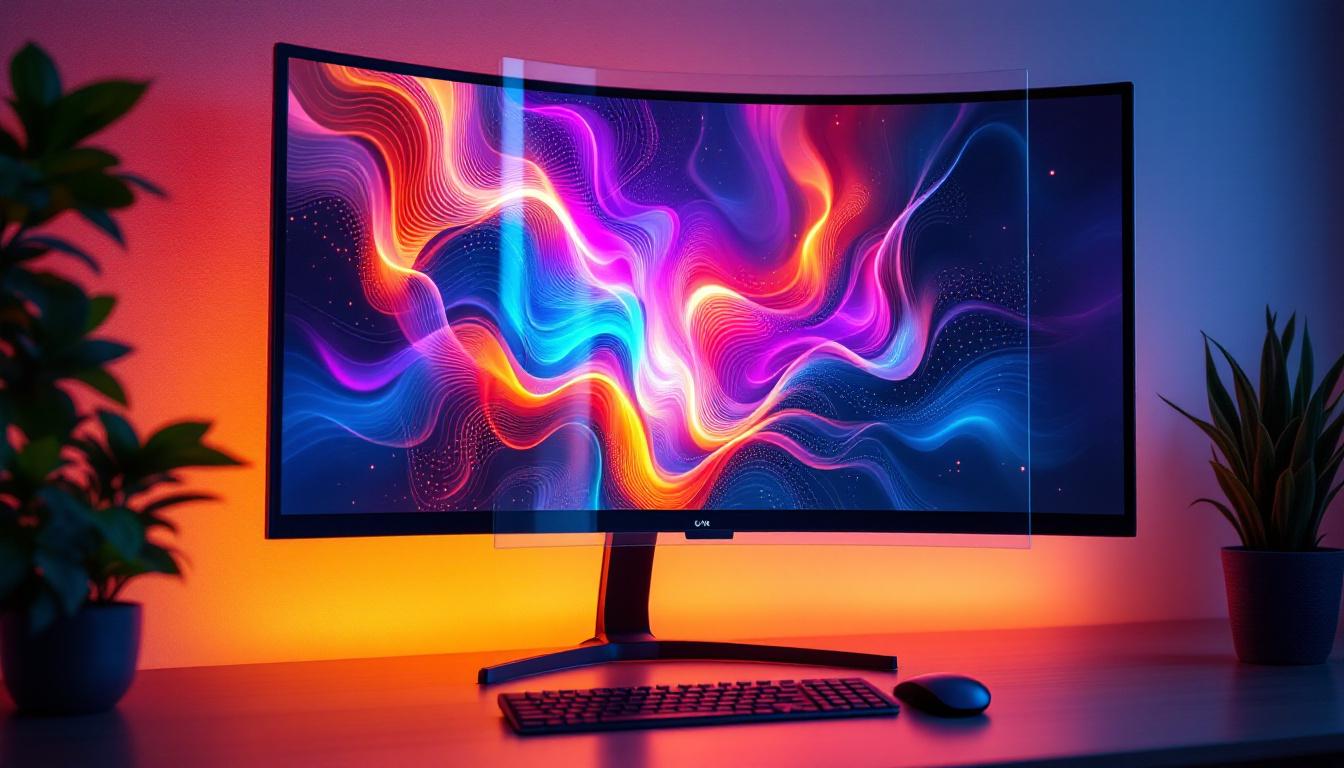
In today’s digital age, safeguarding sensitive information on your computer screen has become more critical than ever. Whether you’re working in a bustling office, a coffee shop, or a shared home environment, protecting your display from prying eyes is essential. Privacy screens have long been a popular solution for flat monitors, but what about curved monitors, especially those with LED displays? This article dives deep into the world of privacy screens tailored for curved LED monitors, explaining their technology, benefits, and how to choose the right one for your needs.
Understanding Curved LED Monitors and Their Unique Challenges
Curved monitors have surged in popularity over the past few years, especially among professionals and gamers. According to a 2023 report by Statista, the global curved monitor market is expected to grow at a compound annual growth rate (CAGR) of over 10% through 2027. This growth is driven by the immersive viewing experience and reduced eye strain that curved displays offer. The design of these monitors allows for a more natural viewing angle, which can enhance the overall experience whether one is gaming, working on graphic design, or simply watching movies. The curvature helps to fill the peripheral vision, creating a more engaging and lifelike experience.
LED (Light Emitting Diode) technology is commonly used in modern curved monitors due to its energy efficiency, brightness, and color accuracy. However, the curvature and LED backlighting present unique challenges when it comes to privacy protection. The vibrant colors and deep contrasts that LED technology provides can be a double-edged sword; while they enhance the visual experience, they also make it easier for onlookers to catch a glimpse of the screen’s contents from various angles. This necessitates a rethinking of how privacy solutions are implemented for these types of displays.
Unlike flat screens, curved monitors wrap around the viewer’s field of vision, which can inadvertently expose the screen content to a wider range of viewing angles. This makes traditional privacy filters designed for flat displays less effective or incompatible. Additionally, LED displays often have higher brightness levels, which can cause glare or reflections when combined with privacy screens that are not optimized for LED technology. The challenge lies in finding or developing privacy solutions that can effectively mitigate these issues without compromising the monitor’s performance or visual quality.
Why Privacy Matters for Curved LED Displays
Data breaches and information theft are significant concerns in both corporate and personal environments. A 2022 survey by IBM found that the average cost of a data breach reached $4.35 million globally, emphasizing the importance of securing sensitive information. Visual hacking—where unauthorized individuals view confidential information on a screen—is a common yet often overlooked threat. The rise of remote work and open office layouts has further exacerbated this issue, as employees often find themselves in environments where their screens are visible to others, increasing the risk of unintentional data exposure.
Curved LED monitors, due to their design, can inadvertently increase the risk of visual hacking if not properly shielded. For professionals handling sensitive data such as financial records, medical information, or proprietary business documents, privacy screens are not just accessories but essential security tools. The effectiveness of these privacy solutions hinges on their ability to block out side views while maintaining clarity for the primary user. As the demand for curved monitors continues to rise, manufacturers are increasingly focusing on developing advanced privacy technologies that cater specifically to the unique challenges posed by these displays. This includes innovations such as adaptive privacy filters that adjust based on the viewer’s position, ensuring that sensitive information remains confidential without sacrificing the quality of the viewing experience for the primary user.
How Privacy Screens Work on Curved LED Monitors
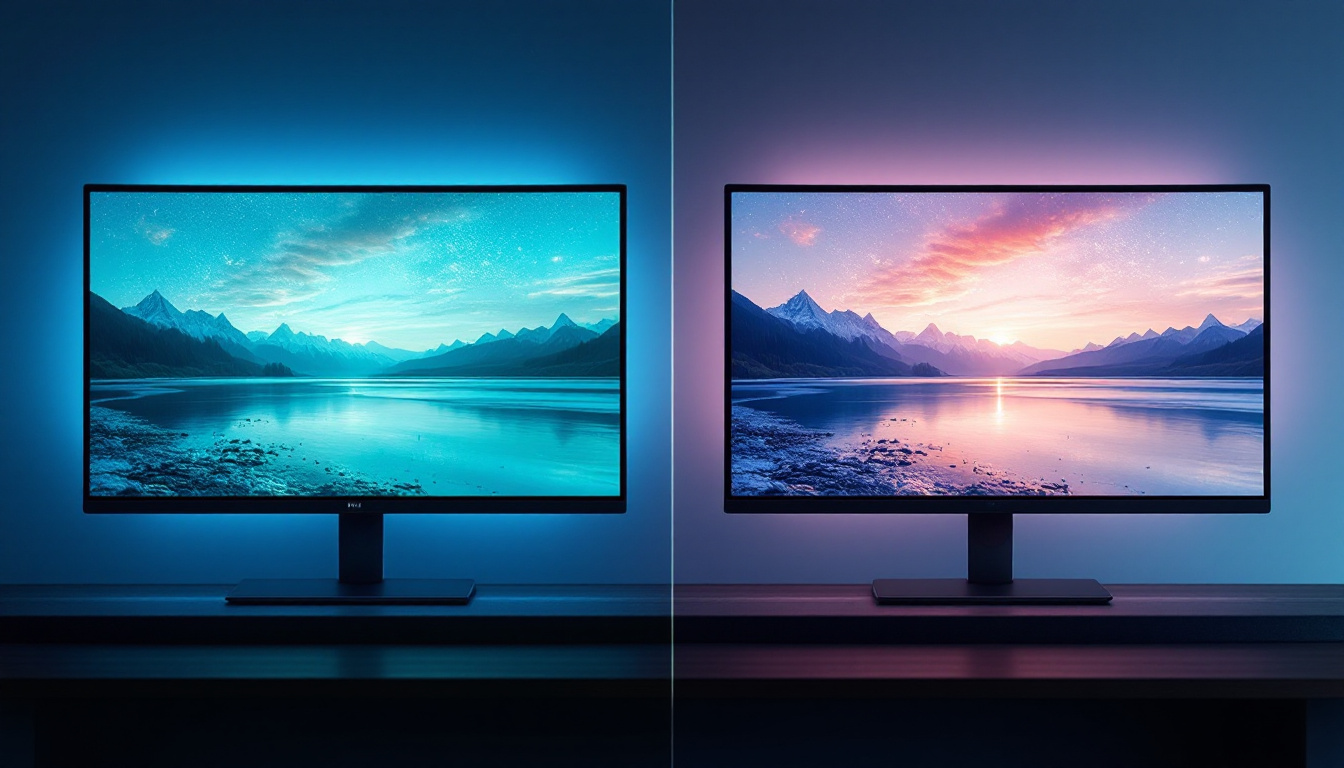
Privacy screens function by narrowing the viewing angle of the monitor, making the screen appear dark or black when viewed from the side. This ensures that only the person directly in front of the monitor can see the content clearly.
For curved monitors, privacy screens must be specially designed to fit the curvature without distorting the image or causing unwanted reflections. The technology behind these screens involves micro-louver technology, which acts like tiny blinds, controlling the direction of light emitted from the display.
Micro-Louver Technology Explained
Micro-louvers are microscopic vertical blinds embedded within the privacy filter. They allow light to pass straight through to the user but block light at wider angles. This directional control of light limits visibility to a narrow field, typically between 30 to 60 degrees, depending on the filter.
On a curved LED monitor, the micro-louver technology must be adapted to the screen’s arc. This ensures uniform privacy protection across the entire display, preventing areas of the screen from becoming vulnerable due to curvature-induced viewing angles.
Material and Coating Considerations
Privacy screens for curved LED monitors are usually made from durable optical-grade PET (polyethylene terephthalate) or tempered glass. PET filters are lightweight and flexible, making them easier to apply on curved surfaces, whereas tempered glass offers superior scratch resistance and clarity but can be more rigid.
Anti-glare and anti-reflective coatings are also critical. LED displays are bright, and without proper coatings, privacy screens can cause distracting reflections or reduce screen brightness excessively. High-quality privacy screens balance privacy with maintaining the vibrant colors and brightness of LED displays.
Choosing the Right Privacy Screen for Your Curved LED Monitor
Selecting the appropriate privacy screen involves several factors, including screen size, curvature radius, compatibility with LED technology, and ease of installation. Here are key considerations to keep in mind:
1. Compatibility with Curvature
Privacy screens come in flat and curved variants. For curved monitors, it’s essential to choose a privacy filter specifically designed to match the curvature radius of your display. Using a flat filter on a curved screen can cause air gaps, bubbles, or poor adhesion, reducing effectiveness.
2. Size and Aspect Ratio
Ensure the privacy screen matches the exact dimensions and aspect ratio of your monitor. Curved monitors often have ultrawide or unconventional aspect ratios (e.g., 21:9 or 32:9), so generic filters may not fit properly. Many manufacturers offer custom-sized filters for popular curved models.
3. Installation Method
Privacy screens can be attached using adhesive strips, slide mounts, or magnetic frames. For curved monitors, flexible adhesive strips or magnetic frames designed for curved surfaces are preferable. These methods allow easy removal and repositioning without damaging the screen.
4. Optical Clarity and Brightness
Look for privacy screens that maintain high optical clarity and do not significantly dim the display. Some filters reduce brightness by up to 40%, which can strain the eyes during prolonged use. High-quality filters optimized for LED displays minimize this effect.
5. Durability and Maintenance
Curved privacy screens should be resistant to scratches and easy to clean. Tempered glass filters offer better durability but may be heavier and more expensive. PET filters are lighter but can be more prone to scratches.
Installation Tips and Best Practices
Proper installation is crucial to maximize the effectiveness of a privacy screen on a curved LED monitor. Here are some best practices to ensure optimal results:
Clean the Screen Thoroughly
Before applying the privacy screen, clean the monitor surface with a microfiber cloth and a gentle screen cleaner. Dust, fingerprints, and oils can cause bubbles or poor adhesion.
Align Carefully
Take your time to align the privacy screen perfectly with the edges of the curved monitor. Misalignment can reduce privacy effectiveness and cause visual distortions.
Use Appropriate Adhesives or Frames
If using adhesive strips, ensure they are designed for curved surfaces and won’t leave residue. Magnetic frames offer a less permanent solution and make it easier to remove or replace the filter.
Test Viewing Angles
After installation, test the screen’s privacy by viewing it from different angles. The screen should appear dark or completely black when viewed from the side, while remaining clear when viewed head-on.
Additional Privacy Solutions for Curved LED Displays
While privacy screens are highly effective, they are just one part of a broader strategy to protect sensitive information on curved LED monitors. Consider these complementary measures:
Screen Positioning and Workspace Layout
Position your monitor to minimize exposure to passersby. Using privacy screens in combination with thoughtful desk placement can significantly reduce the risk of visual hacking.
Software-Based Privacy Tools
Some operating systems and third-party applications offer screen dimming or blur effects when the user is inactive or when unauthorized users are detected nearby. These tools can supplement physical privacy measures.
Use of Privacy Filters with Blue Light Protection
Many privacy screens also incorporate blue light filtering to reduce eye strain during extended use. This dual functionality is particularly beneficial for professionals who spend long hours in front of curved LED monitors.
Conclusion: Balancing Privacy and Performance on Curved LED Monitors
Curved LED monitors offer an immersive and visually stunning experience, but their design introduces unique privacy challenges. Privacy screens tailored for curved displays employ advanced micro-louver technology and specialized materials to ensure that sensitive information stays protected without compromising display quality.
Choosing the right privacy screen involves understanding your monitor’s curvature, size, and LED characteristics, as well as considering installation methods and optical performance. When combined with proper workspace setup and complementary privacy tools, these screens provide a robust defense against visual hacking in various environments.
As remote work and mobile computing continue to grow, investing in a high-quality privacy screen for your curved LED monitor is a smart move to protect your data and maintain productivity with peace of mind.
Discover the Ultimate Privacy and Performance with LumenMatrix
Embrace the future of visual privacy and performance with LumenMatrix’s cutting-edge LED display solutions. As a leader in innovative LED technology, LumenMatrix offers a range of products designed to meet your specific needs, from immersive Indoor LED Wall Displays to dynamic Outdoor LED Wall Displays and beyond. Enhance your workspace and secure your sensitive information with displays that promise clarity, engagement, and protection. Check out LumenMatrix LED Display Solutions today and experience a new standard in visual communication and privacy.