In the rapidly evolving world of sports broadcasting and live event coverage, the demand for high-quality visuals has never been greater. Among the technologies driving this revolution is the integration of 4K camera systems with advanced LED displays. This combination offers audiences an immersive viewing experience, both in stadiums and through broadcast media. This article delves into the technical and practical aspects of Camera Sport 4K technology and explains the role of LED displays in enhancing sports presentation.
Understanding Camera Sport 4K Technology
What is 4K Resolution and Why It Matters in Sports
4K resolution, also known as Ultra High Definition (UHD), refers to a display resolution of approximately 3840 x 2160 pixels. This resolution offers four times the pixel count of standard 1080p HD, resulting in sharper, more detailed images. In sports broadcasting, this increased clarity allows viewers to see every detail—from the texture of the ball to the expressions on athletes’ faces.
The importance of 4K in sports extends beyond just image clarity. It enhances the ability to zoom in on critical moments without losing image quality, which is essential for instant replays and analysis. For example, during a football game, referees and commentators can use 4K footage to review close calls with unprecedented precision, improving the fairness and accuracy of decisions. Furthermore, the immersive experience provided by 4K technology allows fans to feel as if they are part of the action, enhancing their overall viewing experience and connection to the sport.
As more sports leagues and networks adopt 4K broadcasting, viewers can expect to see a shift in how sports are consumed. The ability to watch games in stunning detail not only elevates the home viewing experience but also encourages fans to attend live events, as they seek the same level of excitement and clarity in person. This transition to 4K is not just a trend; it represents a significant evolution in how sports content is created and delivered, setting a new standard for future broadcasts.
Key Features of Camera Sport 4K Systems
Modern Camera Sport 4K systems are designed to meet the unique challenges of live sports coverage. These cameras typically feature high frame rates, advanced image stabilization, and robust low-light performance.
High frame rates, often 60 frames per second (fps) or higher, are crucial for capturing fast-moving action smoothly. This ensures that even the most rapid movements—like a sprinter crossing the finish line or a soccer ball flying into the net—are rendered without motion blur. Additionally, some advanced systems can support variable frame rates, allowing for slow-motion replays that highlight pivotal moments in a game, such as a perfectly executed goal or a dramatic save.
Image stabilization technology compensates for camera shake, which is especially important for handheld or mobile cameras used on the sidelines or in aerial drones. This technology is vital for maintaining a professional quality in broadcasts, particularly in dynamic environments where camera operators are constantly on the move. Additionally, many 4K sports cameras are equipped with sensors optimized for low-light environments, allowing for clear images during evening games or indoor arenas. This capability ensures that no moment is missed, regardless of the lighting conditions, allowing fans to enjoy every thrilling second of the action.
Moreover, the integration of wireless technology in these cameras allows for seamless transmission of high-quality footage directly to broadcasting stations. This innovation not only speeds up the production process but also enables real-time analysis and commentary, enhancing the viewer’s experience. As technology continues to advance, we can expect even more features that will push the boundaries of sports broadcasting, making every game an unforgettable spectacle.
The Role of LED Displays in Sports Venues
What Makes LED Displays Ideal for Sports
LED (Light Emitting Diode) displays have become the preferred choice for stadiums and arenas worldwide due to their brightness, durability, and flexibility. Unlike traditional LCD screens, LED displays can achieve extremely high brightness levels, making them visible even under direct sunlight—a critical factor for outdoor sports venues.
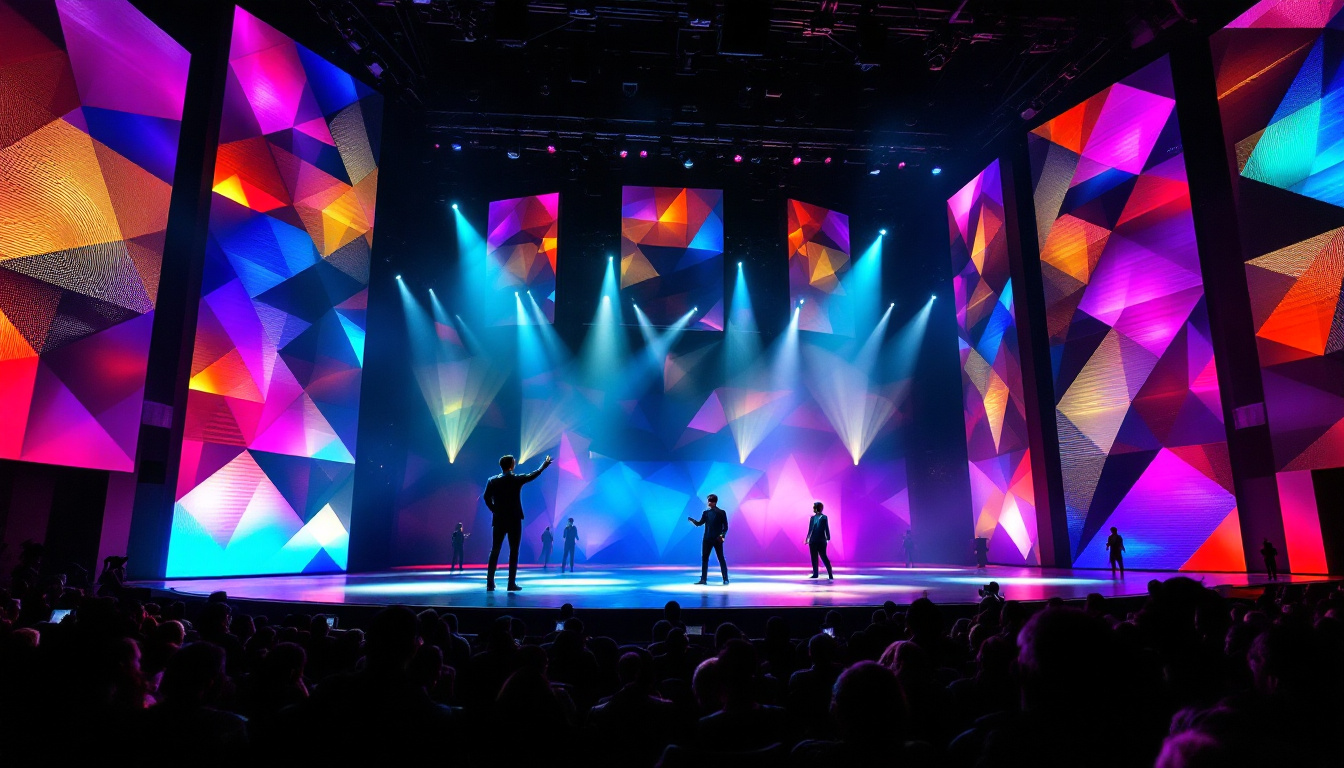
Moreover, LED displays offer excellent color accuracy and contrast ratios, which help in rendering vibrant images that captivate audiences. Their modular design allows for custom shapes and sizes, enabling stadiums to install massive screens that fit unique architectural requirements.
Types of LED Displays Used in Sports
There are several types of LED displays commonly used in sports settings:
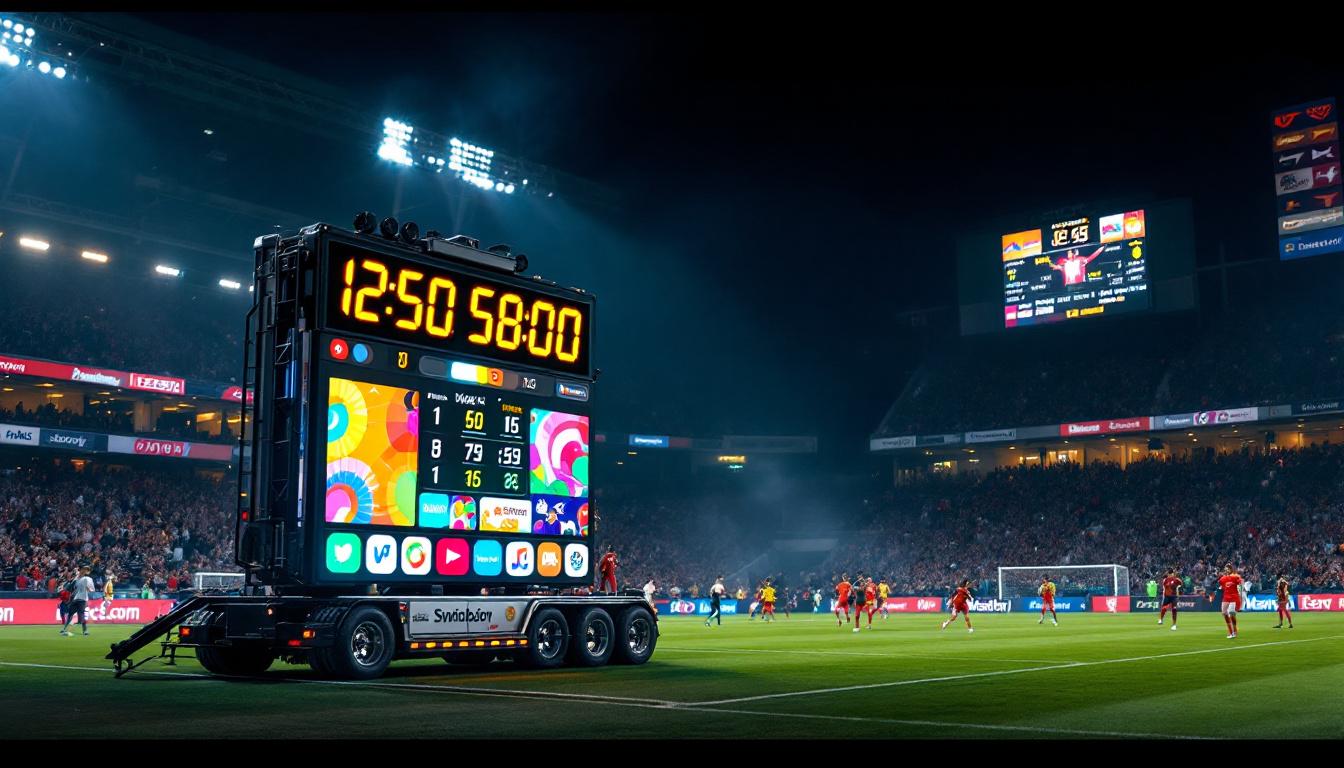
- Jumbotron Screens: These are large-scale LED video boards typically placed at one or both ends of a stadium. They display live game footage, instant replays, and advertisements.
- Ribbon Boards: Narrow, horizontal LED strips that run along the perimeter of the arena or stadium. They are often used for displaying scores, stats, and sponsor messages.
- Pitch-Side LED Panels: These are smaller LED boards placed around the playing field, often used for dynamic advertising that can be changed in real-time.
Each type of LED display plays a specific role in enhancing the fan experience by providing clear, engaging visual content throughout the event.
Integrating Camera Sport 4K with LED Displays
How 4K Footage Enhances LED Display Content
The marriage of 4K camera technology and LED displays creates a synergy that elevates the spectator experience. High-resolution 4K footage ensures that content displayed on LED screens is crisp and detailed, even on the largest video boards.
For instance, when a stadium’s Jumbotron displays a close-up of a player’s celebration, the 4K resolution ensures every detail—from sweat droplets to facial expressions—is visible, making the moment more impactful. This level of detail is not only visually impressive but also emotionally engaging for fans.
Technical Challenges and Solutions
Integrating 4K camera feeds with LED displays is not without its challenges. The sheer volume of data generated by 4K video requires high-bandwidth transmission and robust processing hardware to ensure smooth playback without lag or degradation.
To address this, sports venues and broadcasters employ advanced video processing systems capable of handling 4K streams in real-time. These systems often use compression algorithms optimized for low latency and high image fidelity. Additionally, fiber optic networks and 5G wireless technology are increasingly used to transmit 4K video feeds efficiently across large venues.
Real-Time Analytics and Augmented Reality
Beyond simply displaying live footage, the integration of 4K cameras and LED displays enables advanced features like real-time analytics and augmented reality (AR) overlays. For example, during a basketball game, LED screens can show player statistics, shot trajectories, or heat maps directly on the court or in the broadcast feed.
These enhancements rely on precise synchronization between camera systems and display technology, often powered by AI-driven software. This not only enriches the viewing experience but also provides valuable insights for coaches, players, and fans alike.
Benefits for Broadcasters, Teams, and Fans
For Broadcasters: Superior Content Quality and Flexibility
Broadcasters benefit immensely from Camera Sport 4K and LED display integration. The ability to capture and transmit ultra-high-definition footage allows them to produce visually stunning broadcasts that stand out in a competitive media landscape.
Moreover, the flexibility of LED displays to show multiple content types—live action, replays, stats, and advertisements—enables broadcasters to create dynamic programming that keeps viewers engaged. This versatility also opens up new revenue streams through targeted advertising and sponsorships.
For Teams: Enhanced Fan Engagement and Branding
Sports teams leverage LED displays and 4K content to deepen fan engagement. High-quality visuals help create memorable in-stadium experiences that encourage attendance and loyalty. Teams can also use LED boards to promote merchandise, upcoming events, and community initiatives.
Additionally, the ability to show detailed replays and player highlights on LED screens enhances transparency and trust, especially in officiating decisions. This contributes to a more positive relationship between teams, fans, and officials.
For Fans: Immersive and Interactive Viewing
Ultimately, fans are the biggest beneficiaries of these technological advancements. Whether attending games in person or watching from home, the combination of 4K cameras and LED displays delivers a more immersive and interactive experience.
Fans can enjoy crystal-clear images, instant replays, and real-time statistics that deepen their understanding and enjoyment of the sport. In stadiums, vibrant LED displays create an electrifying atmosphere that amplifies the excitement of live events.
Future Trends in Camera Sport 4K and LED Display Technology
8K and Beyond: The Next Resolution Frontier
While 4K is currently the standard for high-quality sports broadcasting, the industry is already exploring 8K resolution, which offers four times the pixels of 4K. Although 8K adoption is still in its early stages due to bandwidth and hardware limitations, it promises even greater detail and realism in sports coverage.
As 8K cameras and LED displays become more accessible, fans can expect an even more immersive viewing experience, with ultra-high-definition visuals that bring them closer to the action than ever before.
MicroLED and Flexible Displays
On the display front, MicroLED technology is emerging as a game-changer. MicroLEDs offer higher brightness, better energy efficiency, and longer lifespans compared to traditional LEDs. They also enable the creation of flexible and transparent displays, opening new possibilities for innovative stadium designs and fan engagement tools.
AI and Machine Learning Enhancements
Artificial intelligence and machine learning are playing increasingly important roles in sports broadcasting. These technologies can automate camera operations, optimize video quality, and generate real-time insights that enhance both the broadcast and in-stadium experiences.
For example, AI-powered cameras can automatically track players and the ball, ensuring that the most relevant action is always in frame. Combined with LED displays, this technology can deliver personalized content to fans based on their preferences and viewing habits.
Conclusion
The integration of Camera Sport 4K technology with advanced LED displays is transforming the way sports are experienced by audiences worldwide. By delivering ultra-high-definition visuals, vibrant colors, and dynamic content, this combination enhances the excitement and engagement of live events, whether in the stadium or through broadcast media.
As technology continues to evolve, the future promises even more immersive and interactive sports experiences, driven by innovations in resolution, display technology, and artificial intelligence. For broadcasters, teams, and fans alike, staying informed about these developments is key to fully appreciating the next generation of sports entertainment.
Explore the Future of Visual Experience with LumenMatrix
Ready to elevate your sports broadcasting or live event coverage to the next level? Discover LumenMatrix’s innovative LED display solutions, where cutting-edge technology meets stunning visual performance. From Indoor and Outdoor LED Wall Displays to specialized LED Sports and Floor Displays, LumenMatrix offers a wide array of modules designed to captivate your audience and amplify your message. Embrace the revolution in visual communication and check out LumenMatrix LED Display Solutions today to create unforgettable experiences and enhance brand visibility like never before.