Understanding measurements is essential in many aspects of daily life, from tailoring clothes to setting up electronic devices. One common conversion that often arises is translating centimeters into feet and inches. This article delves into the specific conversion of 173 centimeters into feet and inches, while also exploring how LED displays can visually represent such measurements in an intuitive and user-friendly way.
Converting 173 Centimeters to Feet and Inches
Measurements in centimeters are standard in most countries worldwide, especially those using the metric system. However, in the United States and a few other countries, feet and inches remain the preferred units for height and length. To bridge this gap, understanding how to convert between these units is crucial.
The Mathematical Breakdown
One inch is defined as exactly 2.54 centimeters. Therefore, to convert 173 centimeters to inches, the calculation is:
173 cm ÷ 2.54 cm/inch = 68.11 inches
Since 1 foot equals 12 inches, the next step is to convert 68.11 inches into feet and inches:
68.11 inches ÷ 12 inches/foot = 5 feet with a remainder
Calculating the remainder:
68.11 – (5 × 12) = 68.11 – 60 = 8.11 inches
Thus, 173 centimeters is approximately 5 feet 8.11 inches.
Practical Implications of This Conversion
Knowing that 173 cm equals roughly 5 feet 8 inches is particularly useful in contexts such as clothing sizes, fitness tracking, and medical assessments. For instance, many clothing brands in the U.S. use feet and inches for sizing charts, so understanding this conversion helps consumers select the right fit.
Similarly, in healthcare, height measurements are often recorded in feet and inches in certain countries, making this conversion essential for accurate record-keeping and communication.
Beyond practical applications, this conversion can also play a significant role in sports and fitness. Athletes often need to track their height for performance assessments, and coaches may use this information to tailor training programs. For example, a basketball coach might consider a player’s height in feet and inches when evaluating their potential for playing positions, as certain roles may favor taller players. Additionally, fitness apps frequently utilize height in their calculations for body mass index (BMI) and other health metrics, emphasizing the importance of accurate height conversion.
Furthermore, understanding height in both metric and imperial units can enhance travel experiences. When visiting countries that predominantly use the metric system, travelers may find themselves needing to convert their height for various activities, such as participating in local sports or fitting into equipment like bicycles or climbing gear. This knowledge not only facilitates smoother interactions but also fosters a deeper appreciation for the diverse systems of measurement used around the world.
How LED Displays Represent Measurements
LED (Light Emitting Diode) displays are ubiquitous in modern technology, from digital clocks to sophisticated measurement tools. Their ability to clearly and efficiently present numerical data makes them ideal for displaying measurements such as height or length.
Types of LED Displays
LED displays come in various forms, including seven-segment displays, dot matrix displays, and full-color LED panels. Each type serves a different purpose depending on the complexity and detail of the information to be shown.
- Seven-Segment Displays: These are commonly used for displaying digits, such as in digital watches or calculators. They are ideal for showing simple numerical values like “5’8”.
- Dot Matrix Displays: These can display letters and numbers, allowing for more descriptive text alongside measurements.
- Full-Color LED Panels: Used in large-scale displays, they can combine text, numbers, and graphics for comprehensive information presentation.
Displaying Height Measurements on LEDs
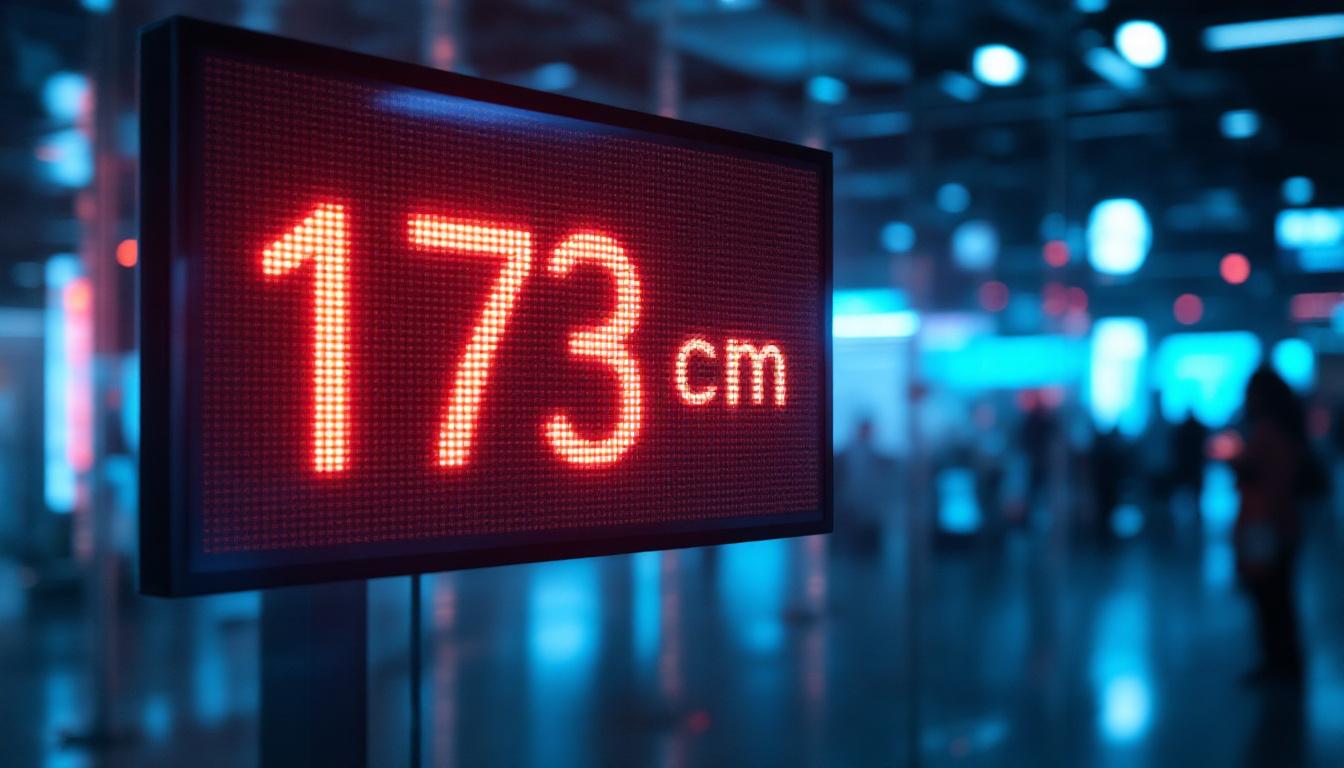
When it comes to showing height measurements like 173 cm or 5 feet 8 inches, LED displays typically use seven-segment or dot matrix types. For example, a fitness device might show “5’8″” on its screen after converting the metric input.
Some advanced devices offer the option to switch between metric and imperial units, updating the LED display accordingly. This flexibility enhances user experience, especially for international users.
In addition to unit conversion, some LED displays incorporate features such as real-time tracking and historical data visualization. For instance, a smart scale might not only show your current height but also track changes over time, displaying trends in growth or weight loss. This capability is particularly beneficial for athletes or individuals monitoring their fitness progress, as it provides a comprehensive view of their physical changes.
Furthermore, the integration of LED displays with mobile applications has revolutionized how measurements are recorded and analyzed. Users can sync their devices to an app that logs height and weight data, allowing for personalized feedback and tailored fitness plans. This connectivity not only makes tracking more convenient but also encourages users to stay engaged with their health goals through interactive features and reminders.
Why Accurate Measurement Displays Matter
In many industries, the accuracy and clarity of measurement displays can significantly impact outcomes. This is especially true in healthcare, manufacturing, and sports.
Healthcare Applications
Medical devices often measure patient height and weight as part of routine assessments. An LED display that clearly shows these measurements can reduce errors and improve patient care. For example, a digital stadiometer might display height in centimeters or feet and inches, ensuring that healthcare providers have precise data for diagnoses and treatment plans. Furthermore, the integration of these displays with electronic health records (EHR) systems allows for seamless data entry, minimizing the risk of transcription errors and ensuring that patient information is always up to date. This real-time data capture can be vital for monitoring changes in a patient’s condition, enabling healthcare professionals to make informed decisions rapidly.
Manufacturing and Engineering
In manufacturing, precise measurements are crucial for quality control. LED displays integrated into measuring tools provide real-time feedback, allowing operators to make adjustments quickly. Displaying measurements in both metric and imperial units can facilitate communication across global teams. Additionally, advancements in measurement technology, such as smart sensors that connect to the Internet of Things (IoT), are enhancing the capabilities of measurement displays. These smart systems can alert operators to discrepancies in measurements, enabling proactive maintenance and reducing downtime. The ability to visualize data trends over time through these displays can also help identify patterns that lead to improved efficiency and product quality.
Sports and Fitness
Athletes and fitness enthusiasts often track their height and other metrics to monitor progress. Devices with LED displays that convert and show measurements in preferred units enhance usability and motivation. Moreover, the incorporation of features such as historical data tracking and personalized goal setting can further engage users. For instance, fitness trackers that display real-time heart rate, calories burned, and distance traveled empower individuals to optimize their workouts. Coaches and trainers can also benefit from these displays, as they provide immediate feedback on performance metrics, allowing for tailored training regimens that can lead to better outcomes in competitions. The visual aspect of these displays can serve as a motivational tool, encouraging users to push their limits and achieve their fitness goals.
Technological Advances in LED Measurement Displays
Recent innovations have improved the functionality and versatility of LED displays in measurement devices.
Integration with Smart Technologies
Modern measurement devices increasingly connect with smartphones and cloud services, transmitting data for analysis and tracking. LED displays serve as the immediate interface, while connected apps provide deeper insights. This integration not only enhances user experience but also allows for real-time monitoring and alerts. For instance, a user can receive notifications on their smartphone if a measurement exceeds a predefined threshold, enabling prompt action. Furthermore, the ability to sync with cloud platforms means that data can be stored securely and accessed from anywhere, facilitating collaboration among teams and streamlining workflows.
Enhanced Readability and Customization
Advancements in LED technology have led to displays with better brightness, contrast, and color options. Users can customize the display format, choosing between metric and imperial units or adjusting font sizes for better readability. This level of customization is particularly beneficial in environments with varying lighting conditions, where glare can hinder visibility. Additionally, some devices now feature adaptive brightness controls that automatically adjust the display according to ambient light, ensuring optimal readability at all times. This attention to user-centric design not only improves functionality but also enhances the overall user experience, making measurement tasks more efficient and less error-prone.
Energy Efficiency and Durability
LEDs are known for their low power consumption and long lifespan, making them ideal for portable measurement devices. This ensures that devices remain functional over extended periods without frequent battery replacements. Moreover, the robust nature of LED technology contributes to the durability of measurement displays, allowing them to withstand harsh environmental conditions such as extreme temperatures, humidity, and vibrations. As a result, professionals working in fields like construction, engineering, and outdoor research can rely on these devices to perform consistently, even in the most challenging situations. The combination of energy efficiency and resilience not only reduces operational costs but also minimizes environmental impact, aligning with the growing emphasis on sustainability in technology design.
Summary: Bridging Units and Display Technology
Converting 173 centimeters to feet and inches results in approximately 5 feet 8 inches, a conversion that is essential for various practical applications. LED displays play a pivotal role in presenting these measurements clearly and accurately, enhancing user experience across healthcare, manufacturing, and fitness sectors.
As LED technology continues to evolve, the integration of measurement displays with smart devices and customizable features will further improve how users interact with and understand their data. Whether for personal use or professional settings, the combination of accurate unit conversion and effective LED display technology ensures clarity and precision in measurement communication.
Discover LumenMatrix’s Advanced LED Display Solutions
As you consider the importance of precise measurements and the role of LED displays in enhancing user experience, we invite you to explore the innovative world of LumenMatrix. Our commitment to revolutionizing visual communication is evident in our diverse range of LED display modules, designed to meet your specific needs. From Indoor and Outdoor LED Wall Displays to Custom and All-in-One LED solutions, LumenMatrix is here to elevate your brand’s visibility and create immersive visual experiences. Don’t miss the opportunity to transform your space with our cutting-edge technology. Check out LumenMatrix LED Display Solutions today and see the difference for yourself.