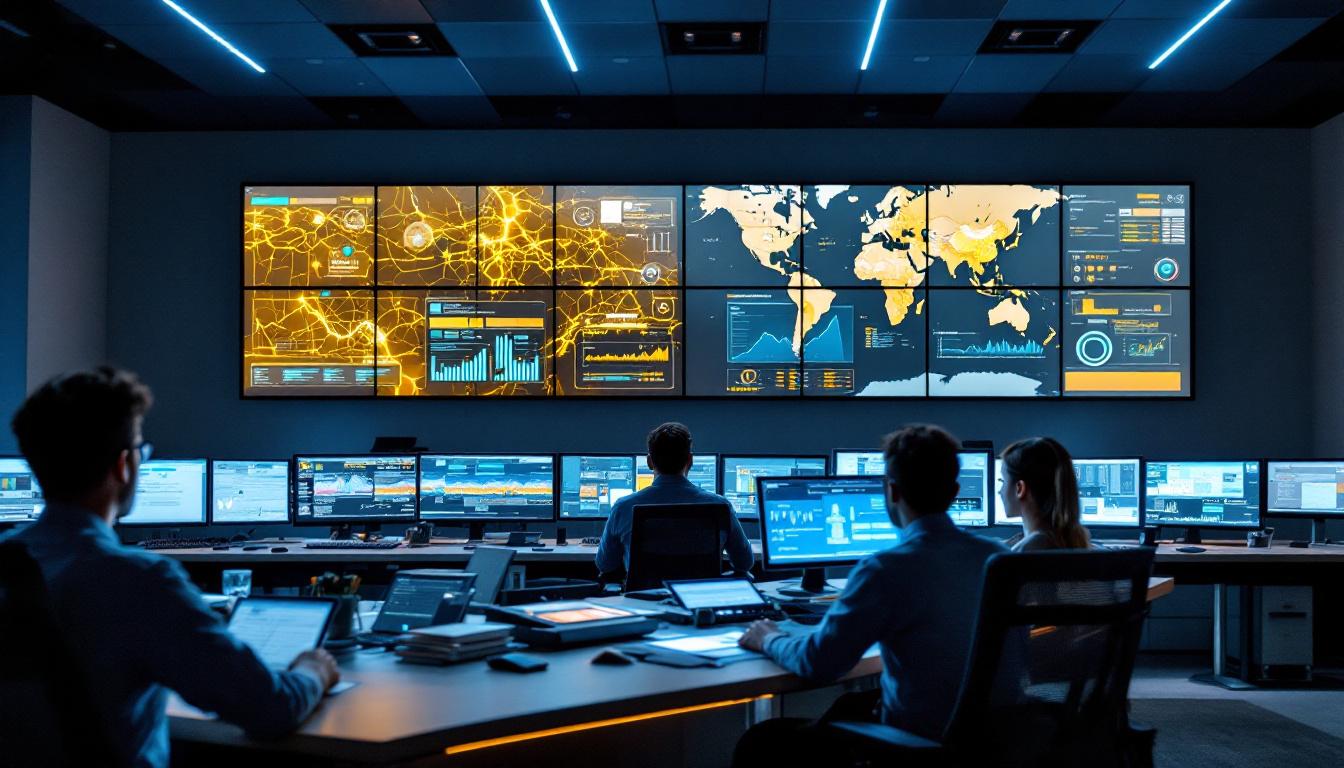
In modern defense operations, the control room is the nerve center where critical decisions are made based on real-time data and intelligence. One of the most vital components of these control rooms is the display technology used to present information clearly and efficiently. LED displays have emerged as the preferred choice for defense control rooms worldwide due to their superior performance, reliability, and flexibility. This article delves into the role of LED displays in defense control rooms, exploring their technology, advantages, and the reasons behind their widespread adoption.
The Critical Role of Display Technology in Defense Control Rooms
Defense control rooms are tasked with monitoring a vast array of data streams—from satellite feeds and radar signals to cybersecurity alerts and communication networks. The ability to visualize this data accurately and promptly can be the difference between mission success and failure. Display technology in these environments must meet stringent requirements for clarity, responsiveness, and durability.
Unlike conventional office or consumer-grade displays, defense control room screens must operate continuously under demanding conditions. They need to support multi-source inputs, high resolution, and often, large-scale video walls that provide a comprehensive situational overview. This necessity has driven the adoption of LED display technology, which excels in these areas.
Why Traditional Displays Fall Short
Historically, control rooms relied on LCD or projection-based displays. While these technologies served their purpose, they presented limitations such as lower brightness, limited viewing angles, and susceptibility to image retention or burn-in. In high-stakes defense environments, these drawbacks can hinder situational awareness and delay response times.
Furthermore, traditional displays often struggle with scalability. Expanding a display wall to cover a larger area or increasing resolution can be complex and costly. In contrast, LED displays offer modularity and flexibility, allowing defense agencies to tailor their visual setups to evolving operational needs.
In addition to their superior performance, LED displays also provide enhanced color accuracy and contrast ratios, which are crucial for interpreting complex data visualizations. The ability to distinguish between subtle variations in color can significantly impact the interpretation of critical information, such as identifying potential threats or anomalies in data patterns. This level of detail is particularly vital during joint operations, where multiple agencies must collaborate and share information seamlessly. The advanced calibration capabilities of modern LED technology ensure that all operators have a consistent view, reducing the risk of miscommunication and errors in high-pressure situations.
Moreover, the integration of advanced software solutions with LED display technology allows for real-time data analytics and visualization. Control rooms can leverage these tools to create dynamic dashboards that automatically update as new information comes in. This capability not only enhances situational awareness but also supports predictive analysis, enabling defense personnel to anticipate potential developments and respond proactively. As defense operations become increasingly data-driven, the role of sophisticated display technology will only continue to grow, underscoring its importance in maintaining national security and operational effectiveness.
Understanding LED Display Technology
LED, or Light Emitting Diode, displays use an array of tiny semiconductor light sources to produce images. Unlike LCDs, which rely on backlighting, LEDs emit light directly, resulting in brighter and more vivid images. This fundamental difference underpins many of the advantages LED displays provide in defense applications.
Types of LED Displays Used in Defense Control Rooms
There are primarily two types of LED displays relevant to control rooms: direct view LED (DVLED) and LED-backlit LCDs. DVLED displays consist of individual LEDs arranged in a grid, capable of producing images with exceptional brightness and contrast. These are often used for large video walls where visibility from various angles and distances is critical.
LED-backlit LCDs, on the other hand, are traditional LCD panels illuminated by LEDs. While they offer improved brightness and energy efficiency compared to older CCFL-backlit LCDs, they do not match the performance of direct view LED displays in large-scale, high-visibility environments.
Pixel Pitch and Resolution
One of the most important specifications in LED displays is pixel pitch—the distance between the centers of two adjacent LEDs. Smaller pixel pitches yield higher resolution and finer image detail, which is essential for displaying complex maps, satellite imagery, and detailed sensor data in defense control rooms.
Modern LED displays designed for control rooms often feature pixel pitches ranging from 0.9mm to 2.5mm, balancing resolution with cost and installation complexity. Advances in micro-LED technology are pushing these boundaries even further, promising ultra-high-definition displays in the near future.
Advantages of LED Displays in Defense Control Rooms
LED displays bring a host of benefits that make them ideally suited for the demanding environment of defense control rooms. These advantages encompass image quality, operational reliability, and adaptability.
Exceptional Brightness and Contrast
Defense control rooms often contend with varying ambient lighting conditions, from dimly lit command centers to rooms with significant natural light. LED displays provide superior brightness levels—often exceeding 1,000 nits—ensuring that images remain clear and legible under any lighting condition.
Additionally, the inherent contrast ratio of direct view LED displays is significantly higher than that of LCDs, enabling deeper blacks and more vibrant colors. This enhances the clarity of critical visual data, such as threat indicators and geospatial information.
Wide Viewing Angles and Uniformity
Control room operators may be positioned at various angles relative to the display wall. LED technology offers wide viewing angles, often close to 180 degrees horizontally and vertically, without color distortion or brightness loss. This ensures that all personnel have an unobstructed view of the information, facilitating better collaboration and decision-making.
Durability and Long Lifespan
Defense environments demand equipment that can operate reliably 24/7 with minimal downtime. LED displays are known for their durability and long operational lifespans, often rated for 100,000 hours or more. They are less prone to issues like screen burn-in and can withstand temperature fluctuations and vibrations better than many other display types.
Modularity and Scalability
One of the standout features of LED displays is their modular design. Panels can be combined seamlessly to create video walls of virtually any size and shape. This scalability allows defense agencies to customize their control room layouts and expand or reconfigure displays as operational needs evolve.
Moreover, modular LED systems simplify maintenance. Individual panels can be replaced or serviced without dismantling the entire display, minimizing downtime during critical operations.
Energy Efficiency and Reduced Heat Output
Operating a control room with multiple large displays can consume significant power and generate heat, impacting operational costs and environmental controls. LED displays are more energy-efficient than traditional technologies, reducing electricity consumption and the associated cooling requirements. This efficiency contributes to sustainable defense infrastructure initiatives.
Applications of LED Displays in Defense Control Rooms
LED displays serve multiple functions within defense control rooms, supporting a wide range of operational needs.
Real-Time Situational Awareness
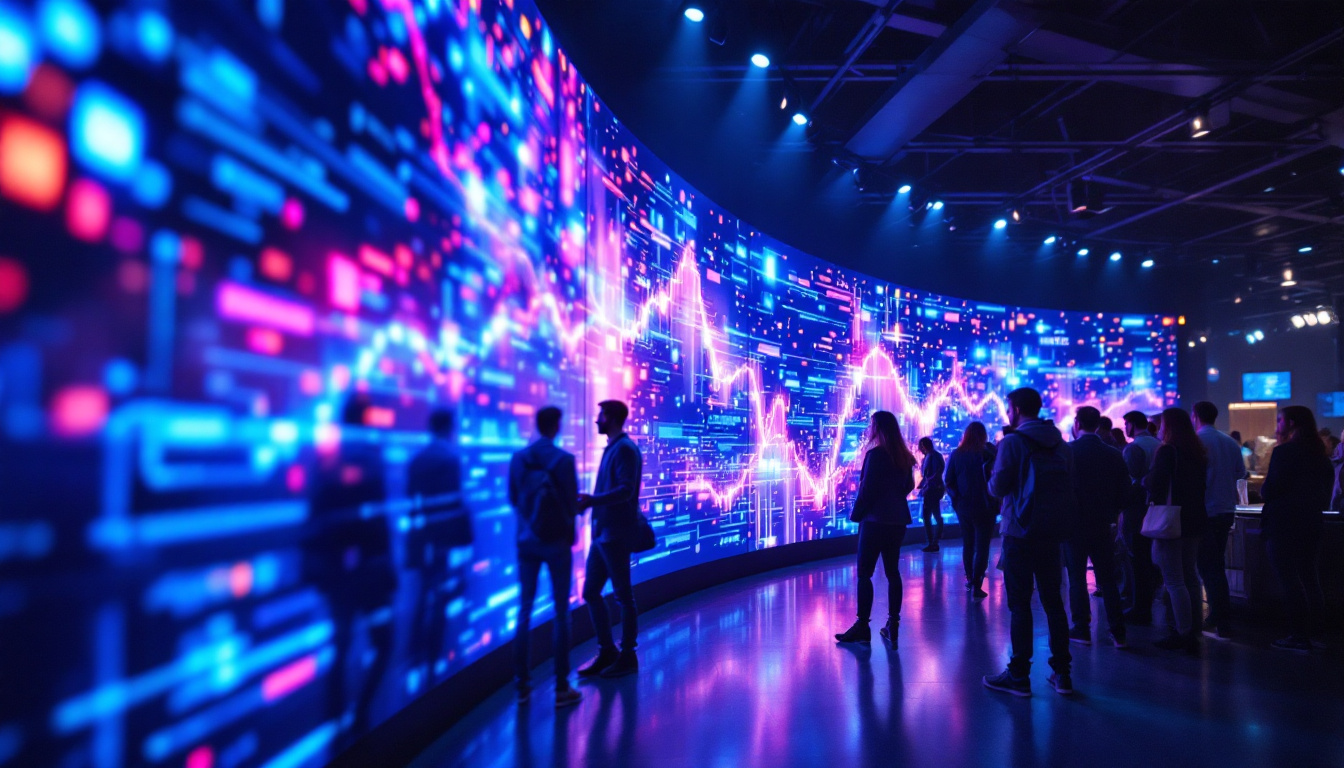
At the heart of any defense operation is situational awareness. LED video walls display live feeds from radar, sonar, drones, and satellites, enabling operators to monitor airspace, maritime zones, and ground movements in real time. The high resolution and brightness of LED displays ensure that even subtle changes in the data are visible immediately.
Command and Control Visualization
Commanders rely on comprehensive visualizations to coordinate forces and manage resources. LED displays can integrate multiple data sources into a unified interface, displaying maps, troop movements, and communication channels simultaneously. This integrated view supports rapid decision-making and effective command execution.
Cybersecurity Monitoring
With cyber threats becoming increasingly sophisticated, defense control rooms also monitor network security in real time. LED displays present dashboards that track intrusion attempts, system health, and threat intelligence feeds, allowing cybersecurity teams to respond swiftly to incidents.
Training and Simulation
Beyond live operations, LED displays are instrumental in training exercises and simulations. Large video walls create immersive environments where personnel can rehearse scenarios, test strategies, and evaluate responses under realistic conditions. The clarity and scale of LED displays enhance the effectiveness of these training programs.
Challenges and Considerations in Implementing LED Displays
While LED displays offer numerous benefits, integrating them into defense control rooms requires careful planning and consideration.
Initial Investment and Cost Management
High-quality LED display systems represent a significant upfront investment. Defense agencies must weigh the long-term operational advantages against initial costs. However, the durability, energy efficiency, and reduced maintenance needs of LED displays often translate into lower total cost of ownership over time.
Installation and Calibration
Installing large LED video walls demands precision to ensure seamless image quality. Calibration is critical to maintain color consistency and brightness uniformity across the entire display surface. Professional installation teams with experience in defense environments are essential to achieve optimal results.
Integration with Existing Systems
Defense control rooms typically operate a complex mix of hardware and software platforms. LED displays must integrate smoothly with these systems, supporting various input formats, resolutions, and control protocols. Compatibility and interoperability are key factors in selecting LED display solutions.
Maintenance and Support
Ongoing maintenance is vital to ensure continuous operation. LED displays require periodic cleaning, firmware updates, and occasional panel replacements. Establishing a robust support framework with rapid response capabilities is crucial for minimizing disruptions in mission-critical environments.
The Future of LED Displays in Defense Control Rooms
Technological advancements continue to push the capabilities of LED displays, promising even greater benefits for defense control rooms in the coming years.
Micro-LED and Quantum Dot Technologies
Emerging micro-LED technology offers ultra-fine pixel pitches and higher brightness with lower power consumption. Combined with quantum dot enhancements, future LED displays will deliver unprecedented color accuracy and image fidelity, further improving situational awareness.
AI-Driven Display Management
Artificial intelligence is beginning to play a role in managing display content dynamically. AI algorithms can prioritize and highlight critical information, adjust brightness based on ambient conditions, and automate fault detection and correction, enhancing operational efficiency.
Flexible and Transparent LED Displays
Innovations in flexible and transparent LED panels open new possibilities for control room design. These displays can be curved, wrapped, or integrated into windows and surfaces, creating immersive environments that enhance operator engagement and comfort.
Conclusion
LED displays have become an indispensable component of defense control rooms, offering unmatched brightness, clarity, and reliability essential for mission-critical operations. Their modularity, energy efficiency, and scalability make them adaptable to the evolving demands of modern defense environments. As technology advances, LED displays will continue to enhance the capabilities of defense control centers, supporting faster decision-making and improved situational awareness.
For defense agencies seeking to upgrade or establish control room infrastructure, investing in state-of-the-art LED display technology is a strategic move that delivers both immediate and long-term operational benefits.
Explore Cutting-Edge LED Solutions with LumenMatrix
Ready to elevate your defense control room with the latest in LED display technology? LumenMatrix is at the forefront of innovation, offering a diverse range of LED display solutions tailored to meet the rigorous demands of modern defense environments. From Indoor and Outdoor LED Wall Displays to specialized options like Vehicle, Sports, and Floor LED Displays, our products are designed to ensure superior visual communication and engagement. Discover how our Custom, All-in-One, and Transparent LED Displays can transform your operations. Check out LumenMatrix LED Display Solutions today and step into the future of visual technology.