Active Matrix LCD: LED Display Explained
In today’s world of digital displays, terms like LCD, LED, and Active Matrix often create confusion among consumers and even professionals. Understanding these technologies is essential not only for making informed purchasing decisions but also for appreciating how modern screens deliver stunning visuals. This article delves into the intricacies of Active Matrix LCDs and LED displays, clarifying their differences, advantages, and applications.
Understanding the Basics: What Is an LCD?
LCD stands for Liquid Crystal Display, a technology that has revolutionized the way images are rendered on screens. Unlike older cathode ray tube (CRT) monitors, LCDs use liquid crystals to modulate light and create images. These crystals don’t emit light themselves; instead, they manipulate light passing through them to produce visible images.
The core principle behind LCDs involves the alignment of liquid crystal molecules when an electric current is applied. This alignment controls the passage of light from a backlight source, allowing the screen to display different colors and shades. The backlight is crucial because, without it, the screen would appear dark. Most modern LCDs utilize LED (Light Emitting Diode) backlighting, which not only enhances brightness and energy efficiency but also allows for thinner designs compared to traditional fluorescent backlights.
Types of LCDs: Passive vs. Active Matrix
LCDs can be broadly categorized into two types: passive matrix and active matrix. Passive matrix LCDs were among the earliest types, characterized by a grid of conductive traces that controlled pixels by intersecting rows and columns. However, this method had limitations in response time and image quality, often resulting in slower refresh rates and poorer color reproduction. As a result, passive matrix displays are now primarily found in older devices or specialized applications where high performance is not critical.
Active matrix LCDs, on the other hand, use a thin-film transistor (TFT) array to control each pixel individually. This approach significantly improves refresh rates, color accuracy, and overall display sharpness, making active matrix LCDs the standard for modern screens. The technology behind TFT LCDs allows for faster pixel response times, which is especially beneficial for dynamic content such as video games and movies. Additionally, advancements in LCD technology have led to the development of variations like IPS (In-Plane Switching) and VA (Vertical Alignment) panels, each offering unique advantages in color reproduction and viewing angles, further enhancing the user experience across a wide range of applications, from smartphones to large television displays.
What Is Active Matrix Technology?
Active matrix technology refers to the use of a transistor and capacitor for each pixel on the display. This transistor acts as a switch that controls the pixel’s state, allowing precise and rapid changes in brightness and color. The capacitor holds the pixel’s charge until the next refresh cycle, ensuring stable image display. This technology is foundational in modern display devices, enabling them to deliver high-quality visuals that meet the demands of today’s multimedia applications.
The integration of thin-film transistors (TFTs) on the glass substrate is what distinguishes active matrix LCDs. Each pixel is paired with its own transistor, enabling independent control. This eliminates the ghosting and slow response times associated with passive matrix displays. Additionally, the compact nature of TFT technology allows for thinner screens, which is particularly beneficial in the design of portable devices like smartphones and tablets, where space is at a premium.
How Active Matrix Improves Display Performance
Active matrix LCDs offer several key advantages over passive matrix types:
- Faster Response Times: By controlling each pixel individually, active matrix displays can change images quickly, reducing motion blur in videos and games.
- Higher Resolution: The precise control allows for denser pixel arrangements, resulting in sharper images and finer detail.
- Better Color Accuracy: Active matrix technology supports more accurate color reproduction, essential for professional applications like photo editing and medical imaging.
- Improved Brightness and Contrast: The stable pixel control enhances overall image quality, making displays easier to view in various lighting conditions.
Furthermore, active matrix technology has paved the way for advancements in display types such as OLED and AMOLED, which utilize similar principles to achieve even greater color vibrancy and energy efficiency. These technologies leverage the active matrix structure to control organic light-emitting diodes, allowing each pixel to emit its own light rather than relying on a backlight. This results in deeper blacks and a wider color gamut, making them increasingly popular in high-end televisions and mobile devices.
Moreover, the evolution of active matrix technology continues to influence the development of flexible and foldable displays. By maintaining the essential characteristics of pixel control while allowing for innovative form factors, manufacturers are exploring new possibilities in design and functionality. This could lead to devices that not only adapt to user preferences but also enhance the overall interactive experience, making displays not just a medium for viewing content but an integral part of the user interface.
LED Displays: Clarifying the Terminology
Often, the term “LED display” is used interchangeably with LCD, which can be misleading. To clarify, LED stands for Light Emitting Diode, a type of semiconductor light source. When discussing LED displays in consumer electronics, it usually refers to LCD screens that use LED backlighting instead of older cold cathode fluorescent lamps (CCFLs).
LED backlighting has become the industry standard for LCDs due to its efficiency, longevity, and ability to produce better brightness and contrast. However, it’s important to distinguish between true LED displays and LED-backlit LCDs.
True LED Displays vs. LED-Backlit LCDs
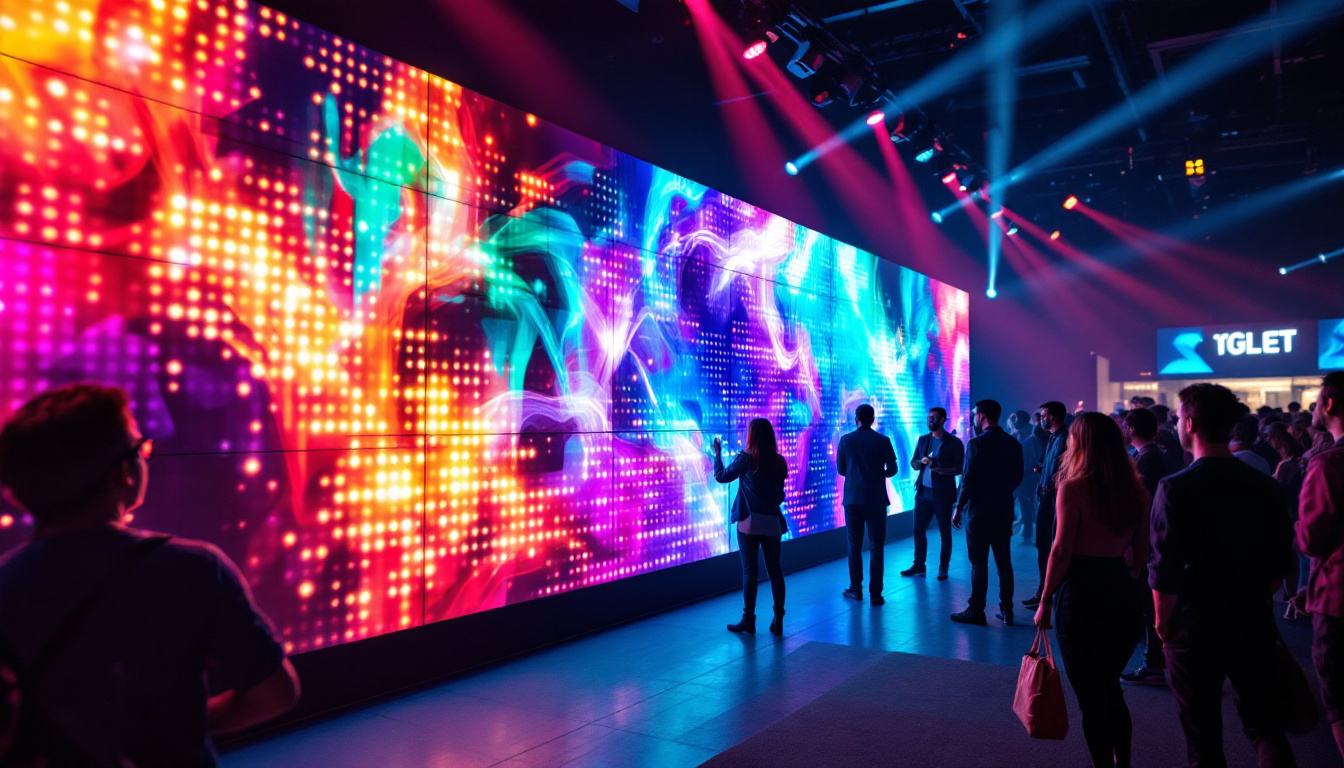
True LED Displays are made up of arrays of individual LEDs that form the image directly. These are commonly used in large outdoor screens, digital billboards, and some high-end televisions. They can be further divided into:
- Direct-View LED (DV-LED): Each pixel is an individual LED or a cluster of LEDs, allowing for extremely bright and vibrant images.
- MicroLED: An emerging technology where microscopic LEDs create images with exceptional brightness, contrast, and energy efficiency.
LED-Backlit LCDs utilize LEDs solely as a backlight source behind the liquid crystal panel. The LCD layer modulates this light to produce the final image. This design combines the mature LCD technology with the benefits of LED lighting.
How LED Backlighting Enhances Active Matrix LCDs
Integrating LED backlighting into active matrix LCDs has led to significant improvements in display quality and energy efficiency. LED backlights can be arranged in different configurations:
- Edge-Lit LED: LEDs are placed along the edges of the screen, and light is guided across the panel using light guides. This allows for thinner displays but can sometimes lead to uneven brightness.
- Full-Array LED: LEDs are distributed evenly behind the entire screen, providing more uniform brightness and enabling local dimming features.
Local dimming allows the display to dim specific areas of the screen independently, improving contrast ratios and deepening blacks. This feature is especially beneficial for HDR (High Dynamic Range) content, where the difference between bright and dark areas is critical.
Energy Efficiency and Longevity
Compared to CCFL backlights, LEDs consume less power and generate less heat, contributing to longer device lifespans and reduced energy costs. This efficiency is particularly important for mobile devices like smartphones and laptops, where battery life is a key concern.
Applications of Active Matrix LCD with LED Backlighting
The combination of active matrix technology and LED backlighting is prevalent across a wide range of devices, from everyday consumer electronics to specialized professional equipment.
Consumer Electronics
Smartphones, tablets, laptops, and televisions predominantly use active matrix LCDs with LED backlights. For instance, many popular laptop models feature IPS (In-Plane Switching) panels, a type of active matrix LCD known for superior color accuracy and wide viewing angles, illuminated by LED backlights.
In televisions, LED-backlit active matrix LCDs dominate the market, offering an excellent balance between cost, image quality, and energy consumption. Advances like quantum dot technology have further enhanced color performance in these displays.
Professional and Industrial Uses
Active matrix LCDs are also crucial in fields requiring precise image reproduction. Medical imaging devices, graphic design monitors, and air traffic control displays rely on the high resolution and color fidelity provided by these screens.
Moreover, ruggedized active matrix LCDs with LED backlighting are used in industrial environments where durability and readability under various lighting conditions are essential.
Future Trends and Innovations
The display industry continues to evolve rapidly, with ongoing research aimed at overcoming current limitations and enhancing user experience.
MicroLED and OLED Technologies
MicroLED displays promise to combine the best aspects of LED and LCD technologies: high brightness, excellent contrast, and energy efficiency without the need for backlighting. Although still in development for mass-market applications, MicroLED could eventually supplant traditional active matrix LCDs.
Organic Light Emitting Diode (OLED) technology offers self-emissive pixels, eliminating the need for backlighting altogether. OLEDs provide perfect blacks and vibrant colors but currently face challenges related to cost and lifespan, especially for larger screens.
Advances in Active Matrix Design
Research is also focusing on improving active matrix designs to support higher refresh rates, greater pixel densities, and flexible or foldable displays. These innovations will expand the applications of LCD technology into new form factors and use cases.
Conclusion: Choosing the Right Display Technology
Understanding the distinctions between active matrix LCDs and LED displays is vital for selecting the right screen for specific needs. Active matrix LCDs with LED backlighting offer a mature, reliable, and cost-effective solution for most applications, balancing image quality, energy efficiency, and durability.
While emerging technologies like MicroLED and OLED hold exciting potential, active matrix LCDs remain the backbone of the display industry. Whether for everyday devices or specialized professional equipment, they continue to deliver vibrant, sharp images that meet the demands of modern users.
Explore Cutting-Edge LED Displays with LumenMatrix
As you consider upgrading to the latest in display technology, let LumenMatrix guide you through a world of vibrant, high-performance LED solutions. With our commitment to innovation and quality, LumenMatrix offers an extensive range of LED display modules, from Indoor and Outdoor LED Wall Displays to specialized solutions like Vehicle LED Displays and LED Sports Displays. Our mission is to transform your visual communication, ensuring your message resonates with brilliance and precision. Check out LumenMatrix LED Display Solutions today and experience the future of display technology.