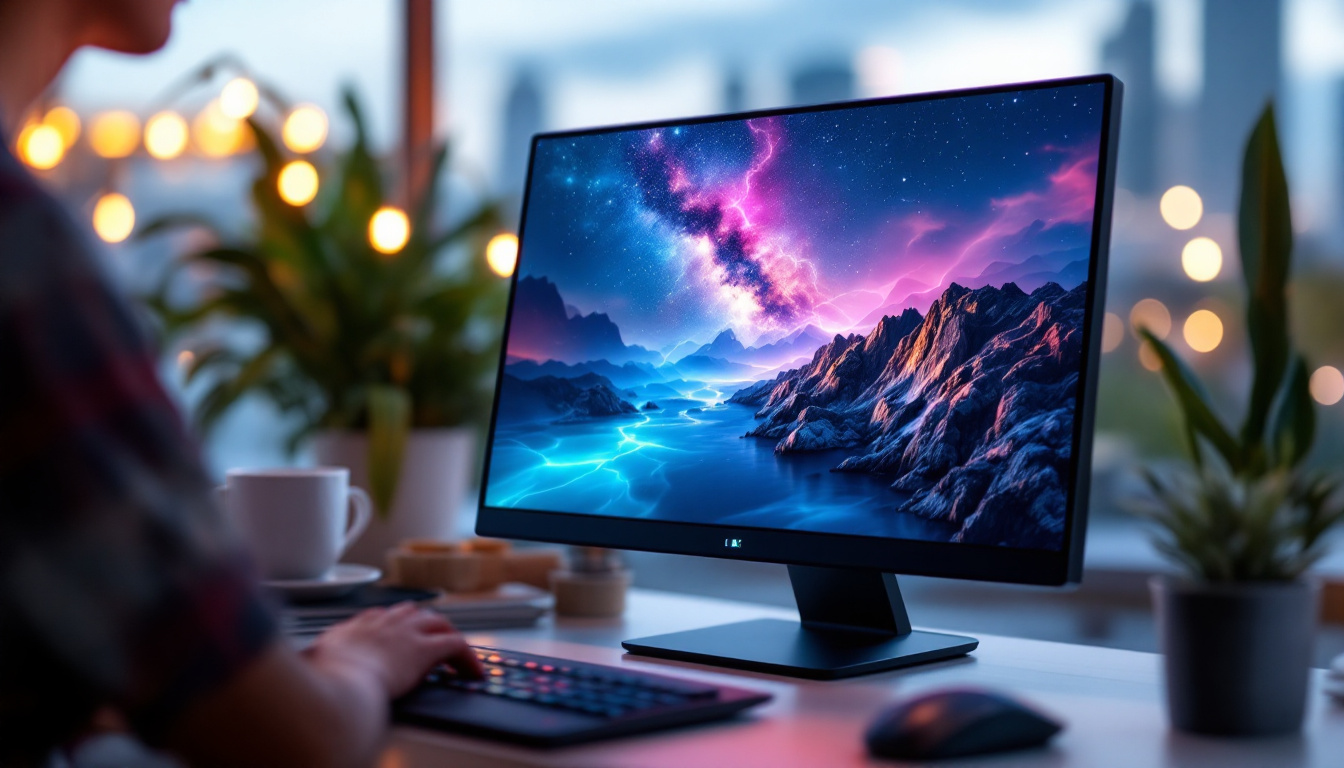
In today’s fast-paced digital world, choosing the right monitor is more important than ever. Whether for professional work, gaming, or everyday use, the display technology plays a critical role in user experience. Among the various types of displays, LED technology has become a dominant choice for consumers and professionals alike. This article dives deep into LED displays, explaining their technology, benefits, and what to consider when searching for monitors equipped with LED screens.
Understanding LED Display Technology
What is an LED Display?
LED stands for Light Emitting Diode, a semiconductor device that emits light when an electric current passes through it. In the context of monitors, LED displays use these diodes as a backlight source behind an LCD (Liquid Crystal Display) panel. This combination is often referred to as an LED-backlit LCD display.
Unlike older CCFL (Cold Cathode Fluorescent Lamp) backlighting, LEDs provide more efficient, brighter, and more uniform lighting. This results in better image quality, lower power consumption, and thinner screen designs. Additionally, LED technology has evolved to include features such as improved color accuracy and faster response times, making them ideal for a variety of applications, from gaming to professional graphic design.
Types of LED Displays
There are primarily two types of LED backlighting used in monitors:
- Edge-Lit LED: LEDs are placed along the edges of the screen, and light is distributed across the display using light guides. This design allows for ultra-thin monitors but may sometimes lead to uneven brightness or contrast.
- Full-Array LED: LEDs are arranged in a grid directly behind the screen. This setup enables local dimming, where specific zones can be dimmed or brightened independently, improving contrast and black levels significantly.
Understanding these types helps buyers make informed decisions based on their priorities, such as display thickness, image quality, and price. Furthermore, advancements in LED technology have led to the development of OLED (Organic Light Emitting Diode) displays, which offer even greater contrast ratios and color vibrancy by allowing individual pixels to emit their own light. This means that OLED displays can achieve true blacks and a wider color gamut, making them particularly appealing for those who prioritize visual fidelity in their viewing experience.
Moreover, the rise of MicroLED technology is also worth noting. MicroLED displays consist of tiny, self-emissive LEDs that can create stunning images without the need for backlighting. This technology promises to combine the best features of OLED and traditional LED displays, offering high brightness, excellent color accuracy, and improved durability. As these technologies continue to evolve, they are likely to redefine the standards for display quality in both consumer and professional markets.
Why LED Displays Are Popular in Monitors
Superior Image Quality
LED-backlit monitors typically offer better brightness and contrast ratios compared to traditional CCFL-backlit LCDs. This improvement translates into sharper images, more vivid colors, and deeper blacks. For professionals in graphic design, video editing, and photography, these qualities are crucial for accurate color representation.
Additionally, the ability of full-array LED monitors to perform local dimming enhances HDR (High Dynamic Range) content, making visuals more lifelike and immersive.
Energy Efficiency and Environmental Impact
One of the key advantages of LED backlighting is its energy efficiency. LED monitors consume significantly less power than their CCFL counterparts. According to the U.S. Department of Energy, LED-backlit LCDs can use up to 40% less energy, which not only reduces electricity bills but also lowers the carbon footprint.
Moreover, LEDs do not contain mercury, a hazardous substance found in CCFL tubes, making LED monitors more environmentally friendly and easier to recycle.
Design and Durability
LED technology enables manufacturers to create slimmer, lighter monitors without compromising screen size or quality. This trend aligns with modern aesthetics and ergonomic needs, as thinner monitors take up less desk space and are easier to mount or transport.
LEDs also have a longer lifespan than CCFLs, often exceeding 50,000 hours of use, which translates into greater durability and less frequent replacements.
Key Features to Consider When Shopping for LED Monitors
Resolution and Screen Size
Resolution determines the clarity and detail of the display. Common resolutions include Full HD (1920×1080), Quad HD (2560×1440), and 4K Ultra HD (3840×2160). For tasks requiring fine detail, such as video editing or CAD work, higher resolutions are preferable.
Screen size is another important factor. While larger screens provide more workspace and immersive experiences, they may also require higher resolutions to maintain sharpness. Typical monitor sizes range from 21 inches to 32 inches or more.
Refresh Rate and Response Time
For gamers and video editors, refresh rate and response time are critical. The refresh rate, measured in hertz (Hz), indicates how many times the screen updates per second. Standard monitors have 60Hz, but gaming monitors often feature 120Hz, 144Hz, or even 240Hz for smoother motion.
Response time refers to how quickly a pixel can change color, usually measured in milliseconds (ms). Lower response times reduce motion blur and ghosting, enhancing fast-paced visuals.
Color Accuracy and Gamut
Color accuracy is essential for professionals working with images and videos. Look for monitors that cover a wide color gamut, such as 99% sRGB or higher, and offer factory calibration or support for hardware calibration tools.
Some LED monitors support advanced color spaces like Adobe RGB or DCI-P3, which are beneficial for print and cinematic work, respectively.
Connectivity Options
Modern LED monitors come with various input ports, including HDMI, DisplayPort, USB-C, and sometimes legacy VGA or DVI. USB-C connectivity is increasingly popular as it allows video, data transfer, and power delivery through a single cable, simplifying setups.
Consider your devices and peripherals when choosing a monitor to ensure compatibility and convenience.
Additional Features
Some LED monitors offer extra features such as built-in speakers, adjustable stands, blue light filters, and flicker-free technology. These can enhance comfort during extended use and improve overall user experience.
How to Use Monitor Shopping Engines to Find the Best LED Display
What is a Monitor Shopping Engine?
A monitor shopping engine is an online platform that aggregates listings of monitors from multiple retailers, allowing users to compare prices, specifications, and reviews in one place. These engines simplify the research process by filtering options based on user preferences and budget.
Effective Search Strategies
When using a shopping engine to find LED monitors, start by setting key filters such as screen size, resolution, refresh rate, and price range. Many platforms allow filtering by backlight type, so specifying LED can narrow down the results quickly.
Reading user reviews and expert ratings is invaluable. Look for feedback on color accuracy, build quality, and after-sales service. Some shopping engines also provide comparison tools to evaluate multiple monitors side-by-side.
Price Trends and Deals
Monitor prices can fluctuate due to sales, new product releases, or seasonal promotions. Shopping engines often track price history, helping buyers identify the best times to purchase. Signing up for alerts can notify users when a desired model drops in price.
Additionally, consider refurbished or open-box options available through reputable sellers, which can offer significant savings without sacrificing quality.
Common Myths and Misconceptions About LED Monitors
LED Monitors Are the Same as OLED
One common misconception is that LED monitors and OLED (Organic Light Emitting Diode) monitors are the same. While both use diode technology, OLED displays differ fundamentally by emitting light from organic compounds at the pixel level, allowing for true blacks and superior contrast.
LED monitors use a backlight behind an LCD panel, which can limit contrast and black levels compared to OLED. OLED monitors are still relatively rare and expensive, but they represent the next frontier in display technology.
Higher Brightness Always Means Better Quality
While brightness is important, especially in well-lit environments, excessively high brightness can cause eye strain and reduce perceived contrast. The optimal brightness depends on ambient lighting conditions and personal preference.
Look for monitors with adjustable brightness and features like ambient light sensors that automatically optimize screen brightness.
All LED Monitors Have the Same Color Quality
Not all LED monitors are created equal in terms of color reproduction. Factors such as panel type (IPS, VA, TN), color gamut coverage, and calibration significantly influence color quality.
In general, IPS panels offer better color accuracy and viewing angles compared to TN or VA panels, making them a preferred choice for creative professionals.
Future Trends in LED Monitor Technology
Mini-LED and Micro-LED Innovations
Emerging technologies like Mini-LED and Micro-LED are pushing the boundaries of LED display performance. Mini-LED uses thousands of tiny LEDs for backlighting, enabling finer local dimming zones and improved contrast, approaching OLED quality at a lower cost.
Micro-LED, still in early stages, involves microscopic LEDs that emit their own light, similar to OLED but with higher brightness and longevity. These advancements promise even better image quality and energy efficiency in future monitors.
Integration of AI and Smart Features
Artificial intelligence is beginning to influence monitor technology through features like automatic calibration, eye health monitoring, and adaptive brightness control. These smart functionalities aim to enhance user comfort and productivity.
Higher Refresh Rates and Resolutions Becoming Standard
As content creation and gaming demand increase, higher refresh rates (144Hz and above) and resolutions (4K and beyond) are becoming more accessible and affordable. LED technology continues to evolve to support these enhancements without compromising power efficiency.
Conclusion
LED displays have transformed the monitor market by offering superior image quality, energy efficiency, and sleek designs. Understanding the nuances of LED technology, including types of backlighting, key features, and how to leverage shopping engines, empowers consumers to make informed decisions tailored to their needs.
Whether for professional use, gaming, or general productivity, selecting the right LED monitor involves balancing resolution, color accuracy, refresh rate, and budget. Staying informed about emerging technologies and market trends ensures that buyers invest in displays that will meet their demands both now and in the future.
Discover Cutting-Edge LED Displays with LumenMatrix
Ready to experience the pinnacle of LED display technology? Look no further than LumenMatrix, a leader in innovative LED solutions. From enhancing your brand’s visibility to creating immersive visual experiences, our range of products, including Indoor and Outdoor LED Wall Displays, Vehicle LED Displays, and more, are designed to captivate and engage. Embrace the future of visual communication with our advanced digital signage and LED displays. Check out LumenMatrix LED Display Solutions today and transform your space with unparalleled clarity and impact.