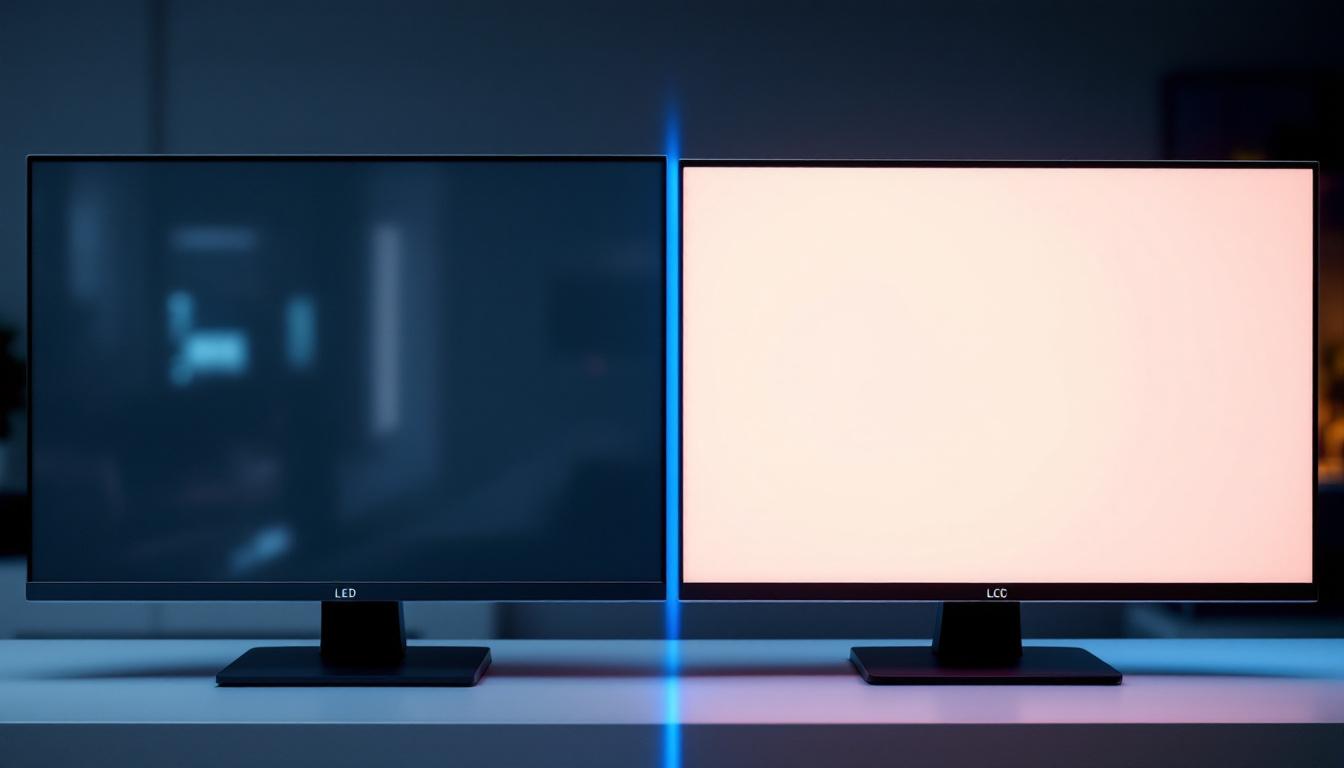
In the world of modern display technology, terms like LED and LCD are often used interchangeably, causing confusion among consumers and professionals alike. Understanding the difference between LED and LCD displays is essential for making informed decisions when purchasing screens for televisions, monitors, smartphones, or digital signage. This article delves into the technical distinctions, practical implications, and current trends surrounding LED and LCD technologies, helping readers grasp what truly sets these displays apart.
Understanding LCD Technology: The Foundation of Modern Displays
Liquid Crystal Display (LCD) technology forms the backbone of most flat-panel screens available today. At its core, an LCD panel uses liquid crystals that modulate light to produce images. However, these crystals do not emit light themselves; instead, they rely on a backlight to illuminate the display.
The liquid crystals in an LCD screen act as shutters that control the passage of light through color filters, creating the pixels that form images. This technology revolutionized display manufacturing by enabling thinner, lighter, and more energy-efficient screens compared to older cathode ray tube (CRT) displays.
How LCD Backlighting Works
Since liquid crystals cannot generate light, LCDs require an external light source, traditionally provided by cold cathode fluorescent lamps (CCFLs). CCFL backlights were standard in early LCD TVs and monitors, offering relatively uniform illumination but consuming more power and producing bulkier panels.
In recent years, LED backlighting has largely replaced CCFLs, leading to the term “LED TVs” becoming common. However, this terminology can be misleading because these “LED TVs” are essentially LCD panels illuminated by LEDs rather than being fundamentally different display types.
LED backlighting comes in two primary configurations: edge-lit and full-array. Edge-lit displays have LEDs positioned along the edges of the screen, allowing for a thinner profile but sometimes resulting in uneven brightness across the panel. In contrast, full-array backlighting features a grid of LEDs behind the entire screen, providing more consistent brightness and enabling advanced features like local dimming, which enhances contrast by selectively dimming sections of the backlight. This technological advancement not only improves the overall viewing experience but also allows for deeper blacks and more vibrant colors, making LCDs more competitive with other display technologies like OLED.
Moreover, the development of advanced liquid crystal materials has further enhanced LCD performance. For instance, the introduction of In-Plane Switching (IPS) technology has significantly improved color accuracy and viewing angles, addressing one of the main drawbacks of earlier twisted nematic (TN) panels. IPS displays maintain color fidelity even at wide angles, making them ideal for collaborative environments and multimedia applications where multiple viewers might be watching from different positions. As a result, LCD technology continues to evolve, adapting to the growing demands for higher resolution and better performance in various applications, from smartphones to large-scale televisions.
What Does LED Mean in Displays?
LED stands for Light Emitting Diode, a semiconductor device that emits light when an electric current passes through it. LEDs are widely used as backlighting sources in LCD screens due to their energy efficiency, long lifespan, and ability to produce brighter and more uniform illumination.
It is important to clarify that LED displays come in two broad categories: LED-backlit LCDs and true LED displays. The former uses LEDs as a light source behind an LCD panel, while the latter uses arrays of tiny LEDs to create images directly, as seen in OLED or MicroLED technologies.
LED-Backlit LCDs: The Most Common Type
Most consumer televisions and monitors labeled as “LED” are actually LCD screens with LED backlighting. This approach improves brightness, contrast, and energy efficiency compared to CCFL-backlit LCDs. LED backlights can be arranged in two main ways:
- Edge-lit LED: LEDs are placed along the edges of the screen, and light is spread across the panel using light guides. This design allows for thinner displays but may result in uneven brightness or reduced contrast.
- Full-array LED: LEDs are distributed evenly behind the entire screen, often with local dimming zones that can be individually controlled. This arrangement enhances contrast and black levels, providing a better viewing experience.
Furthermore, the advancements in LED technology have led to the development of features like HDR (High Dynamic Range), which allows for a broader range of colors and brightness levels. This technology enhances the viewing experience by making images more lifelike and immersive, particularly in scenes with both bright highlights and deep shadows. As a result, consumers are increasingly drawn to LED-backlit LCDs for their vibrant colors and improved picture quality, making them a popular choice for gaming and home theater setups.
True LED Displays: Direct Emission of Light
In contrast to LED-backlit LCDs, true LED displays generate images by turning individual LEDs on or off. This category includes technologies like Organic Light Emitting Diode (OLED) and MicroLED displays, which offer superior contrast ratios, faster response times, and wider viewing angles.
OLED displays use organic compounds that emit light when electrically stimulated, eliminating the need for a separate backlight. This allows for true blacks, as individual pixels can be turned off completely, resulting in stunning contrast and color vibrancy. MicroLED technology, still emerging, uses microscopic LEDs to create bright, efficient, and durable displays with excellent color accuracy. One of the most exciting aspects of MicroLED is its potential for modular displays, allowing users to create screens of virtually any size or shape by combining multiple panels seamlessly. This flexibility opens up new possibilities for creative applications in both commercial and residential environments.
Key Differences Between LED and LCD Displays
Given the overlap in terminology, it is crucial to differentiate between LED-backlit LCDs and true LED displays. Here are the main aspects where these technologies diverge:
Backlighting vs. Self-Emitting Pixels
LCDs rely on a backlight to illuminate pixels, which modulate the light to produce images. In LED-backlit LCDs, LEDs replace older CCFL backlights, improving efficiency but maintaining the same fundamental principle.
True LED displays like OLED and MicroLED have self-emitting pixels that produce light independently. This allows for perfect blacks (pixels can be completely turned off) and superior contrast ratios, enhancing image quality significantly.
Image Quality and Contrast
LED-backlit LCDs with full-array local dimming can achieve impressive contrast ratios, but they still face limitations due to light bleed and the inability to turn off backlighting on a per-pixel basis.
True LED displays excel in contrast because each pixel emits its own light. This results in deeper blacks, more vibrant colors, and better viewing angles. For example, OLED TVs have become popular for their cinematic picture quality, especially in dark room environments.
Thickness and Design Flexibility
LED-backlit LCDs, especially edge-lit models, can be manufactured very thin, enabling sleek and lightweight designs. However, the need for a backlight layer imposes some constraints on flexibility and curvature.
OLED and MicroLED displays, being self-emissive, allow for even thinner and more flexible designs. This has led to innovations such as foldable smartphones and curved televisions, expanding possibilities for device form factors.
Energy Efficiency
LED backlighting is more energy-efficient than CCFLs, reducing power consumption in LCD displays. However, true LED displays can be even more efficient because they only illuminate pixels that need to be bright, whereas LCD backlights are often on at full brightness during operation.
That said, the energy usage of OLEDs can vary depending on the content displayed, as bright scenes consume more power. MicroLEDs promise further improvements in efficiency due to their inorganic nature and high brightness capabilities.
Practical Implications for Consumers and Professionals
Understanding these differences is vital when selecting displays for various applications, from home entertainment to professional design and digital signage.
Choosing the Right Display for Home Use
For general consumers, LED-backlit LCD TVs offer excellent value with good image quality and affordability. Edge-lit LED models are common in budget-friendly options, while full-array local dimming provides better performance at higher price points.
For those seeking superior picture quality, especially for movie watching or gaming, OLED TVs are often recommended due to their outstanding contrast and color accuracy. However, they tend to be more expensive and can be susceptible to image retention if static images are displayed for prolonged periods.
Professional and Commercial Applications
In professional fields such as graphic design, video production, and medical imaging, display accuracy and consistency are paramount. High-end LED-backlit LCD monitors with wide color gamut support and precise calibration are common choices.
Emerging true LED technologies like MicroLED are gaining attention for commercial digital signage and large-scale displays due to their brightness, durability, and scalability. These displays perform well in outdoor environments where sunlight visibility is critical.
Future Trends and Innovations
The display industry continues to evolve rapidly. MicroLED technology is poised to challenge OLED by offering similar or better image quality with improved lifespan and brightness. Additionally, advancements in quantum dot technology are enhancing LCD performance by expanding color ranges and improving efficiency.
Flexible and transparent displays, enabled by self-emissive LED technologies, are opening new avenues for device design and user interaction. As these technologies mature, consumers and professionals alike will benefit from more versatile and immersive visual experiences.
Summary: Clarifying the LED vs. LCD Terminology
In summary, the term “LED” in the context of displays most commonly refers to LED-backlit LCD screens rather than a fundamentally different display technology. These displays use LEDs as a backlight source to illuminate an LCD panel, improving upon older CCFL backlights.
True LED displays, including OLED and MicroLED, use self-emitting pixels that generate light directly, offering superior image quality, contrast, and design flexibility. Recognizing this distinction is essential for making informed choices based on budget, usage, and desired performance.
As display technologies continue to advance, understanding the nuances between LED and LCD will remain important for consumers, professionals, and industry stakeholders seeking the best visual experience for their needs.
Explore Cutting-Edge LED Displays with LumenMatrix
Now that you’ve gained insight into the LED vs. LCD landscape and the transformative impact of LED technology on display solutions, it’s time to experience the future of visual communication firsthand. LumenMatrix, a pioneer in LED display innovation, offers a diverse range of products designed to elevate your brand’s presence and engage audiences like never before. From captivating Indoor and Outdoor LED Wall Displays to dynamic Vehicle and Sports LED Displays, each solution is crafted to deliver unparalleled clarity and impact. Discover how LumenMatrix’s LED Poster, Floor, Custom, All-in-One, and Transparent Displays can transform your visual storytelling. Check out LumenMatrix LED Display Solutions and join the revolution in digital signage excellence.