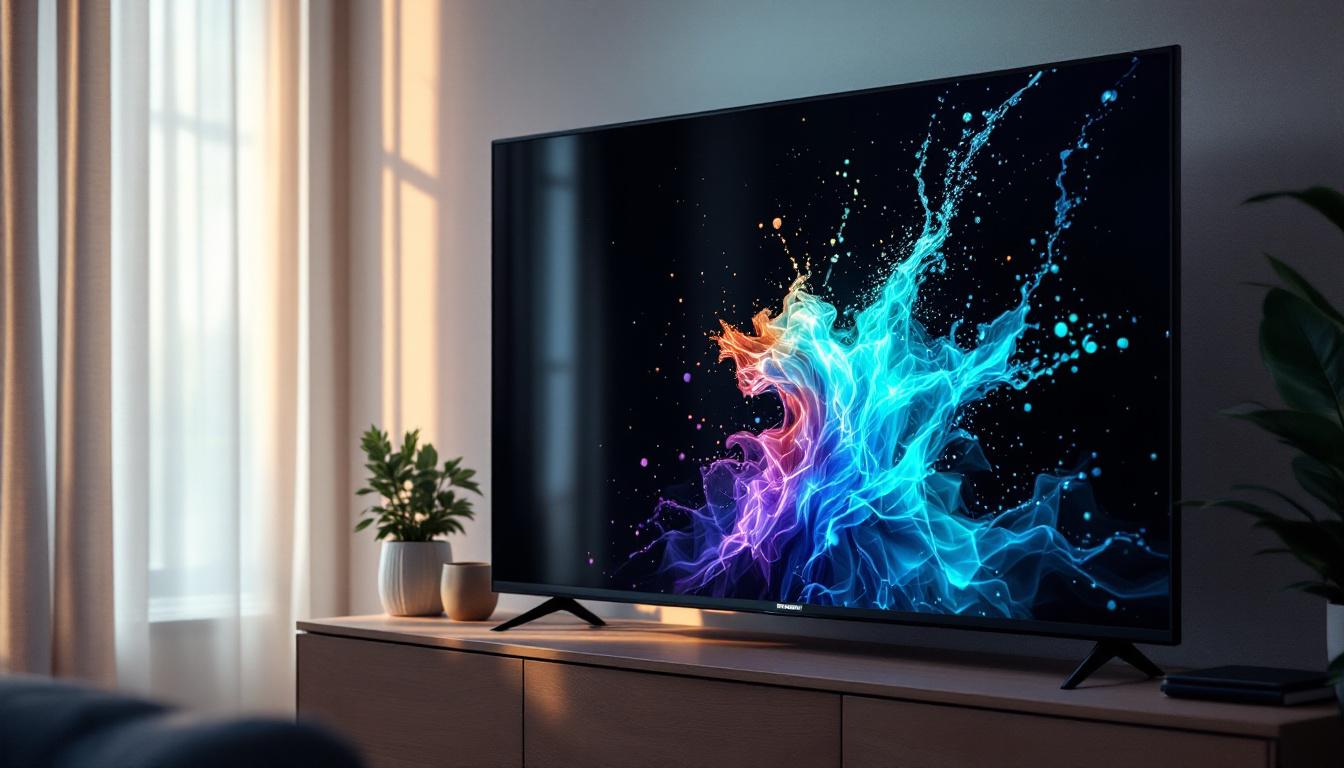
When shopping for a new television, one of the most frequently mentioned specifications is “contrast.” It’s a term that often appears alongside resolution, refresh rate, and color accuracy, but what exactly does contrast mean in the context of LED TVs? Understanding contrast is crucial because it directly influences the picture quality and overall viewing experience. This article delves into the concept of contrast in LED displays, explaining its importance, how it’s measured, and what consumers should look for when choosing a TV.
Understanding Contrast: The Basics
Contrast in televisions refers to the difference between the darkest black and the brightest white that a display can produce. It essentially measures how well a TV can distinguish between light and dark areas on the screen, which affects the depth, detail, and realism of the image.
Imagine watching a night scene in a movie. A TV with high contrast will display deep, rich blacks while still preserving the subtle details in shadows. Conversely, a TV with low contrast might render those blacks as dark gray, causing the scene to look washed out or flat. This difference can significantly impact the viewer’s experience, making it crucial for home theater enthusiasts to consider contrast when choosing a television.
Moreover, the importance of contrast extends beyond just movies; it plays a vital role in gaming and sports broadcasts as well. Gamers often prefer displays with high contrast ratios because they enhance visibility in darker environments, allowing players to spot enemies lurking in shadows. Similarly, during a fast-paced sports event, a high-contrast display can help viewers appreciate the details in uniforms and the ball, making the action more engaging and immersive.
Contrast Ratio Explained
The most common way to quantify contrast is through the contrast ratio, which is the ratio of the luminance of the brightest white to the darkest black a TV can produce. For example, a contrast ratio of 1000:1 means the brightest white is 1000 times brighter than the darkest black.
Higher contrast ratios generally translate to better picture quality, especially in scenes with a wide range of brightness levels. However, it’s important to note that contrast ratio numbers can be misleading because manufacturers use different methods to measure them, and some may inflate the figures for marketing purposes. This discrepancy can lead consumers to believe they are purchasing a superior product when, in reality, the performance may not match the advertised specifications. Therefore, it’s wise for potential buyers to look for independent reviews and tests that evaluate actual performance in real-world scenarios.
Types of Contrast Ratios
There are two primary types of contrast ratios relevant to LED TVs:
- Native Contrast Ratio: This is the inherent contrast ratio of the display panel itself, measured without any additional processing or backlight adjustments. It reflects the panel’s ability to produce blacks and whites under standard conditions.
- Dynamic Contrast Ratio: This ratio takes into account the TV’s ability to adjust the backlight dynamically based on the content being displayed. For example, the TV might dim the backlight during dark scenes to deepen blacks and brighten it during bright scenes. Dynamic contrast ratios are often much higher than native ones, sometimes reaching into the millions, but they are less reliable as a measure of real-world performance.
Understanding these two types of contrast ratios can help consumers make informed decisions. While native contrast ratios provide a baseline for the display’s capabilities, dynamic contrast ratios can enhance viewing experiences in certain scenarios. However, potential buyers should be cautious and consider how often they will be watching content that takes advantage of dynamic adjustments. For instance, if most of your viewing consists of movies or shows with consistent lighting, the native contrast ratio may be more relevant than the dynamic one.
Additionally, advancements in display technology, such as OLED and Mini-LED, have introduced new ways to achieve better contrast. OLED screens, for instance, can turn off individual pixels completely, resulting in true blacks and an infinite contrast ratio. This technology has revolutionized how viewers experience contrast, providing a level of detail and depth that traditional LED displays struggle to match. As technology continues to evolve, understanding contrast will remain a key factor in selecting the right television for your viewing preferences.
How Contrast Works in LED Displays
LED TVs use a liquid crystal display (LCD) panel illuminated by light-emitting diodes (LEDs) as the backlight. Unlike OLED TVs, which emit light from individual pixels, LED TVs rely on a backlight shining through the LCD layer to create images. This setup influences how contrast is achieved and perceived.
The Role of Backlighting
Backlighting is fundamental to contrast in LED TVs. Since the LCD pixels themselves do not emit light, the quality and control of the backlight determine how dark the blacks can get and how bright the whites appear.
There are several types of LED backlighting:
- Edge-Lit LED: LEDs are positioned around the edges of the screen, and light is diffused across the panel. This design is thinner and more affordable but often struggles with uniformity and contrast.
- Full-Array LED: LEDs are placed directly behind the entire screen, allowing for more precise control of brightness across different areas.
- Full-Array Local Dimming (FALD): This is an advanced form of full-array backlighting where the TV can dim or brighten specific zones independently. Local dimming significantly improves contrast by deepening blacks in dark areas without affecting bright parts of the image.
Limitations of LED Backlighting
One of the challenges with LED TVs is that the backlight can never be completely turned off behind a pixel, which limits how deep the blacks can get. This often results in “black blooming,” where bright areas bleed into dark areas, reducing overall contrast quality.
In contrast, OLED TVs can turn off individual pixels entirely, achieving true black and theoretically infinite contrast ratios. However, LED TVs remain popular due to their typically higher brightness levels, longer lifespan, and generally lower cost.
Why Contrast Matters for Viewers
Contrast is more than just a technical specification; it has a direct impact on the viewing experience. Here’s why it matters:
Improved Image Depth and Realism
High contrast enhances the perception of depth and dimensionality in images. When blacks are truly dark and whites are bright, images appear more lifelike and immersive. This is especially important for movies, sports, and gaming, where visual detail and realism elevate enjoyment.
Better Visibility in Different Lighting Conditions
Contrast affects how well you can see details in both bright and dark environments. A TV with good contrast will perform well in a dark room by showing deep blacks without losing shadow details. It will also maintain clarity in a brightly lit room by keeping whites bright and colors vibrant.
Reduced Eye Strain
Proper contrast can reduce eye strain during prolonged viewing. When contrast is too low, the eyes have to work harder to distinguish details, which can lead to discomfort and fatigue.
How to Evaluate Contrast When Buying an LED TV
Since contrast is crucial for picture quality, it’s important to know how to evaluate it when purchasing an LED TV. Here are some practical tips:
Look Beyond the Contrast Ratio Numbers
Because contrast ratio measurements can vary widely depending on testing methods, don’t rely solely on the numbers provided in specifications. Instead, consider other factors such as panel type, backlight technology, and expert reviews.
Check for Local Dimming Features
Local dimming can dramatically improve contrast by controlling the backlight in different zones. TVs with full-array local dimming typically offer better contrast than edge-lit models. When possible, compare models with and without local dimming to see the difference.
Consider HDR Performance
High Dynamic Range (HDR) content requires a TV to display a wider range of brightness and contrast. TVs that handle HDR well usually have better contrast capabilities. Look for TVs that support HDR10, Dolby Vision, or HDR10+ standards and have sufficient peak brightness to showcase HDR content effectively.
Read Professional Reviews and Watch Demos
Professional reviewers often test TVs in controlled environments and provide detailed insights into contrast performance. Watching demo videos or seeing the TV in person can also help you judge how well it handles dark scenes and bright highlights.
Technological Advances Improving Contrast in LED TVs
The LED TV market continues to evolve, with manufacturers introducing innovations to enhance contrast and overall picture quality.
Mini-LED Backlighting
Mini-LED technology uses thousands of tiny LEDs for backlighting instead of hundreds in traditional full-array setups. This allows for more precise local dimming zones, reducing blooming and improving black levels. Mini-LED TVs can achieve contrast ratios closer to OLEDs while maintaining high brightness.
Quantum Dot Technology
Quantum dots are semiconductor nanocrystals that emit pure, saturated colors when illuminated by the LED backlight. While primarily focused on improving color accuracy and brightness, quantum dot technology also contributes to better contrast by enabling brighter highlights without washing out dark areas.
Advanced Image Processing
Modern TVs employ sophisticated algorithms to dynamically adjust brightness and contrast based on the content. These enhancements can simulate higher contrast ratios and improve perceived image quality, especially in challenging scenes.
Conclusion: Making Contrast Work for You
Contrast is a fundamental aspect of picture quality in LED TVs, affecting everything from image depth and realism to viewing comfort. While contrast ratio numbers can be confusing and sometimes misleading, understanding the role of backlighting, local dimming, and HDR capabilities can help consumers make informed decisions.
When choosing an LED TV, prioritize models with effective local dimming, good HDR support, and reputable reviews that confirm strong contrast performance. Emerging technologies like mini-LED and quantum dots are pushing the boundaries of what LED TVs can achieve, narrowing the gap with OLED displays.
Ultimately, the best way to evaluate contrast is to see the TV in action, whether through in-store demos or trusted video reviews. With the right knowledge and approach, it’s possible to find an LED TV that delivers stunning contrast and an immersive viewing experience for years to come.
Discover the Future of LED Contrast with LumenMatrix
Ready to experience the ultimate in contrast and picture quality? LumenMatrix is at the forefront of LED display innovation, offering a wide range of solutions that bring your visual content to life. Whether you’re looking for an Indoor LED Wall Display to elevate your home theater, an Outdoor LED Wall Display for impactful advertising, or any of our specialized LED solutions, LumenMatrix has you covered. Embrace the revolution in visual communication and check out LumenMatrix LED Display Solutions today to transform the way you see, share, and enjoy your visual media.