In many parts of the world, weight measurements are commonly expressed either in kilograms (kg) or pounds (lbs). Whether you’re dealing with shipping, fitness, cooking, or scientific data, understanding how to convert between these units is essential. One practical application of this knowledge is interpreting LED displays on digital scales or devices that show weight in pounds but are set to kilograms, or vice versa. This article explores the conversion of 24.5 kilograms to pounds and delves into how LED displays handle such conversions, ensuring users receive accurate, easy-to-understand information.
Understanding the Basics: Kilograms and Pounds
What is a Kilogram?
The kilogram (kg) is the base unit of mass in the International System of Units (SI). It is widely used around the globe, especially in countries that have adopted the metric system. Defined as exactly 1,000 grams, the kilogram serves as a standard measurement for everything from body weight to industrial goods.
Since 2019, the kilogram has been defined by the Planck constant, a fundamental constant in physics, ensuring extreme precision in mass measurement worldwide. This scientific advancement guarantees that the kilogram remains a stable and reliable unit for all applications. The transition to this definition reflects the ongoing evolution of science and technology, demonstrating how our understanding of the universe can directly influence practical measurements in everyday life. The use of the Planck constant allows for more accurate measurements in various fields, including chemistry, physics, and engineering, where precision is paramount.
What is a Pound?
The pound (lb) is a unit of mass primarily used in the United States, the United Kingdom, and some other countries that have not fully adopted the metric system. It is part of the Imperial system and is defined as exactly 0.45359237 kilograms. This fixed conversion factor allows for precise calculations between pounds and kilograms.
In everyday use, pounds are often used to measure body weight, food portions, and postal packages in countries where the Imperial system prevails. Understanding pounds is crucial for anyone interacting with these regions or using equipment calibrated in pounds. The pound’s historical roots can be traced back to ancient Roman and medieval systems of measurement, where it was based on the weight of a specific quantity of wheat. This historical context adds a layer of richness to the pound’s significance, as it has evolved over centuries to become a familiar unit of measure in contemporary society. Additionally, the cultural implications of using pounds versus kilograms can influence everything from dietary guidelines to fitness regimes, making it essential for individuals to be aware of both systems, especially in a globalized world.
Converting 24.5 Kilograms to Pounds
The Mathematical Formula
Converting kilograms to pounds is straightforward thanks to the fixed conversion factor. The formula is:
Weight in pounds (lbs) = Weight in kilograms (kg) × 2.20462
This means that to convert 24.5 kg to lbs, the calculation is:
24.5 kg × 2.20462 = 54.01339 lbs
Therefore, 24.5 kilograms is approximately 54.01 pounds when rounded to two decimal places.
Why Precision Matters in Conversion
While rounding to two decimal places is sufficient for most everyday purposes, certain industries require higher precision. For example, in scientific research, pharmaceuticals, or aerospace engineering, even minor discrepancies in weight can have significant consequences.
For LED displays on digital scales, the level of precision depends on the device’s design and intended use. Many consumer-grade scales display weight rounded to the nearest tenth or hundredth of a pound, which balances readability with accuracy.
In addition to these practical applications, understanding the conversion between kilograms and pounds can also enhance our appreciation for global diversity. Different countries and regions utilize different measurement systems, which can sometimes lead to confusion. For instance, while the United States primarily uses the imperial system, many other countries have adopted the metric system. This variance highlights the importance of being able to convert between these units, especially for travelers or those working in international contexts.
Moreover, the conversion process is not just a mathematical exercise; it also reflects the broader cultural and historical contexts of measurement. The kilogram, defined in 1795, was based on the mass of a specific physical object, whereas the pound has roots in ancient Roman and medieval English systems. This rich history adds a layer of depth to the seemingly simple act of converting weights, reminding us that measurements are not just numbers, but also stories of human innovation and adaptation.
How LED Displays Show Weight Conversions
The Technology Behind LED Displays
LED (Light Emitting Diode) displays are common in modern digital scales due to their brightness, energy efficiency, and durability. These displays can show numbers clearly in various lighting conditions, which is essential for accurate weight reading. The vibrant colors and clarity of LED technology also enhance user experience, making it easier to read the weight from different angles and distances.
When a scale measures weight, it typically uses a load cell sensor that converts the force of the object’s mass into an electrical signal. This signal is then processed by a microcontroller, which calculates the weight and converts it into the desired unit before displaying it on the LED screen. The precision of the load cell is critical; even slight variations can lead to significant discrepancies in weight readings, especially for lighter objects. This is why many advanced scales incorporate multiple load cells to ensure accuracy across a range of weights.
Unit Switching and Conversion on Digital Scales
Many digital scales offer the ability to switch between kilograms and pounds with the press of a button. When a user selects a different unit, the scale’s internal software automatically performs the conversion using the standard formula. This feature is particularly useful in regions where different measurement systems are prevalent, allowing for a more user-friendly experience.
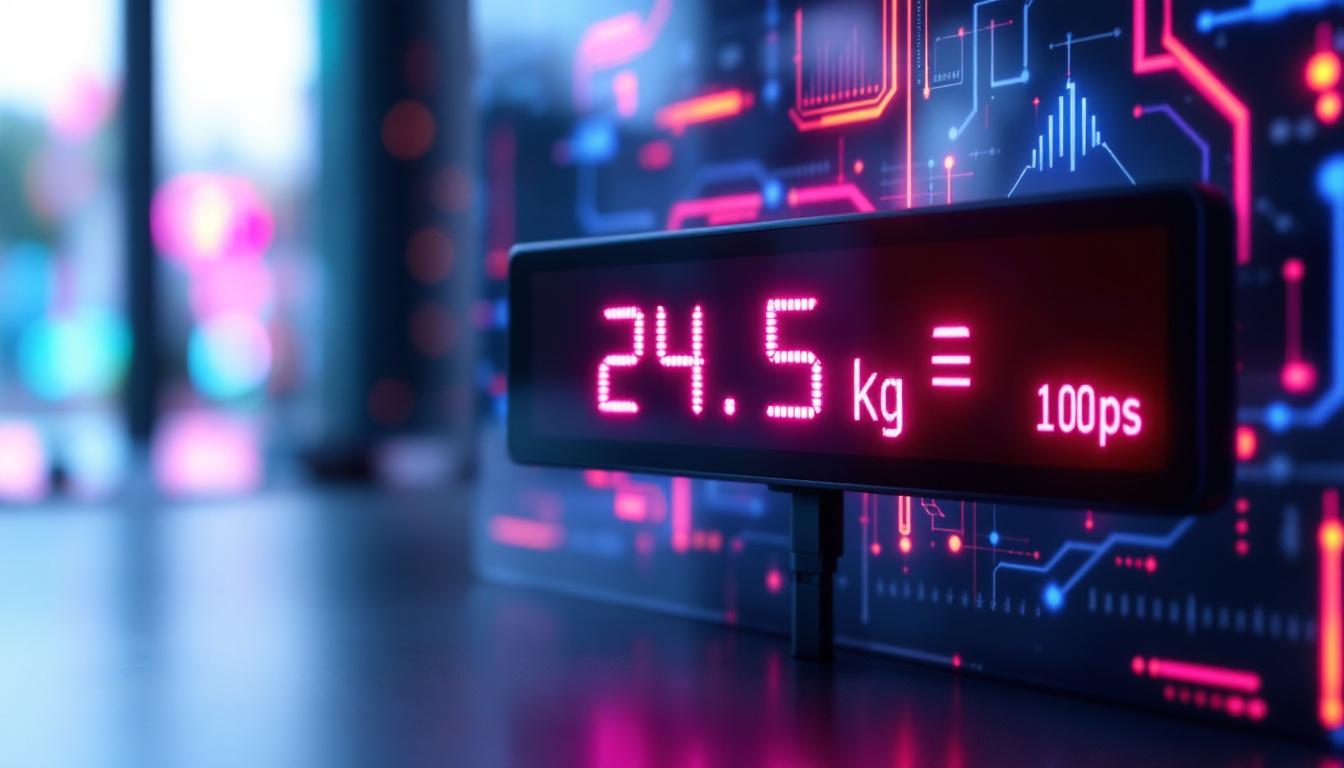
For example, if a scale reads 24.5 kg, switching to pounds will display approximately 54.01 lbs. This conversion is instantaneous and seamless, allowing users to view weight in their preferred unit system without manual calculations. Additionally, some scales even provide the option to convert to other units, such as stones or ounces, catering to a wider audience and various needs, such as weight management or dietary tracking.
Common Display Formats and Their Implications
LED displays on scales can vary in how they present weight data. Some show weight with decimal points (e.g., 54.01 lbs), while others round to whole numbers (e.g., 54 lbs). The choice depends on the scale’s resolution and target market. High-resolution displays are often found in professional settings, such as gyms or laboratories, where precise measurements are crucial.
For users requiring high precision, such as athletes tracking body weight changes or cooks measuring ingredients, displays with one or two decimal places are preferable. Conversely, for general household use, whole numbers often suffice. Furthermore, some advanced models feature additional indicators, such as body fat percentage or water weight, displayed alongside the primary weight measurement. This multifunctionality not only enhances the scale’s utility but also provides users with a comprehensive view of their health metrics, making it a valuable tool in personal fitness and wellness journeys.
Practical Applications of 24.5 Kg to Lbs Conversion
Fitness and Health Monitoring
In fitness, body weight is a critical metric for tracking progress. Many fitness enthusiasts and professionals use scales that can toggle between kilograms and pounds, depending on their location or preference.
For someone weighing 24.5 kg (which is roughly 54 lbs), this might be relevant in pediatric health monitoring, where children’s weights are tracked carefully. Understanding the conversion ensures that health professionals and parents can communicate effectively regardless of the measurement system used.
Shipping and Logistics
In international shipping, packages are often weighed in kilograms, but shipping labels or customs documentation might require weight in pounds. For example, a package weighing 24.5 kg must be accurately converted to pounds to calculate shipping costs and comply with regulations.
Incorrect conversions can lead to overpayment or underpayment of shipping fees, delays, or even penalties. Digital scales with LED displays that show both units help logistics professionals avoid such errors.
Cooking and Food Industry
Recipes and food packaging sometimes list weights in kilograms or pounds, depending on the country of origin. A chef or home cook converting 24.5 kg of an ingredient to pounds (approximately 54 lbs) ensures correct portioning and consistency in recipes.
Food manufacturers also rely on precise conversions for labeling and regulatory compliance, especially when exporting products internationally.
Tips for Using LED Scales and Interpreting Weight Data
Check the Unit Setting Before Weighing
Always verify whether the scale is set to kilograms or pounds before placing an object on it. This simple step prevents confusion and ensures the weight displayed matches your expectations.
Understand the Scale’s Precision Limits
Be aware of the scale’s resolution. Some scales may only display whole numbers, while others show decimal points. Knowing this helps interpret the weight data correctly, especially when small differences matter.
Calibrate Your Scale Regularly
To maintain accuracy, digital scales with LED displays should be calibrated periodically according to the manufacturer’s instructions. Calibration ensures that the conversion between kilograms and pounds remains reliable over time.
Use Conversion Tools When Needed
If your scale does not support unit switching, use trusted conversion calculators or apps to convert kilograms to pounds accurately. Remember the conversion factor of 1 kg = 2.20462 lbs for precision.
Conclusion
Converting 24.5 kilograms to pounds results in approximately 54.01 lbs, a calculation that is straightforward but essential in many real-world contexts. LED displays on digital scales simplify this process by automatically converting and displaying weight in the preferred unit, enhancing usability and reducing errors.
Understanding the relationship between kilograms and pounds, the technology behind LED displays, and the practical applications of these conversions empowers users across industries—from healthcare and fitness to shipping and cooking—to make informed decisions based on accurate weight measurements.
Whether you are interpreting a digital scale’s LED readout or manually converting weights, knowing how to handle these units confidently ensures clarity and precision in everyday tasks and professional endeavors alike.
Explore Advanced LED Display Solutions with LumenMatrix
As you consider the precision and clarity needed for weight conversions and the role of LED displays in providing accurate measurements, it’s clear that the right technology can make all the difference. LumenMatrix, a pioneer in LED display technology, offers an array of innovative solutions that bring your visual communications to life. From Indoor and Outdoor LED Wall Displays to specialized options like Vehicle and Sports Displays, our products are designed to captivate and engage your audience. Discover how LumenMatrix can transform your space and enhance your brand’s visibility. Check out LumenMatrix LED Display Solutions today and take the first step towards revolutionizing your visual experience.