In the world of digital displays, precision and clarity are paramount. Whether you are an engineer, designer, or technology enthusiast, understanding the measurements and specifications of LED displays is crucial. One common measurement that often arises is the conversion of millimeters to inches, especially when dealing with screen sizes and pixel pitches. This article delves into the conversion of 122 millimeters to inches and explores how this measurement relates to LED displays, their design, and their applications.
Understanding the Conversion: 122 Millimeters to Inches
Millimeters and inches are two of the most commonly used units of length measurement worldwide. Millimeters are part of the metric system, which is widely used internationally, while inches belong to the imperial system, predominantly used in the United States. Converting between these units is essential for clear communication and precise specifications, especially in global industries like electronics and display manufacturing.
The Basic Conversion Formula
The conversion between millimeters and inches is straightforward. One inch is equal to exactly 25.4 millimeters. Therefore, to convert millimeters to inches, you divide the millimeter value by 25.4.
For 122 millimeters, the calculation looks like this:
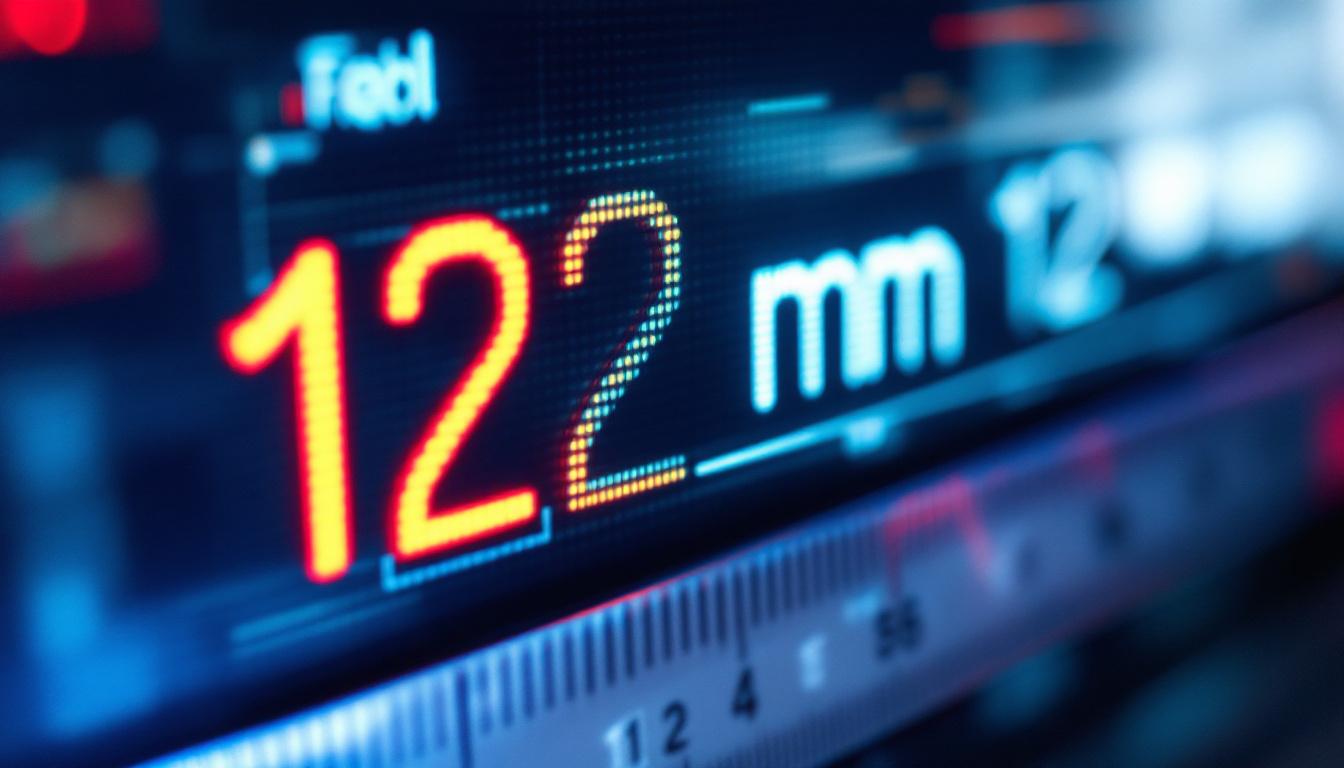
122 mm ÷ 25.4 = 4.803 inches
So, 122 millimeters is approximately 4.803 inches.
Why This Conversion Matters in LED Displays
LED displays are often specified by their physical dimensions and pixel pitch, which is the distance between the centers of two adjacent pixels. These measurements can be given in millimeters or inches depending on the manufacturer or region. Understanding how to convert these units allows professionals to accurately compare displays, design enclosures, and ensure compatibility with other hardware.
Moreover, the choice of measurement can significantly impact the design and functionality of a product. For instance, in the realm of consumer electronics, a display’s size in inches may be more relatable to the average consumer, while engineers might prefer millimeters for precision. This duality necessitates a clear understanding of both systems to facilitate effective communication among designers, manufacturers, and end-users. Furthermore, as global trade continues to expand, the ability to seamlessly convert between these units becomes increasingly vital, ensuring that products meet international standards and consumer expectations.
In addition to the technical aspects, the conversion also plays a role in marketing and product presentation. Companies often highlight the size of their displays in inches to attract customers, as larger numbers can create a perception of greater value or quality. This marketing strategy emphasizes the importance of understanding how to convert measurements accurately, as misrepresentation can lead to customer dissatisfaction and potential returns. Thus, mastering the conversion between millimeters and inches not only aids in technical accuracy but also enhances the overall consumer experience in the competitive electronics market.
LED Display Basics: What You Need to Know
LED (Light Emitting Diode) displays have become ubiquitous in advertising, information dissemination, and entertainment. Their vibrant colors, high brightness, and energy efficiency make them ideal for both indoor and outdoor applications. To fully appreciate why a measurement like 122 mm is significant, it’s important to understand the core components and terminology of LED displays.
Pixel Pitch and Its Importance
Pixel pitch, often measured in millimeters, is a critical specification in LED displays. It refers to the distance from the center of one pixel to the center of the next. The smaller the pixel pitch, the higher the resolution and image clarity, especially at close viewing distances.
For example, a pixel pitch of 2 mm means the pixels are very close together, producing a sharp image suitable for indoor displays viewed up close. Conversely, a pixel pitch of 10 mm or more is common for large outdoor billboards where viewers are typically farther away.
Moreover, pixel pitch not only affects resolution but also influences the overall viewing experience. Displays with finer pixel pitches tend to provide more detailed images, making them ideal for applications such as digital signage in retail environments or high-end presentations in corporate settings. As technology advances, manufacturers are continuously pushing the boundaries of pixel pitch, leading to displays that can maintain clarity even at extremely close distances, which is a game-changer for immersive experiences like virtual reality and augmented reality applications.
Physical Dimensions and Screen Size
The physical size of an LED module or panel is often provided in millimeters. For instance, a module might measure 122 mm by 122 mm, which is roughly 4.8 inches square. This dimension helps designers calculate how many modules are needed to build a display of a desired size.
Understanding the size in inches is also practical for integration with other components or for fitting the display into specific spaces, especially in markets where imperial units are standard.
Additionally, the physical dimensions of LED displays play a crucial role in their installation and maintenance. Larger screens may require specialized mounting solutions and support structures, while smaller modules can be more versatile in terms of placement. This adaptability allows for creative installations in various environments, from stadiums and concert halls to retail storefronts and corporate offices. Furthermore, the modular nature of many LED displays means that they can be easily expanded or reconfigured, enabling businesses to adapt their visual communication strategies as needed without significant additional investment.
Applications of a 122 mm (4.8 inch) Dimension in LED Displays
The dimension of 122 mm (approximately 4.8 inches) is quite common in the LED display industry, particularly when referring to the size of individual LED modules. These modules are the building blocks of larger displays and come in various sizes depending on the design requirements.
Modular LED Panels
Manufacturers often design LED panels in modular units, such as 122 mm x 122 mm, to facilitate easy assembly and maintenance. These modules can be combined in various configurations to create a display of any size, from small indoor screens to massive outdoor billboards.
The 122 mm module size strikes a balance between ease of handling and sufficient pixel density, making it popular for mid-range resolution displays.
Pixel Pitch Examples and Viewing Distances
Consider a 122 mm module with a pixel pitch of 4 mm. This means each pixel is spaced 4 mm apart, and the module would contain approximately 30 pixels along each edge (122 mm ÷ 4 mm = 30.5 pixels). Such a module would be suitable for indoor or semi-outdoor applications where viewers are a few meters away.
For larger pixel pitches, such as 10 mm, the same module would have fewer pixels (about 12 pixels per edge), making it suitable for outdoor advertising where viewers are much farther away.
Technical Considerations When Working with LED Displays
When specifying or working with LED displays, understanding the relationship between physical dimensions and resolution is essential. The 122 mm measurement is just one piece of the puzzle.
Resolution and Image Quality
The resolution of an LED display is determined by the total number of pixels it contains. This is a function of both the number of modules and the pixel pitch. A higher resolution display offers sharper images but typically costs more and requires more processing power.
For example, a 122 mm x 122 mm module with a pixel pitch of 2 mm will have roughly 61 pixels per edge (122 ÷ 2 = 61), resulting in about 3,721 pixels per module. When multiple modules are combined, the total resolution increases accordingly.
Brightness and Viewing Environment
LED displays must be bright enough to be visible in their intended environment. Outdoor displays require higher brightness levels, often exceeding 5,000 nits, to combat sunlight glare. Indoor displays can operate at lower brightness levels, typically around 800 to 1,500 nits.
The size of the module (e.g., 122 mm) affects the design of the LED diodes and the overall brightness capabilities. Smaller modules with finer pixel pitches tend to be used indoors where brightness requirements are lower.
Power Consumption and Heat Management
Smaller modules with higher pixel densities consume more power and generate more heat. Proper heat dissipation is critical to maintain the longevity and performance of the display. The 122 mm module size allows for efficient thermal management designs, including heat sinks and ventilation.
Practical Tips for Choosing LED Displays Based on Size and Conversion
Selecting the right LED display involves balancing size, resolution, viewing distance, and budget. Understanding the conversion between millimeters and inches helps ensure the display fits the physical space and meets performance requirements.
Measure Twice, Convert Once
When planning an installation, measure the available space in both millimeters and inches if possible. Use the conversion factor (1 inch = 25.4 mm) to verify that the display dimensions will fit comfortably. For example, a 122 mm module converts to about 4.8 inches, so a display composed of 10 modules side-by-side would be approximately 48 inches wide.
Match Pixel Pitch to Viewing Distance
Use the pixel pitch to determine the ideal viewing distance. A general rule of thumb is that the minimum viewing distance in meters should be roughly equal to the pixel pitch in millimeters divided by 1,000. For example, a pixel pitch of 4 mm suggests a minimum viewing distance of about 4 meters.
Consider Future Expansion and Maintenance
Modular LED displays sized around 122 mm offer flexibility for future expansion. If your needs grow, additional modules can be added without replacing the entire display. Additionally, smaller modules simplify maintenance since individual units can be replaced without disturbing the whole screen.
Conclusion: The Importance of Accurate Measurement in LED Display Technology
Understanding the conversion of 122 millimeters to inches (approximately 4.8 inches) is more than just a mathematical exercise. It is a vital part of designing, specifying, and deploying LED displays that meet exacting standards for size, resolution, and performance.
Whether you are selecting modules for a new installation or comparing specifications from different manufacturers, knowing how to interpret and convert measurements ensures that your LED display will deliver the desired visual impact and reliability.
As LED technology continues to evolve, precision in measurement and specification will remain a cornerstone of successful display solutions worldwide.
Discover Precision with LumenMatrix LED Displays
Ready to experience the pinnacle of LED display technology? LumenMatrix is at the forefront of innovation, offering a diverse range of LED display solutions tailored to your needs. From vibrant Indoor LED Walls to dynamic Outdoor LED Displays, and from versatile Vehicle LED Displays to sleek LED Poster Displays, our products are designed to elevate your brand and captivate your audience. Embrace the future of visual communication with our LED Sports Displays, interactive Floor LED Displays, and the revolutionary All-in-One and Transparent LED Displays. Don’t just share your message—make an unforgettable impact with clarity and precision. Check out LumenMatrix LED Display Solutions today and transform your space into a visual masterpiece.