In the evolving world of digital displays, understanding the fundamentals behind resolution and display technology is crucial. The term “640 на 480” refers to a specific resolution that has played a significant role in the history of screen technology. Coupled with LED display technology, this resolution offers a fascinating glimpse into how displays have developed over time and how they continue to influence modern visual experiences. This article delves into the meaning behind 640 на 480, explores LED display technology, and examines their relevance in today’s digital landscape.
Understanding 640 на 480 Resolution
The numbers 640 and 480 represent the pixel dimensions of a display screen — 640 pixels horizontally and 480 pixels vertically. This resolution is commonly known as VGA (Video Graphics Array), a standard introduced by IBM in 1987. VGA was a breakthrough at the time, offering a clear and sharp image compared to earlier standards.
Despite being considered low by today’s standards, 640×480 resolution was foundational in the evolution of computer graphics. It provided a 4:3 aspect ratio, which was the norm for monitors and televisions for many years. This resolution allowed for the display of 307,200 pixels in total, which was sufficient for early graphical user interfaces, gaming, and multimedia applications.
The Historical Significance of VGA Resolution
VGA resolution became the baseline for many operating systems and software applications during the late 1980s and 1990s. Its widespread adoption helped standardize display technology, making it easier for developers to create content that would be compatible across different hardware. The 640×480 resolution also influenced early web design and multimedia content, setting a benchmark for image and video quality.
Even though modern displays now boast resolutions in the thousands of pixels horizontally and vertically, VGA’s legacy persists. It serves as a reference point for understanding pixel density, aspect ratios, and the evolution of digital display clarity. Furthermore, the simplicity of 640×480 resolution made it an ideal choice for early video games, where developers had to optimize graphics for limited processing power. Iconic titles from this era, such as “Doom” and “Prince of Persia,” were designed with this resolution in mind, contributing to their nostalgic charm and gameplay experience.
In addition to gaming, 640×480 resolution played a crucial role in the development of early video conferencing technologies. As businesses began to adopt video calls, the VGA standard provided a reliable means of visual communication, allowing users to connect with colleagues and clients across distances. This paved the way for the sophisticated video conferencing tools we use today, which have evolved far beyond the capabilities of VGA but still owe a debt to its foundational role in digital communication.
What is an LED Display?
LED stands for Light Emitting Diode, a semiconductor light source that emits light when current flows through it. LED displays use an array of these diodes to create images, offering advantages such as brightness, energy efficiency, and durability compared to older display technologies like LCD or CRT. This efficiency not only reduces energy consumption but also contributes to a lower carbon footprint, making LED displays an environmentally friendly choice for consumers and businesses alike.
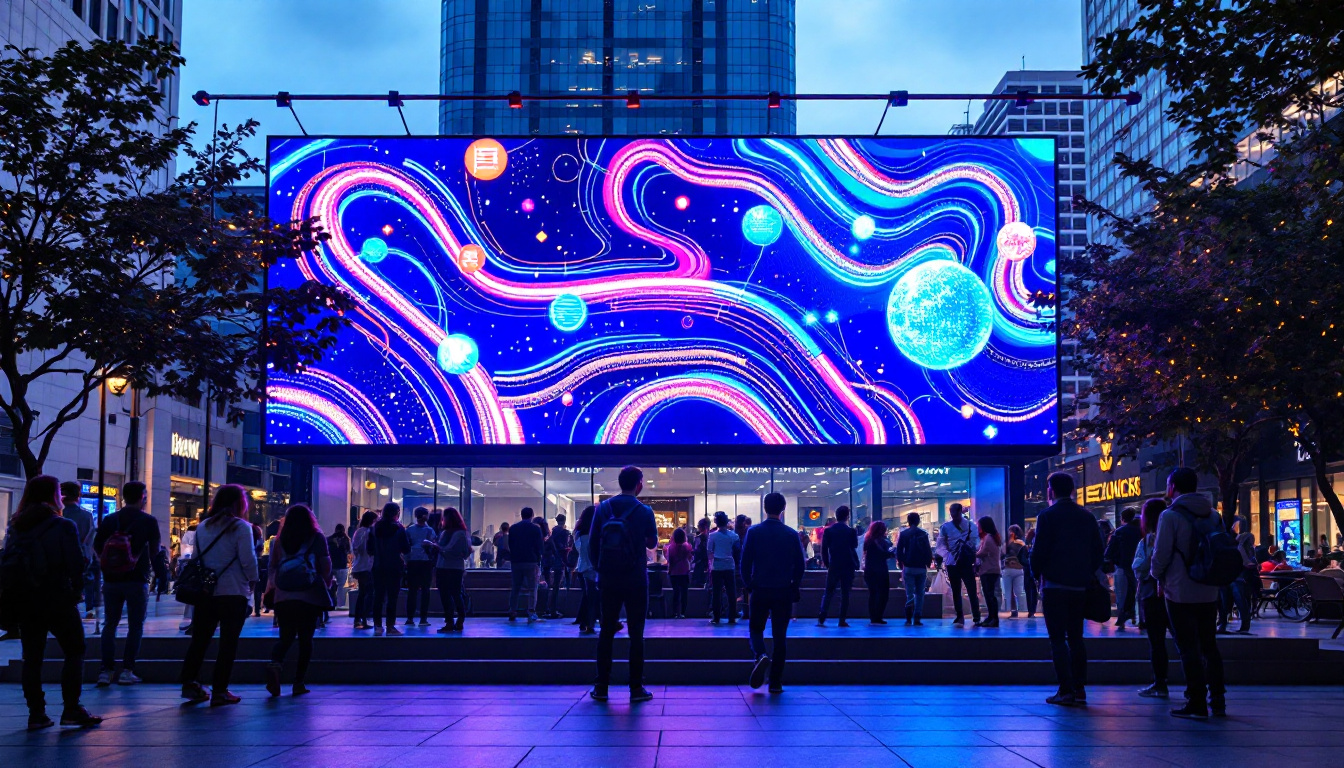
LED displays can be found in various forms—from small indicator lights to large-scale video walls and digital billboards. Their ability to produce vivid colors and high contrast makes them popular for both indoor and outdoor applications. In recent years, the versatility of LED technology has led to innovative uses, such as in fashion shows, art installations, and even architectural lighting, where they enhance the aesthetic appeal of buildings and public spaces.
How LED Displays Work
Each pixel on an LED display is made up of one or more LEDs that emit red, green, and blue light. By adjusting the intensity of each color, the display can produce a wide spectrum of colors. This RGB (Red, Green, Blue) color model is fundamental to digital imaging and screen technology. The precision with which these colors can be mixed allows for high-definition images and videos, making LED displays a favorite for everything from home entertainment systems to professional broadcasting.
There are two main types of LED displays: direct view LED and LED-backlit LCD. Direct view LED displays use LEDs as the actual pixels, making them ideal for large screens and outdoor use. Their resilience to weather conditions and ability to maintain brightness in direct sunlight make them particularly effective for advertising and public information displays. LED-backlit LCDs, on the other hand, use LEDs as a light source behind an LCD panel, improving brightness and energy efficiency over traditional fluorescent backlights. This hybrid technology has made it possible to create thinner, lighter screens while still delivering impressive image quality, which has been a game changer in the world of consumer electronics, particularly in smartphones and tablets.
The Intersection of 640 на 480 Resolution and LED Displays
Combining the 640×480 resolution with LED technology can be seen in various applications, especially where simplicity and cost-effectiveness are priorities. While modern LED displays often feature much higher resolutions, understanding how this classic resolution fits within LED technology offers insight into display design choices.
For instance, many industrial and embedded systems use 640×480 LED displays for control panels, kiosks, and instrumentation. These applications benefit from the clarity and reliability of LED technology while maintaining manageable resolution requirements that reduce processing demands. Additionally, in educational settings, low-resolution displays can serve as effective tools for teaching basic computer skills or programming, where the focus is more on functionality than on high-definition graphics.
Advantages of Using 640×480 Resolution in LED Displays
One key advantage is the balance between image clarity and system resource usage. Lower resolutions like 640×480 require less bandwidth and processing power, which can be critical in embedded systems or devices with limited hardware capabilities. This efficiency not only extends the lifespan of the hardware but also allows for quicker response times, which is essential in applications such as real-time monitoring systems or interactive kiosks.
Additionally, the 4:3 aspect ratio of 640×480 remains suitable for many legacy applications and content formats, ensuring compatibility and ease of integration. In environments where high resolution is not essential, this combination offers a cost-effective and energy-efficient solution. Furthermore, the simplicity of the resolution allows for faster development cycles, enabling companies to deploy solutions swiftly without the overhead of high-resolution graphics processing.
Limitations and Considerations
Despite its benefits, 640×480 resolution is limited in terms of detail and screen real estate compared to modern HD and Ultra HD resolutions. For applications demanding high-definition visuals, such as gaming, video streaming, or graphic design, higher resolutions paired with advanced LED displays are necessary. This limitation can also impact user experience, particularly in interactive environments where visual fidelity plays a crucial role in engagement and satisfaction.
Moreover, as consumer expectations evolve, devices with low resolutions may appear outdated or less appealing. Designers and engineers must carefully assess the intended use case and audience when choosing resolution and display technology. In certain markets, such as advertising or consumer electronics, the trend is increasingly leaning towards high-resolution displays, which may render lower resolutions like 640×480 less competitive. However, in niche markets where functionality and cost are prioritized, the 640×480 resolution continues to hold its ground, proving that sometimes, less is indeed more.
Current Trends in LED Display Technology
LED display technology continues to advance rapidly, with innovations focusing on higher resolutions, improved color accuracy, and greater energy efficiency. MicroLED and MiniLED are two emerging technologies that enhance traditional LED displays by offering better brightness control, contrast ratios, and pixel density.
MicroLED displays, for example, consist of microscopic LEDs that serve as individual pixels, enabling ultra-high resolution and superior image quality without the burn-in issues associated with OLEDs. These advancements are pushing the boundaries of what LED displays can achieve in both consumer electronics and commercial applications.
Applications Driving LED Display Innovation
Large-scale digital signage, sports arenas, and concert venues demand bright, durable, and high-resolution LED displays capable of delivering immersive experiences. Similarly, the rise of virtual and augmented reality technologies is driving the need for compact, high-resolution displays with fast refresh rates and low latency.
In the automotive and aerospace industries, LED displays are increasingly integrated into dashboards and cockpit instrumentation, where reliability and clarity are paramount. These sectors often leverage resolutions tailored to specific functional requirements, sometimes revisiting classic resolutions like 640×480 for simplicity and compatibility.
Choosing the Right Resolution and LED Display for Your Needs
Selecting the appropriate resolution and display technology depends on the intended application, budget, and performance requirements. While 640×480 resolution paired with LED technology may be ideal for certain industrial or embedded systems, consumer devices generally demand higher resolutions for a richer visual experience.
When evaluating LED displays, consider factors such as pixel pitch (the distance between LEDs), brightness levels, color gamut, viewing angles, and power consumption. These characteristics directly impact image quality and user satisfaction.
Future-Proofing Your Display Investment
As digital content becomes increasingly sophisticated, investing in displays with scalable resolutions and adaptable technologies ensures longevity and relevance. While legacy resolutions like 640×480 serve specific niches, embracing higher resolutions and advanced LED technologies can provide competitive advantages and enhanced user engagement.
Ultimately, understanding the historical context and technical aspects of resolutions like 640 на 480 alongside LED display technology empowers informed decisions that align with both current needs and future developments.
Conclusion
The 640 на 480 resolution holds a significant place in the history of digital displays, representing a pivotal step in graphical clarity and standardization. When combined with LED display technology, it offers a practical solution for various applications requiring reliability and efficiency.
While modern display technology has moved far beyond VGA resolution, the principles underlying 640×480 and LED displays continue to influence design and engineering choices. By appreciating this intersection, professionals and enthusiasts alike can better navigate the complex landscape of display technology and make choices that best suit their unique requirements.
Discover the Future of LED Displays with LumenMatrix
As you’ve explored the significance of the 640 на 480 resolution and its role in the evolution of display technology, it’s clear that the future holds even more exciting advancements. LumenMatrix stands at the forefront of this innovation, offering a wide range of LED display solutions that push the boundaries of visual communication. From captivating Indoor and Outdoor LED Wall Displays to dynamic Vehicle and Sports LED Displays, and even customizable options like Floor and Transparent LED Displays, LumenMatrix is dedicated to enhancing your brand’s visibility and audience engagement. Embrace the revolution in digital signage with LumenMatrix’s cutting-edge technology. Check out LumenMatrix LED Display Solutions today and see how they can transform your visual storytelling.