When discussing LED displays, especially in technical or design contexts, understanding the precise dimensions is crucial. One common size reference is “8 x 10 inches,” but converting this to millimeters (mm) is often necessary for accuracy in manufacturing, installation, or specification sheets. This article delves into the conversion of 8 x 10 inches into millimeters, explores why these measurements matter in LED displays, and explains how size impacts display performance and application.
Understanding the Conversion: Inches to Millimeters
Inches and millimeters are both units of length used to measure physical dimensions, but they belong to different measurement systems. Inches are part of the Imperial system, primarily used in the United States, while millimeters belong to the metric system, which is the standard in most other countries and in scientific applications.
How to Convert Inches to Millimeters
The conversion factor between inches and millimeters is fixed: 1 inch equals exactly 25.4 millimeters. This precision is essential for ensuring that measurements are accurate, especially when dealing with technology components like LED displays where tolerances can be tight.
Using this conversion:
- 8 inches × 25.4 mm/inch = 203.2 mm
- 10 inches × 25.4 mm/inch = 254 mm
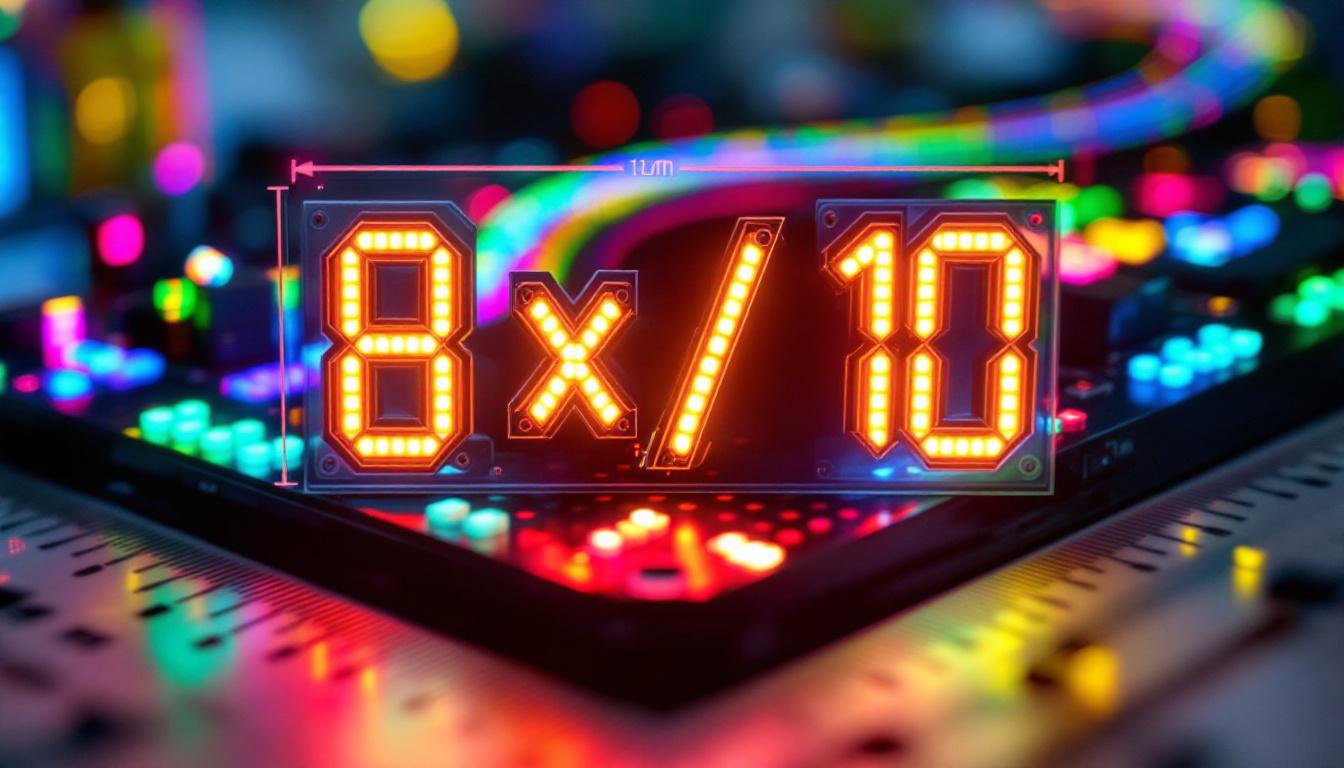
Thus, an 8 x 10 inch display measures 203.2 mm by 254 mm.
Why Millimeters Are Preferred in LED Display Specifications
Millimeters provide a finer scale for measurement, which is particularly useful in the electronics and display industries. When specifying LED modules, pixel pitch, or overall display dimensions, manufacturers and engineers prefer millimeters because it allows for greater precision and reduces ambiguity.
For example, pixel pitch—the distance from the center of one LED cluster to the next—is typically measured in millimeters. This precision affects the display’s resolution and viewing distance, making millimeters the logical choice for detailed specifications.
Furthermore, the use of millimeters in technical specifications facilitates international collaboration. As many companies operate on a global scale, standardizing measurements to the metric system ensures that engineers and designers from different countries can easily interpret and implement designs without the risk of conversion errors. This is particularly important in industries like aerospace and automotive, where even the slightest miscalculation can lead to significant safety issues or product failures.
In addition to their application in technology, millimeters are also commonly used in fields such as construction and manufacturing. For instance, when creating blueprints or schematics, architects and engineers often rely on millimeter measurements to ensure that every component fits together perfectly. This level of detail is crucial when working with materials that have strict tolerances, such as metal or glass, where even a small deviation can compromise structural integrity or aesthetic appeal.
The Importance of Size in LED Displays
LED displays come in a variety of sizes, each suited to different applications, environments, and viewing distances. The physical dimensions, such as 8 x 10 inches (203.2 x 254 mm), influence many factors, from image clarity to installation feasibility.
Impact on Image Quality and Resolution
The size of an LED display directly relates to its resolution and pixel density. Smaller displays, like an 8 x 10 inch panel, often have higher pixel density, which means more pixels per inch (PPI) and sharper images. This is ideal for close-up viewing, such as digital signage in retail or control room monitors.
Conversely, larger displays tend to have lower pixel density because they are designed to be viewed from a distance. Understanding the exact physical size in millimeters helps designers calculate the pixel pitch and resolution needed to achieve the desired image quality. For instance, a display intended for a stadium or large venue must balance size with pixel pitch to ensure that even viewers in the back rows can enjoy a clear and vibrant image without straining their eyes.
Application-Specific Size Considerations
Different industries require LED displays of varying sizes. For example:
- Retail and Advertising: Smaller LED panels, such as 8 x 10 inches, are often used for window displays or product showcases where viewers are close to the screen.
- Broadcast and Control Rooms: Medium-sized displays provide clear, detailed images for operators monitoring multiple data streams.
- Outdoor Billboards: These are much larger, sometimes several meters wide, where pixel pitch and viewing distance become critical.
Knowing the exact dimensions in millimeters ensures compatibility with mounting hardware, enclosures, and integration with other technology components. Furthermore, the choice of size can also influence the overall aesthetic of a space. A well-placed LED display can enhance the ambiance of a retail environment or create a focal point in an event space, drawing attention and engaging customers. The strategic use of size not only improves functionality but also contributes to the visual storytelling that brands aim to convey.
Moreover, the evolution of LED technology has led to the development of ultra-thin and lightweight displays, allowing for innovative installations that were not previously possible. These advancements enable designers to create seamless video walls or immersive environments that captivate audiences. As the demand for dynamic and interactive displays continues to grow, understanding the importance of size becomes even more critical in ensuring that the technology meets the needs of modern applications.
Technical Specifications and Their Relation to Physical Size
Beyond just the physical dimensions, LED displays have a range of technical specifications that are influenced by their size. Understanding these helps in selecting the right display for a given purpose.
Pixel Pitch and Its Measurement
Pixel pitch is one of the most important specifications in LED displays. It refers to the distance between the centers of two adjacent pixels and is measured in millimeters. A smaller pixel pitch means higher resolution and better image quality, especially at close viewing distances.
For an 8 x 10 inch (203.2 x 254 mm) display, the pixel pitch must be chosen carefully to balance resolution and cost. For example, a pixel pitch of 1.5 mm on such a display would provide crisp images suitable for indoor use.
Brightness and Viewing Distance
The size of the LED display also affects brightness requirements and optimal viewing distance. Smaller displays with high pixel density generally require less brightness because they are viewed up close. Larger displays, especially outdoor ones, need higher brightness levels to overcome ambient light.
Understanding the exact size in millimeters helps manufacturers design LED modules with appropriate brightness levels and power consumption.
Practical Examples of 8 x 10 Inch LED Displays
To better understand how an 8 x 10 inch LED display is used in real-world scenarios, consider the following examples:
Digital Photo Frames and Small Signage
Many digital photo frames and small signage displays use dimensions close to 8 x 10 inches. These devices benefit from the compact size, allowing them to fit on desks, shelves, or walls without occupying much space. The conversion to millimeters ensures that manufacturers can produce frames and screens with precise dimensions for a perfect fit.
Control Panels and Instrumentation Displays
In industrial settings, control panels often incorporate LED displays that are around 8 x 10 inches. These displays provide clear, real-time information for operators. The millimeter measurement is critical for engineers designing enclosures and integrating the display with other control hardware.
Point-of-Sale (POS) Systems
Retail POS systems sometimes use LED displays of this size for customer interaction or transaction information. The compact size allows for easy placement on counters, while the precise dimensions in millimeters help in designing protective cases and mounting brackets.
Installation and Integration Considerations
When installing an LED display, knowing the exact size in millimeters is essential for several reasons:
Mounting and Enclosure Design
Mounting brackets, enclosures, and frames are often designed using metric measurements. An 8 x 10 inch display translates to 203.2 mm by 254 mm, which allows engineers to create custom fittings that secure the display properly and protect it from environmental factors.
Compatibility with Other Components
LED displays rarely operate in isolation. They are part of larger systems that include power supplies, controllers, and input devices. Accurate size measurements ensure that all components fit together seamlessly without gaps or overlaps that could affect performance or aesthetics.
Thermal Management
LED displays generate heat during operation, and proper ventilation or heat dissipation solutions must be designed around the exact dimensions. Knowing the size in millimeters helps in calculating airflow requirements and positioning cooling elements effectively.
Future Trends in LED Display Sizes and Metrics
The LED display industry continues to evolve rapidly, with trends influencing how size and measurement are approached.
Increasing Use of Metric Measurements Globally
As LED technology becomes more globalized, the use of metric units like millimeters is becoming standard even in regions where inches were traditionally used. This shift simplifies international collaboration and manufacturing.
Miniaturization and Higher Pixel Density
Advancements in LED technology are enabling smaller pixel pitches and more compact displays without sacrificing image quality. This means that even displays as small as 8 x 10 inches can deliver stunning visuals, expanding their application range.
Customization and Modular Displays
Modular LED panels allow for custom sizes and shapes, making the precise measurement in millimeters even more important. Users can combine modules to create displays of any size, but each module’s exact dimensions must be known for a perfect fit.
Conclusion
Understanding the conversion of 8 x 10 inches to millimeters—203.2 mm by 254 mm—is fundamental when working with LED displays. This knowledge ensures precision in design, manufacturing, and installation, directly impacting the display’s performance and suitability for its intended application.
As LED technology advances, the importance of accurate measurements, including the use of millimeters, will only grow. Whether for small indoor signage or complex industrial control panels, knowing the exact size helps professionals deliver high-quality, reliable LED display solutions.
Explore Cutting-Edge LED Display Solutions with LumenMatrix
Ready to elevate your visual communication with precision and innovation? LumenMatrix offers a wide array of LED display solutions that cater to your unique needs, from Indoor and Outdoor LED Wall Displays to specialized options like Vehicle, Sports, and Floor LED Displays. Embrace the future of digital signage with our Custom, All-in-One, and Transparent LED Displays, designed to captivate your audience and enhance your brand’s visibility. Check out LumenMatrix LED Display Solutions today and experience the transformative power of advanced LED technology.