In the world of digital displays, LED technology has revolutionized how information and visuals are presented, from massive outdoor billboards to intricate indoor screens. One of the mathematical concepts that play a crucial role behind the scenes in managing and optimizing LED displays is the block diagonal matrix. Understanding this concept not only enhances comprehension of LED display technology but also offers insights into how complex visual data is efficiently processed and rendered.
What is a Block Diagonal Matrix?
A block diagonal matrix is a special type of square matrix that is partitioned into smaller square matrices along its main diagonal, with all other elements outside these blocks being zero. In simpler terms, imagine a large matrix divided into smaller “blocks” arranged diagonally, where each block operates independently within the larger structure.
Mathematically, a block diagonal matrix looks like this:
| B₁ 0 0 ... 0 || 0 B₂ 0 ... 0 || 0 0 B₃ ... 0 || ... ... ... ... ... || 0 0 0 ... Bₖ |
Here, each Bᵢ is a smaller square matrix, and the zeros represent zero matrices of compatible dimensions. This structure allows for the independent manipulation of each block, which is particularly useful in computations involving large datasets or systems. The flexibility provided by block diagonal matrices makes them a powerful tool in linear algebra, especially when dealing with high-dimensional data, as they can significantly reduce computational complexity.
Why Block Diagonal Matrices Matter
Block diagonal matrices simplify complex problems by breaking them down into smaller, manageable parts. This modularity is essential in many fields, including engineering, computer graphics, and signal processing. In the context of LED displays, block diagonal matrices help manage the vast amount of data required to control each LED or group of LEDs efficiently. By utilizing block diagonal structures, engineers can optimize the performance of displays, ensuring that they can handle rapid changes in visual information without lag or distortion.
Moreover, block diagonal matrices are integral in the realm of systems theory and control engineering. They allow for the decoupling of systems, where each subsystem can be analyzed and controlled independently. This is particularly advantageous in large-scale systems, such as those found in robotics or aerospace engineering, where different components must work in harmony yet can be developed and tested in isolation. The ability to represent complex interactions through block diagonal matrices not only enhances clarity but also facilitates the design of robust control strategies that can adapt to varying conditions.
LED Displays: An Overview
Light Emitting Diode (LED) displays are composed of numerous tiny LEDs arranged in a grid. Each LED acts as a pixel capable of emitting light in various colors and intensities. The combination of these pixels forms images, videos, or text on the screen.
Modern LED displays range from small wearable screens to gigantic stadium displays spanning thousands of square feet. The complexity and size of these displays demand sophisticated control systems to manage the individual LEDs and ensure synchronized, high-quality visual output.
How LED Displays Work
Each LED in the display is controlled by an electronic driver circuit that regulates its brightness and color. These drivers receive signals from a central processing unit, which processes the input image or video data and translates it into commands for each LED.
Because LED displays often consist of millions of pixels, the data processing and transmission must be optimized for speed and efficiency. This is where mathematical models and matrix operations, including block diagonal matrices, come into play.
The Role of Block Diagonal Matrices in LED Display Technology
When controlling an LED display, the system must handle a large matrix representing the state of each LED pixel. For instance, a 1920×1080 Full HD display contains over two million pixels. Processing such a massive matrix directly can be computationally intensive and inefficient.
Block diagonal matrices offer a solution by breaking down the large matrix into smaller submatrices corresponding to sections or modules of the LED display. This approach aligns well with the physical modularity of LED panels, which are often constructed from smaller, standardized units.
Modularity and Parallel Processing
LED displays are typically built from multiple panels or modules, each containing a subset of the total LEDs. The control system can represent each module’s pixel data as a block within a larger block diagonal matrix. Because these blocks are independent, they can be processed in parallel, significantly speeding up computations.
For example, a stadium display might be divided into 50 modules, each with its own pixel matrix. The overall display matrix becomes block diagonal, with each block representing a module. This structure allows the control software to update each module simultaneously without interference, improving refresh rates and reducing latency.
Signal Processing and Error Correction
Block diagonal matrices also facilitate advanced signal processing techniques used in LED displays. For instance, error correction algorithms can be applied individually to each block, isolating faults or inconsistencies within specific modules without affecting the entire display.
This localized approach to error handling enhances reliability and maintenance efficiency. Technicians can pinpoint and address issues in particular blocks, minimizing downtime and preserving the quality of the displayed content.
Mathematical Foundations: Matrix Operations in LED Displays
Matrix operations are fundamental to the processing of visual data in LED displays. These operations include transformations, filtering, and color space conversions, all of which can be optimized using block diagonal matrices.
Matrix Multiplication and Transformation
Visual effects such as rotation, scaling, and translation of images on an LED display are implemented through matrix multiplication. By structuring the pixel data as block diagonal matrices, these transformations can be applied independently to each block, allowing for localized effects and efficient computation.
This capability is particularly useful in dynamic displays where different sections may need to show varying content or animations simultaneously.
Color Space Conversion
LED displays often require conversion between different color spaces—for example, from RGB (Red, Green, Blue) to YUV or HSV formats—to optimize color rendering and compression. These conversions involve matrix operations that can be streamlined using block diagonal matrices, especially when applied to modular sections of the display.
Compression and Data Transmission
Efficient data compression is critical for transmitting high-resolution video streams to LED displays. Block diagonal matrices enable the segmentation of data into smaller blocks, which can be compressed and transmitted independently. This segmentation reduces bandwidth requirements and allows for error-resilient transmission protocols.
Practical Applications and Case Studies
Understanding the interplay between block diagonal matrices and LED display technology is not just theoretical; it has practical implications across various industries.
Large-Scale Advertising Displays
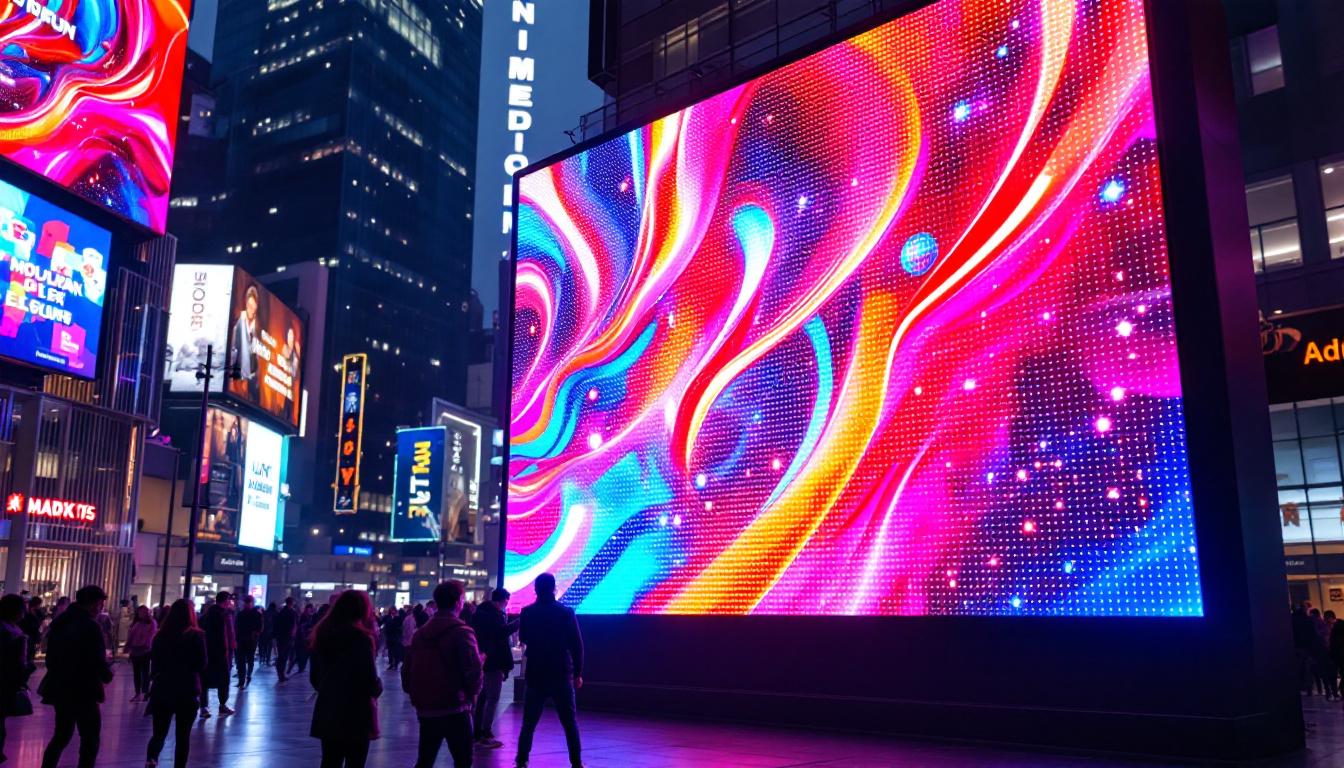
Advertising companies rely on massive LED screens in urban centers to deliver vibrant, eye-catching content. These displays often use block diagonal matrix structures to manage their modular panels, enabling quick updates and seamless integration of diverse content streams.
For instance, Times Square’s iconic LED billboards employ modular control systems that leverage block diagonal matrices to handle the enormous data load efficiently, ensuring smooth transitions and high-resolution imagery.
Sports Arenas and Event Venues
In sports arenas, LED displays provide real-time scores, replays, and interactive content. The modular design of these displays, combined with block diagonal matrix processing, allows for flexible configurations and rapid content changes tailored to the event’s needs.
During major events like the Olympics or World Cup, the ability to process and display complex visuals in real time is critical. Block diagonal matrices facilitate this by enabling parallel processing and localized control of display modules.
Transportation and Public Information Systems
LED displays are widely used in transportation hubs such as airports and train stations to provide schedules, alerts, and advertisements. The modular nature of these displays, managed through block diagonal matrix frameworks, ensures reliability and ease of maintenance, which are vital in high-traffic public spaces.
Future Trends: Enhancing LED Display Technology with Advanced Mathematics
As LED display technology continues to evolve, the role of mathematical models like block diagonal matrices is becoming increasingly prominent. Emerging trends suggest several exciting developments ahead.
Integration with Artificial Intelligence
Artificial intelligence (AI) algorithms are being integrated into LED display control systems to optimize image quality, energy consumption, and content personalization. Block diagonal matrices provide a structured framework that AI can leverage for efficient data processing, enabling smarter and more adaptive displays.
Higher Resolution and 3D Displays
The push towards ultra-high-definition (UHD) and three-dimensional LED displays demands even more sophisticated data handling. Block diagonal matrices will play a key role in managing the exponentially larger datasets, allowing for real-time rendering and interactive experiences.
Energy Efficiency and Sustainability
Optimizing energy use is a priority for large LED installations. By using block diagonal matrix models, control systems can selectively power modules based on content requirements and ambient conditions, reducing overall energy consumption without compromising display quality.
Conclusion
Block diagonal matrices are a fundamental mathematical tool that underpins the efficient operation of modern LED displays. By enabling modular, parallel processing of vast amounts of pixel data, they help overcome the challenges posed by high-resolution, large-scale digital screens.
From enhancing image transformations to facilitating error correction and data compression, block diagonal matrices contribute significantly to the performance, reliability, and scalability of LED display technology. As the industry advances towards more immersive and intelligent displays, the importance of these mathematical structures will only grow, driving innovation and improving user experiences worldwide.
Discover Cutting-Edge LED Technology with LumenMatrix
Ready to experience the pinnacle of LED display innovation? LumenMatrix is at the forefront of transforming visual communication with our comprehensive range of LED display solutions. From captivating Indoor LED Walls to dynamic Outdoor LED Displays, and from versatile Vehicle LED Displays to sleek LED Poster Displays, we have everything you need to make your brand shine. Our mission is to empower your business with LED Sports Displays, interactive Floor LED Displays, and Custom LED Displays tailored to your unique requirements. Elevate your message with our All-in-One LED Displays and LED Transparent Displays, designed to engage and captivate your audience. Check out LumenMatrix LED Display Solutions today and take the first step towards revolutionizing your visual displays.