What Is A DisplayPort 1.4: LED Display Explained
In the ever-evolving world of digital displays and connectivity, understanding the technologies that power your devices is crucial. DisplayPort 1.4 is one such technology that plays a significant role in delivering high-quality video and audio signals from a source device to a display, especially LED monitors. Whether you’re a gamer seeking ultra-high resolutions and refresh rates, a professional working with color-accurate screens, or simply a tech enthusiast wanting to optimize your home setup, knowing what DisplayPort 1.4 offers can help you make informed decisions.
This comprehensive guide delves into what DisplayPort 1.4 is, how it works, and why it matters for LED displays. It also compares it with other common standards and explores future trends in display connectivity.
Understanding DisplayPort 1.4: The Basics
What Is DisplayPort?
DisplayPort is a digital display interface developed by the Video Electronics Standards Association (VESA). It is designed to transmit video and audio from a source device—such as a computer, laptop, or graphics card—to a display device like a monitor or TV. DisplayPort supports high resolutions, refresh rates, and multiple audio channels, making it a popular choice for modern displays.
Introduced in 2006, DisplayPort has gone through several iterations, each improving bandwidth and capabilities. DisplayPort 1.4, released in 2016, is one of the most widely adopted versions, especially in high-performance computing and gaming setups. Its versatility and robust feature set have made it a preferred choice for professionals in graphic design, video editing, and gaming, where visual fidelity is paramount. As technology continues to evolve, the relevance of DisplayPort remains strong, particularly with the increasing demand for higher resolutions and refresh rates in consumer electronics.
Key Features of DisplayPort 1.4
DisplayPort 1.4 brought several enhancements over its predecessors, enabling richer multimedia experiences. Some of its standout features include:
- High Bandwidth: It supports a maximum bandwidth of 32.4 Gbps (gigabits per second), which allows for higher resolutions and refresh rates.
- Support for 8K Resolution: DisplayPort 1.4 can handle 8K UHD (7680×4320 pixels) at 60Hz with Display Stream Compression (DSC).
- HDR Support: It supports High Dynamic Range (HDR) metadata transport, enabling displays to show richer colors and better contrast.
- Display Stream Compression (DSC) 1.2: This visually lossless compression technology allows higher resolutions and refresh rates without needing more bandwidth.
- Backward Compatibility: DisplayPort 1.4 is backward compatible with earlier versions, ensuring it works with older devices.
- Multi-Stream Transport (MST): It supports daisy-chaining multiple monitors from a single output port.
In addition to these features, DisplayPort 1.4 also includes support for Adaptive Sync technology, which helps eliminate screen tearing and stuttering during fast-paced gaming. This feature is particularly beneficial for gamers who seek smooth and fluid visuals, as it synchronizes the refresh rate of the display with the frame rate output of the graphics card. Furthermore, DisplayPort 1.4’s ability to carry audio signals alongside video means that users can enjoy a streamlined setup without the need for additional cables, making it an efficient choice for both home entertainment systems and professional workstations.
Another noteworthy aspect of DisplayPort 1.4 is its ability to support high refresh rates at lower resolutions, which is essential for competitive gaming. For instance, it can deliver 144Hz at 1440p or even 240Hz at 1080p, allowing gamers to experience ultra-responsive gameplay. This capability, combined with its support for advanced color spaces and deeper color depth, ensures that content creators and gamers alike can achieve the best possible visual performance. As the demand for immersive experiences continues to grow, DisplayPort 1.4 stands out as a crucial technology in the evolution of display interfaces.
How DisplayPort 1.4 Works with LED Displays
Why LED Displays Benefit from DisplayPort 1.4
LED (Light Emitting Diode) displays have become the standard for computer monitors, TVs, and other screens due to their brightness, energy efficiency, and color accuracy. DisplayPort 1.4 complements these advantages by providing a robust and flexible connection capable of transmitting high-fidelity video and audio signals.
Because LED displays often support high resolutions and refresh rates, a connection standard like DisplayPort 1.4 that can handle large amounts of data is essential. For example, a 4K LED monitor running at 144Hz requires substantial bandwidth to deliver smooth, crisp images without lag or artifacts. DisplayPort 1.4’s 32.4 Gbps bandwidth and DSC technology make this possible.
Display Stream Compression (DSC) and Its Impact
One of the most important features of DisplayPort 1.4 is Display Stream Compression 1.2, a visually lossless compression technique. DSC allows the transmission of ultra-high resolutions and refresh rates without overwhelming the cable’s bandwidth limitations.
For LED displays, this means users can enjoy 8K resolution at 60Hz or 4K at 120Hz with HDR enabled, all through a single cable. Without DSC, these configurations would require multiple cables or would be impossible due to bandwidth constraints.
HDR and Color Depth Support
High Dynamic Range (HDR) enhances the contrast and color range of displays, making images more vibrant and lifelike. DisplayPort 1.4 supports HDR metadata transport, which enables LED displays to accurately reproduce HDR content.
Additionally, DisplayPort 1.4 supports color depths up to 10-bit per channel or higher, which is crucial for professional photo and video editing where color precision is paramount. This makes it a preferred choice for creative professionals using LED displays.
DisplayPort 1.4 vs. Other Display Standards
DisplayPort 1.4 Compared to HDMI 2.0 and HDMI 2.1
HDMI (High-Definition Multimedia Interface) is another popular digital interface commonly found in TVs, monitors, and gaming consoles. HDMI 2.0 and HDMI 2.1 are the latest versions, with HDMI 2.1 being the most advanced.
While HDMI 2.0 supports up to 18 Gbps bandwidth, DisplayPort 1.4 offers 32.4 Gbps, allowing for higher resolutions and refresh rates. HDMI 2.1, however, supports up to 48 Gbps, surpassing DisplayPort 1.4 in raw bandwidth.
Despite HDMI 2.1’s higher bandwidth, DisplayPort 1.4 remains favored in PC environments due to its support for MST (daisy-chaining multiple monitors), better support for adaptive sync technologies like NVIDIA G-SYNC and AMD FreeSync, and its widespread adoption in graphics cards and monitors.
DisplayPort 1.4 vs. DisplayPort 2.0
DisplayPort 2.0, announced in 2019, is the next-generation standard designed to handle even more demanding display setups. It offers up to 80 Gbps bandwidth, enabling uncompressed 8K at 60Hz or 4K at 240Hz without compression.
However, DisplayPort 2.0 adoption has been slow, with compatible devices only beginning to appear recently. For most users, DisplayPort 1.4 remains the practical choice, providing excellent performance for current LED displays.
Practical Applications and Use Cases of DisplayPort 1.4
Gaming and High-Performance Computing
Gamers benefit significantly from DisplayPort 1.4’s high bandwidth and support for high refresh rates. Many gaming monitors use DisplayPort 1.4 to deliver 144Hz or higher refresh rates at 1440p or 4K resolutions, providing smooth and immersive gameplay.
Additionally, the support for adaptive sync technologies reduces screen tearing and stuttering, enhancing the gaming experience. For competitive gamers, these features can provide a tangible advantage.
Professional Content Creation
Professionals in graphic design, video editing, and 3D modeling require precise color accuracy and high resolutions. DisplayPort 1.4’s support for 10-bit color depth, HDR, and high resolutions makes it ideal for driving professional LED displays.
Moreover, the ability to daisy-chain multiple monitors simplifies multi-display setups, increasing productivity by expanding workspace without cluttering with multiple cables.
Home and Office Use
For everyday users, DisplayPort 1.4 offers future-proofing and flexibility. Whether streaming 4K HDR content, working on spreadsheets, or video conferencing, the standard ensures crisp visuals and reliable connectivity.
Its backward compatibility means users can connect to older monitors without issues, and MST support allows for multi-monitor setups that enhance multitasking and workflow.
Choosing the Right Cable and Setup for DisplayPort 1.4
Cable Quality and Certification
To fully leverage DisplayPort 1.4’s capabilities, using high-quality, certified cables is essential. Certified DisplayPort 1.4 cables ensure proper bandwidth and signal integrity, minimizing issues like flickering or signal dropouts.
Active cables, which contain signal boosters, can be used for longer runs (over 2 meters) without degradation. For standard desktop setups, passive cables up to 2 meters are typically sufficient.
Connector Types and Compatibility
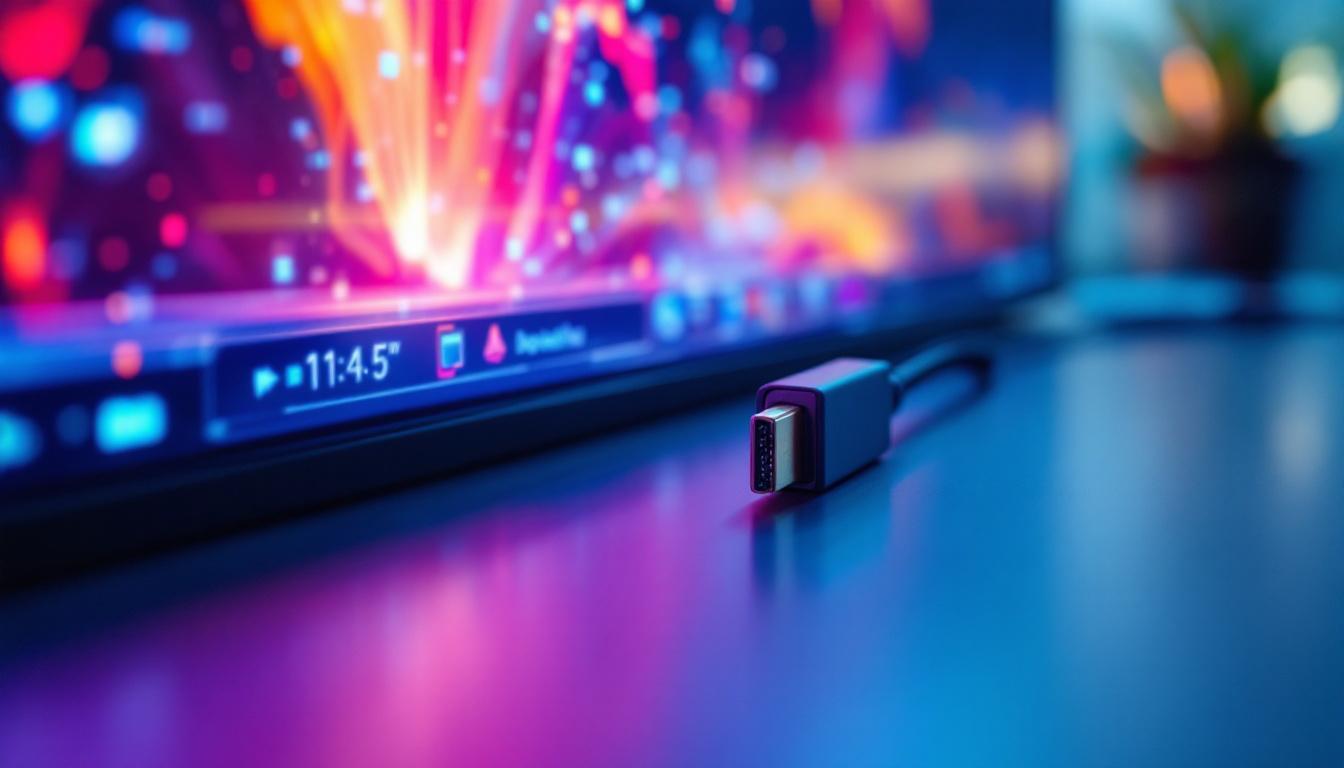
DisplayPort connectors come in two main types: the standard DisplayPort and the smaller Mini DisplayPort. Both support DisplayPort 1.4 features, but the choice depends on the device’s port availability.
Adapters are available to connect DisplayPort to HDMI or USB-C, but users should be aware that adapters may limit bandwidth or features depending on the conversion.
The Future of Display Connectivity and LED Displays
Emerging Technologies and Trends
As display technology advances, so do connectivity standards. DisplayPort 2.0 promises even greater bandwidth to support emerging display formats like 16K resolution and ultra-wide monitors with high refresh rates.
Meanwhile, USB-C with DisplayPort Alternate Mode is becoming increasingly common, combining power delivery, data transfer, and video output into a single cable. This trend simplifies connections and reduces cable clutter.
Why Understanding DisplayPort 1.4 Still Matters
Despite new standards on the horizon, DisplayPort 1.4 remains highly relevant. It is widely supported across current hardware and offers a balanced combination of performance and compatibility.
For consumers and professionals alike, knowing the capabilities and limitations of DisplayPort 1.4 ensures optimal setup choices and better utilization of LED display technology.
Conclusion
DisplayPort 1.4 is a powerful and versatile digital interface that has significantly influenced the way LED displays receive and render high-quality video and audio signals. Its high bandwidth, support for advanced features like HDR and DSC, and compatibility with high refresh rates make it a preferred choice for gamers, professionals, and everyday users.
As display technology continues to evolve, DisplayPort 1.4 provides a solid foundation for current and near-future applications. Understanding its features and how it integrates with LED displays helps users maximize their visual experience and prepare for upcoming innovations in display connectivity.
Explore Cutting-Edge LED Displays with LumenMatrix
Ready to experience the full potential of DisplayPort 1.4 with industry-leading LED display technology? LumenMatrix offers a comprehensive range of solutions tailored to meet your needs, from vibrant Indoor and Outdoor LED Wall Displays to dynamic Vehicle and Sports LED Displays. Embrace the future of visual communication with our innovative LED Poster Displays, Floor LED Displays, and Custom LED solutions. Elevate your brand and captivate your audience with our All-in-One and Transparent LED Displays. Check out LumenMatrix LED Display Solutions today and transform your space into a mesmerizing visual experience.