In today’s fast-paced world, control rooms serve as the nerve centers for critical operations across various industries. From managing city traffic to monitoring power grids and coordinating emergency responses, control rooms rely heavily on advanced display technologies to provide clear, real-time information. Among these technologies, LED displays have emerged as a dominant solution, offering unparalleled brightness, clarity, and flexibility. This article delves into the concept of control room LED displays, explaining their importance, technical features, and applications to help organizations make informed decisions when designing or upgrading their control environments.
The Role of Control Rooms in Modern Operations
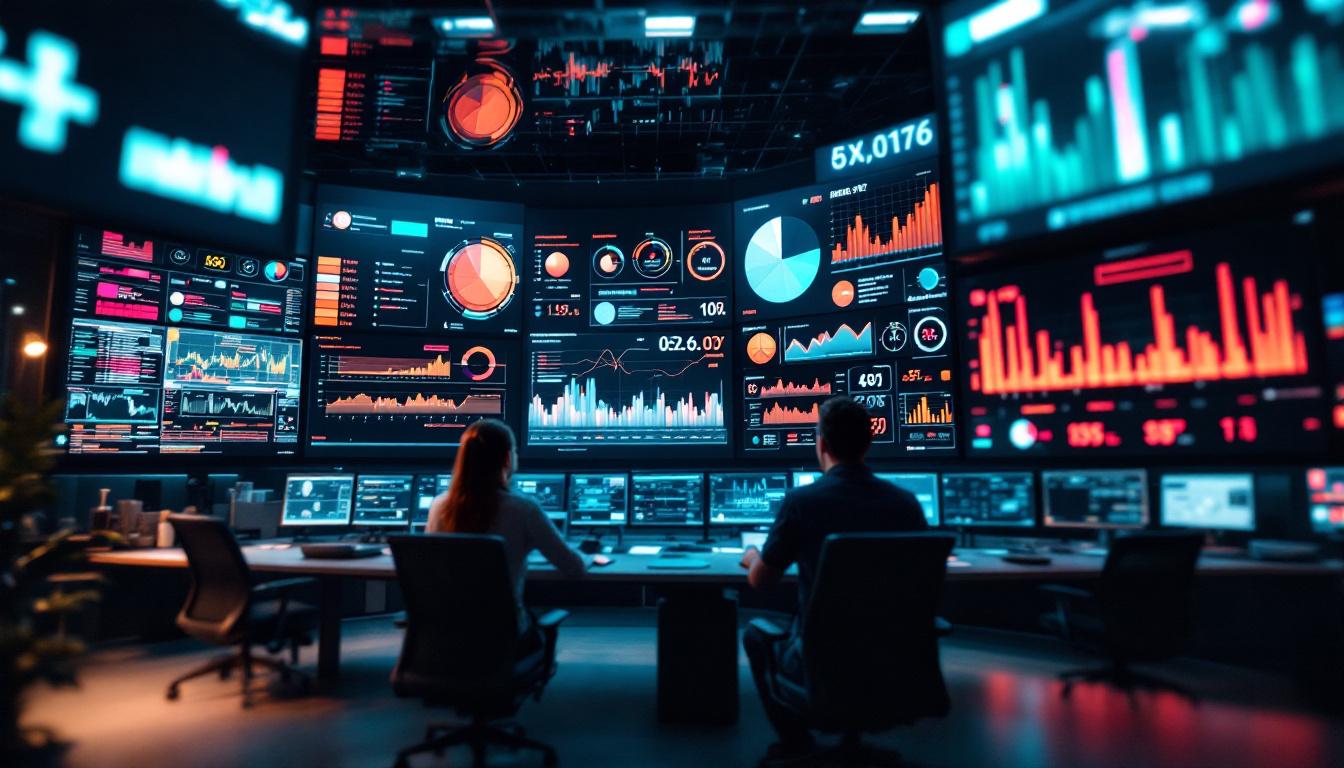
Control rooms are centralized spaces where operators monitor, manage, and control complex systems. These environments are crucial in sectors such as transportation, utilities, manufacturing, security, and telecommunications. The effectiveness of a control room depends largely on the quality and reliability of the information presented to operators, who must make quick, accurate decisions often under pressure.
For instance, in a city’s traffic management center, operators track vehicle flow, identify congestion points, and respond to incidents in real time. Similarly, in a utility control room, engineers oversee electricity distribution, ensuring stability and responding to outages. In all these cases, the display technology used to present data must be highly visible, easy to interpret, and capable of displaying multiple data sources simultaneously.
Why Display Technology Matters
The visual interface in a control room is the primary tool for situational awareness. Poor display quality can lead to misinterpretation of data, delayed responses, and increased risk of errors. Traditional display technologies such as LCD monitors or projection screens, while useful, often fall short in large-scale environments due to limitations in brightness, viewing angles, and scalability.
LED (Light Emitting Diode) displays have revolutionized control room visualization by offering superior brightness, contrast, and modularity. These features make LED displays particularly well-suited for environments where ambient lighting conditions vary and where information must be visible from multiple angles or distances.
What Is a Control Room LED Display?
A control room LED display is a large-format screen composed of multiple LED modules arranged to form a seamless visual surface. Unlike traditional displays, LED panels emit their own light, allowing for higher brightness levels and better visibility in well-lit environments. These displays are designed for continuous operation, ensuring reliability in mission-critical settings.
Control room LED displays can range from a single large screen to an extensive video wall spanning several meters. Their modular nature allows for flexible sizing and resolution configurations tailored to specific operational needs.
Key Features of Control Room LED Displays
- High Brightness and Contrast: LED displays provide brightness levels often exceeding 1,000 nits, making them easily viewable even under strong ambient lighting.
- Wide Viewing Angles: Operators positioned at different points in the room can see the display clearly without color distortion or brightness loss.
- Modular Design: The display is built from smaller LED panels that can be combined to create custom sizes and resolutions.
- Durability and Longevity: LEDs have long lifespans and can operate continuously with minimal maintenance.
- High Resolution: Fine pixel pitches enable detailed imagery and text, essential for displaying complex data and graphics.
- Color Accuracy: Precise color reproduction ensures that color-coded data and alerts are clearly distinguishable.
Technical Aspects of Control Room LED Displays
Understanding the technical specifications of LED displays is crucial for selecting the right solution for a control room environment. Several parameters influence performance, including pixel pitch, refresh rate, and calibration capabilities.
Pixel Pitch and Resolution
Pixel pitch refers to the distance between the centers of two adjacent LED pixels, typically measured in millimeters. A smaller pixel pitch means higher pixel density, resulting in sharper images and finer detail. For control rooms where operators may be seated relatively close to the display, pixel pitches between 0.9mm and 2.5mm are common.
Higher resolution allows for displaying multiple data feeds, video streams, and detailed graphical interfaces simultaneously. This capability is essential in complex control rooms where situational awareness depends on integrating diverse information sources.
Refresh Rate and Response Time
Refresh rate, measured in Hertz (Hz), indicates how many times per second the display updates its image. Higher refresh rates reduce flicker and motion blur, which is particularly important when displaying video feeds or rapidly changing data. Control room LED displays typically support refresh rates of 1,200Hz or higher to ensure smooth visuals and reduce eye strain.
Response time—the speed at which a pixel changes from one color to another—also affects image clarity, especially for dynamic content. LED technology generally offers fast response times, enhancing the overall viewing experience.
Calibration and Uniformity
Color and brightness uniformity across the entire display surface are vital to avoid visual distractions and ensure consistent data interpretation. Professional LED displays come with advanced calibration tools that allow technicians to adjust color balance and brightness levels precisely.
Regular calibration helps maintain image quality over time, compensating for any aging of LED components or environmental factors. This is particularly important in control rooms where displays operate 24/7.
Applications of LED Displays in Control Rooms
LED displays have become indispensable in a variety of control room settings. Their versatility and performance make them suitable for any environment requiring real-time monitoring and rapid decision-making.
Transportation and Traffic Management
Modern traffic control centers use LED video walls to display live traffic cameras, maps, and sensor data. The high brightness of LED displays ensures visibility even during daylight hours, while the ability to segment the screen allows operators to monitor multiple intersections or highways simultaneously.
For example, the New York City Department of Transportation’s Traffic Management Center employs large LED video walls to coordinate traffic signals and respond to incidents, improving traffic flow and reducing congestion.
Utilities and Energy Sector
Power grid control rooms rely on LED displays to visualize grid status, load balancing, and outage management. The clarity and reliability of LED technology help operators quickly identify faults and coordinate repair crews, minimizing downtime and improving service reliability.
Renewable energy control centers also benefit from LED displays to monitor solar and wind farm outputs, weather conditions, and storage systems in real time.
Emergency and Security Operations
In emergency operations centers, LED video walls display live feeds from surveillance cameras, weather alerts, and communication channels. The ability to customize the layout and integrate various data sources enhances situational awareness and response coordination.
Security control rooms in airports, stadiums, and critical infrastructure facilities use LED displays to monitor multiple camera streams and access control systems, enabling rapid threat detection and response.
Industrial and Manufacturing Control Rooms
Manufacturing plants utilize LED displays to oversee production lines, equipment status, and safety systems. Real-time visualization helps operators detect anomalies early, optimize workflows, and maintain quality control.
In industries such as oil and gas, LED displays provide critical data on pressure, temperature, and flow rates, supporting safe and efficient operations.
Design Considerations for Control Room LED Displays
Choosing and integrating an LED display into a control room involves more than just selecting the right panel. Several factors influence the overall effectiveness of the display solution.
Room Size and Viewing Distance
The size of the control room and the typical distance between operators and the display determine the optimal screen size and pixel pitch. Larger rooms may require multiple displays or very large video walls to ensure visibility for all users.
Ergonomics also play a role; displays should be positioned to minimize neck strain and allow operators to view content comfortably for extended periods.
Content Management and Integration
Control room displays often show data from multiple sources such as SCADA systems, video feeds, and communication platforms. A robust content management system (CMS) is essential to manage and route information effectively.
Integration with existing IT infrastructure and security protocols ensures seamless operation and protects sensitive data.
Ambient Lighting and Environmental Factors
LED displays excel in environments with varying lighting conditions, but ambient light levels still influence display performance. Anti-glare coatings and adjustable brightness settings help maintain image clarity without causing operator fatigue.
Environmental factors such as temperature, humidity, and dust must also be considered to ensure the longevity and reliability of LED displays.
Maintenance and Support
Given the critical nature of control rooms, LED displays should be easy to maintain with minimal downtime. Features such as front-access modules simplify repairs and replacements.
Partnering with experienced vendors who offer comprehensive support and training can extend the lifespan of the display system and optimize its performance.
Future Trends in Control Room LED Displays
As technology advances, control room LED displays continue to evolve, incorporating new features to enhance operator experience and operational efficiency.
Higher Resolutions and Smaller Pixel Pitches
Emerging LED panels with ultra-fine pixel pitches below 0.9mm are enabling even sharper images, allowing operators to view intricate details without needing multiple displays. These advancements support more complex data visualization and improved situational awareness.
Integration with AI and Analytics
Artificial intelligence and advanced analytics are increasingly integrated into control room systems. LED displays will play a key role in visualizing AI-driven insights, predictive alerts, and automated recommendations, helping operators make faster, data-driven decisions.
Interactive and Touch-Enabled Displays
Interactive LED walls with touch capabilities are gaining traction, allowing operators to manipulate data directly on the screen. This interactivity can streamline workflows and improve collaboration during critical incidents.
Energy Efficiency and Sustainability
New LED technologies focus on reducing power consumption and environmental impact. Energy-efficient LED displays contribute to greener control room operations, aligning with broader sustainability goals.
Conclusion
Control room LED displays are vital components in the infrastructure of modern operational centers. Their superior brightness, clarity, and flexibility make them indispensable for environments where real-time data visualization and rapid decision-making are crucial. Understanding the technical features, applications, and design considerations of LED displays helps organizations select solutions that enhance situational awareness, improve response times, and ultimately support safer and more efficient operations.
As LED technology continues to advance, control rooms will benefit from higher resolution, smarter integration, and more interactive capabilities, ensuring they remain at the forefront of operational excellence in an increasingly complex world.
Discover LumenMatrix’s Advanced LED Display Solutions
Ready to elevate your control room’s capabilities with the latest in LED display technology? LumenMatrix offers a comprehensive range of cutting-edge LED display modules designed to enhance situational awareness and decision-making in mission-critical environments. From Indoor and Outdoor LED Wall Displays to specialized solutions like Vehicle, Sports, and Floor LED Displays, our products are tailored to meet the unique demands of your operations. Experience the transformative power of our Custom, All-in-One, and Transparent LED Displays. Check out LumenMatrix LED Display Solutions today and step into the future of visual communication.