In the rapidly evolving world of display technology, terms like LCD and LED are often used interchangeably, leading to some confusion about what they actually mean and how they differ. Understanding these technologies is essential whether you are shopping for a new TV, monitor, or any device with a screen. This article dives deep into what LCD and LED displays are, how they work, their advantages and disadvantages, and how they shape the viewing experience today.
Understanding the Basics: What Is an LCD?
LCD stands for Liquid Crystal Display, a technology that has revolutionized screens since its commercial introduction in the late 20th century. Unlike older cathode ray tube (CRT) displays, LCDs use liquid crystals that do not emit light directly. Instead, they manipulate light to produce images.
At its core, an LCD panel consists of several layers: two polarized glass panels with a liquid crystal solution sandwiched between them. When an electric current passes through the crystals, they align in ways that either block or allow light to pass through, creating images. However, because liquid crystals don’t emit light themselves, LCDs require a backlight to illuminate the display.
The Role of Backlighting in LCDs
Backlighting is critical in LCD technology. Early LCDs used cold cathode fluorescent lamps (CCFLs) as backlights, which provided uniform illumination but were bulky and consumed more power. Modern LCDs have largely replaced CCFLs with LED backlighting, which is more energy-efficient, slimmer, and allows for better color accuracy and contrast.
This transition has led to the term “LED TV” or “LED display,” which technically refers to an LCD panel lit by LEDs rather than a fundamentally different display technology. This distinction is important to understand when comparing displays. The advancements in LED technology have also enabled features like local dimming, where specific areas of the screen can be dimmed or brightened independently, enhancing the overall visual experience by providing deeper blacks and more vibrant colors.
Moreover, the evolution of LCD technology has paved the way for various applications beyond traditional television and computer monitors. From smartphones and tablets to digital signage and automotive displays, LCDs have become ubiquitous in our daily lives. The versatility of LCD technology, combined with its ability to produce high-resolution images, has made it a preferred choice for manufacturers across multiple industries. As a result, we continue to see innovations in LCD technology, such as flexible displays and ultra-thin panels, which promise to further enhance user interaction and engagement.
What Is an LED Display? Clarifying the Terminology
LED stands for Light Emitting Diode, a semiconductor device that emits light when an electric current passes through it. In the context of displays, the term “LED display” can be somewhat ambiguous, as it is used in two main ways:
LED-Backlit LCD Displays
As mentioned earlier, most modern LCD screens use LED backlighting instead of CCFL. These are often marketed as “LED TVs” or “LED monitors.” They are essentially LCD panels illuminated by an array of tiny LEDs placed either behind the screen (direct backlighting) or around its edges (edge-lit). This design improves brightness, contrast, and energy efficiency compared to older CCFL-backlit LCDs.
True LED Displays (Direct-View LED)
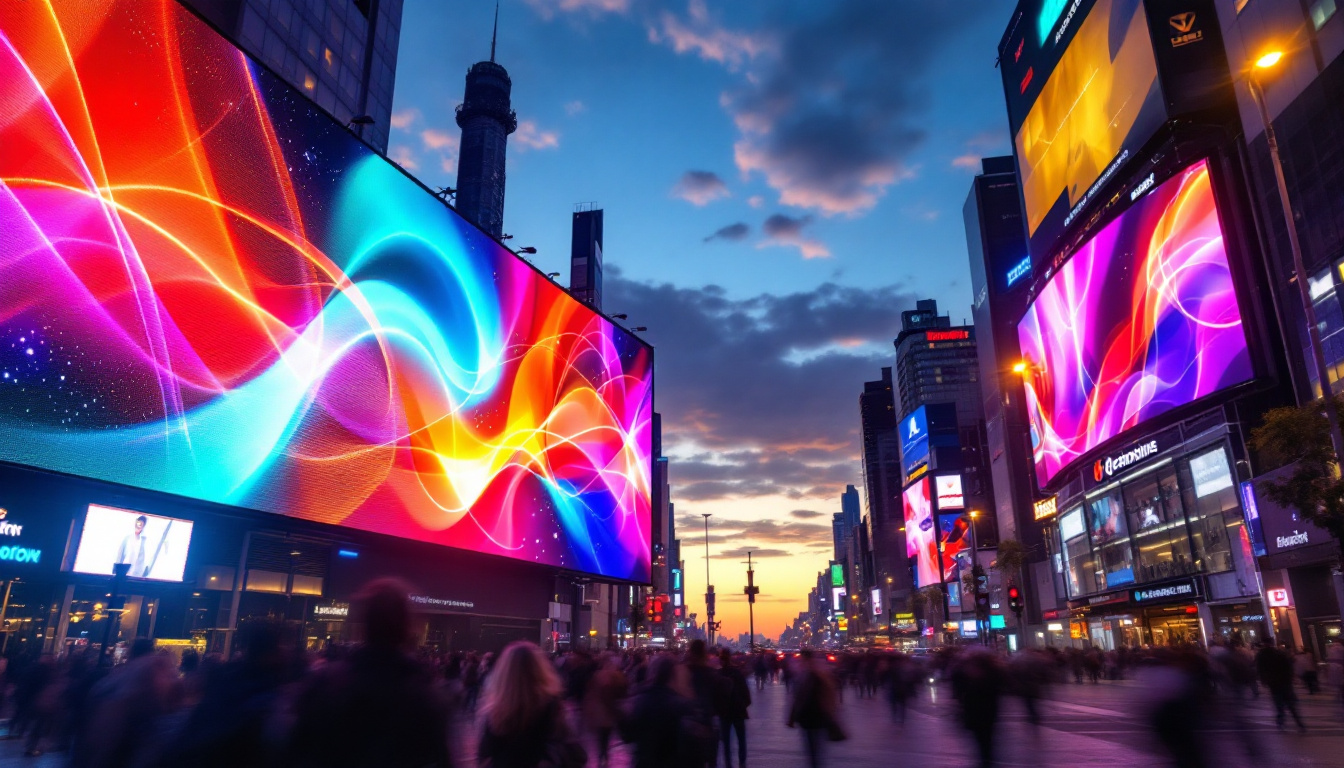
True LED displays, also known as direct-view LED or microLED displays, consist of millions of tiny LEDs that act as individual pixels. Each LED emits its own light and color, eliminating the need for a backlight. This technology is commonly used in large-scale digital billboards, stadium screens, and increasingly in premium TVs and monitors.
Unlike LCDs, true LED displays offer superior contrast ratios, deeper blacks, and faster response times because each pixel can be turned on or off independently. However, they are generally more expensive and complex to manufacture, especially at smaller sizes.
How LCD and LED Displays Work: A Technical Overview
To appreciate the differences between LCD and LED displays, it’s helpful to understand their underlying mechanisms.
LCD Operation
Liquid crystals in an LCD do not emit light but control the passage of light from the backlight. When voltage is applied, the crystals twist and untwist to modulate light intensity and color filters create the desired hues. The backlight shines through these manipulated crystals to produce the visible image.
This system allows for thin, lightweight screens with low power consumption. However, because the backlight is always on, LCDs can struggle with producing true blacks and have limited viewing angles compared to emissive displays.
LED Display Operation
In direct-view LED displays, each pixel is composed of tiny LEDs that emit light directly. These LEDs can be red, green, and blue, combining to create a full spectrum of colors. Because each LED can be individually controlled, the display can achieve perfect blacks by turning off pixels entirely, resulting in exceptional contrast.
MicroLED technology, a recent advancement, miniaturizes these LEDs to fit into smaller displays while maintaining high brightness and color accuracy. This technology promises to combine the best features of OLED and LCD displays without some of their drawbacks.
Comparing LCD and LED Displays: Pros and Cons
Both LCD and LED technologies have their strengths and weaknesses, making them suitable for different applications and user preferences.
Advantages of LED-Backlit LCDs
- Energy Efficiency: LED backlights consume less power than CCFLs, making devices more energy-efficient.
- Slim Design: LED backlighting allows for thinner and lighter displays, ideal for modern TVs and laptops.
- Improved Brightness and Color: LEDs provide better brightness and color accuracy compared to older LCDs.
- Cost-Effective: LED-backlit LCDs are generally more affordable than true LED or OLED displays.
Disadvantages of LED-Backlit LCDs
- Limited Contrast: Because the backlight is always on, blacks can appear grayish, especially in dark scenes.
- Viewing Angles: Colors and brightness can shift when viewed from the side.
- Response Time: Some LCDs may exhibit motion blur during fast-moving scenes.
Advantages of True LED Displays
- Superior Contrast and Blacks: Pixels can be turned off completely, providing true blacks.
- High Brightness: LEDs can achieve very high brightness levels, suitable for outdoor and high ambient light environments.
- Fast Response Times: Ideal for gaming and fast video content with minimal motion blur.
- Longevity: LEDs generally have a longer lifespan compared to other display technologies.
Disadvantages of True LED Displays
- Cost: Manufacturing true LED displays, especially microLEDs, is expensive.
- Complexity: The technology is still maturing for consumer-sized screens, limiting widespread adoption.
- Potential for Burn-in: Although less common than OLED, some LED displays can suffer from image retention under certain conditions.
Applications and Trends in LCD and LED Display Technology
Both LCD and LED display technologies continue to evolve and find new applications across various industries.
Consumer Electronics
In televisions, monitors, smartphones, and laptops, LED-backlit LCDs dominate the market due to their balance of cost, performance, and energy efficiency. Brands continue to innovate with technologies like local dimming, quantum dots, and HDR to enhance LCD performance.
True LED displays are gaining traction in high-end TVs and gaming monitors, especially with the rise of microLED technology promising OLED-like performance without some of the limitations.
Commercial and Industrial Use
Large-scale LED displays are widely used for advertising, sports arenas, and public information systems. Their brightness and scalability make them ideal for outdoor use where LCDs would struggle.
Future Outlook
Emerging technologies such as microLED and miniLED are bridging the gap between LCD and true LED displays. MiniLED enhances LCD backlighting with thousands of tiny LEDs for improved contrast and brightness, while microLED offers self-emissive pixels with exceptional image quality.
As production costs decrease, these technologies are expected to become more accessible, potentially reshaping the display market in the next decade.
How to Choose the Right Display: Key Considerations
When selecting a display, understanding the differences between LCD and LED technologies can help make an informed decision based on your needs.
Usage Scenario
If you need a display for everyday use, such as office work, streaming, or casual gaming, an LED-backlit LCD is typically sufficient and cost-effective. For professional photo or video editing, or immersive gaming, a display with better contrast and color accuracy, such as an OLED or microLED, may be preferable.
Budget
LED-backlit LCDs offer excellent value for most consumers. True LED displays and emerging technologies like microLED tend to be more expensive but provide superior image quality.
Viewing Environment
Consider the lighting conditions where the display will be used. True LED displays with higher brightness are better suited for bright rooms or outdoor environments, while LCDs perform well in controlled lighting.
Longevity and Maintenance
LED-backlit LCDs generally have long lifespans and low maintenance. Some emissive displays may require more careful handling to avoid burn-in or image retention.
Conclusion
Understanding the distinction between LCD and LED displays is crucial in navigating today’s display market. While LCD refers to the liquid crystal technology that manipulates light to create images, LED can refer either to the backlighting method used in most modern LCDs or to true LED displays where each pixel emits its own light.
Each technology offers unique benefits and trade-offs. LED-backlit LCDs provide a cost-effective, energy-efficient solution with good image quality, while true LED displays deliver superior contrast, brightness, and response times at a higher price point. As display technology continues to advance, innovations like microLED and miniLED promise to blend the best of both worlds, offering consumers increasingly impressive viewing experiences.
Whether purchasing a new TV, monitor, or digital signage, understanding these technologies empowers consumers to make choices that best suit their needs and budgets.
Discover Cutting-Edge LED Displays with LumenMatrix
Ready to elevate your visual experience with the latest in display technology? Look no further than LumenMatrix, a pioneer in LED display innovation. From mesmerizing Indoor and Outdoor LED Wall Displays to dynamic Vehicle and Sports LED Displays, LumenMatrix offers a comprehensive range of solutions tailored to your needs. Immerse yourself in the future of digital signage with our LED Poster Displays, Floor LED Displays, and Custom LED solutions. Experience the transformative power of All-in-One and Transparent LED Displays designed to captivate and engage. Embrace the revolution in visual communication with LumenMatrix. Check out LumenMatrix LED Display Solutions today and transform your space into a beacon of creativity and impact.