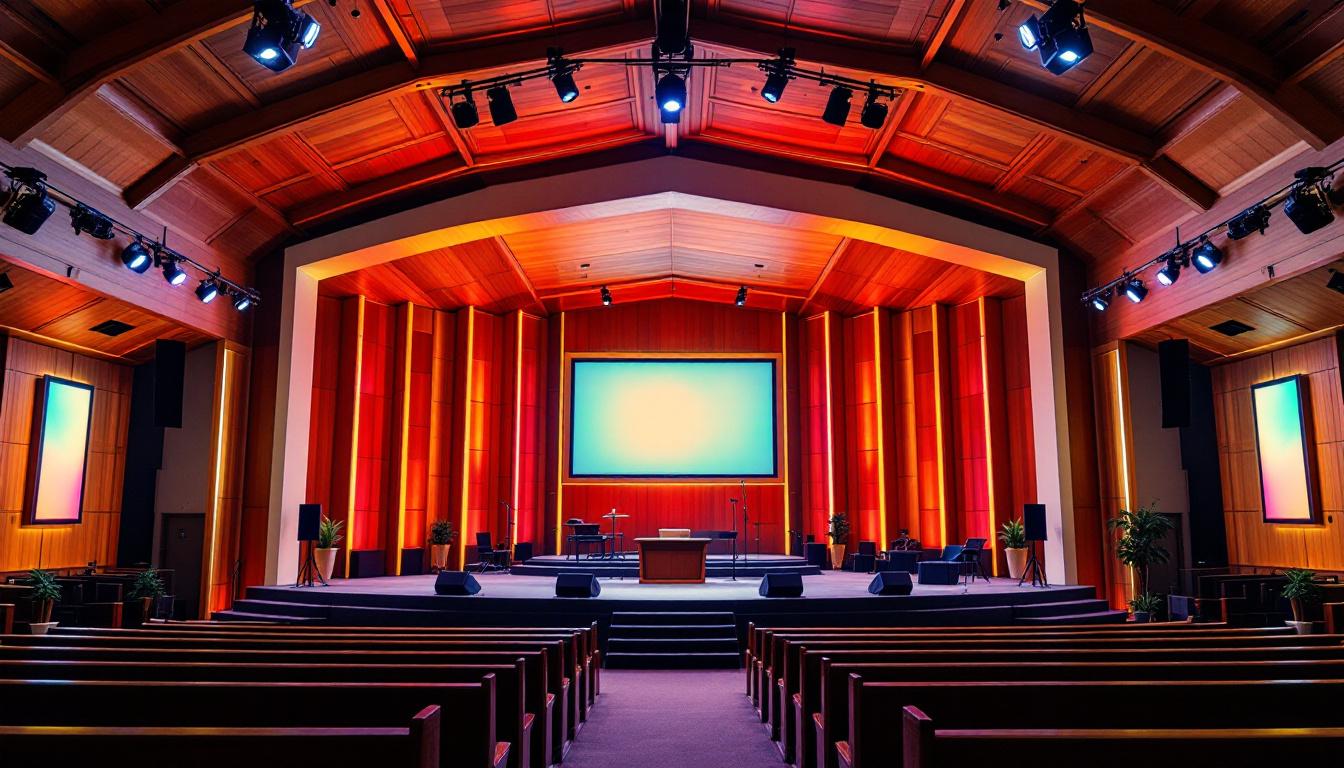
In recent years, the integration of LED display technology into church stage design has transformed the worship experience, particularly in venues where wood plays a central role in the aesthetic. Wood church stage design, known for its warmth and organic beauty, can now be enhanced with the dynamic capabilities of LED displays. This combination not only elevates the visual impact but also supports the evolving needs of modern congregations.
This article explores the intersection of wood stage design and LED display technology, explaining how these elements work together to create inspiring worship environments. From technical considerations to design principles and practical examples, this comprehensive guide will help church leaders, designers, and audiovisual professionals understand the benefits and challenges of integrating LED displays into wood-based church stages.
The Appeal of Wood in Church Stage Design
Wood has long been a favored material in church architecture and interior design due to its natural beauty, versatility, and symbolic resonance. It evokes warmth, tradition, and a sense of grounded spirituality, which aligns well with the atmosphere many churches seek to cultivate during worship.
Wood can be crafted into intricate carvings, paneling, and structural elements that add depth and texture to a stage. Its acoustic properties also contribute to sound quality, an important factor in spaces where sermons, music, and communal singing are central activities.
Why Wood Remains a Popular Choice
Beyond aesthetics, wood is sustainable and adaptable. Churches often use reclaimed or responsibly sourced wood to align with environmental stewardship values. Additionally, wood’s natural grain and color can complement a wide range of lighting setups, including the vibrant and dynamic illumination provided by LED displays.
However, wood also presents challenges when integrating modern technology such as LED screens, which require careful design to maintain the stage’s visual harmony and structural integrity. The juxtaposition of traditional materials with contemporary technology can create a striking visual narrative, but it necessitates a thoughtful approach to ensure that both elements enhance rather than detract from the worship experience.
Moreover, wood’s tactile quality invites a sense of connection and intimacy, making it an ideal choice for spaces intended for reflection and community engagement. The rich textures of wood can evoke memories and emotions, reinforcing the sense of history and continuity that many congregations cherish. As churches evolve to meet the needs of modern worshippers, the integration of wood in stage design not only honors tradition but also embraces innovation, allowing for a dynamic and engaging environment that resonates with both the past and the present.
Understanding LED Displays in Church Settings
LED (Light Emitting Diode) displays have revolutionized visual presentation in many public spaces, including churches. These displays consist of numerous small LEDs arranged in a matrix to form screens capable of showing images, videos, text, and live feeds with exceptional brightness and clarity.
In church environments, LED displays serve multiple purposes: enhancing worship services with lyrics and scripture, broadcasting live video of the pastor or choir, displaying sermon themes, and creating immersive visual storytelling that complements music and liturgy. The ability to convey messages visually can significantly enhance the engagement of congregants, particularly in a world where digital communication is increasingly prevalent.
Key Advantages of LED Displays for Churches
One of the biggest advantages of LED displays is their high brightness, which ensures visibility even in well-lit spaces. This is particularly important for churches that use natural daylight or have large windows. Additionally, LED screens offer flexibility in size and shape, allowing for custom installations that fit unique stage designs. This adaptability means that churches can create dynamic environments that can be tailored for different events, from traditional services to contemporary worship experiences.
Energy efficiency is another benefit; modern LED technology consumes significantly less power compared to traditional projection systems. Maintenance costs are also lower, as LEDs have long lifespans and are resistant to damage from dust and vibration. Furthermore, the vibrant colors and high contrast ratios of LED displays can enhance the overall aesthetic of the worship space, making it more inviting and engaging for attendees. As churches continue to embrace technology, the integration of LED displays can also facilitate creative outreach efforts, allowing congregations to share their messages and events with a broader audience through social media and live streaming.
Integrating LED Displays with Wood Stage Design
The fusion of LED technology with wood stage design requires thoughtful planning to balance tradition and innovation. The goal is to create a seamless visual experience where the natural warmth of wood complements the vibrant digital content displayed on the LED screens.
Design Considerations
One of the primary considerations is the mounting and framing of LED panels on or around wooden structures. The weight and heat generated by LED displays must be supported safely without damaging the wood. Specialized mounting brackets and ventilation solutions are often employed to protect the wood from warping or discoloration.
Another factor is the visual integration. Designers often use wood framing or trim around LED screens to soften the transition between digital and natural materials. This approach helps maintain the stage’s cohesive aesthetic while allowing the screens to stand out as focal points.
Acoustic Impact
Wood stages contribute positively to acoustics, but the addition of LED displays can alter sound reflection and absorption. Careful placement and acoustic treatment may be necessary to preserve sound quality. For example, incorporating acoustic panels behind or around LED installations can mitigate unwanted echoes or reverberations.
Practical Examples of Wood and LED Integration in Churches
Many churches around the world have successfully integrated LED displays into wood-centric stage designs, showcasing both creativity and technical expertise.
Case Study: A Contemporary Worship Center
A mid-sized worship center in the Pacific Northwest integrated a large curved LED video wall framed by reclaimed barn wood. The wood’s rustic texture contrasts beautifully with the high-definition digital content, creating an inviting yet modern atmosphere. The design team used hidden ventilation channels behind the wood panels to prevent heat buildup and preserve the wood’s integrity.
This installation supports dynamic worship experiences, from displaying song lyrics and sermon notes to immersive visual backgrounds that enhance thematic storytelling.
Case Study: Historic Church Renovation
In a historic church undergoing renovation, designers installed modular LED panels recessed into a custom-built walnut stage backdrop. The wood was carefully treated to match the church’s original interior, preserving its heritage feel while introducing state-of-the-art technology. The LED system is used sparingly during services to maintain reverence but can be fully utilized for special events and concerts.
Technical Specifications and Best Practices
Choosing the right LED display for a wood church stage involves understanding key technical specifications and adhering to best practices to ensure longevity and performance.
Resolution and Pixel Pitch
Pixel pitch—the distance between individual LEDs—determines the display’s resolution and viewing distance. For church stages, a pixel pitch between 2.5mm and 4mm is common, providing crisp images visible from various seating areas without overwhelming the space.
Brightness and Contrast
LED displays for indoor church environments typically require brightness levels between 800 and 1500 nits. This range balances visibility with comfort, avoiding glare that could distract worshippers. High contrast ratios help ensure text and images remain sharp and legible.
Control Systems and Content Management
Modern LED displays are paired with sophisticated control systems that allow for real-time content switching, remote management, and integration with worship software. This flexibility enables seamless transitions between sermon slides, live video, and multimedia presentations.
Challenges and Solutions in Wood and LED Stage Design
While the combination of wood and LED displays offers many benefits, it also presents challenges that require proactive solutions.
Heat Management
LED panels generate heat that can affect wood materials. Proper ventilation and the use of heat-resistant materials or coatings can prevent damage. Some designers incorporate cooling fans or air gaps behind panels to dissipate heat effectively.
Weight and Structural Support
LED displays can be heavy, especially large-format video walls. Ensuring the stage structure can support this weight is critical. Structural engineers often collaborate with designers to reinforce wood frameworks or use lightweight LED panels designed for stage use.
Visual Cohesion
Maintaining a cohesive look between the natural wood and the high-tech LED screen requires careful color matching, framing, and lighting design. Using warm LED color temperatures and wood finishes that complement the digital content palette helps achieve harmony.
Future Trends in Wood Church Stage Design with LED Displays
The evolution of LED technology and sustainable design practices points toward exciting future possibilities for church stage design.
Flexible and Transparent LED Panels
Emerging LED technologies include flexible and transparent panels that can be curved or integrated into wood surfaces without obstructing natural light. These innovations will allow even more creative stage designs that blend technology and tradition seamlessly.
Interactive and Immersive Experiences
As churches increasingly adopt interactive worship elements, LED displays will play a key role in creating immersive environments. Motion sensors, augmented reality, and synchronized lighting effects can transform wooden stages into dynamic storytelling spaces.
Sustainability and Smart Materials
Future designs will likely emphasize sustainability, using eco-friendly wood treatments and energy-efficient LED systems. Smart materials that adapt to environmental conditions may also be integrated to protect wood surfaces and optimize display performance.
Conclusion
The integration of LED displays into wood church stage design represents a harmonious blend of tradition and innovation. By thoughtfully combining the natural beauty of wood with the dynamic capabilities of LED technology, churches can create worship environments that are both visually stunning and functionally versatile.
Understanding the technical requirements, design principles, and potential challenges is essential for successful implementation. As LED technology continues to advance, the opportunities for creative and meaningful stage designs in wood-centric churches will only expand, enriching the worship experience for congregations worldwide.
Explore LumenMatrix LED Solutions for Your Church Stage
Ready to elevate your church’s worship experience with the perfect blend of tradition and cutting-edge technology? Discover how LumenMatrix’s innovative LED display modules can transform your wood church stage into a captivating visual environment. From Indoor and Outdoor LED Wall Displays to Custom and Transparent LED solutions, LumenMatrix is committed to revolutionizing your worship space. Check out LumenMatrix LED Display Solutions today and witness the impact of enhanced engagement and powerful visual storytelling in your congregation.