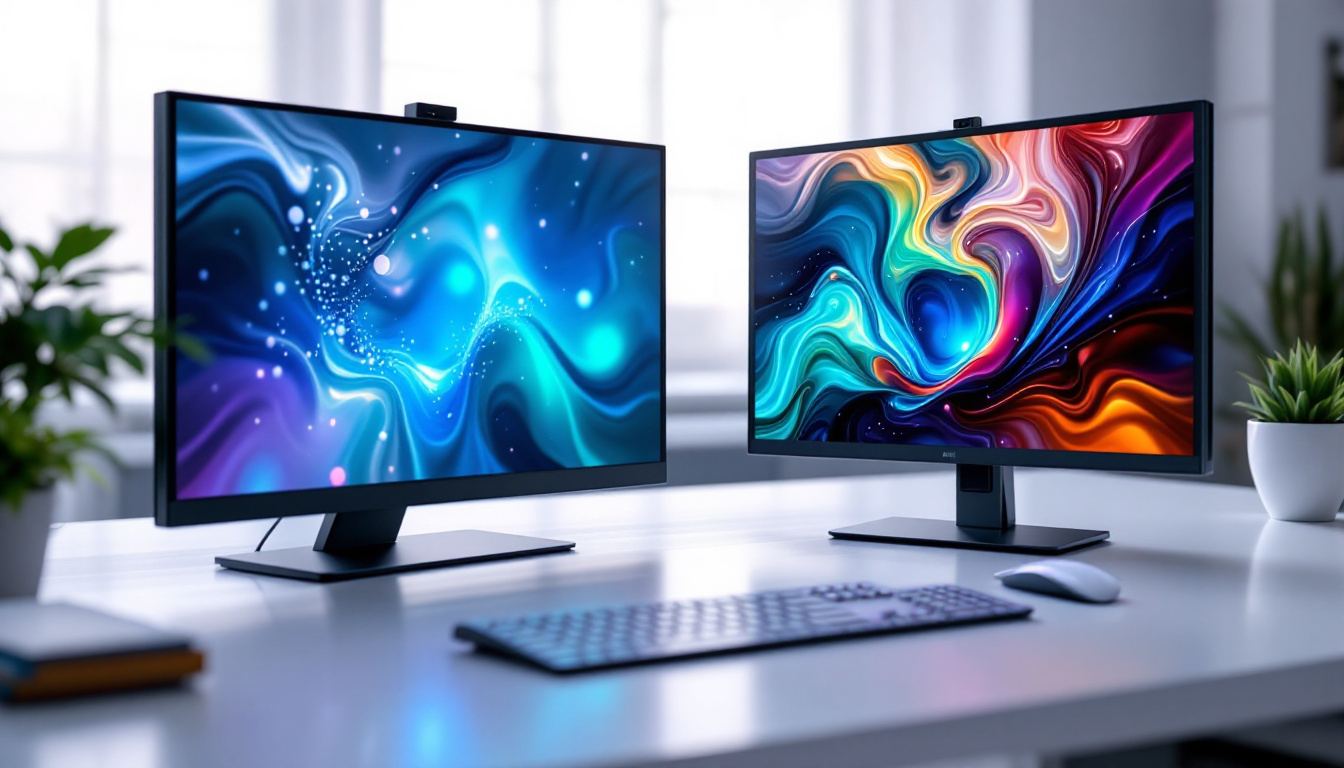
In today’s fast-evolving digital landscape, the demand for high-quality computer monitors has never been greater. Whether for professional use, creative work, or immersive entertainment, users seek displays that offer sharp visuals, responsive touch capabilities, and vibrant colors. Among the top contenders in this arena are 4K touch screen monitors with LED displays. This article delves into the technology behind these monitors, explains their benefits, and guides readers through what to consider when choosing one.
Understanding 4K Resolution: What Does It Mean?
4K resolution, often referred to as Ultra High Definition (UHD), represents a display resolution of approximately 3840 x 2160 pixels. This is four times the pixel count of Full HD (1920 x 1080), resulting in significantly sharper and more detailed images. The term “4K” originates from the horizontal pixel count, which is close to 4000 pixels.
The increased pixel density means that images and text appear crisper, which is especially beneficial for professionals such as graphic designers, video editors, and photographers who require precise detail. For everyday users, 4K displays provide a more immersive viewing experience, whether for gaming, streaming movies, or multitasking with multiple windows open simultaneously.
Why 4K Matters for Touch Screen Monitors
When touch functionality is integrated into a 4K monitor, the combination enhances user interaction. Higher resolution ensures that touch inputs are registered with greater accuracy, and the display can render fine details that correspond with precise touch gestures. This is particularly useful in fields like digital art and design, where stylus or finger input demands both precision and responsiveness.
Moreover, the extra screen real estate afforded by 4K resolution allows for more workspace and better multitasking capabilities. Users can comfortably work with multiple applications side-by-side without sacrificing clarity or usability.
LED Display Technology: The Backbone of Modern Monitors
LED, or Light Emitting Diode, technology has become the standard for modern computer monitors due to its energy efficiency, brightness, and color accuracy. However, it’s important to clarify that LED monitors are actually LCD (Liquid Crystal Display) panels that use LED backlighting instead of older CCFL (Cold Cathode Fluorescent Lamp) backlights.
How LED Backlighting Works
In an LED-backlit LCD monitor, a series of LEDs positioned behind or along the edges of the screen illuminate the liquid crystals. These crystals then modulate the light to produce the images seen on the display. This method offers several advantages:
- Improved Brightness: LEDs can produce brighter light than traditional CCFL backlights, making the screen easier to view in well-lit environments.
- Energy Efficiency: LED backlighting consumes less power, contributing to lower energy costs and reduced heat output.
- Better Color Accuracy: LEDs can be fine-tuned to emit specific wavelengths, enhancing color reproduction and contrast ratios.
- Thinner Displays: LEDs are smaller and more flexible, allowing manufacturers to create slimmer and lighter monitors.
Types of LED Backlighting
There are primarily two types of LED backlighting used in monitors:
- Edge-Lit LED: LEDs are placed along the edges of the screen, and light is spread across the display using light guides. This design enables ultra-thin monitors but can sometimes result in uneven brightness or contrast.
- Full-Array LED: LEDs are distributed evenly behind the entire screen. This setup allows for local dimming, where specific zones can be dimmed or brightened independently, improving contrast and black levels.
For 4K touch screen monitors, full-array LED backlighting is often preferred for its superior image quality, although edge-lit models remain popular due to their slim profiles and cost-effectiveness.
The Advantages of 4K Touch Screen Monitors with LED Displays
Combining 4K resolution, touch screen capability, and LED display technology results in a powerful tool for various users. Here are some of the key benefits:
Enhanced Visual Clarity and Detail
The 4K resolution ensures that images, videos, and text appear exceptionally sharp. This clarity is crucial for professionals working with high-resolution content, such as CAD designers, video editors, and photographers. The LED backlighting further enhances this by delivering vivid colors and deep contrasts, making visuals pop.
Improved User Interaction through Touch
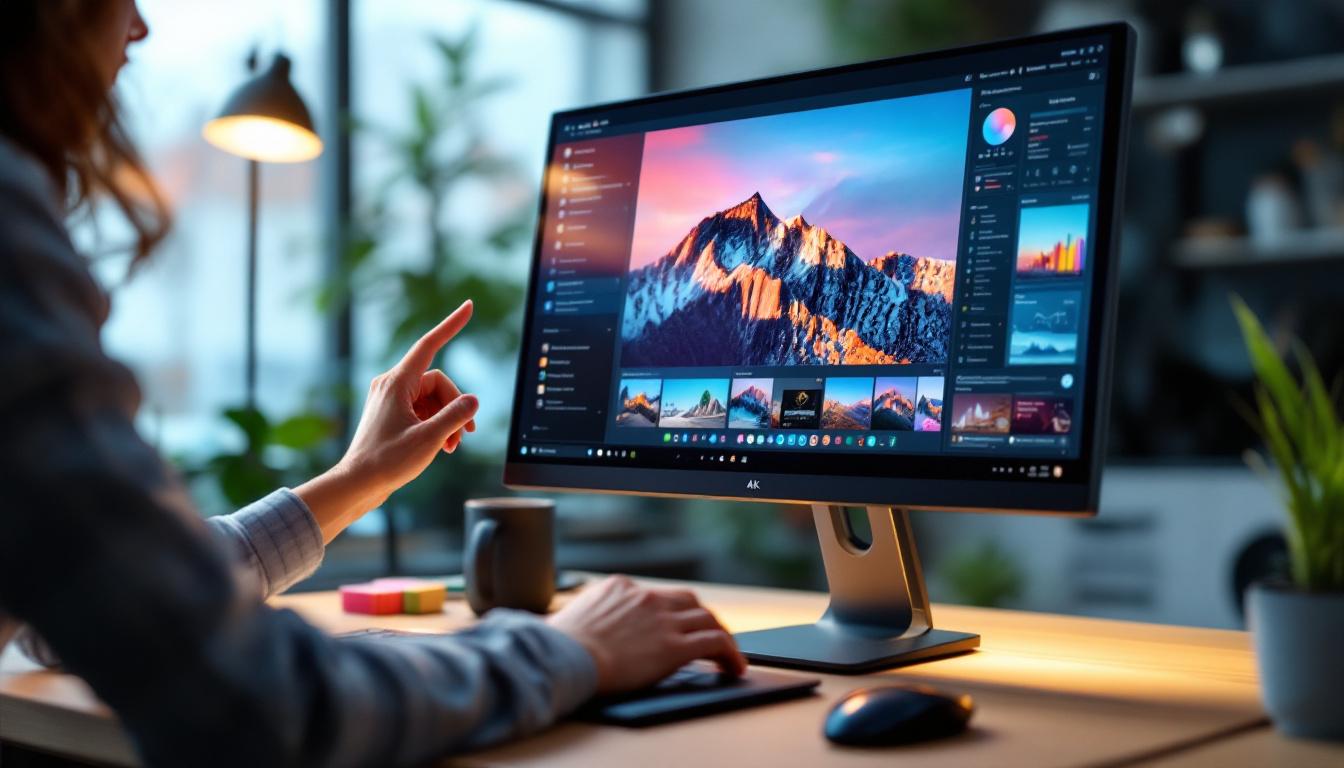
Touch screen functionality adds an intuitive layer of interaction. It allows users to manipulate content directly on the screen, which can speed up workflows and improve precision. For example, digital artists can draw directly on the display, while business professionals can navigate presentations or spreadsheets with simple gestures.
Energy Efficiency and Durability
LED technology is more energy-efficient than older display technologies, which means lower electricity bills and a smaller environmental footprint. Additionally, LED backlights have longer lifespans and are less prone to flickering, contributing to a more reliable and comfortable viewing experience.
Versatility Across Use Cases
4K touch screen LED monitors are versatile and suitable for a wide range of applications:
- Creative Work: Artists, designers, and video editors benefit from the precision and color accuracy.
- Business and Education: Touch screens facilitate interactive presentations and collaborative work.
- Gaming and Entertainment: High resolution and fast response times provide immersive experiences.
- Accessibility: Touch interfaces can be easier for users with certain disabilities.
Factors to Consider When Choosing a 4K Touch Screen LED Monitor
With many options on the market, selecting the right 4K touch screen LED monitor requires careful consideration of several factors to ensure it meets your needs.
Screen Size and Aspect Ratio
4K monitors come in various sizes, typically ranging from 24 inches to 32 inches or more. Larger screens provide more workspace and better immersion but require more desk space and can be more expensive. The standard aspect ratio is 16:9, which suits most applications, but some users might prefer ultrawide formats for enhanced multitasking.
Touch Technology and Responsiveness
Touch screens use different technologies such as capacitive, resistive, or infrared. Capacitive touch is the most common in modern monitors, offering multi-touch support and high responsiveness. For professional creative work, consider monitors that support stylus input with pressure sensitivity.
Color Accuracy and Calibration
For professionals in photography, video editing, or design, color accuracy is paramount. Look for monitors that cover a wide color gamut (e.g., Adobe RGB or DCI-P3) and offer factory calibration or support hardware calibration tools. This ensures that colors are displayed consistently and accurately.
Refresh Rate and Response Time
While 4K monitors traditionally prioritize resolution over refresh rate, gamers and video editors may want monitors with higher refresh rates (75Hz or above) and low response times (5ms or less) to reduce motion blur and latency.
Connectivity Options
Ensure the monitor supports the necessary ports for your devices, such as HDMI 2.0 or DisplayPort 1.4, which can handle 4K resolution at 60Hz or higher. USB-C ports with power delivery and data transfer capabilities are increasingly common and convenient for laptop users.
Ergonomics and Build Quality
Adjustable stands that allow height, tilt, swivel, and pivot adjustments improve comfort during extended use. Additionally, consider the monitor’s build quality and design, especially if it will be used in a professional environment.
Common Applications and Use Cases
Understanding how 4K touch screen LED monitors are used can help clarify their value and guide purchasing decisions.
Creative Professionals
Graphic designers, illustrators, and video editors benefit immensely from the combination of 4K resolution and touch input. The ability to zoom in on fine details without pixelation, combined with direct manipulation via touch or stylus, streamlines the creative process. Monitors like the Dell UltraSharp 32 4K Touch Monitor or the Microsoft Surface Studio exemplify this synergy.
Business and Collaborative Environments
Touch screen monitors facilitate interactive presentations and collaborative work sessions. In conference rooms or classrooms, these monitors allow multiple users to annotate, navigate, and engage with content dynamically. This interactivity can improve communication and productivity.
Healthcare and Industrial Use
In medical imaging or industrial control systems, precise touch input and high-resolution displays are critical. The clarity of 4K combined with responsive touch helps professionals make accurate assessments and decisions.
Gaming and Entertainment
While gaming traditionally prioritizes refresh rates over resolution, 4K touch screen monitors are gaining traction for casual and immersive gaming experiences. The vibrant LED backlighting enhances visual fidelity, and touch capabilities open up new interaction possibilities for certain game genres.
Future Trends in 4K Touch Screen LED Monitors
The technology behind 4K touch screen LED monitors continues to evolve rapidly. Several emerging trends are shaping the future of this market:
Mini-LED and Micro-LED Backlighting
Mini-LED technology uses thousands of tiny LEDs for backlighting, offering even better local dimming and contrast than traditional full-array LEDs. Micro-LED takes this further by integrating LEDs directly into the display pixels, promising superior brightness, color accuracy, and energy efficiency. These advancements will enhance the visual quality of 4K touch monitors significantly.
Higher Refresh Rates and Variable Refresh Technologies
As 4K content becomes more prevalent, monitors are increasingly supporting refresh rates of 120Hz or higher, along with adaptive sync technologies like NVIDIA G-SYNC and AMD FreeSync. This improves smoothness and reduces screen tearing, benefiting gamers and video professionals alike.
Improved Touch and Stylus Integration
Future monitors will likely feature more sophisticated touch and stylus technologies, including haptic feedback, tilt recognition, and enhanced pressure sensitivity. This will make touch screen monitors even more versatile for creative and professional tasks.
Integration with AI and Smart Features
Artificial intelligence may be integrated into monitors to optimize display settings automatically based on content and ambient lighting. Smart features could also include voice control, gesture recognition, and seamless connectivity with other devices.
Conclusion
4K touch screen computer monitors with LED displays represent a convergence of high-resolution visuals, responsive touch input, and energy-efficient lighting technology. They cater to a broad spectrum of users—from creative professionals demanding color accuracy and precision, to businesses seeking interactive collaboration tools, to gamers and entertainment enthusiasts craving immersive experiences.
Understanding the underlying technologies, advantages, and key considerations can help users make informed decisions when selecting a monitor that best suits their needs. As display technology continues to advance, these monitors will become even more capable, versatile, and integral to how people interact with digital content.
Investing in a quality 4K touch screen LED monitor is not just about keeping up with technology trends; it’s about enhancing productivity, creativity, and enjoyment in the digital age.
Discover LumenMatrix’s Advanced LED Display Solutions
Ready to elevate your visual experience with the latest in 4K touch screen technology? LumenMatrix offers a wide array of innovative LED display solutions that bring your content to life with unparalleled brightness, color accuracy, and energy efficiency. From immersive indoor and outdoor displays to dynamic vehicle and sports LED solutions, LumenMatrix is at the forefront of revolutionizing visual communication. Don’t just keep up with technology trends—lead the way with LumenMatrix. Check out LumenMatrix LED Display Solutions today and transform how you engage with your audience.