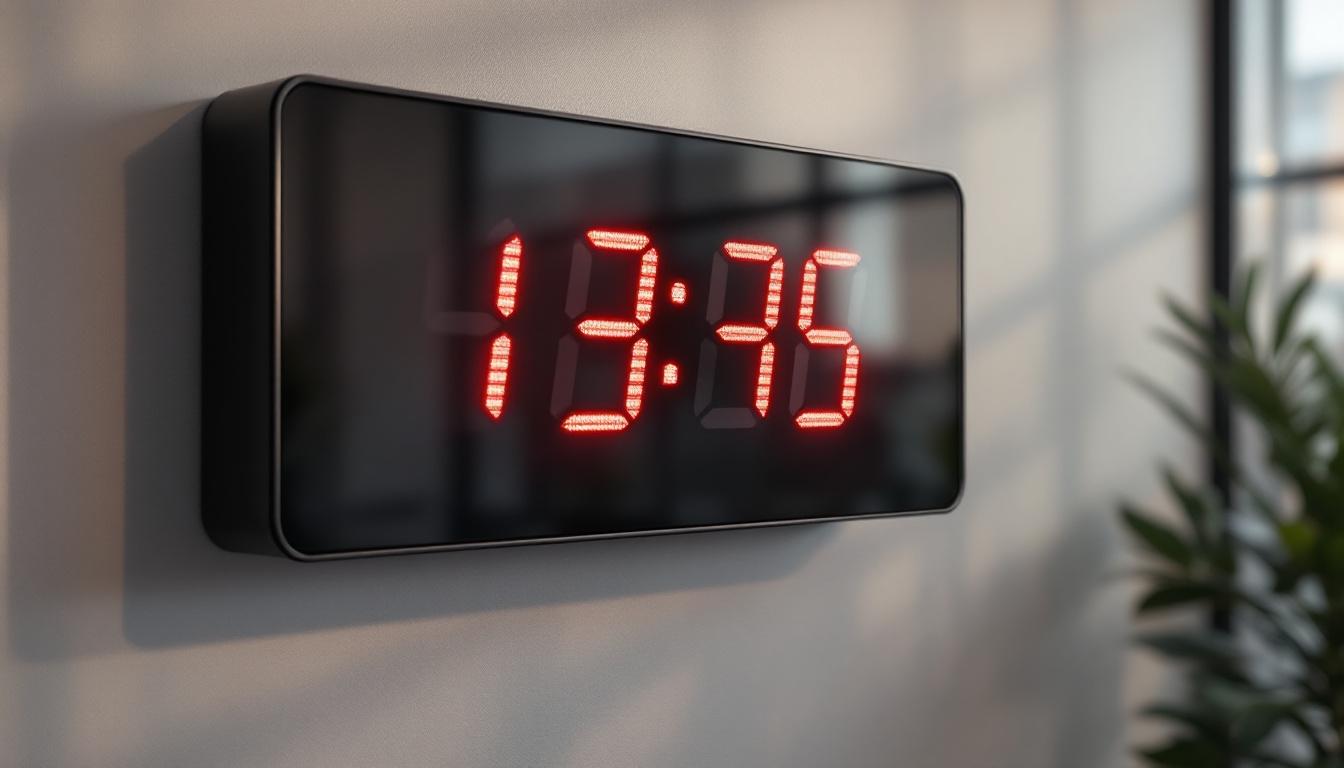
In today’s fast-paced world, keeping track of time with accuracy and clarity is essential. The LED digital wall clock has become a popular choice for homes, offices, schools, and public spaces due to its bright display, energy efficiency, and modern aesthetic. But what exactly makes the LED display so effective, and how does it work? This article delves into the technology behind LED digital wall clocks, exploring their design, advantages, and practical applications.
Understanding LED Technology in Digital Wall Clocks
LED stands for Light Emitting Diode, a semiconductor device that emits light when an electric current passes through it. Unlike traditional incandescent bulbs, LEDs produce light through electroluminescence, which is more efficient and longer-lasting. This fundamental property makes LEDs ideal for digital displays that require consistent brightness and energy efficiency.
In digital wall clocks, LEDs are arranged in segments or matrices to form numbers and symbols. The most common configuration is the seven-segment display, where each digit is made up of seven individual LEDs arranged in a pattern that can be selectively lit to create numbers from 0 to 9. More advanced clocks may use dot-matrix LED displays, allowing for more complex characters and even animations.
The Seven-Segment Display Explained
The seven-segment display is the backbone of most LED digital clocks. It consists of seven individual segments shaped like bars, labeled from ‘a’ to ‘g.’ By turning on specific segments, the clock can display any numeral between 0 and 9. For example, to show the number “8,” all seven segments light up, while the number “1” only requires two segments.
This simple yet effective design allows for clear visibility and easy recognition of digits from a distance. The segments are typically red, green, or blue LEDs, with red being the most common due to its high visibility and low power consumption.
Dot-Matrix and Multi-Color LED Displays
While seven-segment displays are standard, some LED digital wall clocks employ dot-matrix displays composed of a grid of tiny LEDs. This design offers greater flexibility, enabling the display of not only numbers but also letters, symbols, and even scrolling messages.
Multi-color LED displays, often using RGB (red, green, blue) LEDs, can produce a wide range of colors by adjusting the intensity of each color channel. This feature is particularly popular in modern clocks designed for decorative purposes or to provide additional information, such as temperature or calendar data, in different colors for easy differentiation.
Advantages of LED Digital Wall Clocks
LED digital wall clocks offer numerous benefits compared to traditional analog clocks or older digital models with LCD displays. These advantages contribute to their widespread adoption in various settings.
High Visibility and Readability
One of the primary reasons LED digital wall clocks are favored is their superior visibility. The bright, illuminated digits are easily readable from a distance and in low-light conditions. This makes them ideal for environments such as classrooms, hospitals, airports, and factories where quick time checks are necessary.
Additionally, the contrast between the lit segments and the dark background enhances readability, reducing eye strain and minimizing errors when reading the time.
Energy Efficiency and Longevity
LEDs are known for their low power consumption compared to incandescent or fluorescent lighting. A typical LED digital wall clock uses only a fraction of the electricity required by older lighting technologies, making it a cost-effective choice for continuous operation.
Moreover, LEDs have an exceptionally long lifespan, often exceeding 50,000 hours of use. This durability means fewer replacements and less maintenance, which is especially important for clocks installed in hard-to-reach places or public areas.
Durability and Environmental Impact
LED digital wall clocks are robust and resistant to shock and vibration, unlike mechanical analog clocks with moving parts. The solid-state nature of LEDs means they are less prone to damage, ensuring reliable performance over time.
From an environmental perspective, LEDs contain no mercury or hazardous materials, making them safer to dispose of than fluorescent lamps. Their energy efficiency also contributes to reduced carbon emissions over their operational life.
Applications and Use Cases of LED Digital Wall Clocks
The versatility and reliability of LED digital wall clocks have led to their adoption across a wide range of environments. Understanding these applications helps highlight why LED technology is so well-suited for modern timekeeping needs.
Commercial and Industrial Settings
In offices, factories, and warehouses, LED digital wall clocks provide employees with clear, accurate timekeeping that supports productivity and scheduling. Their bright displays ensure visibility even in large, open spaces or dimly lit areas.
Industrial environments particularly benefit from clocks with rugged designs and additional features such as temperature displays or countdown timers integrated into the LED panel. These multifunctional clocks help streamline operations and improve workplace safety.
Educational Institutions
Schools and universities often rely on LED digital wall clocks to maintain punctuality and time management during classes and exams. The clear, large digits help students and staff keep track of time without distraction.
Some educational facilities utilize clocks with synchronized time systems, where multiple LED clocks are networked to display the exact same time, ensuring consistency across campus.
Public Spaces and Transportation Hubs
Airports, train stations, and bus terminals frequently use LED digital wall clocks to provide travelers with accurate time information. The high visibility and reliability of LED displays are crucial in these fast-moving environments where timing is critical.
In many cases, these clocks are integrated with public announcement systems and digital signage to offer real-time updates, enhancing the overall passenger experience.
Home and Personal Use
LED digital wall clocks have also become popular in residential settings due to their modern look and ease of reading. Many models include additional features such as alarms, temperature sensors, and date displays, making them multifunctional devices for everyday use.
Smart LED clocks with Wi-Fi connectivity can synchronize with internet time servers, ensuring precise timekeeping without manual adjustments. Some even integrate with smart home systems for voice control and automation.
Factors to Consider When Choosing an LED Digital Wall Clock
With a wide variety of LED digital wall clocks available on the market, selecting the right model requires careful consideration of several factors to ensure it meets specific needs and preferences.
Display Size and Digit Height
The size of the LED display and the height of the digits significantly affect readability. For large rooms or public spaces, clocks with digits at least 2 to 4 inches tall are recommended to ensure visibility from a distance.
Conversely, smaller clocks with compact displays may be more suitable for personal desks or small rooms where space is limited.
Brightness and Color Options
Brightness levels can vary between models, with some offering adjustable settings to reduce glare or adapt to different lighting conditions. Clocks with automatic brightness sensors are particularly convenient, as they adjust the display intensity based on ambient light.
Color preferences also play a role. While red is the most common and visible color, green and blue LEDs are popular alternatives for aesthetic reasons or to match interior design themes.
Power Source and Backup Features
Most LED digital wall clocks operate on AC power with a plug-in adapter, but battery-powered models are available for portability or use in locations without easy access to power outlets.
Backup battery options are important to maintain timekeeping during power outages, especially in critical environments like hospitals or transportation hubs.
Additional Features and Connectivity
Modern LED digital wall clocks often come with extra functionalities such as temperature and humidity sensors, calendar displays, alarms, and timers. Choosing a clock with features tailored to specific needs can enhance its usefulness.
Connectivity options like Wi-Fi or Bluetooth enable synchronization with atomic clocks or smartphones, ensuring accurate time without manual setting. Integration with smart home systems is an emerging trend that adds convenience and automation capabilities.
Maintaining and Troubleshooting LED Digital Wall Clocks
Proper maintenance ensures that LED digital wall clocks continue to function accurately and reliably over time. Fortunately, these devices require minimal upkeep compared to mechanical clocks.
Cleaning and Care
Regularly dusting the clock face and housing helps maintain clear visibility. Use a soft, dry cloth or a slightly damp cloth if necessary, avoiding harsh chemicals that could damage the LED components or plastic casing.
Avoid exposing the clock to extreme temperatures or moisture, as these conditions can shorten the lifespan of the LEDs and electronic circuits.
Common Issues and Solutions
Occasionally, LED segments may fail or flicker due to loose connections or component wear. In many cases, simple troubleshooting steps such as checking power connections, resetting the clock, or replacing batteries can resolve these issues.
If the clock is networked or synchronized with external time sources, connectivity problems may cause incorrect time display. Ensuring a stable internet connection or resetting the synchronization settings can help restore accuracy.
When to Replace Your LED Digital Wall Clock
Despite the long lifespan of LEDs, the clock’s internal electronics or power supply may degrade over time. Signs that it may be time to replace the clock include persistent display errors, dimming LEDs, or failure to keep accurate time despite troubleshooting.
Upgrading to a newer model with enhanced features or improved energy efficiency can also be a practical choice for users seeking better performance or integration with modern technology.
The Future of LED Digital Wall Clocks
As LED technology continues to evolve, digital wall clocks are becoming more sophisticated and versatile. Advances in micro-LEDs and flexible displays promise even brighter, thinner, and more energy-efficient clocks.
Integration with Internet of Things (IoT) ecosystems will enable clocks to serve as multifunctional hubs, providing not only time but also environmental data, notifications, and smart home controls. Voice activation and AI-powered personalization are likely to become standard features in the near future.
With these innovations, LED digital wall clocks will remain an essential and dynamic component of both everyday life and professional environments.
Conclusion
LED digital wall clocks combine the benefits of modern LED technology with practical timekeeping needs. Their bright, clear displays, energy efficiency, and durability make them suitable for a wide range of applications, from homes to industrial settings. Understanding the technology behind LED displays and the factors to consider when choosing a clock can help users select the best model for their requirements.
As technology advances, LED digital wall clocks will continue to offer enhanced features and improved performance, ensuring their relevance and utility for years to come.
Discover LumenMatrix’s Advanced LED Display Solutions
As you consider upgrading to a high-performance LED digital wall clock, remember that LumenMatrix is at the forefront of LED display innovation. Our comprehensive range of products, from Indoor and Outdoor LED Wall Displays to Custom and All-in-One LED solutions, is designed to meet the diverse needs of any space. Embrace the future of visual communication with LumenMatrix’s captivating and energy-efficient displays that promise to transform your environment. Check out LumenMatrix LED Display Solutions today and experience the pinnacle of digital display technology.