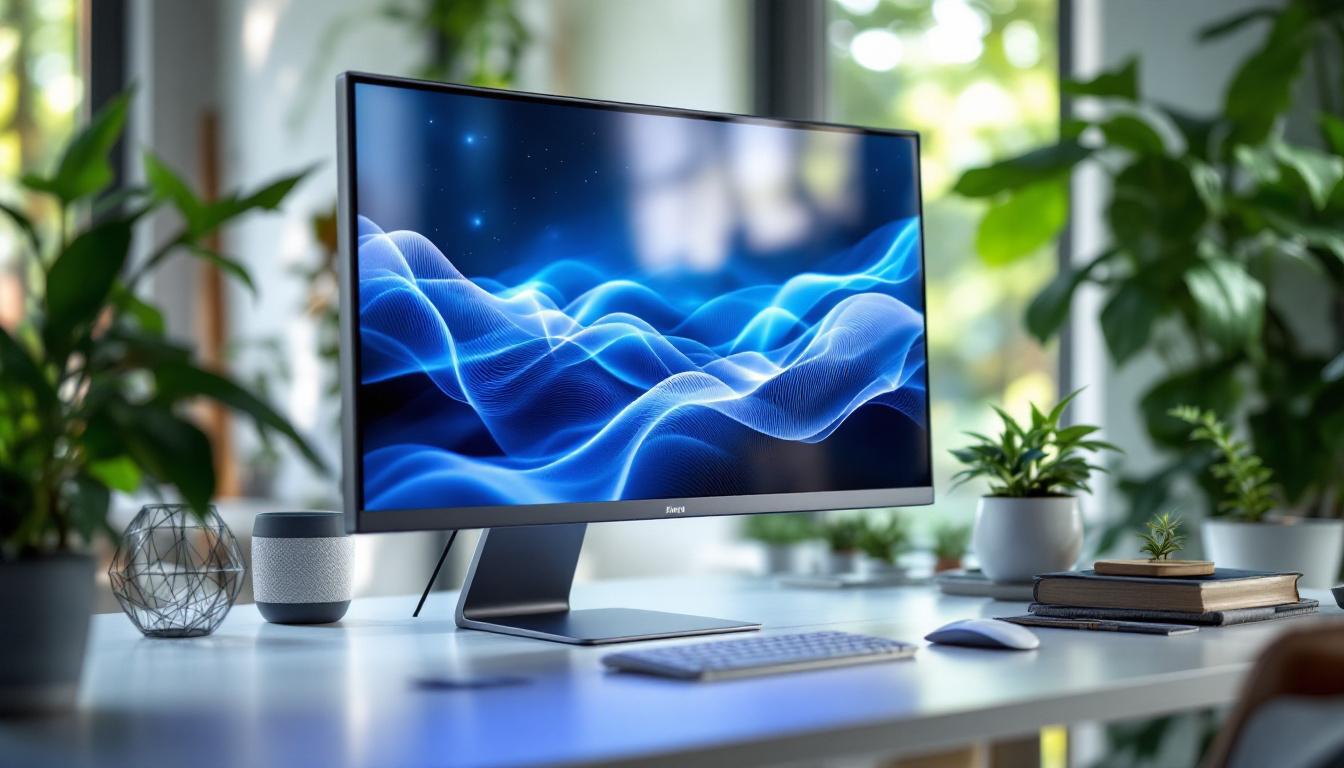
Touch display monitors have become an integral part of modern computing environments, from retail kiosks and industrial control panels to personal laptops and interactive digital signage. Among the various technologies that power these displays, LED (Light Emitting Diode) technology stands out for its efficiency, brightness, and versatility. This article delves into the fundamentals of LED touch display monitors, exploring how they work, their advantages, and why they are increasingly preferred in a range of applications.
Understanding LED Technology in Touch Displays
What is an LED Display?
An LED display is a flat panel display that uses light-emitting diodes as pixels to create images. Unlike traditional LCDs that rely on cold cathode fluorescent lamps (CCFLs) for backlighting, LED displays use LEDs, which are more energy-efficient and capable of producing brighter and more vibrant images.
In the context of touch monitors, the LED technology primarily refers to the backlighting system that illuminates the liquid crystal display (LCD) panel. This combination allows for clear, sharp images alongside responsive touch capabilities. The advancement in LED technology has also led to the development of displays that can achieve higher resolutions and refresh rates, making them ideal for various applications, from gaming to professional design work.
Moreover, LED displays are not only limited to standard viewing experiences; they have also paved the way for innovative features such as ultra-narrow bezels and flexible displays. These enhancements provide users with a more immersive experience, whether they are watching movies, playing video games, or conducting business presentations.
Types of LED Backlighting
There are two primary types of LED backlighting used in touch display monitors: edge-lit and direct-lit (or full-array). Edge-lit LED displays position LEDs along the edges of the screen, using light guides to distribute illumination evenly. This design allows for thinner monitors but can sometimes result in uneven brightness. Additionally, edge-lit displays typically consume less power, making them a popular choice for portable devices and applications where battery life is a concern.
Direct-lit LED displays place LEDs directly behind the LCD panel, offering more uniform brightness and better contrast. Some high-end monitors use full-array local dimming, where individual LED zones can be dimmed or brightened independently, enhancing picture quality significantly. This technology not only improves the overall visual experience but also contributes to energy savings, as it allows the display to use less power during darker scenes. Furthermore, the advancements in local dimming technology have made it possible for displays to achieve deeper blacks and more vibrant colors, which is particularly beneficial for media consumption and graphic design.
How Touch Technology Integrates with LED Displays
Capacitive vs. Resistive Touchscreens
Touch display monitors typically use either capacitive or resistive touch technologies. Capacitive touchscreens detect touch by measuring changes in electrical charge when a finger or conductive stylus makes contact. They are highly responsive, support multi-touch gestures, and are commonly used in smartphones and tablets. This technology allows for a more intuitive interaction, enabling users to swipe, pinch, and zoom with ease, which has transformed the way we engage with digital content. The sensitivity of capacitive screens also means they can detect the slightest touch, making them ideal for applications that require precision, such as graphic design or gaming.
Resistive touchscreens, on the other hand, consist of two flexible layers separated by a small gap. When pressure is applied, the layers make contact, registering the touch. Resistive screens are less sensitive but can be operated with gloves or any pointing device, making them suitable for industrial or outdoor environments. They are often used in settings where durability is paramount, such as in kiosks or medical devices, where users may not always have bare fingers available. The ability to work with various tools also allows for versatility in user interaction, catering to a broader range of applications.
Integration Challenges and Solutions
Integrating touch functionality with LED displays requires careful engineering to maintain display clarity and responsiveness. For instance, adding a touch-sensitive layer can affect brightness and color accuracy if not properly designed. Manufacturers often employ optical bonding techniques to fuse the touch panel directly to the LED screen, reducing reflections and improving durability. This process not only enhances the visual quality by minimizing air gaps that can distort images but also increases the overall robustness of the display, making it more resistant to scratches and impacts.
Additionally, modern touch monitors use advanced controllers and firmware to minimize latency and enhance precision, ensuring a seamless user experience whether for professional applications or consumer use. These controllers are designed to process touch inputs rapidly, allowing for real-time feedback that is crucial in applications such as gaming or interactive presentations. Furthermore, the integration of machine learning algorithms into touch technology is paving the way for smarter touchscreens that can adapt to user behavior, improving accuracy and responsiveness over time. As touch technology continues to evolve, the potential for innovative applications in various fields, from education to healthcare, becomes increasingly promising.
Advantages of LED Touch Display Monitors
Energy Efficiency and Longevity
One of the most significant benefits of LED backlighting is its energy efficiency. LEDs consume less power than CCFL backlights, which translates to lower operating costs and reduced environmental impact. According to the U.S. Department of Energy, LED displays can use up to 30-40% less energy than traditional LCDs with fluorescent backlighting.
Moreover, LEDs have a longer lifespan, often exceeding 50,000 hours of use. This durability reduces the frequency of replacements and maintenance, making LED touch monitors a cost-effective choice over time.
Superior Image Quality
LED technology enables higher brightness levels and better contrast ratios compared to older display technologies. This results in vibrant colors and sharp images, which are crucial for applications such as graphic design, medical imaging, and retail advertising.
High dynamic range (HDR) capabilities are also more achievable with LED displays, enhancing the depth and realism of images. For touch monitors used in interactive kiosks or digital signage, this means clearer visuals that attract and engage users effectively.
Design Flexibility and Thin Profiles
LED backlighting allows manufacturers to produce thinner and lighter monitors. Edge-lit LED displays, in particular, contribute to sleek designs that fit well in modern workspaces and public environments.
Additionally, the reduced heat output of LEDs compared to CCFLs enables more compact internal components, which can improve reliability and user comfort during extended use.
Applications of LED Touch Display Monitors
Retail and Interactive Kiosks
Retail environments have widely adopted LED touch display monitors for self-service kiosks, point-of-sale (POS) terminals, and interactive product catalogs. The combination of responsive touch input and bright, vivid displays enhances customer engagement and streamlines transactions.
For example, major retailers use LED touch kiosks to offer personalized shopping experiences, enabling customers to browse inventory, check prices, or complete orders without staff assistance. The durability and energy efficiency of LED technology make these kiosks reliable for continuous operation.
Industrial and Medical Use
In industrial settings, LED touch monitors are favored for control panels and monitoring systems due to their robustness and clarity under various lighting conditions. Capacitive touchscreens with optical bonding are often used to ensure responsiveness even when operators wear gloves or protective gear.
Medical professionals also benefit from LED touch displays in diagnostic equipment and patient monitoring. The high resolution and accurate color reproduction are essential for interpreting medical images, while the touch interface allows for intuitive control in sterile environments.
Education and Collaborative Workspaces
Interactive whiteboards and collaborative displays in classrooms and meeting rooms increasingly use LED touch monitors. Their brightness and responsiveness support dynamic presentations, digital annotations, and real-time collaboration.
With the rise of hybrid work models, these displays facilitate seamless communication between in-person and remote participants, making learning and teamwork more effective.
Choosing the Right LED Touch Display Monitor
Key Specifications to Consider
When selecting an LED touch display monitor, several specifications should be evaluated based on the intended use:
- Screen Size and Resolution: Larger screens with higher resolutions provide better detail but may come at a higher cost. For detailed work like graphic design or medical imaging, 4K resolution or higher is recommended.
- Touch Technology: Choose capacitive for smooth, multi-touch experiences or resistive for environments requiring glove use or stylus input.
- Brightness and Contrast: Higher brightness (measured in nits) ensures visibility in bright or outdoor settings. A high contrast ratio improves image depth.
- Durability and IP Rating: For industrial or outdoor use, look for monitors with rugged construction and appropriate ingress protection ratings against dust and moisture.
- Connectivity: Ensure compatibility with existing systems via HDMI, DisplayPort, USB, or other interfaces.
Future-Proofing and Support
Investing in LED touch monitors with firmware update capabilities and manufacturer support can extend the device’s useful life. Features like anti-glare coatings, blue light filters, and adjustable stands add ergonomic benefits that improve user comfort.
Additionally, considering the integration with software platforms and compatibility with operating systems is crucial, especially for enterprise deployments.
The Future of LED Touch Display Technology
Emerging Trends
Advancements in LED technology continue to push the boundaries of display performance. Mini-LED and micro-LED backlighting are emerging as next-generation solutions that offer even higher contrast ratios, improved color accuracy, and thinner form factors.
These technologies use thousands of tiny LEDs to provide precise local dimming, enhancing HDR effects and reducing power consumption further. While currently more expensive, they are expected to become mainstream in the coming years.
Integration with AI and IoT
Smart touch displays are increasingly integrated with artificial intelligence (AI) and Internet of Things (IoT) platforms. This integration enables features such as gesture recognition, voice control, and adaptive display settings based on user behavior or environmental conditions.
For example, retail kiosks equipped with AI can personalize content dynamically, while industrial monitors can predict maintenance needs, reducing downtime and improving efficiency.
Conclusion
LED touch display monitors represent a mature and versatile technology that combines the visual advantages of LED backlighting with the interactivity of touchscreens. Their energy efficiency, superior image quality, and design flexibility make them suitable for a wide range of applications, from consumer electronics to specialized industrial equipment.
As LED technology continues to evolve, incorporating innovations like mini-LED and AI integration, touch display monitors will become even more powerful tools for communication, collaboration, and control. Understanding the fundamentals of LED displays and their touch integration helps businesses and consumers make informed decisions when selecting the right monitor for their needs.
Discover LumenMatrix’s Advanced LED Display Solutions
Ready to elevate your visual experience with the latest in LED display technology? LumenMatrix is at the forefront of innovation, offering a wide array of LED display solutions tailored to meet your unique needs. From captivating Indoor LED Walls to dynamic Outdoor Displays, and from versatile Vehicle LED Displays to stunning LED Posters, our products are designed to revolutionize visual communication. Whether you’re looking to enhance engagement in retail, sports, or any specialized environment, LumenMatrix has the cutting-edge technology to bring your vision to life. Check out LumenMatrix LED Display Solutions today and transform the way you connect with your audience.