In recent years, LED technology has revolutionized the automotive industry, transforming how vehicles communicate, display information, and enhance safety. Among these innovations, car LED displays have become increasingly prevalent, offering dynamic, bright, and energy-efficient solutions for various automotive applications. This article delves into the world of car LED displays, explaining their technology, types, benefits, and future trends, providing a comprehensive understanding for automotive enthusiasts, professionals, and everyday drivers alike.
Understanding LED Display Technology in Cars
What is an LED Display?
LED, or Light Emitting Diode, displays consist of an array of tiny light sources that emit light when an electric current passes through them. Unlike traditional incandescent bulbs, LEDs are far more efficient, durable, and versatile. In automotive contexts, LED displays serve multiple purposes—from dashboard indicators and infotainment screens to external communication panels and lighting systems.
At their core, LED displays rely on semiconductor materials that produce light through electroluminescence. This process allows for precise control over brightness, color, and timing, enabling vibrant and clear visuals even under direct sunlight or adverse weather conditions. The longevity of LED technology also means that vehicles equipped with these displays require less frequent maintenance and replacement, contributing to overall vehicle reliability and reducing long-term costs for owners.
Types of LED Displays Used in Vehicles
Car LED displays come in various forms, each tailored to specific functions and design requirements:
- Segment Displays: Commonly used in digital speedometers and fuel gauges, segment displays show numbers and simple characters using illuminated segments.
- Dot Matrix Displays: These consist of a grid of LEDs that can form letters, numbers, and simple graphics, often employed in dashboard warnings and notifications.
- Full-Color LED Displays: Utilizing red, green, and blue LEDs, these displays can render complex images and videos, found in infotainment systems and external advertising panels.
- OLED Displays: Although technically different from traditional LEDs, Organic LED displays are increasingly integrated into vehicles for high-resolution, flexible screens.
In addition to these types, the integration of LED technology into vehicle design has also led to innovations such as adaptive lighting systems. These systems adjust the brightness and direction of headlights based on driving conditions, enhancing safety and visibility. Furthermore, the use of LED displays in rearview mirrors and heads-up displays (HUDs) has transformed how drivers interact with their vehicles, providing crucial information without requiring them to take their eyes off the road. This seamless integration of technology not only improves functionality but also contributes to a more intuitive driving experience.
Moreover, the aesthetic appeal of LED displays cannot be overlooked. Manufacturers are increasingly using LED technology to create visually striking interiors and exteriors, allowing for customizable ambient lighting that enhances the overall driving experience. From customizable dashboard colors to dynamic exterior lighting patterns, LED displays are becoming a key component in modern automotive design, appealing to consumers’ desires for personalization and modernity. As technology continues to evolve, we can expect even more innovative applications of LED displays in the automotive industry, further enhancing both functionality and style.
Applications of Car LED Displays
Dashboard and Instrument Cluster Displays
The instrument cluster is the driver’s primary interface with the vehicle’s status. Modern cars increasingly replace analog gauges with LED-based digital displays that provide clearer, customizable, and more informative readouts. These displays can show speed, fuel levels, engine temperature, navigation prompts, and even real-time diagnostics. The integration of advanced technologies allows for features like heads-up displays (HUDs), which project vital information directly onto the windshield, minimizing the need for drivers to take their eyes off the road.
According to a 2023 report by the Automotive Display Consortium, over 70% of new vehicles worldwide now incorporate some form of LED or OLED display in their instrument clusters, highlighting the rapid adoption of this technology. This shift not only enhances the aesthetic appeal of the dashboard but also improves functionality, as drivers can personalize their displays to show preferred metrics, thereby tailoring their driving experience to their individual needs.
Infotainment and Control Panels
LED displays have become central to in-car entertainment and control systems. Touchscreen panels with LED backlighting offer vibrant visuals and responsive interfaces for navigation, media playback, climate control, and vehicle settings. The high brightness and contrast ratios of LED displays ensure usability in various lighting conditions, enhancing the driver and passenger experience. Additionally, many of these systems now support voice recognition and gesture control, allowing for a more intuitive interaction without the need for physical buttons, which can be distracting while driving.
Furthermore, the integration of smartphone connectivity features, such as Apple CarPlay and Android Auto, has transformed infotainment systems into seamless extensions of users’ mobile devices. This connectivity enables drivers to access their favorite apps, music, and navigation tools directly through the LED display, making the driving experience more enjoyable and efficient.
External LED Displays: Communication and Safety
Beyond internal displays, LED technology is increasingly used externally for communication and safety purposes. Examples include:
- Dynamic Brake Lights: High-intensity LED brake lights that can flash or change patterns to alert drivers behind of sudden stops.
- LED Matrix Headlights: These adaptive headlights use arrays of LEDs to selectively illuminate road sections without blinding oncoming traffic.
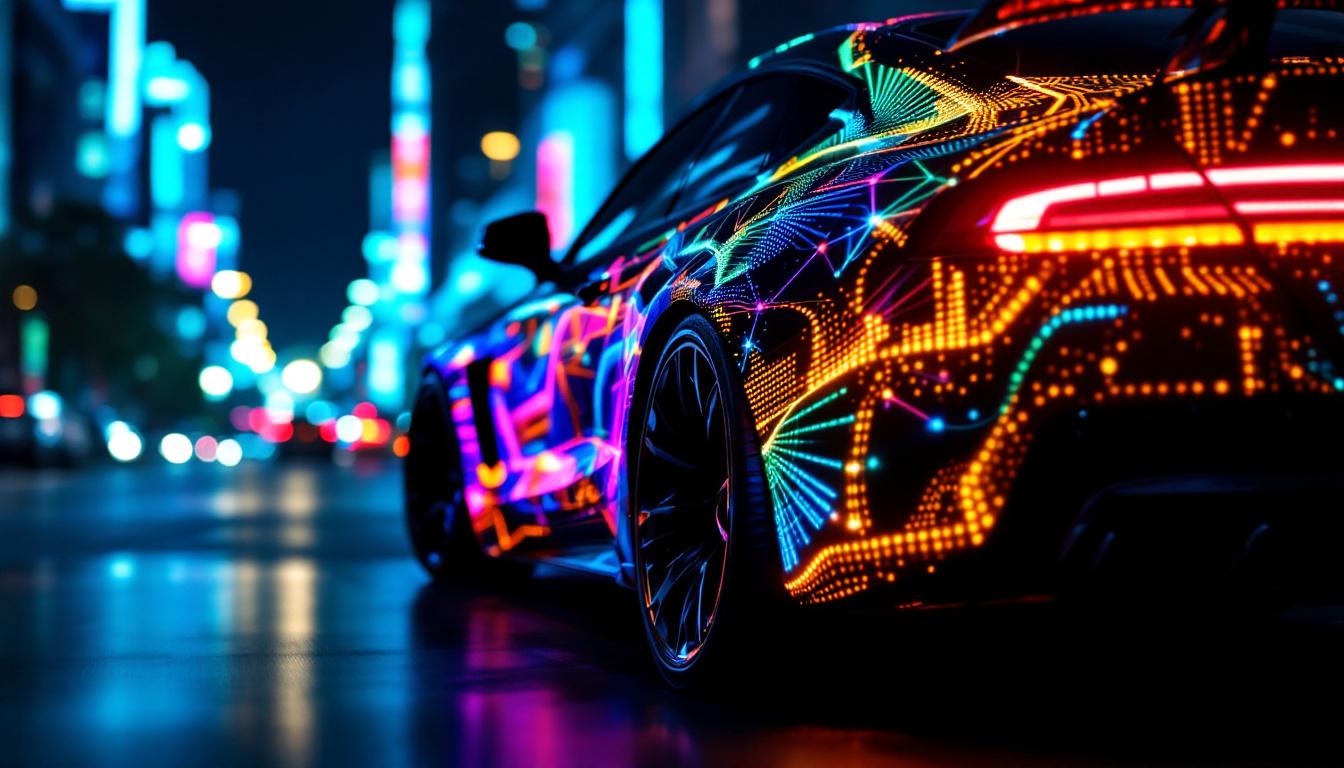
- Rear and Side Display Panels: Some modern vehicles feature LED panels that display messages such as “Stop,” “Turn,” or even personalized graphics to communicate with pedestrians and other drivers.
These applications not only improve safety but also open new avenues for vehicle-to-vehicle and vehicle-to-pedestrian communication, a crucial aspect of emerging autonomous driving technologies. As the automotive industry continues to innovate, we can expect to see even more advanced LED applications, such as integrated traffic signal recognition systems that can communicate with vehicles to optimize traffic flow and reduce congestion. This level of interaction between vehicles and their environment could significantly enhance road safety and efficiency, paving the way for smarter cities in the future.
Advantages of LED Displays in Automotive Use
Energy Efficiency and Longevity
One of the most significant advantages of LED displays is their energy efficiency. LEDs consume far less power than traditional incandescent or fluorescent lighting, which is critical in vehicles where energy conservation translates to better fuel economy or extended battery life in electric vehicles (EVs). Additionally, LEDs have a longer operational lifespan, often exceeding 50,000 hours, reducing maintenance costs and enhancing reliability.
Brightness and Visibility
LED displays offer superior brightness levels, ensuring visibility in direct sunlight and adverse weather conditions. This is particularly important for safety-critical displays such as brake lights and turn signals. The instant-on nature of LEDs also means no warm-up time, providing immediate visual feedback to drivers and pedestrians.
Design Flexibility and Customization
LED technology allows automotive designers to create sleek, thin, and curved display panels that integrate seamlessly into vehicle interiors and exteriors. Full-color LED displays enable dynamic content, from custom animations to real-time information, enhancing both aesthetics and functionality. This flexibility supports the trend toward personalized and connected vehicles.
Improved Safety Features
LED displays contribute to enhanced safety through clearer signaling and communication. For instance, adaptive LED headlights improve nighttime visibility without causing glare, while dynamic brake lights reduce rear-end collisions by alerting trailing drivers more effectively. The integration of LED displays with advanced driver-assistance systems (ADAS) further amplifies these benefits.
Challenges and Considerations in Implementing Car LED Displays
Cost Implications
While LED technology has become more affordable over time, high-resolution and full-color LED displays still represent a significant investment compared to traditional display technologies. This cost can impact vehicle pricing, especially in lower-end models. However, as production scales and technology advances, prices are expected to continue declining.
Durability and Environmental Factors
Automotive LED displays must withstand harsh environmental conditions, including temperature extremes, vibration, moisture, and UV exposure. Manufacturers must ensure robust encapsulation and protective coatings to maintain performance and longevity. Advances in materials science have improved LED durability, but ongoing testing and quality control remain essential.
Integration with Vehicle Electronics
Modern vehicles are complex electronic ecosystems. Integrating LED displays requires careful consideration of power management, data communication protocols, and software compatibility. Ensuring seamless interaction between LED displays and other vehicle systems, such as sensors and control units, is critical for optimal performance.
The Future of Car LED Displays
Emerging Trends and Innovations
The future of car LED displays is closely linked to broader automotive trends such as electrification, autonomy, and connectivity. Some promising developments include:
- Transparent and Flexible Displays: Innovations in flexible OLED and micro-LED technology enable displays that can conform to curved surfaces or even be embedded in windows and windshields, offering heads-up display (HUD) capabilities without obstructing views.
- Interactive Exterior Displays: Vehicles may soon feature external LED panels capable of displaying messages or signals to pedestrians and other road users, enhancing communication in urban environments.
- Integration with Augmented Reality (AR): Combining LED displays with AR technology can provide drivers with enhanced situational awareness, overlaying navigation and hazard information directly onto the windshield.
Impact on Autonomous Vehicles
As autonomous vehicles become more prevalent, LED displays will play a crucial role in signaling vehicle intentions to pedestrians and other drivers. For example, an autonomous car might use LED panels to indicate when it is yielding, stopping, or preparing to turn, helping to build trust and improve safety in mixed traffic environments.
Sustainability Considerations
With increasing emphasis on sustainability, the automotive industry is focusing on environmentally friendly materials and manufacturing processes for LED displays. Recycling initiatives and the development of low-impact components will be essential to minimize the ecological footprint of these technologies.
Conclusion
Car LED displays represent a significant advancement in automotive technology, combining efficiency, versatility, and safety. From enhancing driver information systems to enabling innovative communication methods, LED displays are integral to the modern vehicle experience. As technology continues to evolve, these displays will become even more sophisticated, supporting the transition to smarter, safer, and more connected transportation.
Understanding the fundamentals of LED display technology and its applications helps consumers and industry professionals appreciate the value and potential of these systems. With ongoing innovation, car LED displays are set to illuminate the future of mobility in exciting and transformative ways.
Explore the Future of LED Displays with LumenMatrix
As you’ve seen, LED displays are transforming the automotive landscape, offering unparalleled efficiency, customization, and safety features. If you’re inspired to take part in this evolution and want to discover how cutting-edge LED technology can elevate your driving experience, look no further. LumenMatrix, a pioneer in LED display innovation, provides an extensive range of solutions, from Vehicle LED Displays to Transparent LED Displays, designed to captivate and engage. Check out LumenMatrix LED Display Solutions today and join the revolution in visual communication.