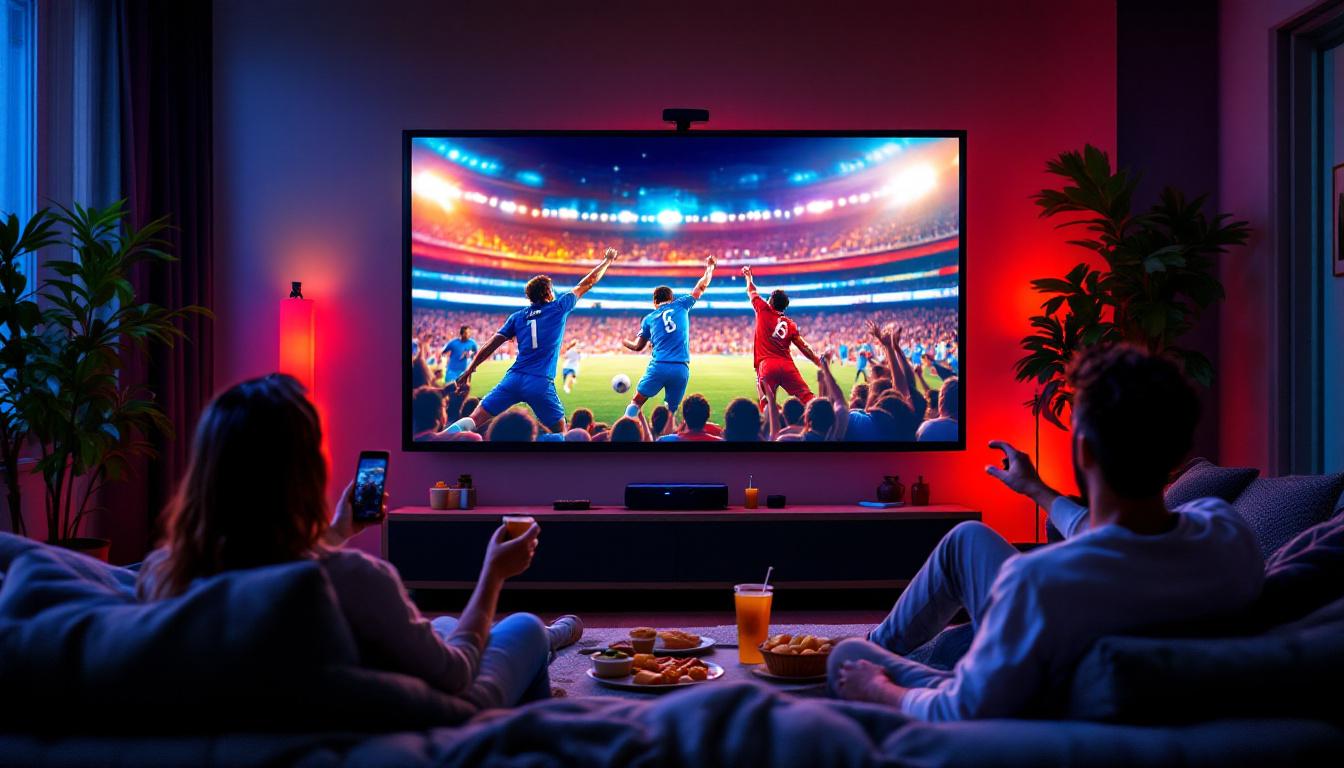
Watching sports at home has evolved dramatically over the past decade. With the rise of large-screen TVs and advanced streaming services, fans now demand an immersive viewing experience that rivals the excitement of being in the stadium. Among the various display technologies available, LED projectors have gained significant attention for sports enthusiasts seeking a big-screen experience without the hefty price tag of massive TVs.
This article delves into why LED projectors are an excellent choice for sports viewing, explaining the technology behind them, key features to consider, and how they compare to other display options. Whether you’re a casual fan or a dedicated sports aficionado, understanding LED projectors can help you make an informed decision for your home entertainment setup.
Understanding LED Projector Technology
What is an LED Projector?
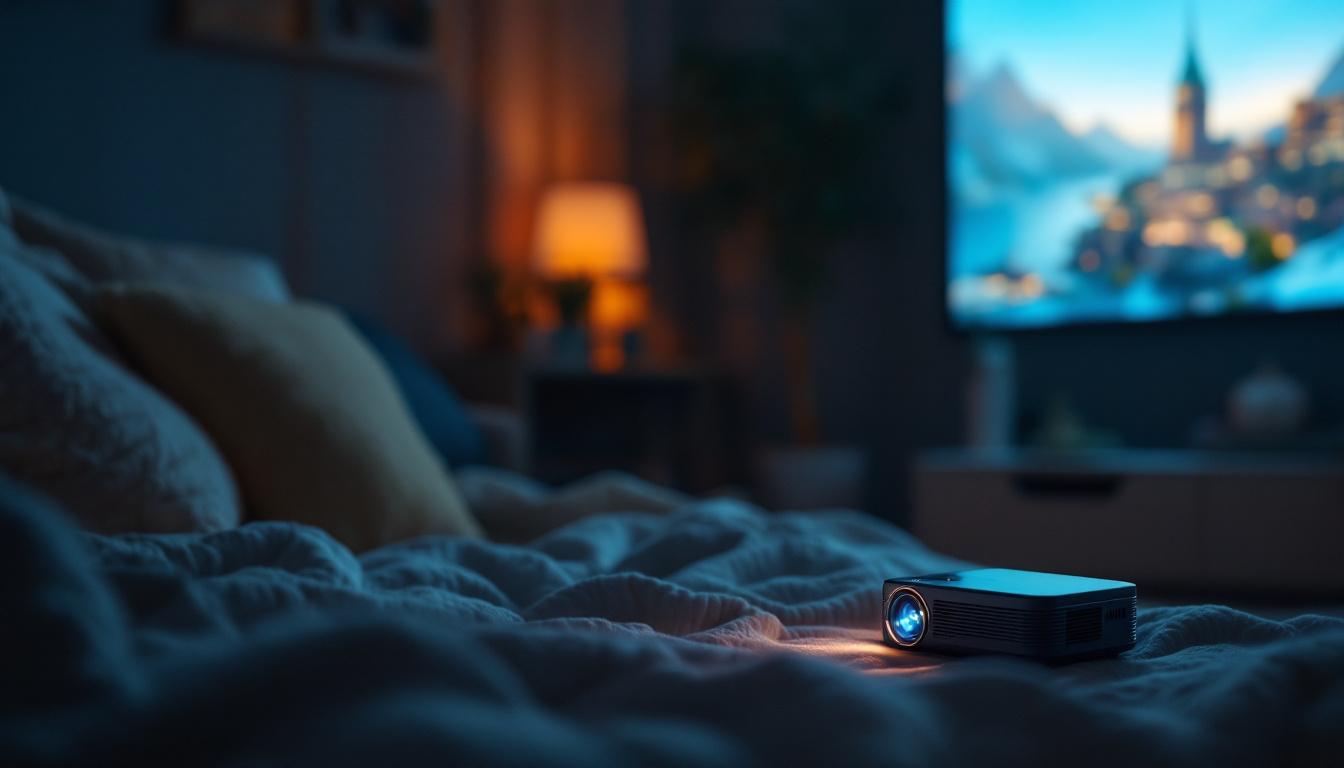
LED projectors use light-emitting diodes (LEDs) as their primary light source, unlike traditional projectors that rely on high-intensity lamps or lasers. This fundamental difference impacts brightness, color accuracy, lifespan, and overall performance.
LEDs are solid-state devices, meaning they have no filaments or gases that can degrade over time. This results in longer-lasting light sources, often rated for 20,000 to 30,000 hours of use, compared to 2,000 to 5,000 hours for conventional lamps. For sports fans who might watch multiple games weekly, this longevity translates to less maintenance and lower replacement costs.
How LED Projectors Work
Inside an LED projector, red, green, and blue LEDs generate light that passes through a microdisplay panel—often DLP (Digital Light Processing) or LCD (Liquid Crystal Display)—which modulates the light to form images. The combined light is then projected onto a screen or wall, creating a large, vibrant picture.
This design allows LED projectors to produce vivid colors with high contrast ratios, essential for capturing the fast-paced action and detailed visuals in sports broadcasts. The technology also supports instant on/off functionality, which is convenient for spontaneous game viewing.
Why LED Projectors Are Ideal for Sports Viewing
Large Screen Size for Immersive Experience
One of the primary reasons sports fans prefer projectors is the ability to enjoy a much larger screen size than most TVs can offer. LED projectors typically support screen sizes from 80 inches up to 150 inches or more, providing a cinematic atmosphere that makes viewers feel closer to the action.
For sports like football, basketball, or soccer, where field dimensions and player movements matter, a larger display enhances the viewing experience by making it easier to follow plays and appreciate the game’s nuances.
Vibrant Colors and High Contrast
Sports broadcasts often feature vibrant team colors, detailed uniforms, and dynamic lighting conditions. LED projectors excel in reproducing these colors accurately due to their superior color gamut and contrast levels. This ensures that jerseys, field markings, and even subtle shadows are rendered clearly, contributing to a more realistic and engaging experience.
Moreover, many LED projectors come with HDR (High Dynamic Range) support, which further improves color depth and contrast, allowing viewers to see bright highlights and deep shadows simultaneously—important for outdoor sports played under varying light conditions.
Low Input Lag for Live Sports
Input lag—the delay between the signal input and the display output—is critical for gaming but also relevant for live sports, especially when streaming or using interactive features like instant replays or multi-angle views. LED projectors generally offer lower input lag compared to traditional lamp-based models, ensuring smoother motion and less delay, which enhances the real-time viewing experience.
Portability and Versatility
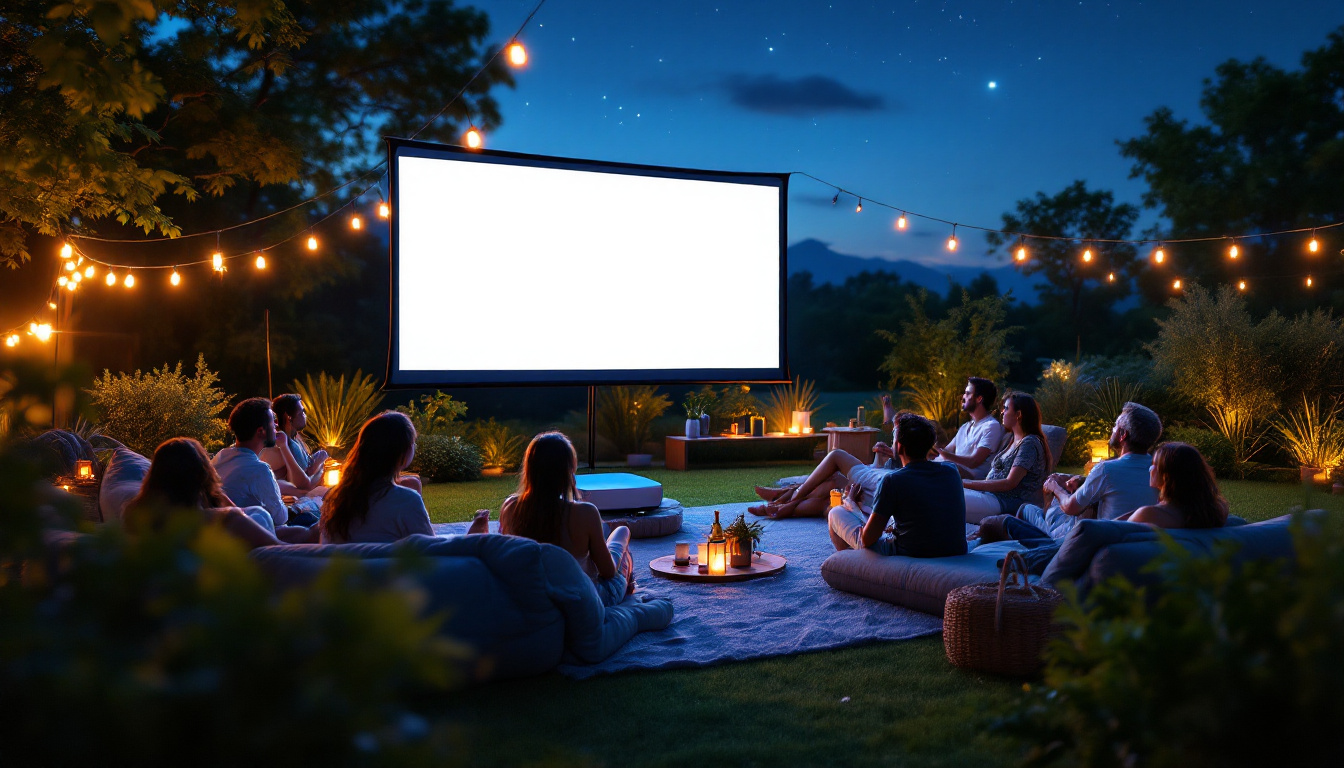
Many LED projectors are compact and lightweight, making them easy to move between rooms or even take outdoors for backyard viewing parties. This flexibility is a huge advantage for sports fans who want to watch games in different settings or host social gatherings.
Additionally, LED projectors often have multiple input options, including HDMI, USB, and wireless connectivity, allowing seamless integration with streaming devices, gaming consoles, and cable boxes.
Key Features to Look for in a Sports Viewing Projector
Brightness and Ambient Light Handling
Brightness is measured in lumens, and for sports viewing, it’s essential to have a projector that can perform well in various lighting conditions. Games are often watched during the day or in rooms with ambient light, so a projector with at least 2,500 lumens is recommended for clear images without washing out colors.
LED projectors typically have lower brightness ratings than lamp-based models, but advances in LED technology have significantly improved their output. Some high-end LED projectors now offer brightness levels exceeding 3,000 lumens, making them suitable for well-lit environments.
Resolution and Image Quality
Full HD (1920×1080 pixels) resolution is considered the minimum for sports viewing, providing sharp and detailed images. Many LED projectors now support 4K resolution, which offers four times the pixel count of Full HD, delivering even crisper visuals and enhanced clarity for fast-moving sports content.
Higher resolution projectors also future-proof your setup as sports broadcasts increasingly adopt 4K streaming and UHD Blu-ray formats.
Refresh Rate and Motion Handling
Sports broadcasts involve rapid movements, so a projector’s refresh rate and motion handling capabilities are crucial. A higher refresh rate (ideally 60 Hz or above) reduces motion blur and judder, resulting in smoother action scenes.
Some LED projectors incorporate motion interpolation technology, which inserts additional frames to make fast action appear more fluid. While this can improve viewing comfort, some purists prefer to disable such features to avoid the “soap opera effect.”
Connectivity Options
Modern projectors should offer versatile connectivity to accommodate various sources. HDMI ports are standard, but having multiple inputs allows connecting a cable box, streaming stick, and gaming console simultaneously. Wireless options such as Wi-Fi and Bluetooth add convenience for streaming directly from smartphones or tablets.
Additionally, USB ports can support media playback from external drives, and some projectors include smart TV platforms, eliminating the need for external devices altogether.
Sound Quality
While many projectors include built-in speakers, they often lack the power and clarity needed for an immersive sports experience. Investing in a projector with good audio output or pairing it with an external sound system—such as a soundbar or home theater setup—can significantly enhance the atmosphere and make commentary and crowd noise more impactful.
Comparing LED Projectors to Other Display Technologies for Sports
LED Projectors vs. LCD and DLP Projectors
Traditional projectors use either LCD or DLP technology combined with lamp or laser light sources. While these projectors can achieve higher brightness levels, they often require bulb replacements and can be bulkier.
LED projectors offer longer lifespan, lower power consumption, and better color consistency over time. However, they may have slightly lower peak brightness, which can be a consideration in very bright rooms.
LED Projectors vs. OLED and QLED TVs
OLED and QLED TVs are renowned for their exceptional picture quality, deep blacks, and vibrant colors. For sports viewing, these TVs provide excellent clarity and motion handling, especially in smaller to medium-sized rooms.
However, when it comes to screen size and cost-efficiency, LED projectors have the upper hand. Achieving a 100-inch or larger display with OLED or QLED technology can be prohibitively expensive, whereas LED projectors can deliver similar screen sizes at a fraction of the cost.
LED Projectors vs. Laser Projectors
Laser projectors are another premium option, offering high brightness and excellent color accuracy. They tend to be more expensive than LED models but can outperform them in large, well-lit venues.
For most home sports viewers, LED projectors strike a better balance between price, performance, and maintenance.
Setting Up Your LED Projector for the Best Sports Experience
Choosing the Right Screen and Environment
The viewing environment plays a critical role in projector performance. A dedicated projector screen with a matte finish will enhance image quality by reducing glare and improving contrast. For casual setups, a smooth, white wall can suffice but may not deliver the same sharpness.
Controlling ambient light is also important. Blackout curtains or dimmable lighting can help maintain image vibrancy during daytime games.
Optimal Placement and Calibration
Position your projector to achieve the desired screen size without distortion. Most LED projectors support keystone correction and lens shift features to adjust image geometry. Calibrating brightness, contrast, and color settings according to your room’s lighting will optimize picture quality.
Using a tripod or ceiling mount can provide stability and free up space, enhancing the overall viewing setup.
Enhancing Audio Setup
As mentioned earlier, pairing your projector with an external sound system is highly recommended. Wireless soundbars or surround sound systems can be connected via Bluetooth or HDMI ARC, delivering immersive audio that complements the large visuals.
Top LED Projectors Recommended for Sports Viewing in 2024
1. BenQ GV30 Portable LED Projector
The BenQ GV30 offers 720p resolution with 300 lumens brightness, making it ideal for dimly lit rooms and portable use. Its built-in speakers provide decent audio, and its compact design is perfect for spontaneous sports viewing anywhere.
2. ViewSonic M2 Full HD LED Projector
With 1080p resolution and 1200 lumens brightness, the ViewSonic M2 balances image quality and portability. It supports HDR10 and has robust connectivity options, including Wi-Fi and Bluetooth, catering well to sports fans.
3. LG CineBeam PF50KA
This LED projector delivers Full HD resolution with 600 lumens brightness and smart TV features. Its long battery life and wireless screen mirroring make it a versatile choice for sports enthusiasts who want flexibility.
4. Epson EF-12 Smart Streaming Laser Projector
While technically a laser projector, the EF-12 uses a hybrid LED-laser light source, offering 1000 lumens brightness and Full HD resolution. It includes built-in speakers and smart capabilities, making it a premium option for home sports viewing.
Conclusion
For sports fans seeking a large, vibrant, and immersive viewing experience, LED projectors represent a compelling option. Their long lifespan, excellent color reproduction, and portability make them well-suited for watching fast-paced games in a variety of settings. When selecting an LED projector, consider factors such as brightness, resolution, refresh rate, and connectivity to ensure the best performance tailored to your environment.
While LED projectors might not yet match the brightness of some lamp or laser models, ongoing advancements continue to close that gap, making them increasingly viable for bright room use. Paired with a quality screen and sound system, an LED projector can transform your sports viewing into a thrilling, stadium-like experience right at home.
Discover the Ultimate Sports Viewing Experience with LumenMatrix
Ready to elevate your sports viewing to the next level? LumenMatrix is at the forefront of LED display innovation, offering a wide range of solutions tailored to bring the stadium atmosphere into your home. From Indoor and Outdoor LED Wall Displays to specialized LED Sports Displays, our technology is designed to immerse you in the game with unparalleled brightness, clarity, and color accuracy. Don’t just watch the game—experience it with LumenMatrix. Check out LumenMatrix LED Display Solutions today and transform your sports viewing into an event that’s not to be missed.