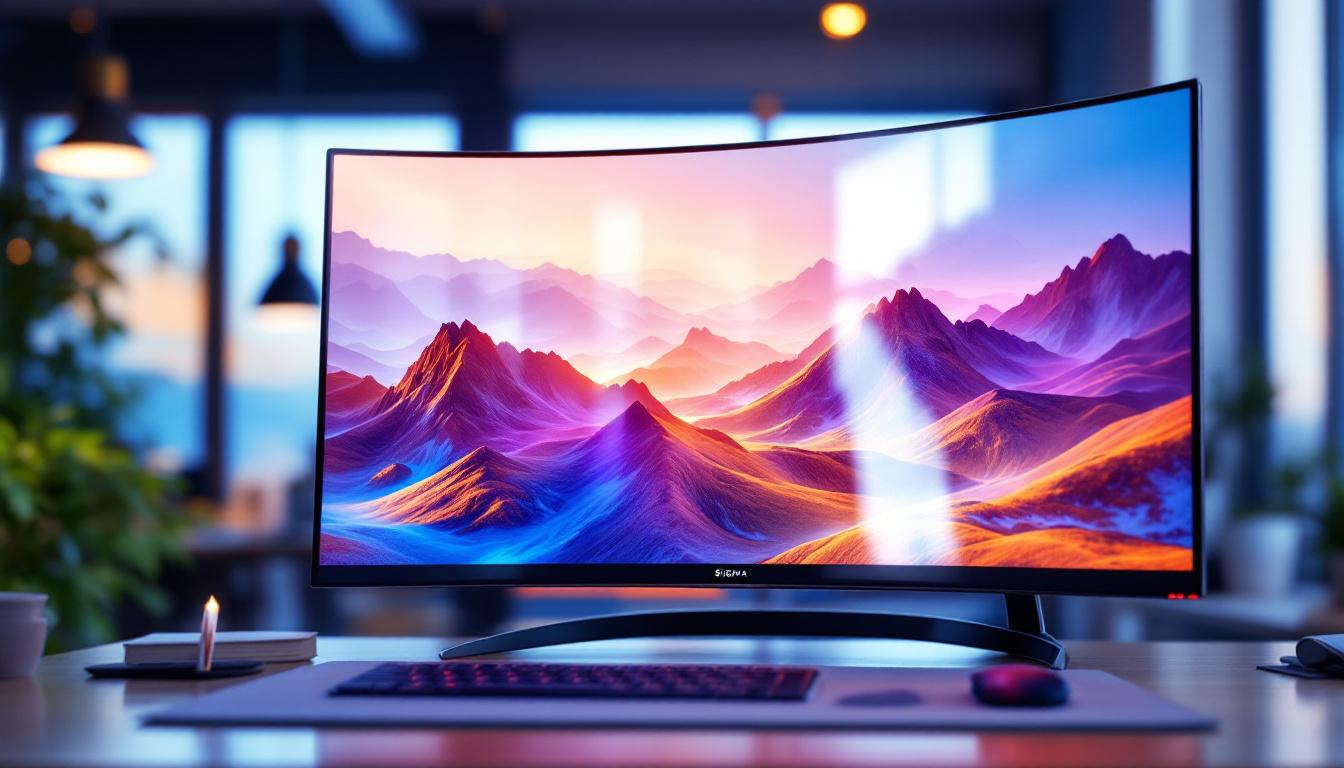
In today’s digital age, privacy and screen quality are paramount concerns for both professionals and casual users. With the rise of remote work, open office environments, and public computing spaces, protecting sensitive information on your screen has become more critical than ever. Curved monitors, known for their immersive viewing experience, are increasingly popular. However, their unique shape poses challenges for privacy protection. This is where curved monitor privacy screens come into play, especially those designed for LED displays.
This article explores the technology behind curved monitor privacy screens, focusing on LED displays, and explains how these screens enhance privacy without compromising visual quality. Whether you’re an IT professional, a business user, or simply someone interested in safeguarding your digital workspace, understanding these privacy solutions is essential.
Understanding Curved Monitors and Their Popularity
What Makes Curved Monitors Different?
Curved monitors are designed with a concave shape that wraps around the viewer’s field of vision. This curvature creates a more immersive and comfortable viewing experience by reducing distortion and glare at the edges of the screen. The curve radius, typically measured in millimeters (e.g., 1500R, 1800R), indicates the degree of curvature, with smaller numbers representing more pronounced curves.
The ergonomic benefits of curved monitors include reduced eye strain and a more natural viewing angle, especially for ultrawide and large-format displays. These features have made curved monitors increasingly popular in both gaming and professional environments, where screen real estate and visual clarity are crucial. Additionally, the immersive experience provided by these monitors can enhance the enjoyment of multimedia content, making them a favorite among movie enthusiasts and gamers alike. The added depth perception can transform gameplay, allowing players to spot enemies or navigate complex environments with greater ease.
LED Displays: Brightness and Clarity
Most modern curved monitors utilize LED (Light Emitting Diode) technology for their displays. LED displays offer superior brightness, energy efficiency, and color accuracy compared to older LCD technologies. The LED backlighting allows for thinner panels and better contrast ratios, essential for detailed work such as graphic design, video editing, and data analysis.
However, the brightness and wide viewing angles of LED displays can also be a double-edged sword when it comes to privacy. The very qualities that make LED screens visually appealing can make it easier for bystanders to view your screen from off-angles, increasing the risk of sensitive data exposure. To combat this, many manufacturers are now incorporating features such as anti-glare coatings and privacy filters, which can help mitigate these concerns while still delivering the vibrant visuals that users expect. Furthermore, advancements in display technology, such as Quantum Dot and Mini-LED, are beginning to emerge in curved monitor designs, promising even greater color fidelity and brightness levels, which could redefine the standards for both work and entertainment setups.
The Need for Privacy Screens on Curved LED Monitors
Privacy Risks in Modern Work Environments
With the proliferation of open-plan offices, co-working spaces, and public Wi-Fi hotspots, the risk of visual hacking—where unauthorized individuals view confidential information on your screen—has grown significantly. According to a 2023 study by the Ponemon Institute, 48% of data breaches involve some form of insider threat or accidental data exposure, often linked to careless screen visibility.
Curved monitors, while excellent for immersive viewing, can inadvertently increase this risk. Their wide and curved display surfaces can be visible from multiple angles, making it easier for someone nearby to glance at your screen without your knowledge.
Why Standard Privacy Screens Fall Short
Traditional privacy screens are typically designed for flat monitors and rely on micro-louver technology to narrow the viewing angle. When applied to a curved monitor, these flat privacy filters may not conform properly, leading to gaps where the screen is still visible from the sides. This compromises the effectiveness of the privacy screen and can cause visual distortions or uneven shading.
Moreover, some privacy filters reduce screen brightness or alter color accuracy, which can be problematic for users who require precise color representation, such as photographers or designers. Therefore, a specialized solution is necessary for curved LED monitors to maintain both privacy and display quality.
How Curved Monitor Privacy Screens Work
Micro-Louver Technology Adapted for Curved Surfaces
Curved monitor privacy screens employ advanced micro-louver technology designed to fit the contours of the curved display. Micro-louvers are tiny vertical blinds embedded within the privacy screen that block light from certain angles. When properly aligned with the curve of the monitor, these louvers restrict the viewing angle to approximately 30 degrees or less, ensuring that only the person directly in front of the screen can see the content clearly.
This technology effectively prevents side glances and shoulder surfing, which are common ways sensitive information is compromised. The curvature-specific design ensures that the privacy screen adheres smoothly to the monitor’s surface without bubbles or gaps, maintaining an aesthetically pleasing and functional setup.
Maintaining LED Display Brightness and Color Accuracy
One of the challenges with privacy screens is preserving the LED monitor’s brightness and color fidelity. High-quality curved privacy screens use optical-grade materials that minimize light loss and color distortion. These materials allow up to 85-90% of the screen’s original brightness to pass through while filtering out off-angle light.
Some privacy screens also come with anti-glare and anti-reflective coatings that enhance viewing comfort by reducing reflections from ambient light sources. This is particularly beneficial in brightly lit office environments or near windows.
Installation and Compatibility
Installing a curved privacy screen is typically straightforward. Most products come with adhesive strips or magnetic frames that allow for easy attachment and removal without damaging the monitor. It’s important to select a privacy screen that matches the exact curvature radius and dimensions of your monitor to ensure a perfect fit.
Compatibility is another critical factor. Privacy screens designed specifically for LED curved monitors account for the unique thickness and bezel design of these displays, ensuring that the screen does not interfere with monitor controls or ports.
Benefits of Using Curved Monitor Privacy Screens
Enhanced Data Security and Compliance
For businesses handling sensitive data—such as financial institutions, healthcare providers, and legal firms—curved monitor privacy screens are a vital component of data security protocols. They help prevent unauthorized viewing of confidential information, supporting compliance with data protection regulations like GDPR, HIPAA, and CCPA.
By physically limiting screen visibility, privacy screens reduce the risk of data breaches caused by visual hacking, which is often overlooked in cybersecurity strategies. This added layer of security complements digital encryption and access controls.
Improved Focus and Productivity
Privacy screens not only protect sensitive data but also help users maintain focus by minimizing visual distractions. In busy office environments, reducing the visibility of your screen to others can create a sense of personal space and reduce interruptions.
Users report increased productivity when using privacy screens, as they feel more secure and less concerned about inadvertent data exposure. This psychological benefit can be significant, especially during tasks that require deep concentration.
Preserving Visual Quality for Professional Use
Unlike generic privacy filters, curved monitor privacy screens designed for LED displays maintain high visual fidelity. This is crucial for professionals in creative fields who rely on accurate color representation and sharp image quality.
By combining privacy with performance, these screens allow users to work confidently on sensitive projects without sacrificing the visual advantages of their curved LED monitors.
Choosing the Right Curved Monitor Privacy Screen
Factors to Consider
When selecting a privacy screen for a curved LED monitor, several factors should guide your decision:
- Curvature Compatibility: Ensure the privacy screen matches your monitor’s curvature radius (e.g., 1500R, 1800R).
- Screen Size: The privacy screen must fit the exact dimensions of your monitor to avoid gaps or overlap.
- Material Quality: Look for optical-grade materials that provide high transparency and color accuracy.
- Installation Method: Consider whether you prefer adhesive, magnetic, or clip-on attachments based on your monitor’s design and your need for portability.
- Additional Features: Anti-glare coatings, blue light filtering, and fingerprint resistance can enhance usability.
Popular Brands and Market Trends
Several manufacturers specialize in privacy screens tailored for curved LED monitors. Brands like 3M, Kensington, and Targus offer solutions that balance privacy with screen clarity. The market has seen a 20% annual growth in privacy screen sales since 2021, reflecting increasing demand driven by remote work and heightened data security awareness.
Emerging trends include privacy screens with adjustable privacy levels, allowing users to control the viewing angle dynamically, and integration with touchscreens for hybrid devices.
Maintaining and Caring for Your Privacy Screen
Cleaning Tips
Maintaining the clarity and effectiveness of your privacy screen requires regular cleaning. Use a microfiber cloth and a gentle screen cleaner designed for LED displays. Avoid abrasive materials or harsh chemicals that can damage the micro-louvers or coatings.
Handling and Storage
If you remove the privacy screen frequently, store it in a protective sleeve or case to prevent scratches. Handle the screen by the edges to avoid fingerprints and smudges, which can reduce visibility and privacy effectiveness.
Conclusion
Curved monitor privacy screens for LED displays represent a sophisticated solution to the growing challenge of visual data security in modern work environments. By combining advanced micro-louver technology with materials optimized for LED brightness and color accuracy, these privacy screens protect sensitive information without compromising the immersive experience that curved monitors provide.
Whether in corporate offices, healthcare settings, or public spaces, investing in a high-quality curved privacy screen is a proactive step toward safeguarding your digital workspace. With careful selection and proper maintenance, these screens enhance both security and productivity, making them an essential accessory for today’s LED curved monitor users.
Discover LumenMatrix’s Advanced LED Display Solutions
As you consider the importance of privacy and the superior visual performance of curved monitors, LumenMatrix invites you to explore our innovative LED display solutions. Our commitment to revolutionizing visual communication is evident in our diverse range of products, from Indoor LED Wall Displays to Custom LED Displays, designed to meet your specific needs. Elevate your digital workspace and create immersive visual experiences with LumenMatrix. Check out LumenMatrix LED Display Solutions today and see the difference cutting-edge technology can make.