In the realm of large venues—whether stadiums, concert halls, conference centers, or expansive theaters—the demand for vivid, bright, and reliable visual displays has never been higher. As technology evolves, LED displays have emerged as a leading solution, often challenging traditional large venue projectors. This article delves into the intricacies of large venue projectors, explores the rise of LED displays, and explains why understanding these technologies is crucial for event organizers, venue managers, and AV professionals alike.
Understanding Large Venue Projectors
What Defines a Large Venue Projector?
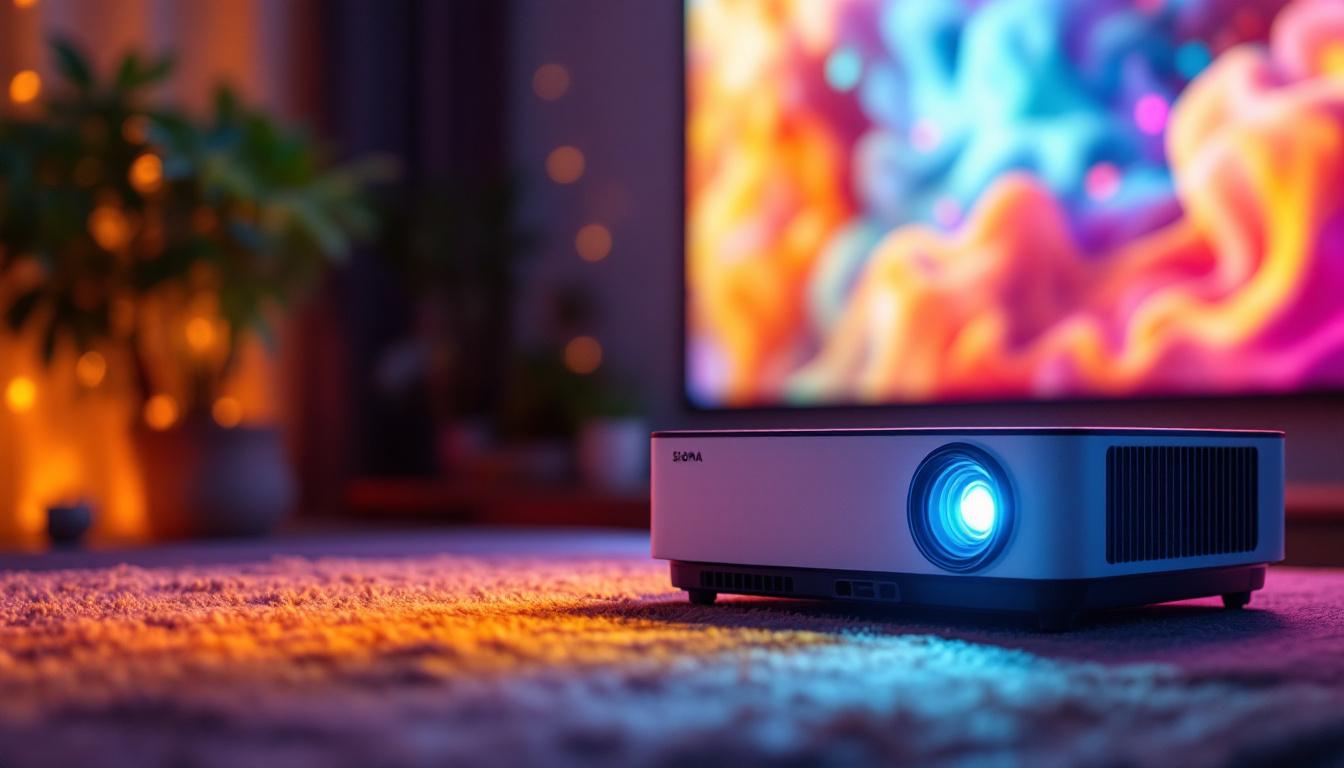
Large venue projectors are specialized projection systems designed to deliver high-lumen output and large image sizes suitable for expansive spaces. Unlike standard home or office projectors, these units typically offer brightness levels exceeding 10,000 lumens, with some models reaching up to 30,000 lumens or more. This intensity ensures that images remain clear and vibrant even in environments with significant ambient light, such as arenas or convention centers.
These projectors often utilize advanced lamp technologies, including laser phosphor and high-pressure mercury lamps, to achieve consistent brightness and color accuracy over extended periods. The projectors are engineered for durability and ease of integration, with features like motorized lenses, edge blending, and geometric correction to fit complex venue layouts. Additionally, many large venue projectors are equipped with advanced cooling systems to prevent overheating during prolonged use, ensuring they can operate efficiently during lengthy events without compromising performance.
Key Specifications and Performance Metrics
When selecting a large venue projector, several technical specifications are critical:
- Brightness (Lumens): Essential for visibility; larger venues generally require projectors with 15,000 lumens or more.
- Resolution: High-definition resolutions (WUXGA, 4K) are increasingly standard for crisp image detail.
- Contrast Ratio: A higher contrast ratio enhances image depth, especially important for video content.
- Lens Shift and Zoom: Flexibility in positioning the image without physically moving the projector.
- Durability and Maintenance: Laser projectors typically offer longer lifespans and reduced maintenance compared to lamp-based models.
These specifications ensure that the projector can meet the demanding visual needs of large-scale events, from sports broadcasts to corporate presentations. Furthermore, many modern large venue projectors come with built-in networking capabilities, allowing for seamless integration with various media sources and control systems. This connectivity can facilitate remote management and monitoring, enabling technicians to adjust settings or troubleshoot issues without needing to be physically present at the venue. This feature is particularly beneficial for events that require quick adjustments or for venues that host multiple events in a short timeframe.
Another important aspect to consider is the projector’s compatibility with various content formats and sources. Many large venue projectors support multiple input options, including HDMI, DisplayPort, and even wireless streaming, making them versatile tools for diverse presentations. This flexibility allows event organizers to easily switch between different types of content, whether it’s a high-energy video presentation, live feeds, or interactive displays, ensuring that the audience remains engaged and the message is effectively communicated.
The Rise of LED Displays in Large Venues
What Are LED Displays?
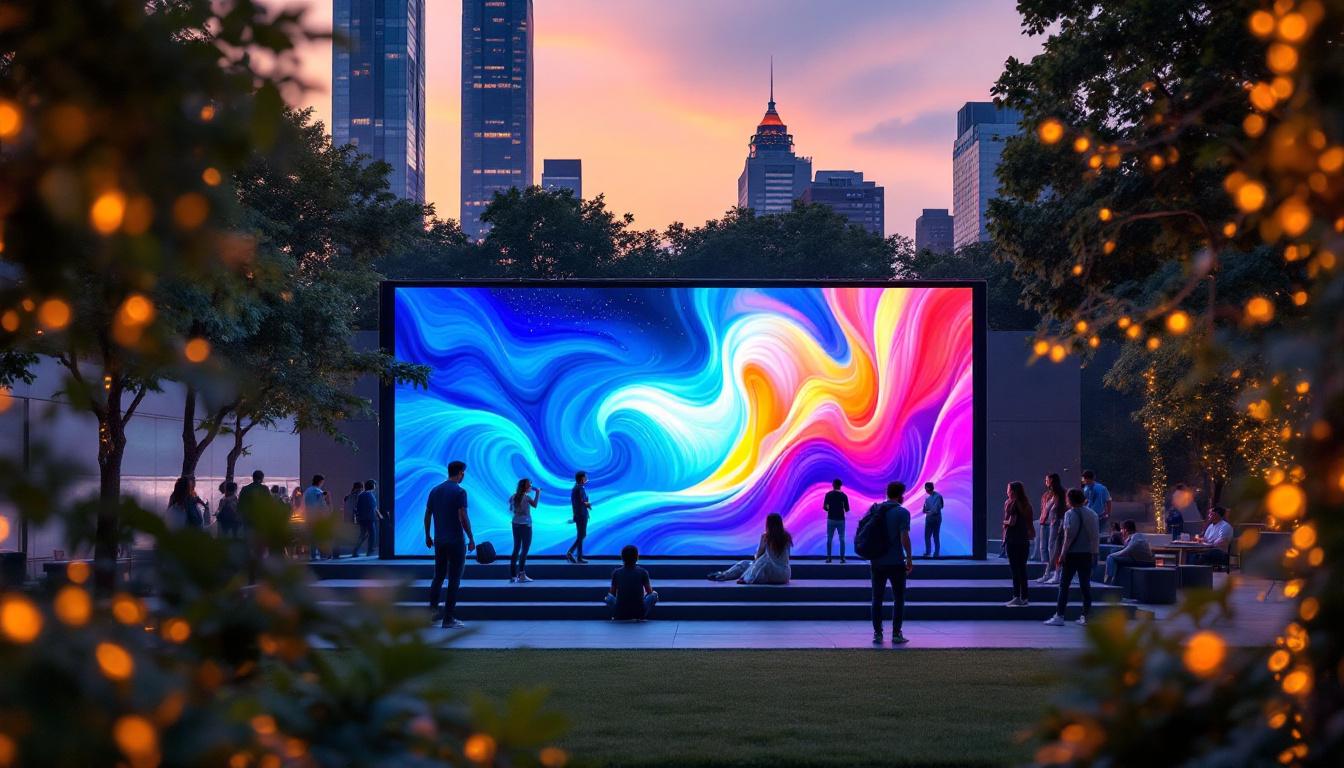
LED (Light Emitting Diode) displays consist of panels made up of thousands to millions of tiny LEDs that emit light individually. Unlike projectors, which cast images onto a screen, LED displays produce their own light, resulting in exceptionally bright and vibrant visuals. This self-illumination makes LED displays highly visible even in direct sunlight or brightly lit environments.
Modern LED displays come in various pixel pitches, which determine the density of LEDs per square meter and thus the resolution and viewing distance suitability. For large venues, pixel pitches typically range from 2mm to 10mm, balancing image clarity with cost and installation complexity.
Advantages Over Traditional Projectors
LED displays have rapidly gained traction in large venues due to several compelling benefits:
- Brightness and Visibility: LED displays can achieve brightness levels exceeding 5,000 nits, far surpassing projector brightness and ensuring visibility in daylight or well-lit spaces.
- Durability and Longevity: LEDs have longer lifespans—often 50,000 hours or more—and are less prone to damage from environmental factors like dust and temperature fluctuations.
- Seamless Image Quality: LED panels can be configured in virtually any size or shape, enabling massive, uninterrupted displays without the bezels or alignment issues common in projector setups.
- Low Maintenance: Unlike lamp-based projectors requiring periodic lamp replacements and calibration, LED displays demand minimal upkeep.
- Energy Efficiency: LED technology consumes less power relative to the brightness output compared to traditional projectors.
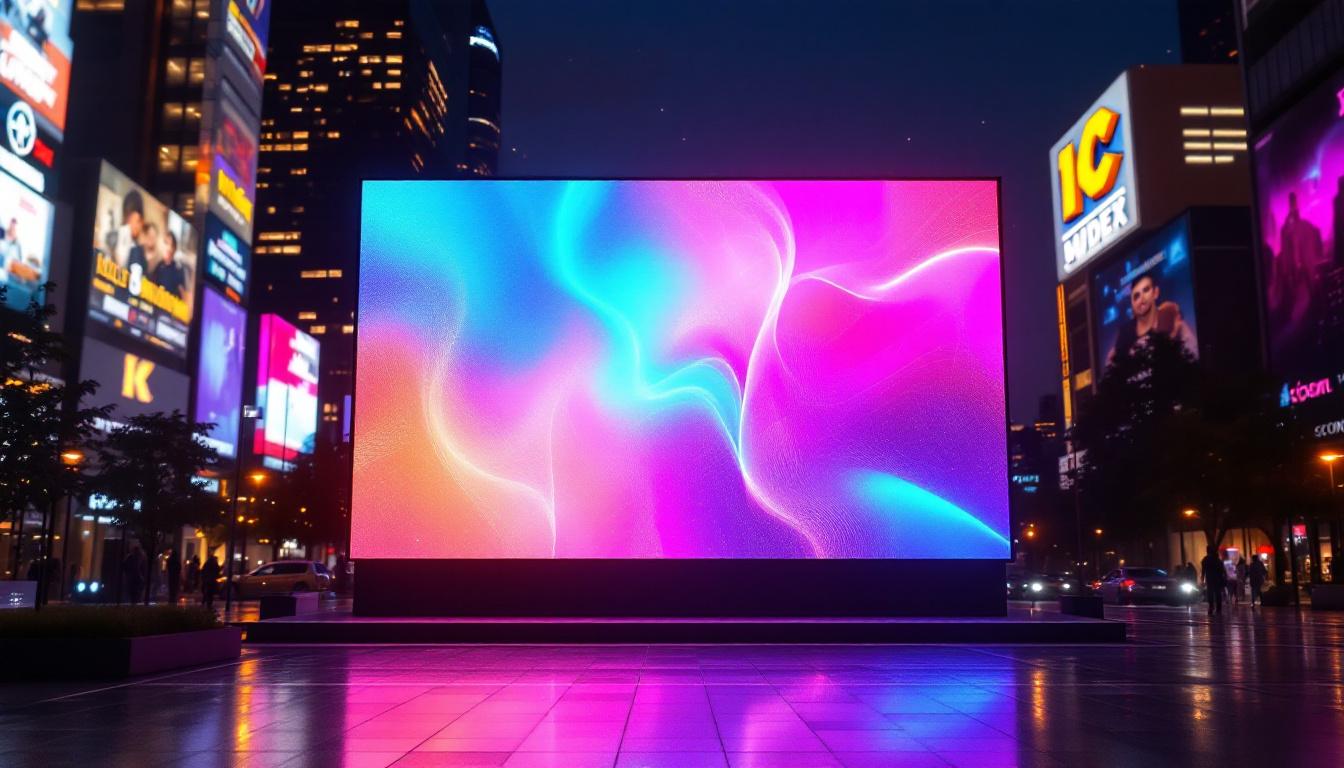
These advantages make LED displays particularly suited for outdoor stadiums, large-scale concerts, and venues where ambient light control is limited.
Comparing Large Venue Projectors and LED Displays
Image Quality and Brightness
While large venue projectors offer high brightness, their image quality can be affected by ambient light, screen quality, and projector placement. LED displays, by contrast, maintain consistent brightness and color fidelity regardless of environmental lighting, making them superior for venues with challenging lighting conditions.
However, projectors can produce higher native resolutions at a lower cost, especially for very large images. For example, a 4K projector can project ultra-high-definition content onto a screen tens of meters wide, whereas LED displays with comparable resolution at such sizes can be prohibitively expensive.
Installation and Flexibility
Projectors require careful positioning, mounting, and alignment to achieve the desired image size and focus. They also need a projection surface, which can limit venue design options. LED displays offer greater flexibility in installation—they can be mounted on walls, suspended, or even curved to fit architectural features.
Additionally, LED modules can be combined to create custom shapes and sizes, enabling creative visual experiences that projectors cannot easily replicate.
Cost Considerations
Initial investment for LED displays is typically higher than for projectors, especially for ultra-high-resolution and large-scale installations. However, the total cost of ownership can favor LED displays due to lower maintenance, longer lifespan, and energy savings.
Projectors may be more cost-effective for venues with controlled lighting and where ultra-high resolution is a priority over brightness. Conversely, venues requiring robust, high-brightness displays with minimal maintenance often find LED displays more economical over time.
Applications of LED Displays in Large Venues
Sports Stadiums and Arenas
LED displays have revolutionized the fan experience in sports venues. Massive LED scoreboards and ribbon boards provide real-time stats, replays, and advertising with unmatched clarity. For example, the AT&T Stadium in Texas features one of the largest high-definition LED displays in the world, measuring 160 feet wide and 72 feet tall, delivering an immersive experience to over 100,000 spectators.
These displays must withstand outdoor conditions, including weather and sunlight, making LEDs the preferred choice over projectors.
Concerts and Live Events
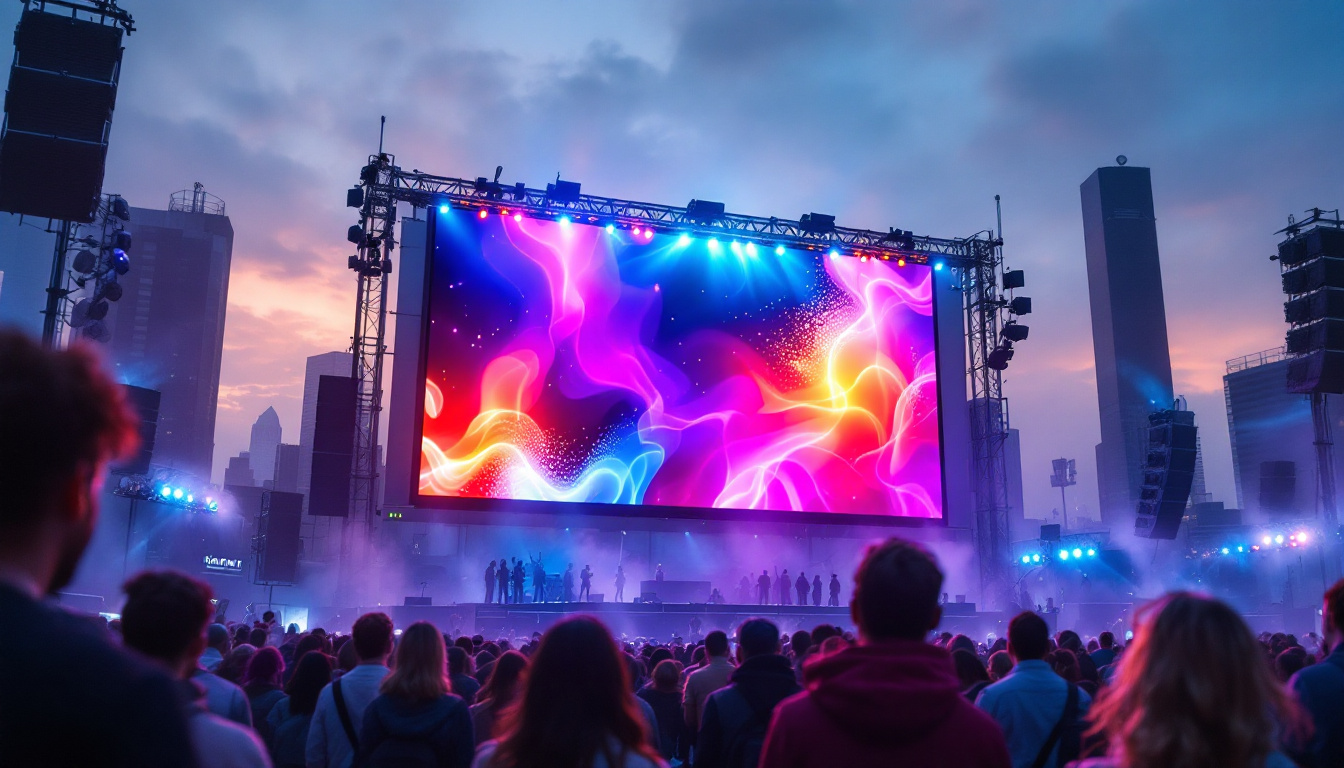
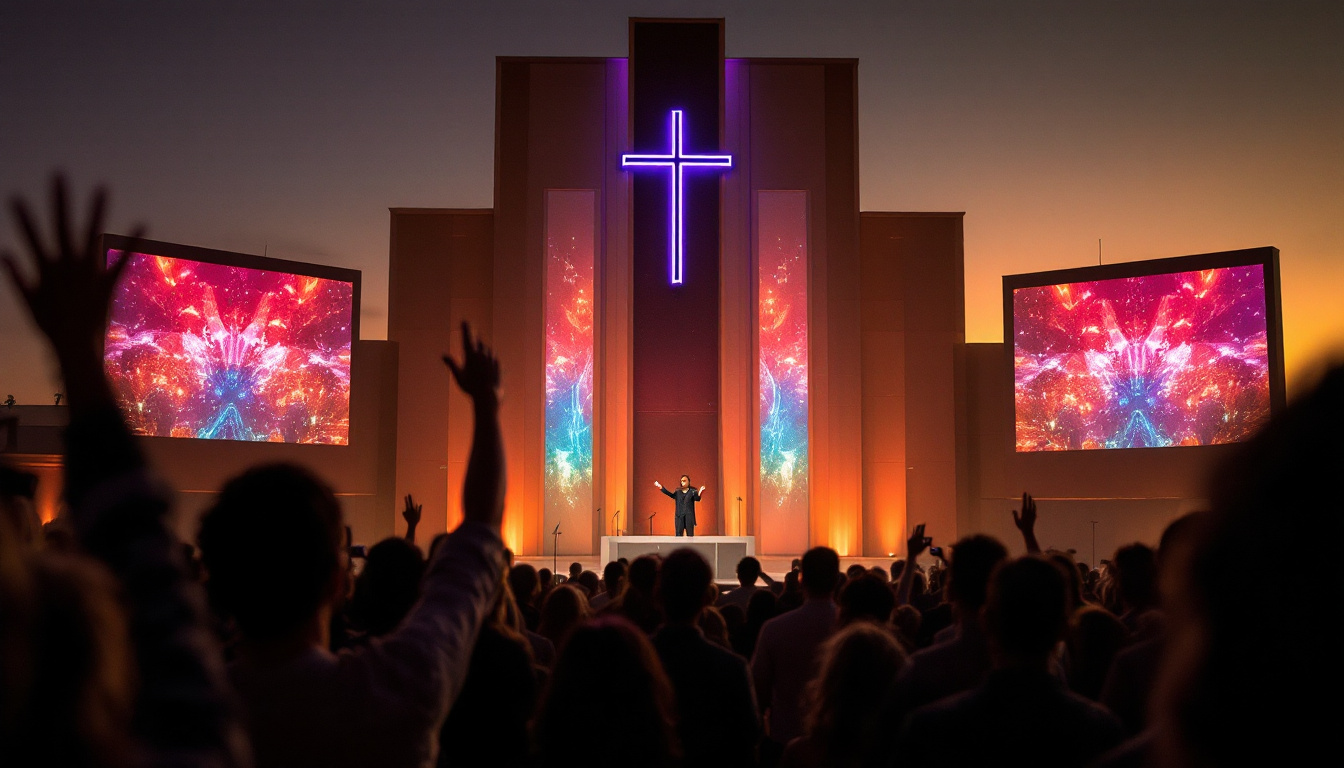
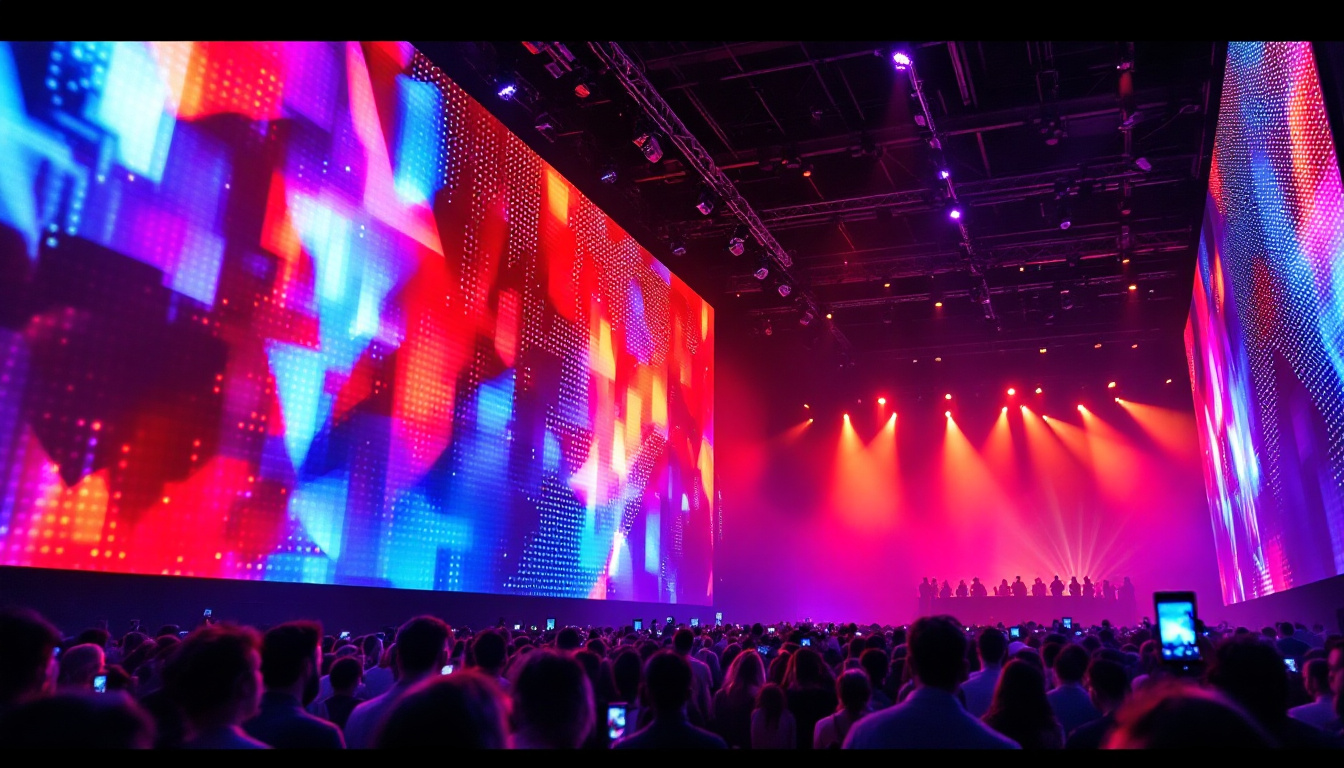
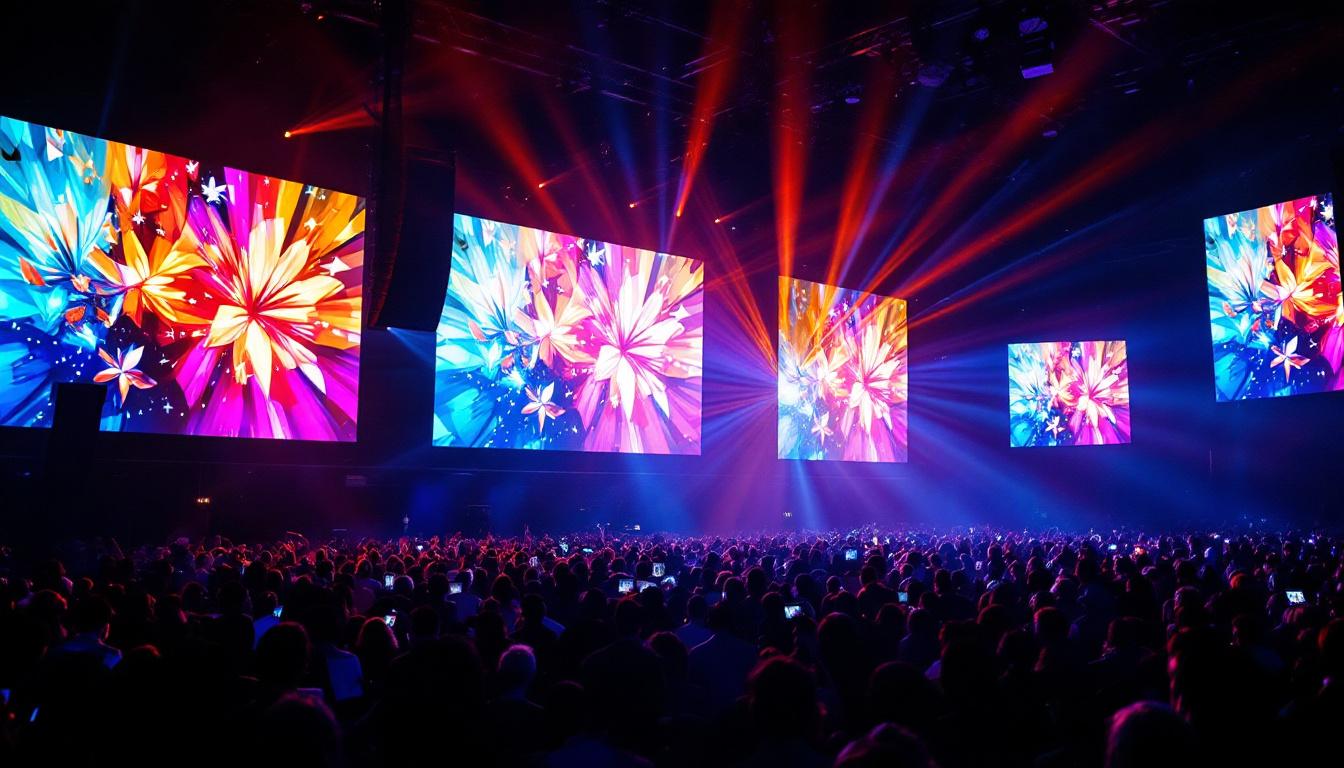
Concerts and festivals leverage LED displays for dynamic stage backdrops and immersive visual effects. The ability to create curved, transparent, or flexible LED screens allows designers to craft unique environments that enhance performances. Additionally, the high refresh rates and color accuracy of LED panels ensure smooth video playback and vibrant imagery that captivate audiences.
Corporate and Convention Centers
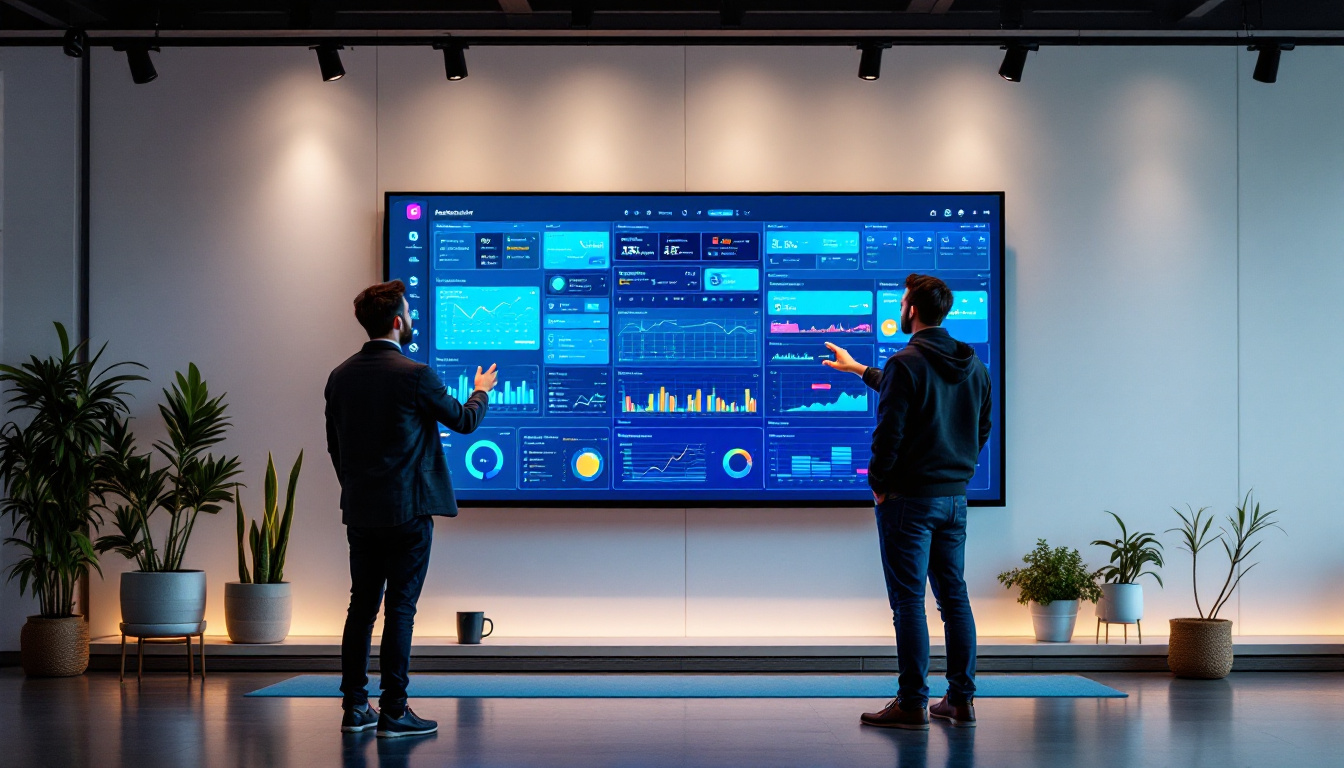
In large conference venues, LED displays provide clear, bright visuals for presentations, video conferencing, and digital signage. Their modular design allows for quick setup and breakdown, which is critical for multi-event venues. Moreover, LED walls can be reconfigured to suit different event sizes and layouts, offering unparalleled versatility.
Future Trends in Large Venue Projection and LED Technology
MicroLED and MiniLED Innovations
Emerging technologies like MicroLED and MiniLED promise to further enhance LED display performance. MicroLEDs, with their microscopic light-emitting diodes, offer higher resolution, improved contrast, and better energy efficiency compared to traditional LEDs. These advancements could lead to even more seamless, brighter, and thinner displays suited for large venues.
Laser Projectors and Hybrid Solutions
Laser projectors continue to evolve, offering higher brightness and longer lifespans than traditional lamp-based units. Hybrid systems that combine laser projection with LED elements are also being explored to blend the benefits of both technologies, potentially delivering ultra-high brightness and resolution with flexible installation options.
Integration with Augmented Reality and Interactive Technologies
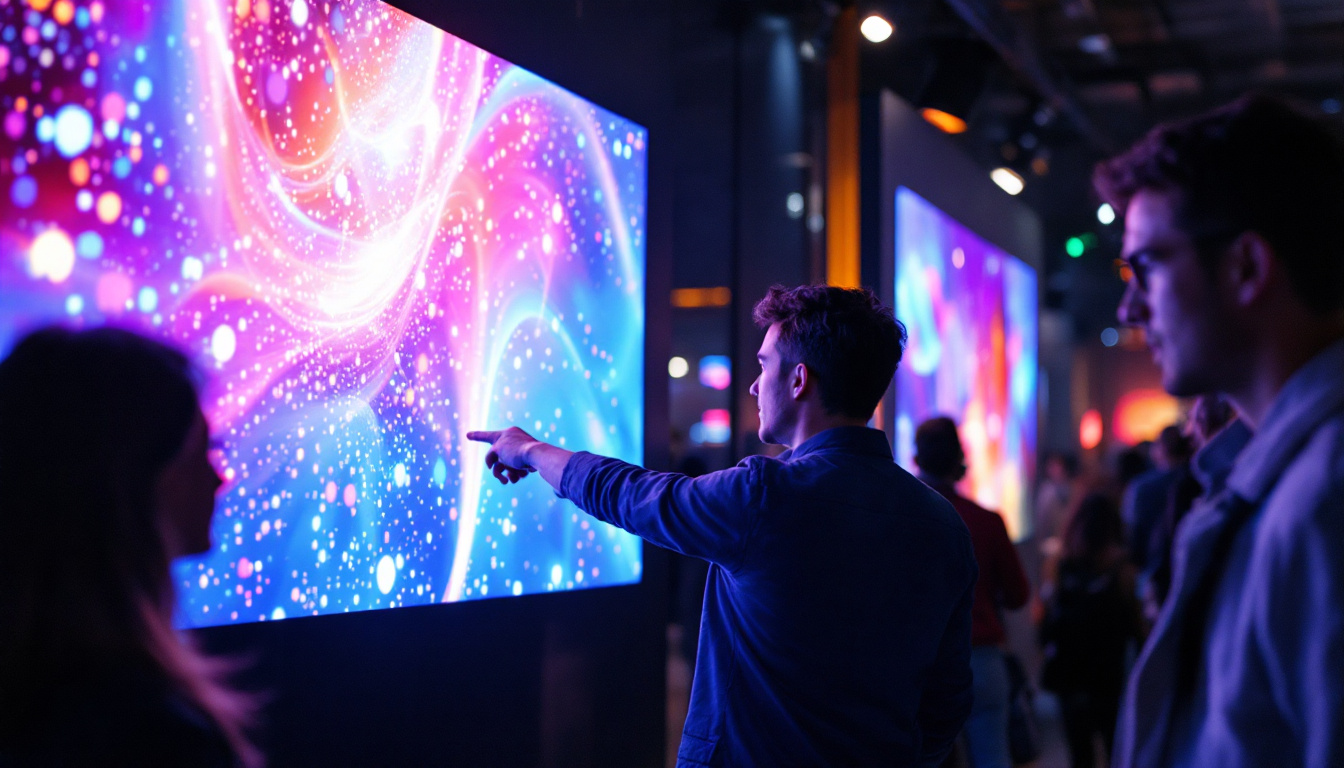
As venues seek to create more engaging experiences, LED displays are increasingly integrated with interactive and augmented reality (AR) technologies. Touch-sensitive LED walls, gesture-controlled visuals, and AR overlays can transform passive viewing into immersive participation, opening new possibilities for entertainment and communication.
Choosing the Right Visual Solution for Your Venue
Assessing Venue Requirements
Selecting between large venue projectors and LED displays depends on multiple factors:
- Ambient Lighting: High ambient light favors LED displays.
- Image Size and Resolution: Ultra-large, high-resolution images may benefit from projectors.
- Budget Constraints: Consider both upfront costs and long-term maintenance.
- Installation Flexibility: LED displays offer more creative freedom.
- Event Types: Dynamic, fast-changing content may require higher refresh rates and brightness.
Consulting with AV Professionals
Given the technical complexity and investment involved, consulting with audiovisual experts is essential. Professionals can conduct site surveys, analyze lighting conditions, and recommend solutions tailored to the venue’s unique needs and goals.
Ultimately, the decision should align with the venue’s operational demands, audience expectations, and future scalability plans.
Conclusion
The landscape of large venue visual technology is rapidly evolving. While traditional large venue projectors remain relevant for certain applications, LED displays have become the gold standard for brightness, durability, and versatility in many large-scale environments. Understanding the strengths and limitations of each technology is crucial for making informed decisions that enhance audience engagement and maximize return on investment.
As LED technology continues to advance and integrate with emerging innovations, venues that adopt these solutions will be well-positioned to deliver captivating, high-impact visual experiences that resonate with audiences for years to come.
Discover LumenMatrix’s Advanced LED Display Solutions
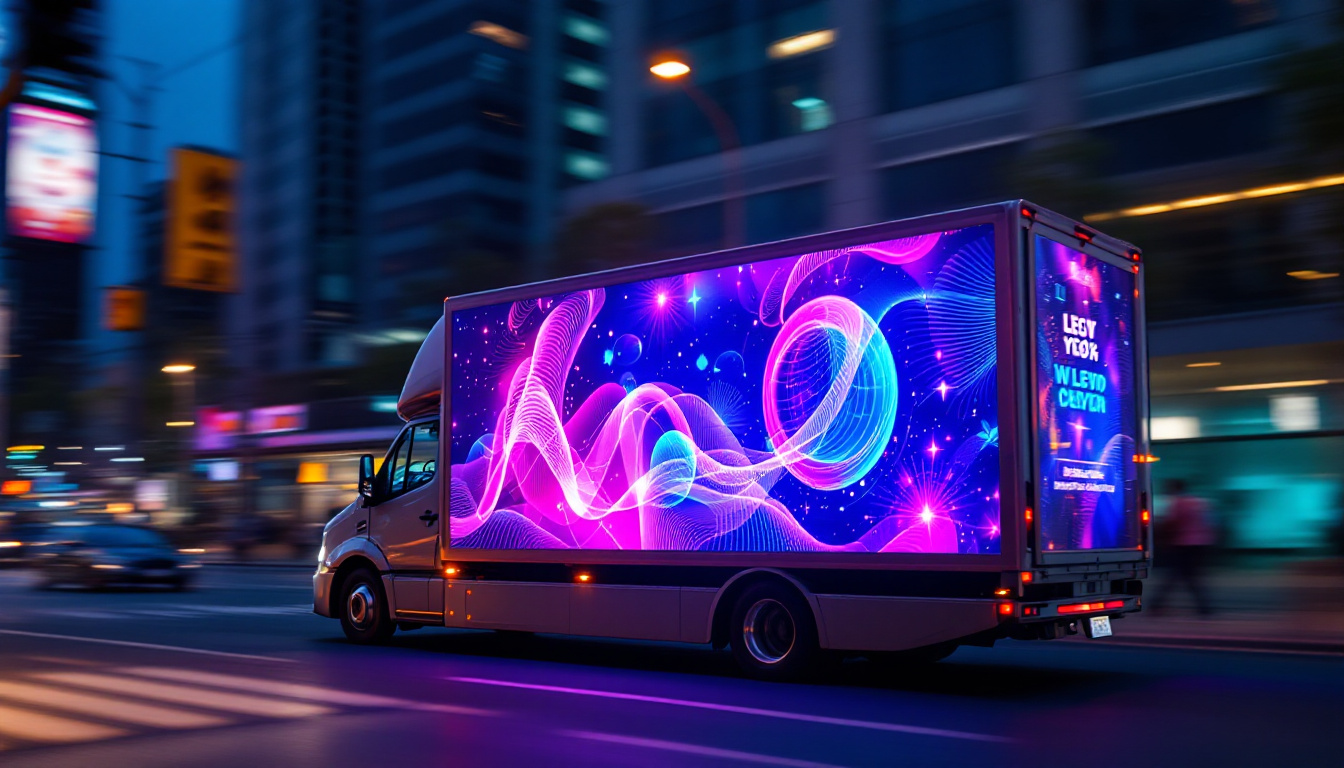
Ready to elevate your large venue with the latest in LED display technology? LumenMatrix offers a comprehensive range of LED display modules tailored to create unforgettable visual experiences. From vibrant Indoor and Outdoor LED Wall Displays to innovative solutions like Vehicle LED Displays, LED Posters, and even Custom LED Displays, our mission is to transform your visual communication. Experience the future of audience engagement with LumenMatrix’s cutting-edge LED displays. Check out LumenMatrix LED Display Solutions today and see the difference for yourself.