Do Churches Have To Be ADA Compliant: LED Display Explained
Accessibility in public spaces is a critical issue that affects millions of people across the United States. The Americans with Disabilities Act (ADA), enacted in 1990, sets forth requirements to ensure that individuals with disabilities have equal access to public accommodations, including places of worship. As technology advances, many churches are incorporating LED displays to enhance communication and engagement during services. This raises an important question: do churches have to be ADA compliant when using LED displays? This article explores the intersection of ADA compliance, churches, and LED display technology, providing clarity on legal obligations and best practices for accessibility.
Understanding ADA Compliance and Its Applicability to Churches
What is ADA Compliance?
The Americans with Disabilities Act (ADA) is a landmark civil rights law that prohibits discrimination against individuals with disabilities in all areas of public life. Title III of the ADA specifically addresses public accommodations and commercial facilities, mandating that these entities provide equal access to goods, services, and facilities.
ADA compliance involves meeting a range of standards, including architectural accessibility, effective communication, and reasonable modifications to policies and practices. For churches, this means ensuring that people with disabilities can participate fully in religious services and activities. This can include features such as wheelchair ramps, accessible restrooms, and designated seating areas, as well as providing materials in alternative formats like Braille or large print for those with visual impairments.
Are Churches Required to Follow the ADA?
The ADA applies differently to churches compared to other public accommodations. Under Title III, religious organizations are generally exempt from the requirement to make their facilities physically accessible because they are not considered public accommodations in the traditional sense. This exemption means that churches are not legally obligated to comply with certain ADA architectural standards.
However, this exemption does not mean that churches can ignore accessibility altogether. Many churches voluntarily adopt ADA guidelines to foster inclusivity and serve their congregations better. Additionally, if a church operates a facility that is open to the public for non-religious activities, ADA requirements may apply to those spaces. This could include community events, educational programs, or social services, which further emphasizes the importance of creating an accessible environment for all visitors.
Why Accessibility Matters for Churches
Beyond legal obligations, accessibility is a moral and practical consideration for churches. According to the U.S. Census Bureau, approximately 26% of adults in the United States have some form of disability. This significant portion of the population includes many potential congregants who may face barriers to participation without accessible facilities and communication methods.
Ensuring accessibility aligns with the core values of many faith communities, promoting inclusion, compassion, and respect. Moreover, accessible churches can enhance community engagement, increase attendance, and demonstrate leadership in social responsibility. By creating an environment where everyone feels welcome, churches can foster a sense of belonging and community among their members. This not only benefits individuals with disabilities but also enriches the entire congregation, as diverse perspectives and experiences contribute to a more vibrant and dynamic faith community.
Furthermore, churches can take proactive steps to assess their current level of accessibility. This might involve conducting an accessibility audit, seeking feedback from congregants with disabilities, and collaborating with local organizations that specialize in disability advocacy. By actively involving the community in these discussions, churches can identify specific needs and make informed decisions about improvements, ensuring that their facilities truly serve everyone. This commitment to accessibility not only fulfills a social responsibility but also reflects the teachings of many faiths that emphasize love, acceptance, and service to others.
LED Displays in Churches: Enhancing Communication and Engagement
What Are LED Displays?
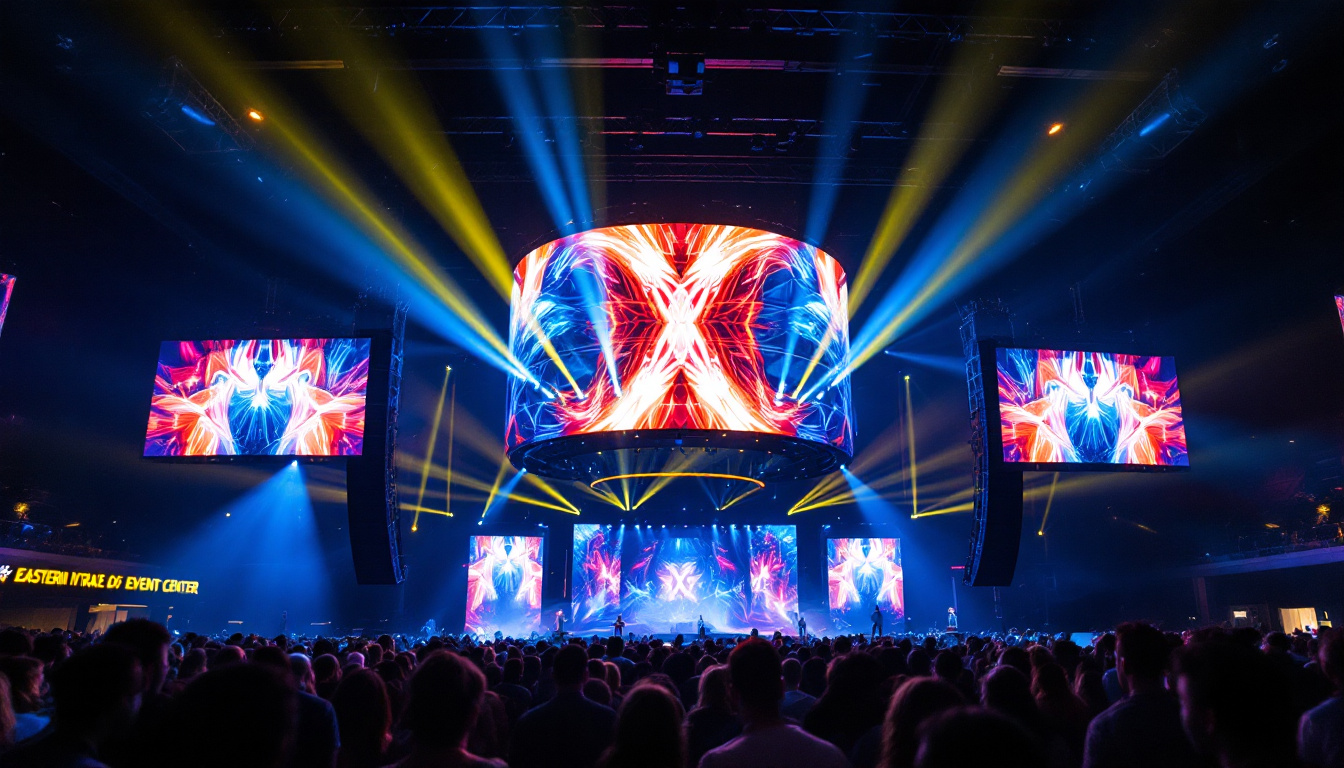
LED (Light Emitting Diode) displays are digital screens that use light-emitting diodes to present information, images, and videos. These displays are known for their brightness, energy efficiency, and versatility. In churches, LED displays are commonly used for projecting song lyrics, sermon notes, announcements, and multimedia presentations.
The adoption of LED technology has transformed worship experiences by enabling dynamic and visually engaging content that can be easily updated and customized.
Benefits of Using LED Displays in Churches
LED displays offer several advantages for churches, including:
- Improved Visibility: Bright and clear displays ensure that content is visible to all attendees, even in large or dimly lit spaces.
- Enhanced Engagement: Multimedia content such as videos, images, and animations can capture attention and enrich the worship experience.
- Flexibility: Content can be changed quickly to accommodate different services, events, or announcements.
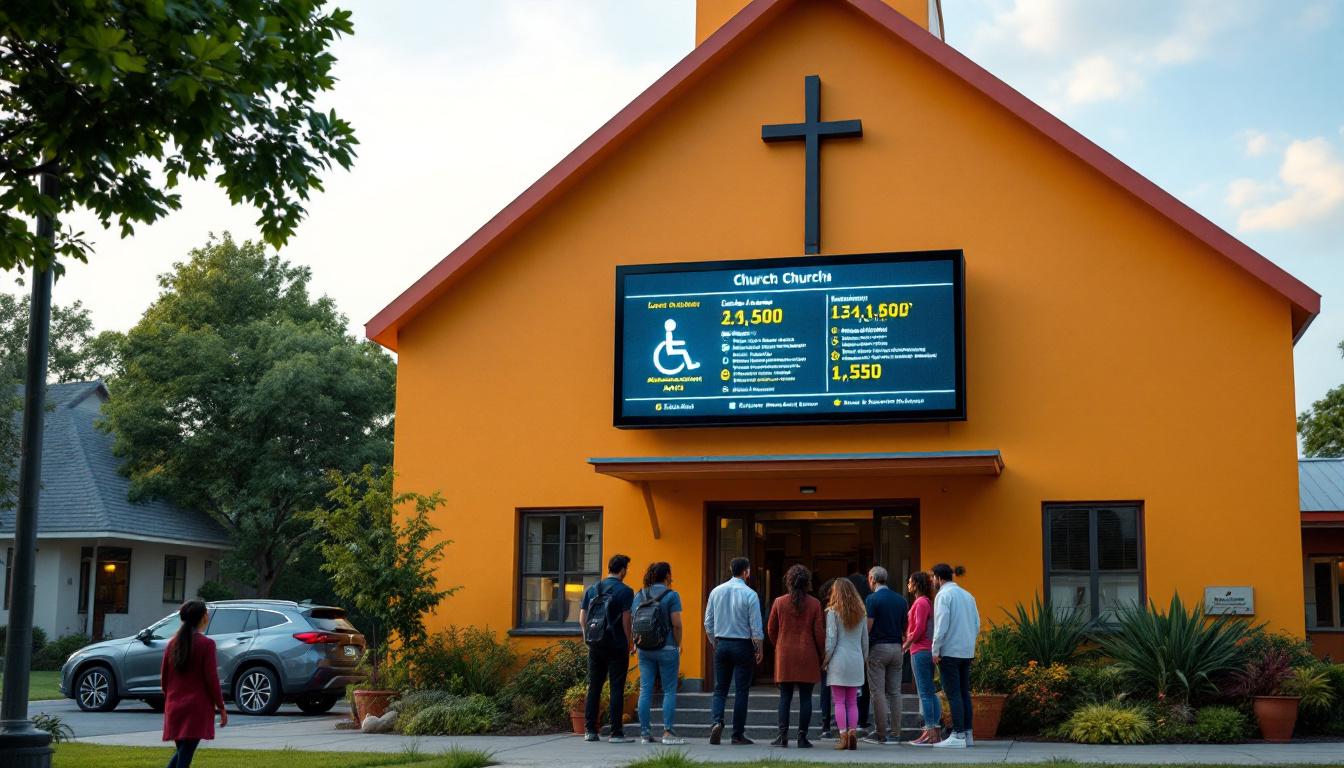
- Accessibility Support: When designed thoughtfully, LED displays can support accessibility features such as large fonts and high-contrast visuals.
Challenges and Considerations for Accessibility
Despite their benefits, LED displays can present challenges for accessibility if not implemented with ADA considerations in mind. For example, individuals with visual impairments may struggle to read content that is too small, low contrast, or rapidly changing.
Moreover, people with cognitive disabilities might find overly complex or flashing content distracting or disorienting. Therefore, churches must carefully design LED display content to be inclusive and accessible to all congregants.
Legal Requirements for ADA Compliance of LED Displays in Churches
Are LED Displays in Churches Subject to ADA Regulations?
Since churches are generally exempt from Title III ADA requirements regarding physical accessibility, the use of LED displays inside the church is not explicitly mandated to be ADA compliant by law. However, if the LED display is part of a church-operated facility that serves the public in a non-religious capacity, or if the church receives federal funding, ADA rules may apply.
Furthermore, under Title II of the ADA, state and local government entities must ensure accessibility, which could affect churches that are government-owned or operated.
Effective Communication Requirements
One of the most relevant ADA provisions for LED displays is the requirement for effective communication. The ADA mandates that public accommodations provide auxiliary aids and services to ensure that communication with people with disabilities is as effective as communication with others.
In practice, this means that if a church uses LED displays to convey information, it should also provide alternative means for individuals who cannot access that information visually. For example, providing printed materials, sign language interpreters, or audio descriptions can help meet effective communication standards.
Section 508 and Web Accessibility
Many churches also stream services online or post content on websites, which brings digital accessibility into focus. Section 508 of the Rehabilitation Act requires federal agencies and organizations receiving federal funds to make electronic and information technology accessible to people with disabilities.
While Section 508 does not directly regulate churches, adopting web accessibility standards such as the Web Content Accessibility Guidelines (WCAG) can improve access to digital content, including LED display programming and related online materials.
Best Practices for Making LED Displays Accessible in Churches
Designing Accessible LED Display Content
To maximize accessibility, churches should consider the following design principles when creating LED display content:
- Use Large, Clear Fonts: Text should be easily readable from a distance, with a minimum font size of 18 points recommended.
- High Contrast Colors: Use color combinations that provide strong contrast, such as black text on a white background or white text on a dark background.
- Limit Text Amount: Keep messages concise to avoid overwhelming viewers and to facilitate quick comprehension.
- Avoid Flashing or Flickering: Rapidly changing content can trigger seizures in individuals with photosensitive epilepsy and should be avoided.
- Consistent Layout: Maintain a consistent format to help attendees anticipate where information will appear.
Providing Alternative Communication Methods
Complementing LED displays with other communication methods ensures inclusivity:
- Printed Materials: Offering bulletins or handouts with the same information displayed on LED screens.
- Assistive Listening Devices: For individuals with hearing impairments, providing devices that amplify sound or transmit audio directly to hearing aids.
- Sign Language Interpretation: Including interpreters during services or events.
- Audio Descriptions: Offering narrated explanations of visual content for people with visual impairments.
Training and Awareness
Church staff and volunteers should be trained on accessibility best practices and the importance of inclusive communication. This training can include how to operate LED displays effectively, how to assist individuals with disabilities, and how to implement reasonable accommodations.
Case Studies: Churches Successfully Implementing ADA-Compliant LED Displays
Example 1: Grace Community Church
Grace Community Church, located in a metropolitan area, installed large LED displays in their sanctuary to enhance worship services. They prioritized accessibility by using high-contrast colors and large fonts, ensuring that text was visible from all seating areas.
Additionally, they provided printed song lyrics and sermon notes for attendees with visual impairments and offered assistive listening devices. Their inclusive approach led to positive feedback from congregants with disabilities and increased overall engagement.
Example 2: St. Mark’s Episcopal Church
St. Mark’s Episcopal Church integrated LED displays with sign language interpretation during services. The LED screens displayed sermon points and hymn lyrics, while interpreters were positioned prominently to ensure visibility.
The church also streamed services online with closed captioning, making their content accessible to a broader audience. Their commitment to accessibility has fostered a welcoming environment for diverse congregants.
Conclusion: Embracing Accessibility in Churches Through Thoughtful LED Display Use
While churches are generally exempt from strict ADA architectural compliance, the principles of accessibility remain vital to fostering inclusive worship environments. LED displays offer powerful tools to communicate and engage congregations, but they must be used thoughtfully to accommodate individuals with disabilities.
By adhering to best practices in design, providing alternative communication methods, and promoting awareness, churches can ensure that their LED display technology enhances accessibility rather than creating barriers. Ultimately, embracing accessibility aligns with the mission of many faith communities to welcome and serve all individuals with dignity and respect.
As technology continues to evolve, churches have the opportunity to lead by example in creating worship spaces that are both innovative and inclusive. Understanding ADA compliance in the context of LED displays is a crucial step toward achieving that goal.
Discover Inclusive LED Solutions with LumenMatrix
Embrace the full potential of accessibility in your place of worship with LumenMatrix’s innovative LED display technology. As a leader in creating visually stunning and inclusive experiences, LumenMatrix offers a wide array of LED solutions, from Indoor and Outdoor LED Wall Displays to Custom and Transparent LED Displays, all designed to meet the diverse needs of your congregation. Enhance your church’s engagement and ensure everyone can participate fully in your services. Check out LumenMatrix LED Display Solutions today and take a significant step towards a more accessible and welcoming worship environment.