Understanding measurements and conversions is essential in many fields, especially when dealing with technology like LED displays. Whether you are planning an installation, designing a stage setup, or simply curious about dimensions, knowing how to convert feet to meters accurately can make a significant difference. This article delves into the conversion of 16 feet into meters and explores how these measurements relate to LED displays, offering a comprehensive explanation tailored for professionals and enthusiasts alike.
Understanding the Conversion: Feet to Meters
Before diving into LED displays, it’s important to grasp the basics of measurement conversion. The foot is a unit of length used primarily in the United States, while the meter is the standard unit of length in the International System of Units (SI), used worldwide.
One foot equals exactly 0.3048 meters. This conversion factor is internationally recognized and used in scientific, engineering, and everyday applications. Understanding this conversion is essential not only for academic purposes but also for practical applications in various fields such as construction, architecture, and even sports, where precise measurements can significantly impact performance and safety.
Calculating 16 Feet in Meters
To convert 16 feet to meters, multiply 16 by the conversion factor 0.3048:
16 ft × 0.3048 m/ft = 4.8768 meters
Therefore, 16 feet is equivalent to approximately 4.88 meters when rounded to two decimal places. This precise measurement is crucial when planning and installing LED displays, where spatial accuracy is key. In fact, when designing an LED display, knowing the exact dimensions in both feet and meters can help ensure that the display fits perfectly within the designated space, whether it’s in a stadium, a storefront, or an event venue.
Moreover, the importance of accurate conversions extends beyond just installation. For instance, when creating marketing materials or signage that includes dimensions, it’s vital to present information in a way that is understandable to the target audience. In regions where the metric system is the norm, providing measurements in meters can enhance clarity and reduce the chances of misinterpretation. This attention to detail can significantly improve communication with clients, contractors, and consumers alike, ultimately leading to more successful outcomes in projects involving LED displays and other installations.
Why Accurate Measurement Matters in LED Displays
LED displays are widely used in advertising, entertainment, sports venues, and public information systems. The physical size of these displays is often specified in feet or meters, depending on the region and industry standards. Accurate measurements impact several aspects of LED display design and installation.
Space Planning and Installation
Knowing the exact size of an LED display in meters allows installers to plan for the appropriate space, ensuring the display fits perfectly within the designated area. For example, a 16-foot-wide LED screen translates to about 4.88 meters, which might influence wall mounting, structural support, and electrical wiring layouts.
Misjudging the size can lead to costly errors, such as ordering the wrong screen size or encountering installation challenges that delay project completion. Additionally, precise measurements are crucial for ensuring that the display is positioned at the correct height and angle for optimal visibility. This is especially important in crowded environments where viewers may be standing at various distances and angles. A well-planned installation not only enhances the aesthetic appeal but also maximizes the effectiveness of the display in conveying messages.
Visual Impact and Viewing Distance
The size of an LED display directly affects its visual impact and the optimal viewing distance. Larger displays, such as a 16-foot-wide screen, are suitable for venues where viewers are farther away, like stadiums or outdoor events. Converting this size into meters helps international clients and designers standardize viewing distance calculations based on metric measurements.
Furthermore, the pixel pitch, or the distance between the center of one pixel to the center of the adjacent pixel, plays a critical role in determining how close viewers can be to the display without noticing pixelation. A larger screen with a finer pixel pitch allows for closer viewing, enhancing the overall experience. Understanding the relationship between display size, pixel pitch, and viewing distance is essential for creating engaging content that captivates audiences, whether at a concert, a sports event, or a city square. This knowledge enables designers to tailor their content appropriately, ensuring that every detail is sharp and clear, regardless of the viewer’s position.
LED Display Dimensions: Common Sizes and Their Metric Equivalents
LED displays come in various sizes, often described in feet for width and height. Understanding their metric equivalents is essential for global projects and technical specifications. The versatility of LED technology allows for a wide range of applications, from large outdoor billboards to smaller indoor screens used in retail and corporate environments. This adaptability makes it crucial for designers and engineers to have a clear understanding of both imperial and metric measurements.
Examples of Common LED Display Sizes
- 8 ft × 4 ft: Approximately 2.44 m × 1.22 m
- 12 ft × 6 ft: Approximately 3.66 m × 1.83 m
- 16 ft × 9 ft: Approximately 4.88 m × 2.74 m
- 20 ft × 10 ft: Approximately 6.10 m × 3.05 m
These conversions help manufacturers, clients, and installers communicate effectively, ensuring everyone understands the exact dimensions regardless of the measurement system they use. Additionally, the choice of size can significantly impact the display’s visibility and effectiveness in various settings. For instance, larger displays are often preferred for outdoor advertising due to their ability to capture attention from a distance, while smaller screens may be more suitable for indoor environments where viewers are closer to the display.
Pixel Pitch and Resolution Considerations
Besides physical dimensions, LED displays are characterized by pixel pitch—the distance between the centers of two adjacent pixels. Pixel pitch is typically measured in millimeters and directly influences image resolution and viewing distance. A smaller pixel pitch results in a higher pixel density, allowing for clearer images and finer details, which is particularly important for applications such as video walls and high-definition content delivery.
For example, a 16-foot (4.88-meter) wide LED display with a 4mm pixel pitch will have a higher resolution and sharper image quality compared to one with a 10mm pixel pitch. Accurately converting the display size into meters helps in calculating the total number of pixels and planning the content accordingly. Furthermore, understanding pixel pitch is vital when determining the optimal viewing distance; displays with smaller pixel pitches can be viewed from closer distances without losing image quality, making them ideal for venues like theaters, conference rooms, or retail spaces where audience proximity is a factor. As technology advances, manufacturers continue to innovate, producing displays with even smaller pixel pitches, thereby enhancing the overall viewing experience.
Applications of 16-Foot LED Displays in Various Industries
16-foot LED displays, or those around 4.88 meters wide, are versatile and widely used across multiple sectors. Understanding their size in meters helps stakeholders from different regions and industries collaborate effectively.
Advertising and Marketing
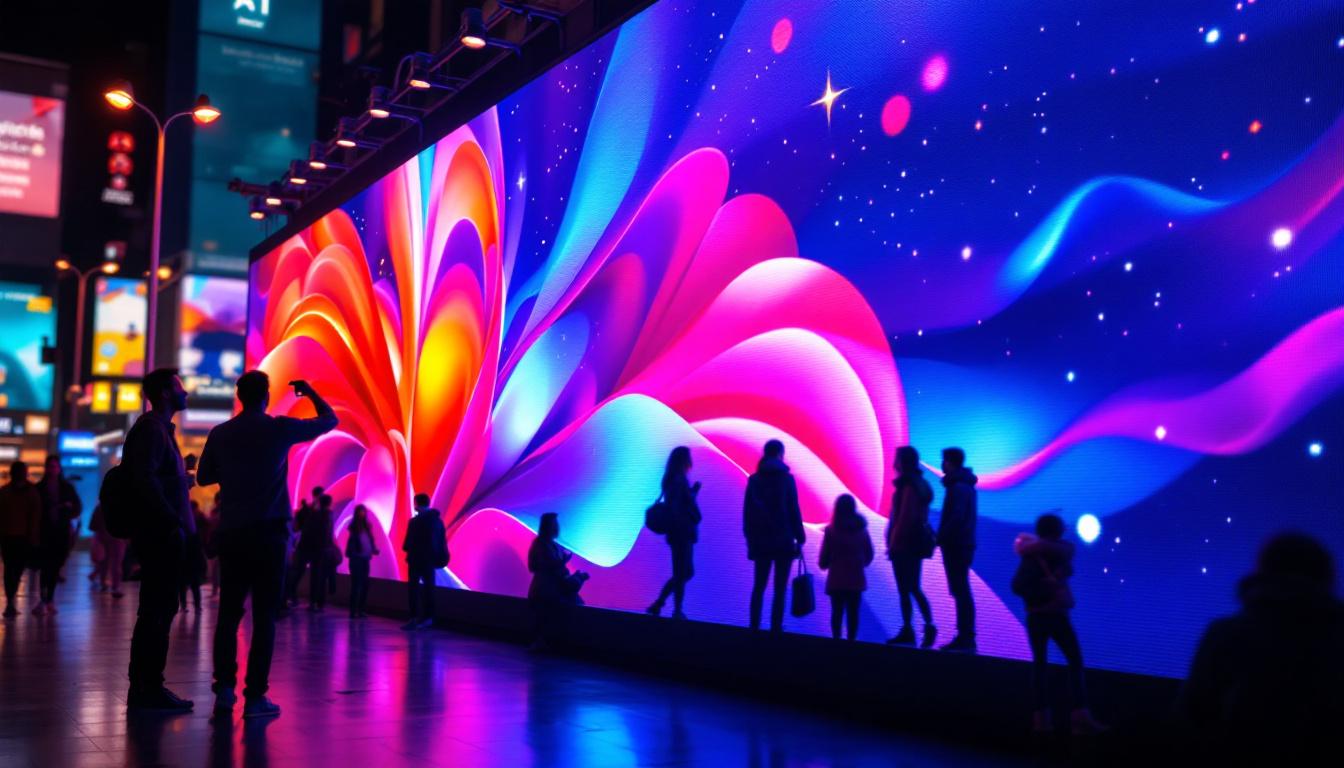
Outdoor advertising billboards often use large LED displays around 16 feet wide to capture the attention of passing pedestrians and drivers. These displays provide bright, dynamic content that can be updated in real-time, making them highly effective for marketing campaigns.
Knowing the exact size in meters is crucial for urban planners and advertising agencies to comply with local regulations and optimize visibility.
Sports and Entertainment Venues
Stadiums and concert venues frequently install LED displays of this size to broadcast live events, scores, and advertisements. A 16-foot-wide screen offers a balance between visibility and space efficiency, suitable for mid-sized arenas.
Converting the dimensions to meters helps international event organizers coordinate equipment and ensure seamless integration with other audiovisual components.
Corporate and Conference Settings
In corporate environments, LED displays around 16 feet wide are used for presentations, video conferencing, and digital signage. The metric conversion aids multinational companies in specifying equipment that fits their global office standards.
Technical Considerations When Working with 16-Foot LED Displays
Beyond size, several technical factors must be considered when dealing with LED displays of this dimension. These include power consumption, weight, and mounting requirements.
Power Requirements
LED displays consume varying amounts of power depending on their size, brightness, and pixel pitch. A 16-foot-wide display typically requires a substantial power supply to operate efficiently, especially if it is designed for outdoor use with high brightness levels.
Understanding the size in meters helps engineers calculate power distribution and cooling needs more accurately, ensuring reliable performance.
Weight and Structural Support
The weight of a 16-foot LED display can range from a few hundred to over a thousand kilograms, depending on the materials and technology used. Accurate metric measurements allow structural engineers to design appropriate mounting systems and supports, ensuring safety and durability.
Installation and Maintenance Access
Planning for installation and maintenance requires precise knowledge of the display’s dimensions. Converting 16 feet to meters helps technicians plan access routes, scaffolding, and service platforms, particularly in regions where metric units are standard.
Future Trends: LED Display Sizes and Measurement Standards
As LED technology evolves, display sizes and measurement practices continue to adapt. The trend toward larger, higher-resolution screens makes understanding conversions between feet and meters increasingly important.
Global Standardization and Metric Adoption
Most countries use the metric system, which means that manufacturers and installers often need to convert imperial measurements like feet into meters. This standardization simplifies international trade, installation, and maintenance of LED displays.
Increasing Demand for Custom Sizes
Clients increasingly request custom-sized LED displays tailored to unique spaces and applications. Accurate conversions between feet and meters ensure that custom orders meet specifications precisely, avoiding costly errors.
Advancements in Modular LED Display Technology
Modular LED panels allow for flexible sizing, where multiple smaller units combine to create large displays. Understanding the size of each module in meters, as well as the total assembled size, is essential for design and installation.
Conclusion
Converting 16 feet into meters—approximately 4.88 meters—is a fundamental step when working with LED displays, especially in international contexts. Accurate measurement conversions ensure proper planning, installation, and operation of LED screens, enhancing their effectiveness across advertising, entertainment, corporate, and other industries.
As LED technology continues to advance, the ability to seamlessly convert and communicate dimensions between feet and meters will remain a vital skill for professionals involved in design, manufacturing, and installation. Understanding these measurements not only facilitates technical accuracy but also fosters better collaboration and innovation in the global LED display market.
Explore Cutting-Edge LED Display Solutions with LumenMatrix
Ready to take your visual displays to the next level? LumenMatrix is at the forefront of LED display innovation, offering a wide array of solutions tailored to your needs. From captivating Indoor LED Wall Displays to dynamic Outdoor LED Wall Displays, and from versatile Vehicle LED Displays to sleek LED Poster Displays, our technology is designed to make your brand stand out. Discover the transformative power of LED Sports Displays, interactive Floor LED Displays, and the customization possibilities with our Custom LED Displays. Embrace the future with our All-in-One LED Display and LED Transparent Display options. Elevate your visual communication and create unforgettable experiences with LumenMatrix. Check out LumenMatrix LED Display Solutions today and see the difference for yourself.