Dark OLED Image: LED Display Explained
In the world of modern display technology, OLED and LED screens have become household names, powering everything from smartphones and televisions to monitors and wearable devices. Among the many fascinating aspects of these technologies is how they handle dark images—particularly the concept of “dark OLED image” and how it compares to traditional LED displays. Understanding these differences is essential for consumers, designers, and tech enthusiasts who want to make informed choices about display quality, energy efficiency, and visual experience.
Understanding OLED and LED Technologies
What is OLED?
OLED stands for Organic Light Emitting Diode. Unlike traditional LED displays, which rely on a backlight to illuminate pixels, OLED pixels emit their own light when an electric current passes through organic compounds. This self-emissive property allows each pixel to be turned on or off independently, resulting in true blacks and exceptional contrast ratios.
Because OLED pixels can be completely turned off, dark images on an OLED screen appear truly black rather than a dark gray. This capability not only enhances picture quality but also contributes to energy savings, especially when displaying predominantly dark content. Additionally, OLED technology allows for incredibly thin and flexible screens, enabling innovative designs such as curved displays and even foldable devices. This versatility has led to a surge in the popularity of OLED screens in smartphones, televisions, and wearable technology, where aesthetics and functionality go hand in hand.
What is LED?
LED, or Light Emitting Diode, in the context of displays typically refers to LCD (Liquid Crystal Display) panels that use LED backlighting. These displays rely on a constant light source behind the screen, and liquid crystals manipulate this light to create images. Unlike OLEDs, LED-based displays cannot turn off individual pixels completely because the backlight is always on.
This means that even in dark scenes, some light bleeds through, resulting in less deep blacks and lower contrast ratios compared to OLED. However, LED displays tend to be more affordable and have longer lifespans, making them a popular choice for many applications. Furthermore, advancements in LED technology, such as local dimming and quantum dot enhancements, have improved their performance significantly. These innovations allow for better color accuracy and brightness levels, making LED displays a competitive option for consumers who prioritize longevity and cost-effectiveness over the ultimate in picture quality.
The Significance of Dark Images on OLED Displays
True Blacks and Contrast
One of the most celebrated features of OLED technology is its ability to display true black. When an OLED pixel is off, it emits no light, creating a perfect black. This is in stark contrast to LED displays, where the backlight can cause dark areas to appear washed out or grayish due to light leakage.
This characteristic is particularly important for dark images or scenes in movies, games, and photography. The enhanced contrast ratio on OLED screens results in more vivid colors and a more immersive viewing experience. For example, a starry night sky or a shadowy scene in a thriller movie looks more realistic and captivating on an OLED display. The depth of black enhances the overall visual storytelling, allowing viewers to feel the tension and atmosphere in ways that are often lost on traditional displays. Additionally, filmmakers and game developers are increasingly designing content that takes advantage of these capabilities, creating experiences that are not just visually stunning but also emotionally engaging.
Energy Efficiency in Dark Modes
Because OLED pixels emit light individually, displaying dark images can significantly reduce power consumption. When large portions of the screen are black or dark, many pixels remain off or emit minimal light, conserving energy. This is why dark mode interfaces and dark-themed content are often recommended for devices with OLED screens to extend battery life.
In contrast, LED displays consume roughly the same amount of power regardless of the image content because the backlight remains on at a consistent brightness level. This makes OLED technology more energy-efficient for users who frequently view dark or dim content. Furthermore, as more applications and operating systems adopt dark mode options, users can enjoy not only a visually appealing aesthetic but also the practical benefit of longer battery life. This trend has led to a growing awareness of how display technology can influence user habits and preferences, encouraging a shift towards more energy-conscious choices in everyday device usage.
Potential Drawbacks: Burn-in and Image Retention
While OLED technology offers stunning dark image performance, it is not without challenges. One notable issue is burn-in, where static images displayed for prolonged periods can cause uneven pixel wear, leading to ghost images or permanent discoloration.
Dark images themselves do not cause burn-in; rather, it is the display of static bright elements, such as logos or UI components, that pose the risk. Manufacturers have implemented various software and hardware solutions to mitigate burn-in, but users should still be mindful of prolonged static content on OLED screens. Techniques such as pixel shifting and screen savers can help alleviate the risk, but they require users to be proactive in their viewing habits. As OLED technology continues to evolve, ongoing research aims to enhance pixel longevity and further reduce the risk of burn-in, ensuring that users can enjoy the stunning visual quality of OLED displays without the worry of image retention affecting their experience.
Comparing Dark Image Performance: OLED vs. LED Displays
Contrast and Black Levels
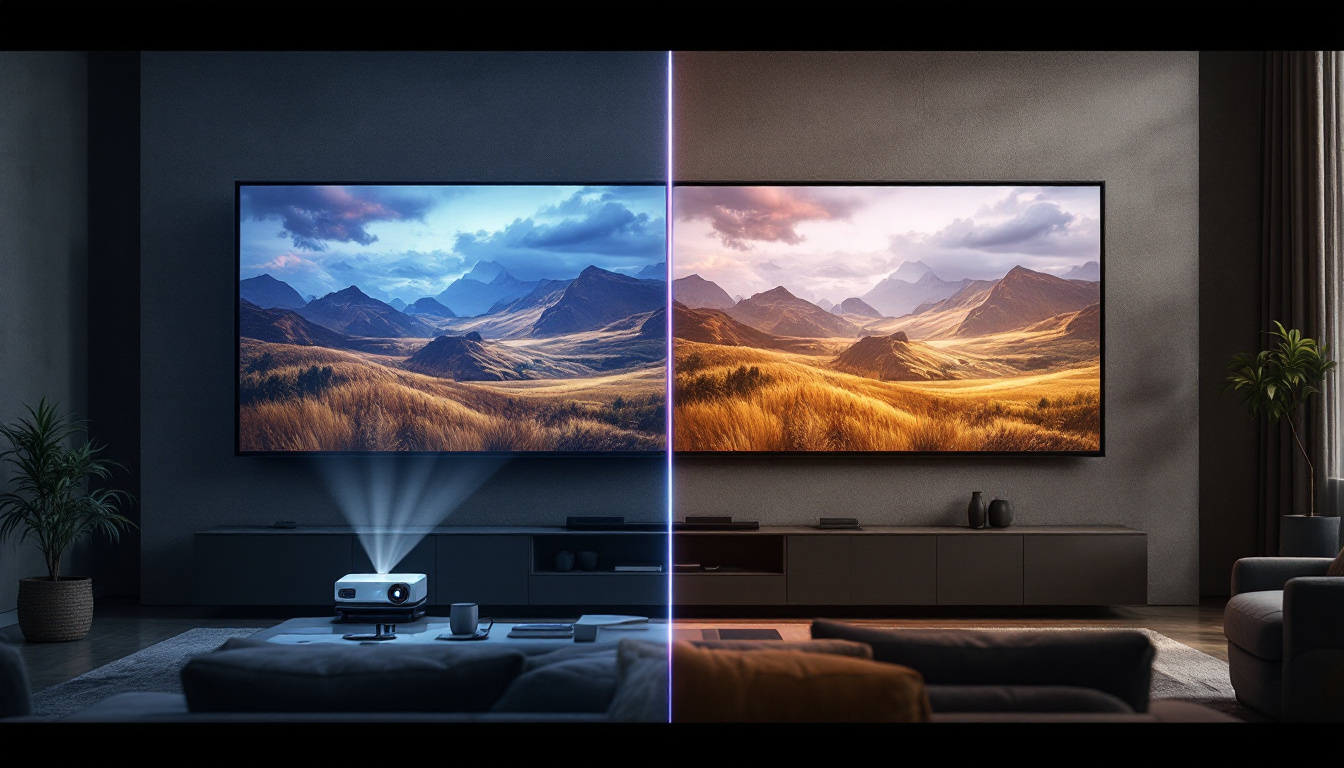
The difference in black levels between OLED and LED displays is one of the most noticeable distinctions. OLED’s ability to switch off pixels leads to an infinite contrast ratio, meaning the difference between the darkest black and the brightest white is as high as possible.
LED displays, even those with advanced local dimming technologies, cannot match this level of contrast. Local dimming attempts to dim backlight zones in dark areas, but it is limited by zone size and can cause blooming or halo effects around bright objects on dark backgrounds.
Color Accuracy and Viewing Angles
Dark images on OLED displays also benefit from superior color accuracy and wider viewing angles. Since each pixel emits light independently, colors remain consistent even when viewed from sharp angles. LED displays often suffer from color shifting and reduced contrast when viewed off-center.
This makes OLED particularly advantageous for professional applications such as photo editing, video production, and any scenario where color fidelity is paramount.
Cost and Longevity Considerations
Despite the advantages in dark image rendering, OLED displays tend to be more expensive to produce and purchase than LED counterparts. Additionally, OLED panels may have a shorter lifespan due to organic material degradation, although recent advancements have improved durability significantly.
LED displays generally offer longer lifespans and are less prone to burn-in, making them a practical choice for budget-conscious consumers or environments where display longevity is critical.
Applications and Use Cases for Dark OLED Images
Entertainment and Media Consumption
For movie enthusiasts and gamers, OLED displays provide an unparalleled viewing experience, especially with content that features dark scenes or high contrast visuals. Streaming services like Netflix and Disney+ offer HDR content optimized for OLED screens, showcasing the technology’s strengths in rendering deep blacks and vibrant colors.
Gamers benefit from OLED’s fast response times and low input lag, combined with excellent dark scene visibility, which can provide a competitive edge in visually demanding games.
Mobile Devices and Wearables
Smartphones and smartwatches increasingly adopt OLED technology to improve battery life and display quality. Dark mode interfaces, which are popular for their aesthetic appeal and eye comfort, also help extend device usage times thanks to OLED’s energy efficiency with dark images.
Manufacturers like Samsung, Apple, and Google have integrated OLED panels into their flagship devices, highlighting the technology’s growing dominance in the mobile market.
Professional and Creative Work
In professional settings, OLED displays are favored for tasks requiring precise color reproduction and contrast, such as photo editing, video grading, and graphic design. The ability to accurately render dark images and subtle shadow details ensures that creatives can work with confidence and accuracy.
High-end monitors and laptops with OLED panels are becoming more accessible, enabling professionals to leverage these benefits without compromise.
Future Trends and Innovations in OLED and LED Display Technologies
Advancements in OLED Materials and Manufacturing
Research continues to improve OLED technology, focusing on enhancing brightness, lifespan, and reducing production costs. Innovations such as micro-OLED and flexible OLED panels are expanding the range of applications, from augmented reality headsets to foldable smartphones.
Additionally, efforts to minimize burn-in and improve blue pixel longevity are making OLED displays more robust and reliable for long-term use.
Mini-LED and QLED: Bridging the Gap
To address some limitations of traditional LED displays, manufacturers have introduced Mini-LED and QLED technologies. Mini-LED uses thousands of tiny LEDs for backlighting, enabling finer local dimming and improved contrast, narrowing the gap with OLED’s black levels.
QLED, which employs quantum dots to enhance color and brightness, offers vibrant images with better energy efficiency than conventional LED displays. While these technologies do not achieve true pixel-level light control like OLED, they provide compelling alternatives, especially for larger screens and budget-conscious consumers.
The Role of Software and AI in Display Optimization
Software algorithms and artificial intelligence are increasingly used to optimize display performance dynamically. For example, adaptive brightness, contrast enhancement, and content-aware dimming can improve dark image rendering on both OLED and LED screens.
These innovations help maximize visual quality while managing power consumption, contributing to a more sustainable and user-friendly display experience.
Conclusion: Choosing the Right Display for Dark Image Quality
When it comes to displaying dark images, OLED technology stands out for its ability to deliver true blacks, superior contrast, and energy efficiency. These qualities make OLED displays ideal for users who prioritize image quality, color accuracy, and immersive viewing experiences.
However, considerations such as cost, potential burn-in, and lifespan may influence the choice between OLED and LED displays. Emerging technologies like Mini-LED and QLED offer promising compromises, bringing improved dark image performance to a wider audience.
Ultimately, understanding the strengths and limitations of each display type empowers consumers and professionals alike to select the technology best suited to their needs, ensuring the best possible visual experience in both bright and dark environments.
Explore the Future of LED Displays with LumenMatrix
As you consider the best display technology for your dark image needs, remember that LumenMatrix is at the forefront of LED innovation. Our extensive range of LED display solutions, from Indoor and Outdoor LED Walls to Custom and Transparent Displays, is designed to bring your visual content to life with unparalleled clarity and impact. Whether for business, entertainment, or creative endeavors, check out LumenMatrix LED Display Solutions today and experience the future of visual storytelling.