In today’s fast-paced world, staying organized and managing time efficiently is more critical than ever. Traditional paper planners have evolved into digital solutions that offer greater flexibility, interactivity, and customization. Among these innovations, the digital planner for wall using LED displays has emerged as a powerful tool for both personal and professional environments.
This article explores the concept of digital planners integrated with LED displays, explaining the technology behind them, their advantages, and how they can transform the way individuals and teams plan, track, and visualize their schedules and tasks.
Understanding Digital Planners on LED Displays
What Is a Digital Planner for Wall?
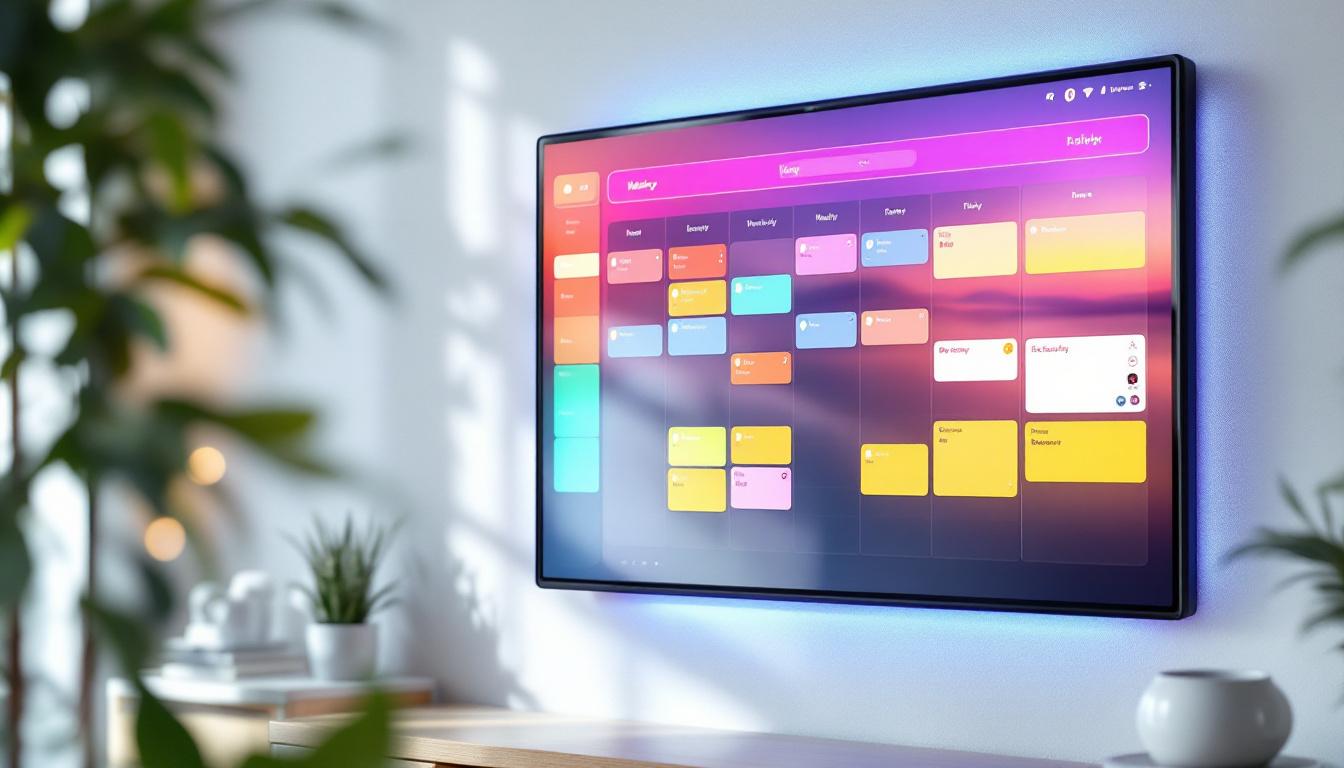
A digital planner for wall is essentially a large, interactive display mounted on a wall that serves as a dynamic scheduling and organizational tool. Unlike traditional planners, which are static and limited by physical space, these digital planners leverage LED display technology to offer a highly visible, customizable, and interactive planning interface.
They are designed to replace or complement conventional whiteboards, calendars, and paper planners, providing a centralized platform where users can visualize appointments, deadlines, tasks, and notes in real time.
The Role of LED Display Technology
LED (Light Emitting Diode) displays are widely known for their brightness, energy efficiency, and durability. In the context of digital planners, LED technology enables the creation of large-format screens that are easy to read from a distance, even in well-lit rooms. This makes them ideal for communal spaces such as offices, conference rooms, classrooms, and even home environments.
Modern LED displays also support touch functionality, allowing users to interact directly with the planner interface—adding, editing, or moving tasks with simple gestures. The combination of LED technology and digital planning software creates an engaging and user-friendly experience that enhances productivity.
The Advantages of Using LED-Based Digital Planners
Enhanced Visibility and Accessibility
One of the primary benefits of LED digital planners is their superior visibility. Unlike traditional whiteboards or paper calendars, LED displays provide bright, high-contrast visuals that can be easily seen from across a room. This feature is particularly valuable in collaborative environments where multiple team members need to view and update schedules simultaneously.
Moreover, LED planners can be programmed to display information in various formats—daily, weekly, or monthly views—allowing users to customize their planning experience according to their needs.
Real-Time Updates and Synchronization
Digital planners on LED displays can be connected to cloud-based calendar systems such as Google Calendar, Microsoft Outlook, or specialized project management tools. This integration enables real-time synchronization of events and tasks, ensuring that the displayed information is always current.
For example, a marketing team using a digital wall planner can see updates to campaign deadlines or meeting schedules as soon as they are made on individual devices. This reduces miscommunication and helps keep everyone aligned.
Interactivity and Collaboration
Many LED digital planners incorporate touchscreens or support wireless input devices, allowing users to interact directly with the planner. This interactivity fosters collaboration by enabling team members to add notes, assign tasks, or rearrange schedules on the fly.
In addition, some systems support multi-user input, meaning several people can interact with the planner simultaneously. This feature is particularly useful during brainstorming sessions, project kick-offs, or daily stand-up meetings.
Customization and Integration Capabilities
LED digital planners offer extensive customization options. Users can tailor the interface to display color-coded tasks, priority levels, reminders, and progress indicators. This visual differentiation helps users quickly assess the status of various activities and prioritize accordingly.
Furthermore, these planners can integrate with other digital tools such as task management apps, communication platforms, and data analytics software. This connectivity creates a comprehensive ecosystem that streamlines workflows and enhances productivity.
Key Components of a Digital Planner Using LED Displays
The LED Display Panel
The core of the digital planner is the LED display panel itself. These panels vary in size, resolution, and pixel pitch, depending on the intended application. For wall planners, large-format displays ranging from 55 inches to over 100 inches are common, providing ample space to visualize complex schedules.
High resolution ensures that text and graphics are crisp and legible, which is essential for detailed planning. Additionally, displays with wide viewing angles allow multiple users to see the screen clearly from different positions in the room.
Interactive Touch Layer
Many digital planners incorporate a touch-sensitive layer over the LED panel, enabling direct interaction. Capacitive touch technology, similar to that used in smartphones and tablets, is often employed to provide a smooth and responsive user experience.
Some advanced systems support multi-touch gestures, allowing users to zoom in and out, drag and drop tasks, or write notes using a stylus or finger. This interactivity transforms the planner from a passive display into an active workspace.
Software Platform
The software powering the digital planner is crucial. It manages the display of calendars, tasks, reminders, and other planning elements. Good software platforms offer intuitive interfaces, seamless integration with popular calendar and project management services, and robust customization options.
Many solutions also include features like notifications, analytics, and reporting to help users track progress and optimize their time management strategies.
Connectivity and Integration Hardware
To synchronize with cloud services and other devices, the digital planner system must have reliable connectivity options such as Wi-Fi, Ethernet, or Bluetooth. Some setups also include USB ports or HDMI inputs to connect external devices like computers or media players.
Integration hardware ensures that the planner can communicate with other digital tools, enabling a cohesive and efficient planning environment.
Practical Applications of LED Digital Wall Planners
Corporate and Office Environments
In corporate settings, LED digital planners serve as centralized hubs for team scheduling, project tracking, and meeting coordination. They are often installed in conference rooms, open office areas, or near workstations to provide real-time visibility into team activities.
For example, a product development team can use a digital wall planner to visualize sprint schedules, assign tasks, and monitor deadlines, facilitating agile workflows and enhancing transparency.
Educational Institutions
Schools and universities benefit from LED digital planners by displaying class schedules, exam timetables, and event announcements. Mounted in hallways or common areas, these planners keep students and staff informed and help reduce scheduling conflicts.
Interactive features also allow educators to update information quickly and engage students in collaborative planning activities.
Healthcare Facilities
Hospitals and clinics can utilize digital planners to manage staff shifts, patient appointments, and resource allocation. The high visibility and real-time updates help ensure smooth operations and improve patient care coordination.
For instance, an emergency department might use a digital wall planner to track bed availability, staff assignments, and critical alerts, enhancing responsiveness.
Home and Personal Use
On a smaller scale, LED digital planners are increasingly popular in smart homes. Families can use them to organize daily activities, grocery lists, meal plans, and reminders. The interactive display becomes a central command center for household management.
Integration with smart home devices and voice assistants further enhances convenience and connectivity.
Choosing the Right Digital Planner for Your Needs
Assessing Display Size and Resolution
Selecting the appropriate display size depends on the intended location and number of users. Larger displays provide more space for detailed planning but require adequate wall space and viewing distance. Resolution should be high enough to ensure clarity, especially if the planner will display dense information.
Evaluating Interactivity Features
Consider whether touch functionality is essential for your use case. Interactive planners offer greater flexibility but may come at a higher cost. Multi-touch support and stylus compatibility can enhance usability, particularly in collaborative environments.
Software Compatibility and Integration
Ensure the planner’s software supports integration with your existing calendar and project management tools. Compatibility with cloud services and mobile devices is critical for seamless synchronization and remote updates.
Look for platforms that offer customization options to tailor the planner to your specific workflow and preferences.
Budget and Installation Considerations
Costs for LED digital planners vary widely based on display size, technology, and software features. Installation may require professional assistance, especially for large or complex setups. Factor in these expenses when planning your investment.
Additionally, consider ongoing maintenance and software subscription fees to ensure long-term usability.
Future Trends in Digital Planning with LED Displays
Artificial Intelligence and Predictive Scheduling
Emerging digital planners are beginning to incorporate artificial intelligence (AI) to offer predictive scheduling and smart recommendations. By analyzing past behavior and task patterns, AI can suggest optimal times for meetings, flag potential conflicts, and prioritize tasks automatically.
This advancement promises to make planning even more efficient and personalized.
Augmented Reality (AR) Integration
AR technology is poised to complement LED digital planners by overlaying planning information onto physical spaces through wearable devices or smartphones. This fusion could enable users to interact with their schedules in immersive ways, blending digital and real-world environments.
Enhanced Collaboration Tools
Future digital planners will likely feature deeper integration with communication platforms, enabling real-time collaboration across distributed teams. Features such as live annotations, video conferencing, and shared task boards will become standard, further breaking down barriers to teamwork.
Conclusion
Digital planners for walls using LED displays represent a significant leap forward in organizational technology. Their combination of high visibility, interactivity, real-time synchronization, and customization makes them invaluable tools for a wide range of settings—from corporate offices to classrooms and homes.
As technology continues to evolve, these planners will become even more intelligent, immersive, and collaborative, helping users manage their time and tasks with unprecedented efficiency and clarity.
For anyone looking to enhance their planning capabilities and foster better communication and productivity, investing in an LED-based digital wall planner is a forward-thinking choice that aligns with the demands of modern life and work.
Transform Your Space with LumenMatrix
Ready to elevate your organizational capabilities and embrace the future of planning? LumenMatrix is at the forefront of LED display innovation, offering a diverse range of solutions tailored to your needs. From dynamic Indoor LED Wall Displays that bring your digital planner to life to Outdoor LED Wall Displays that withstand the elements, our technology is designed to captivate and communicate effectively. Discover how our LED Sports Displays, Floor LED Displays, and Custom LED solutions can transform your environment. Take the first step towards enhanced engagement and clear visual communication by exploring our comprehensive LED display solutions. Check out LumenMatrix LED Display Solutions today and see your vision materialize on a grand scale.