How To Measure TV Screen: LED Display Explained
Choosing the perfect TV often starts with understanding the size of the screen. With the rise of LED technology dominating the market, knowing how to measure an LED TV screen correctly can help you make an informed decision that fits your space and viewing preferences. This comprehensive guide will walk you through everything you need to know about measuring TV screens, specifically focusing on LED displays, so you can shop confidently and enjoy the best viewing experience.
Understanding TV Screen Measurements
When shopping for a TV, the screen size is one of the first specifications you’ll encounter. But what does the size actually represent? TV screen size is measured diagonally from one corner of the display to the opposite corner. This measurement is usually given in inches and indicates the viewable area of the screen, not including the bezel or frame surrounding the display.
For example, a 55-inch LED TV means the screen measures 55 inches diagonally from the bottom left corner to the top right corner. This standard measurement applies across all types of TVs, including LED, OLED, and QLED.
It’s important to note that the diagonal measurement does not provide the width and height of the screen directly. These dimensions vary depending on the aspect ratio of the TV, which is typically 16:9 for most modern TVs. Understanding the width and height can be crucial when planning your room layout or fitting the TV into a specific space.
Why Diagonal Measurement Matters
The diagonal measurement is a universal standard that allows consumers to compare screen sizes easily across different brands and models. It provides a quick reference to the overall size of the display, helping buyers gauge how immersive the viewing experience might be. However, relying solely on diagonal size can be misleading if you don’t consider the room size and viewing distance.
Aspect Ratio and Its Impact on Screen Dimensions
Most LED TVs use a 16:9 aspect ratio, meaning the width is 16 units for every 9 units of height. This standard widescreen format is ideal for watching HD content and most streaming services. Knowing the aspect ratio helps calculate the actual width and height of the screen from the diagonal measurement.
For instance, a 55-inch TV with a 16:9 aspect ratio has an approximate width of 47.9 inches and a height of 27 inches. These dimensions are critical when determining if the TV will fit on your entertainment center or wall mount.
Step-by-Step Guide: How to Measure Your LED TV Screen
Measuring your TV screen accurately is straightforward if you follow these steps carefully. Whether you are verifying the size of an existing TV or planning to buy a new one, this method ensures precision.
Tools You Will Need
- A tape measure or a ruler that can measure in inches or centimeters
- A notepad or device to record measurements
- Optional: a calculator for aspect ratio calculations
Step 1: Measure the Diagonal
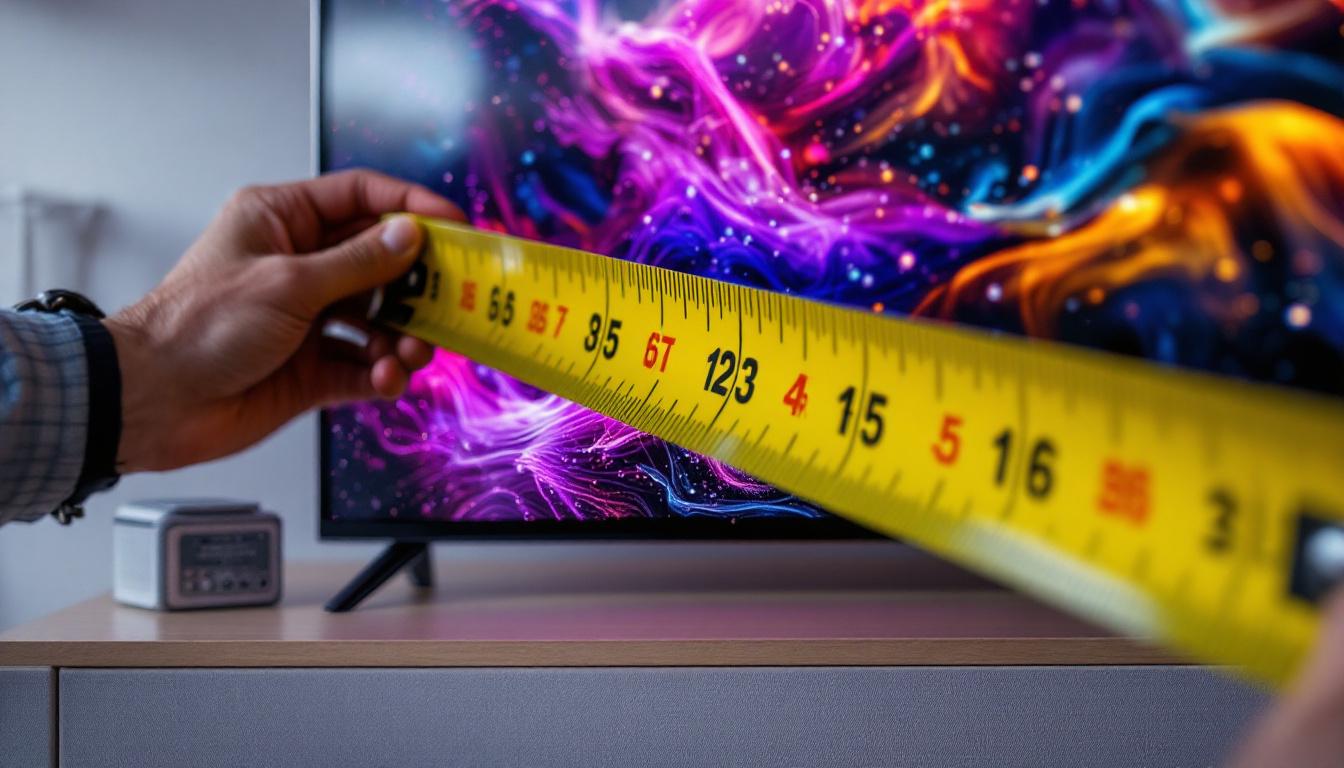
Start by placing the tape measure at one corner of the screen, typically the bottom left. Extend the tape diagonally across the screen to the opposite corner, which would be the top right. Make sure you are measuring only the visible screen area and not the bezel or frame surrounding it.
Record this measurement. This number is the official size of your TV screen, usually rounded to the nearest inch.
Step 2: Measure the Width and Height (Optional)
To get a better understanding of how the TV will fit in your space, measure the width and height of the screen. Place the tape measure horizontally across the screen to get the width, and vertically to get the height. Again, measure only the visible screen area.
If you want to double-check your measurements or calculate width and height from the diagonal, use the following formulas based on a 16:9 aspect ratio:
- Width = Diagonal × 0.8716
- Height = Diagonal × 0.4903
For example, a 65-inch TV would have a width of approximately 56.65 inches and a height of about 31.87 inches.
Step 3: Consider the Bezel and TV Frame
While the screen size refers only to the display area, the overall dimensions of the TV include the bezel or frame. Modern LED TVs often feature slim bezels, but it’s important to measure the full width, height, and depth of the TV if you plan to fit it into a tight space or mount it on a wall.
Measure from edge to edge of the TV’s outer frame to ensure your furniture or wall mount can accommodate the full size.
Why Accurate TV Screen Measurement Is Crucial
Understanding how to measure your TV screen correctly is more than just a technical detail—it directly impacts your viewing experience and room aesthetics. Here are some reasons why precise measurement matters:
Optimizing Viewing Distance
Experts recommend sitting at an ideal distance from your TV to maximize picture clarity and comfort. For LED TVs with 4K resolution, the recommended viewing distance is roughly 1 to 1.5 times the screen’s diagonal size.
For example, if you own a 55-inch LED TV, the optimal viewing distance would be between 4.5 to 6.5 feet. Sitting too close or too far can cause eye strain or diminish the immersive experience.
Ensuring Proper Fit in Your Space
Knowing your TV’s exact dimensions helps prevent surprises when placing it on a stand or mounting it on a wall. A TV that’s too large might overwhelm the room or block windows and vents, while one that’s too small may not provide the cinematic experience you desire.
Measuring your space beforehand and comparing it with the TV’s width, height, and depth ensures a perfect fit and maintains room harmony.
Compatibility With Mounts and Furniture
Wall mounts and TV stands come with specific size and weight limits. Accurate measurements guarantee that your chosen mounting hardware will support your LED TV safely. Additionally, some mounts require knowledge of the TV’s VESA (Video Electronics Standards Association) pattern, which relates to the mounting holes on the back of the TV.
While VESA patterns are separate from screen size, knowing the full dimensions of your TV helps in selecting compatible accessories.
Understanding LED Display Technology and Its Impact on Measurement
LED TVs use Light Emitting Diodes to illuminate the screen, offering advantages such as energy efficiency, thinner panels, and improved picture quality compared to older LCD models. This technology influences the design and size of the TV, which in turn affects how you measure and perceive screen size.
Thin Bezels and Slim Profiles
One of the key benefits of LED technology is the ability to produce ultra-thin TVs with minimal bezels. This design trend means that while the screen size remains the same, the overall dimensions of the TV are more compact than older models. When measuring, it’s essential to distinguish between the screen size and the total TV size to avoid confusion.
Screen Size vs. TV Size in LED Displays
Because LED TVs are thinner and often have smaller bezels, the difference between screen size and overall TV size is less pronounced compared to older models. However, it still matters when planning your setup. For example, a 65-inch LED TV might have an overall width of around 57 inches, but the bezel adds a small margin that could affect wall mounting or fitting into a cabinet.
Impact of Resolution on Viewing Experience
LED TVs come in various resolutions, including Full HD (1080p), 4K Ultra HD, and increasingly popular 8K models. Higher resolution allows for closer viewing distances without losing picture clarity, which can influence how large a TV you want for your space.
For instance, a 4K LED TV enables viewers to sit closer without noticing pixelation, meaning a larger screen can fit comfortably in smaller rooms. This makes accurate measurement and understanding of your viewing environment even more critical.
Additional Tips for Selecting the Right LED TV Size
Beyond measuring the screen, several factors should guide your decision when choosing an LED TV size that suits your needs.
Consider Room Size and Layout
Measure the available space where the TV will be placed, including height clearance and depth. Take into account furniture placement and walking paths to ensure the TV does not obstruct movement or create awkward viewing angles.
Think About Viewing Habits
Are you primarily watching movies, gaming, or streaming sports? Larger screens enhance immersive experiences for movies and sports, while smaller screens might suffice for casual viewing or gaming setups. Understanding your habits helps balance size and budget.
Account for Future Upgrades
Technology evolves rapidly, and LED TVs are no exception. If you plan to upgrade your home theater system or add soundbars and gaming consoles, consider how the TV size will integrate with other devices.
Budget Constraints
Larger LED TVs generally cost more, so measuring your space and choosing an appropriate size can help avoid overspending on a TV that doesn’t fit or meet your needs.
Conclusion
Measuring your LED TV screen correctly is a fundamental step in selecting the right television for your home. By understanding how screen size is measured diagonally, factoring in aspect ratio, and considering the overall dimensions of the TV, you can ensure a perfect fit for your space and viewing preferences.
LED technology offers sleek designs and excellent picture quality, but accurate measurement remains essential to maximize your investment. Whether you’re upgrading your current setup or buying your first LED TV, knowing how to measure the screen and interpret those measurements empowers you to make a confident, informed choice.
Remember, the right TV size combined with optimal viewing distance and room layout will transform your entertainment experience, making every movie night, game, or binge-watch session truly enjoyable.
Discover the Perfect LED Display with LumenMatrix
Now that you’re equipped with the knowledge to measure your LED TV screen accurately, take the next step and explore LumenMatrix’s innovative LED display solutions. Whether you’re looking to enhance your home theater or elevate your business’s brand visibility, LumenMatrix offers an array of options, from Indoor and Outdoor LED Wall Displays to Custom and All-in-One LED solutions. Experience the future of visual communication and create unforgettable visual experiences with our state-of-the-art LED technology. Check out LumenMatrix LED Display Solutions today and transform your space with clarity and impact.