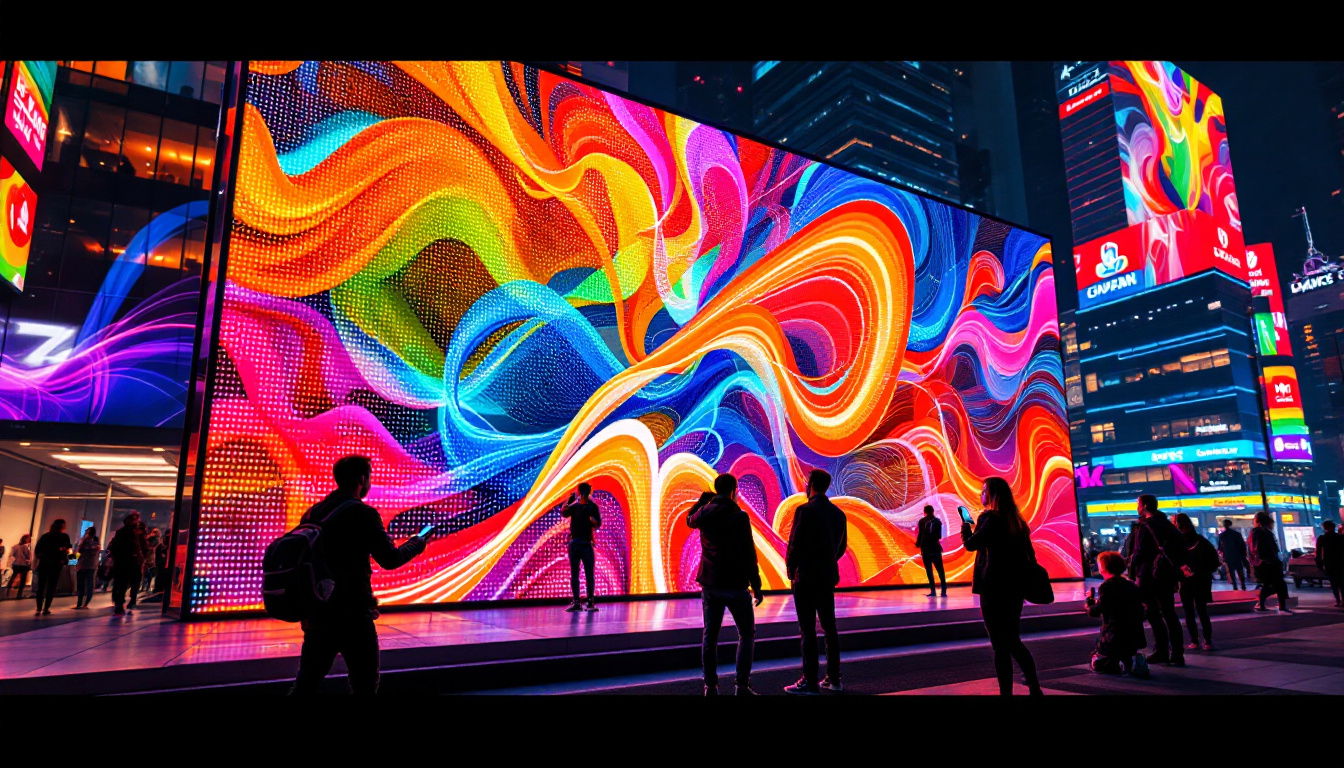
In today’s digital world, screens are everywhere—from smartphones and televisions to digital billboards and smartwatches. Among the most common display technologies are LCD (Liquid Crystal Display) and LED (Light Emitting Diode) displays. While often mentioned together, it’s important to understand how each technology works and how they differ. This article dives deep into the workings of LCD and LED displays, explaining their principles, advantages, and applications to provide a clear understanding of these ubiquitous technologies.
Understanding LCD Technology
What Is an LCD?
Liquid Crystal Display (LCD) technology is a flat-panel display technology that uses liquid crystals combined with polarizers to control light and produce images. Unlike traditional cathode ray tube (CRT) displays, LCDs do not emit light directly. Instead, they manipulate light passing through the screen to create visible images.
LCDs are widely used in devices such as computer monitors, televisions, smartphones, and instrument panels due to their slim profile, energy efficiency, and relatively low manufacturing costs. The advent of LCD technology has revolutionized the way we interact with visual media, allowing for thinner and lighter devices that offer high-resolution displays. This shift has not only improved the aesthetics of electronic devices but has also enhanced user experience, making it easier to view content in various lighting conditions.
How Does an LCD Work?
At the heart of an LCD is a layer of liquid crystals sandwiched between two sheets of polarized glass. These liquid crystals have properties between those of liquids and solid crystals, allowing them to twist and align in response to electric currents.
When an electric voltage is applied to the liquid crystals, they change orientation, controlling the amount of light that passes through. The screen is typically backlit by a fluorescent lamp or LEDs, and the liquid crystals act as shutters, blocking or allowing light to pass through colored filters to create images. This method of light manipulation is not only efficient but also allows for rapid refresh rates, making LCDs ideal for displaying dynamic content such as videos and games. Additionally, advancements in technology have led to the development of various LCD types, including IPS (In-Plane Switching) and TN (Twisted Nematic), each offering different benefits in terms of color accuracy and viewing angles.
Key Components of an LCD
- Liquid Crystals: These molecules twist to modulate light based on electrical input.
- Polarizing Filters: Positioned on either side of the liquid crystals to control light polarization.
- Glass Substrates: Provide structural support and house the liquid crystals.
- Backlight: Illuminates the display from behind, essential because LCDs don’t emit light themselves.
- Color Filters: Divide the display into red, green, and blue subpixels to produce full-color images.
Each of these components plays a crucial role in the overall functionality of the display. For instance, the quality of the backlight can significantly affect the brightness and color accuracy of the images produced. LED backlighting, which has become the standard in modern LCDs, offers improved energy efficiency and a wider color gamut compared to traditional fluorescent backlights. Furthermore, the integration of advanced technologies such as local dimming and HDR (High Dynamic Range) capabilities has further enhanced the visual performance of LCDs, allowing for deeper blacks and more vibrant colors. As manufacturers continue to innovate, the future of LCD technology looks promising, with ongoing research aimed at improving resolution, reducing power consumption, and enhancing the overall user experience.
What Is an LED Display?
Clarifying the Terminology
The term “LED display” can be somewhat misleading because it is often used to describe two types of technology: LED-backlit LCDs and true LED displays. Understanding the distinction is crucial.
Most modern LCD screens use LEDs as their backlight source instead of older fluorescent lamps. These are called LED-backlit LCDs. Meanwhile, true LED displays use individual light-emitting diodes as pixels themselves, commonly seen in large outdoor screens and some high-end TVs known as OLED or microLED displays.
How LED-Backlit LCDs Work
In LED-backlit LCDs, the LCD panel remains the same, but the backlight is provided by an array of LEDs instead of cold cathode fluorescent lamps (CCFLs). This change offers several advantages:
- Improved Energy Efficiency: LEDs consume less power than CCFLs.
- Better Brightness and Contrast: LEDs can be dimmed locally to improve contrast ratios.
- Thinner Panels: LEDs are smaller and generate less heat, allowing for slimmer designs.
This technology has become the industry standard for LCD screens, from smartphones to large TVs. The transition to LED-backlit LCDs has not only enhanced the viewing experience but has also contributed to a more sustainable approach in electronics, as reduced energy consumption translates to lower carbon footprints. Additionally, manufacturers have been able to innovate further, integrating features like smart technology and touch sensitivity into these sleek devices, making them more versatile for everyday use.
How True LED Displays Work
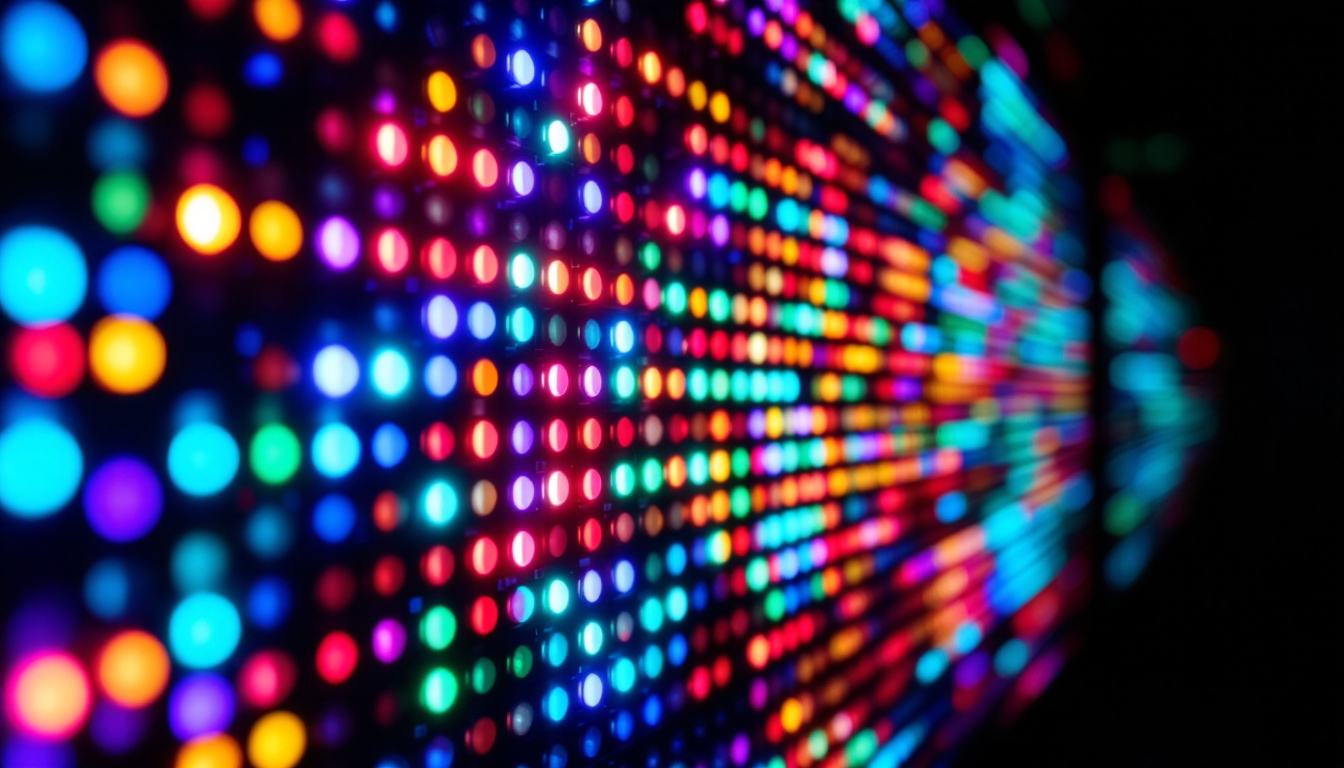
True LED displays use tiny LEDs as individual pixels that emit their own light, eliminating the need for a backlight. These displays are typically categorized as:
- OLED (Organic LED): Uses organic compounds that emit light when electrically stimulated. OLEDs offer excellent color accuracy, deep blacks, and fast response times.
- MicroLED: Uses microscopic LEDs to create pixels. MicroLEDs combine the advantages of OLEDs with higher brightness and longer lifespan.
True LED displays are common in large-scale outdoor advertising, stadium screens, and increasingly in premium consumer devices. The flexibility of these displays allows for creative applications, such as curved screens and modular setups, which can be tailored to fit unique spaces and artistic visions. Furthermore, the rapid advancement in true LED technology has led to improvements in durability and environmental resistance, making them suitable for a variety of settings, from bustling urban centers to serene natural landscapes. As the demand for high-quality visual experiences continues to grow, true LED displays are poised to play a pivotal role in shaping the future of digital signage and entertainment.
Comparing LCD and LED Displays
Brightness and Contrast
LED-backlit LCDs generally offer better brightness levels than older CCFL-backlit LCDs, with some models reaching up to 1000 nits or more, making them suitable for well-lit environments. However, true LED displays, especially OLEDs, provide superior contrast ratios because each pixel emits its own light and can be turned off completely to achieve true blacks.
Color Accuracy and Viewing Angles
LCDs have traditionally struggled with color accuracy and limited viewing angles due to the way liquid crystals manipulate light. Advances in IPS (In-Plane Switching) and VA (Vertical Alignment) panel technologies have significantly improved these aspects. True LED displays, particularly OLEDs, offer wider viewing angles and more vibrant colors because of their self-emissive nature.
Energy Consumption
LED-backlit LCDs consume less power than older CCFL-backlit models, which is beneficial for battery-powered devices. True LED displays vary: OLEDs are more energy-efficient when displaying darker images but can consume more power with bright, white content. MicroLEDs promise even better energy efficiency but are still emerging in the market.
Lifespan and Durability
LCDs typically have a longer lifespan than OLEDs, which may suffer from burn-in or degradation over time. MicroLEDs offer improved durability and longevity, making them attractive for future applications where display life is critical.
Applications of LCD and LED Displays
Consumer Electronics
LCD technology dominates in smartphones, tablets, laptops, and televisions due to its cost-effectiveness and versatility. LED-backlit LCDs have become the standard for modern TVs and monitors, offering improved image quality and energy efficiency.
OLED displays are increasingly popular in premium smartphones and TVs, prized for their exceptional image quality and thin form factors. MicroLEDs are beginning to appear in high-end TVs and specialized devices, promising the next generation of display technology.
Industrial and Commercial Uses
LCDs are widely used in industrial control panels, medical devices, and automotive dashboards because of their reliability and clarity. LED displays, especially large-scale LED video walls, are common in stadiums, concerts, and advertising due to their brightness and scalability.
Emerging Trends
Flexible and transparent LCD and OLED displays are being developed for wearable technology, augmented reality (AR) devices, and innovative user interfaces. MicroLED technology is also advancing rapidly, with potential to revolutionize display quality and durability across many sectors.
Future of Display Technologies
Advancements in LCD
While LCD technology is mature, ongoing improvements focus on enhancing color gamut, refresh rates, and energy efficiency. Quantum dot technology, often combined with LED-backlit LCDs, enhances color reproduction and brightness, making LCDs competitive in high-end markets.
Rise of OLED and MicroLED
OLED displays continue to gain traction due to their superior image quality and flexibility. However, challenges like burn-in and production costs remain. MicroLED technology is poised to address these issues by combining OLED’s advantages with greater brightness, longevity, and efficiency, though mass production is still in early stages.
Integration with Emerging Technologies
Displays are becoming smarter and more integrated with AI, touch sensitivity, and adaptive brightness controls. Innovations such as foldable and rollable screens are reshaping device design, driven largely by advancements in OLED and flexible LCD technologies.
Conclusion
Understanding how LCD and LED displays work provides valuable insight into the technology behind the screens that dominate modern life. LCDs manipulate light through liquid crystals and require backlighting, often provided by LEDs for enhanced performance. True LED displays, such as OLED and microLED, emit light directly from each pixel, offering superior image quality and flexibility.
Each technology has its strengths and ideal applications, from the energy-efficient, cost-effective LCDs powering everyday devices to the vibrant, high-contrast OLEDs and microLEDs pushing the boundaries of display innovation. As technology evolves, consumers can expect even more immersive and versatile display experiences in the near future.
Explore the Future of Visual Display with LumenMatrix
As you’ve seen, the world of display technology is constantly advancing, with LCD and LED displays at the forefront of innovation. If you’re inspired by the potential of these technologies to transform your visual communication, LumenMatrix is here to turn that vision into reality. As a leader in LED display technology, LumenMatrix offers a comprehensive range of solutions, from Indoor and Outdoor LED Wall Displays to specialized options like Vehicle LED Displays and LED Sports Displays. Whether you’re looking to captivate your audience with a Custom LED Display or enhance transparency with an LED Transparent Display, LumenMatrix has the expertise to elevate your brand’s visibility. Ready to create a captivating visual experience? Check out LumenMatrix LED Display Solutions and join the revolution in digital signage.