In today’s fast-paced advertising world, capturing consumer attention requires innovation and mobility. Mobile LED billboard trucks have emerged as a dynamic solution, combining the power of digital displays with the flexibility of mobile advertising. This article delves into the technology behind LED displays used in these trucks, explores their advantages, and discusses how businesses can leverage them effectively.
Understanding Mobile LED Billboard Trucks
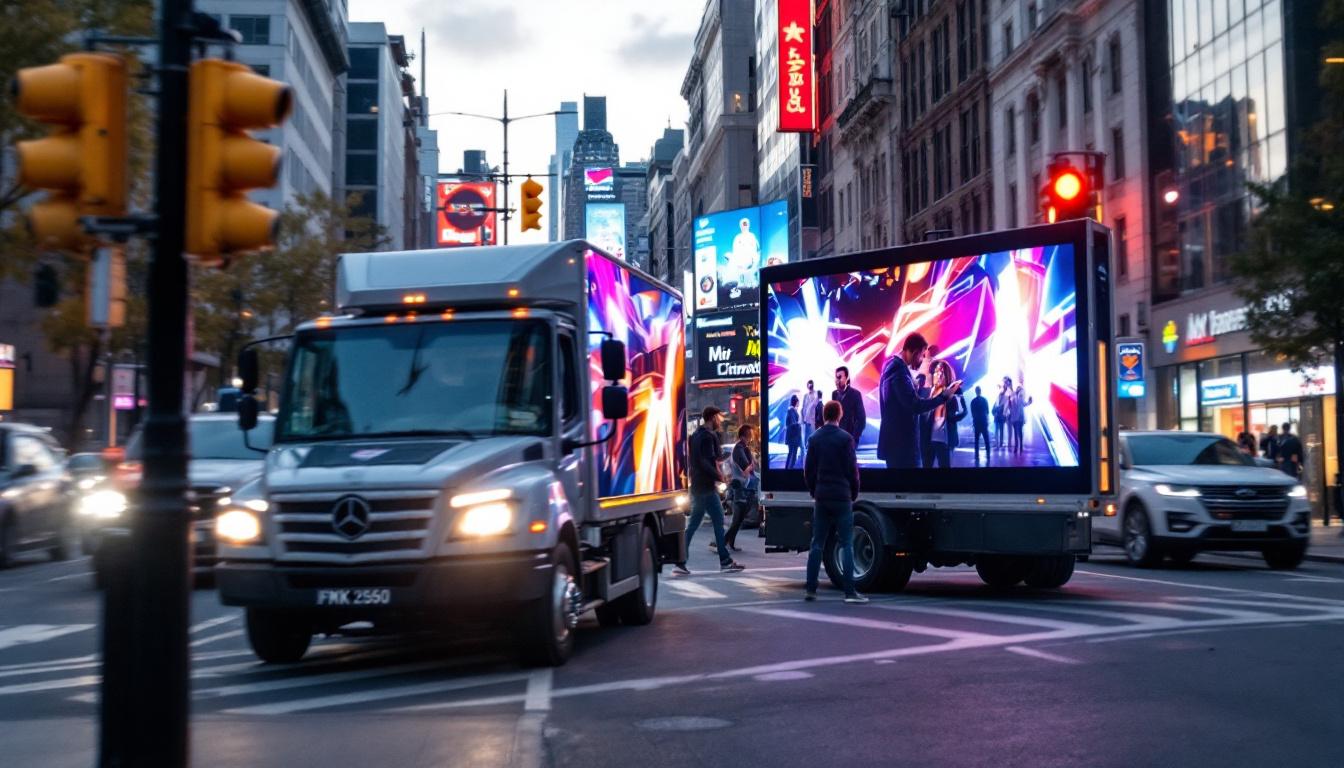
Mobile LED billboard trucks are vehicles equipped with large LED screens that display digital advertisements while on the move or stationary. Unlike traditional static billboards, these trucks offer the unique advantage of mobility, allowing advertisers to reach diverse audiences across multiple locations throughout the day.
The concept blends traditional out-of-home (OOH) advertising with digital technology, creating an engaging platform that can display vibrant, eye-catching content. These trucks are commonly used for product launches, event promotions, political campaigns, and brand awareness initiatives. With the ability to travel to high-traffic areas, they can effectively target specific demographics, making them a versatile tool in the advertising arsenal. Furthermore, the interactive nature of LED displays allows for real-time engagement with potential customers, encouraging them to take immediate action, such as visiting a website or attending an event.
What Makes LED Displays Ideal for Mobile Billboards?
LED (Light Emitting Diode) technology is particularly suited for mobile billboards due to its brightness, energy efficiency, and durability. LEDs provide high visibility even in direct sunlight, which is crucial for outdoor advertising. Additionally, LED screens can display dynamic content such as videos, animations, and real-time updates, making advertisements more engaging than static images. This capability not only captures attention but also allows for the integration of social media feeds or live event updates, further enhancing viewer interaction. As a result, advertisers can create a more immersive experience that resonates with audiences on a deeper level, fostering brand loyalty and recognition.
Key Components of a Mobile LED Billboard Truck
A typical mobile LED billboard truck consists of the following components:
- LED Display Panel: The screen itself, made up of thousands of tiny LEDs arranged in a matrix.
- Control System: Hardware and software that manage the content displayed, allowing for remote updates and scheduling.
- Power Supply: Usually a combination of the truck’s engine and auxiliary batteries or generators to ensure uninterrupted operation.
- Vehicle Platform: The truck chassis and body, designed to support the weight and size of the LED panels while maintaining maneuverability.
In addition to these core components, mobile LED billboard trucks often come equipped with advanced features such as GPS tracking and analytics tools. GPS technology allows advertisers to optimize routes based on traffic patterns and audience density, ensuring that their message reaches the right people at the right time. Meanwhile, analytics tools can provide valuable insights into viewer engagement, such as the number of impressions and interactions generated by specific campaigns. This data-driven approach enables businesses to refine their advertising strategies and maximize return on investment, making mobile LED billboards an increasingly popular choice among marketers looking to innovate and stand out in a crowded marketplace.
The Technology Behind LED Displays
To appreciate the impact of mobile LED billboard trucks, it’s important to understand how LED displays work and what sets them apart from other display technologies.
How LED Displays Function
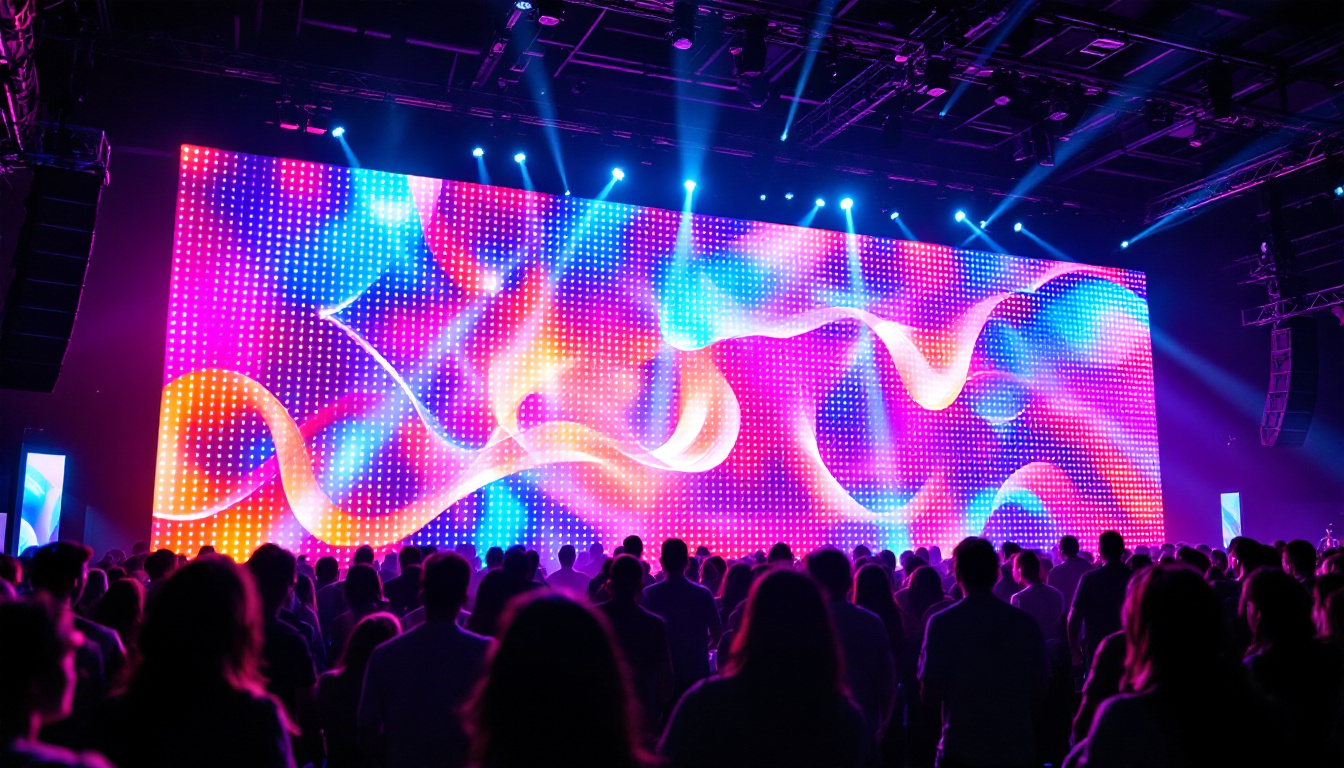
LED displays consist of numerous tiny diodes that emit light when an electric current passes through them. These diodes are arranged in pixels, each containing red, green, and blue LEDs. By adjusting the intensity of each color, the display can produce a wide range of colors and images.
The pixels are controlled by a driver circuit and a control system that processes the input video or image data. This allows for real-time content changes and animations, which are essential for dynamic advertising campaigns.
Types of LED Displays Used in Mobile Billboards
There are primarily two types of LED displays used in mobile billboards:
- Surface-Mounted Device (SMD) LEDs: These LEDs have all three colors (red, green, blue) integrated into a single package, offering excellent viewing angles and color uniformity. SMD technology is widely used for high-resolution displays.
- Through-Hole LEDs: These are individual LEDs mounted through holes on the circuit board. While they can be brighter and more durable in certain environments, they generally have narrower viewing angles and lower resolution compared to SMD.
Pixel Pitch and Resolution
Pixel pitch refers to the distance between the centers of two adjacent pixels, measured in millimeters. A smaller pixel pitch means higher resolution and sharper images, which is important for close viewing distances. Mobile LED billboard trucks typically use pixel pitches ranging from 4mm to 10mm, balancing clarity and cost.
Choosing the right pixel pitch depends on the intended viewing distance. For example, a 4mm pitch is suitable for city streets where viewers are close, while a 10mm pitch works well for highways where viewers are farther away.
Advantages of Mobile LED Billboard Trucks
Mobile LED billboard trucks offer several benefits that make them an attractive option for advertisers looking to maximize their reach and impact.
High Visibility and Engagement
LED displays are bright and colorful, making them highly visible even in daylight. The ability to display moving images and videos captures attention more effectively than static signs. This increased engagement often translates into better brand recall and higher conversion rates.
Flexibility and Mobility
Unlike fixed billboards, mobile LED trucks can target multiple locations and demographics throughout the day. This flexibility allows advertisers to tailor campaigns based on time, place, and audience, optimizing marketing spend and effectiveness.
Real-Time Content Updates
One of the most powerful features of LED displays is the ability to update content remotely and instantly. This enables advertisers to run time-sensitive promotions, respond to market trends, or display emergency messages without the need for physical replacements.
Cost-Effectiveness Over Time
While the initial investment in a mobile LED billboard truck can be significant, the ability to reuse the platform for multiple campaigns reduces long-term costs. Additionally, digital content eliminates printing and installation expenses associated with traditional billboards.
Eco-Friendly Advertising
LED technology is energy-efficient, consuming less power than other lighting options. Many mobile billboard trucks incorporate solar panels or hybrid power systems to further reduce their environmental footprint, appealing to eco-conscious brands and consumers.
Applications and Use Cases
Mobile LED billboard trucks have found diverse applications across industries, demonstrating their versatility and effectiveness.
Retail and Product Launches
Retailers use mobile LED trucks to announce new store openings, sales events, or product launches. For instance, a fashion brand might deploy a mobile billboard truck to popular shopping districts, displaying vibrant visuals and promotional offers to attract foot traffic.
Event Promotion and Entertainment
Concerts, festivals, and sports events leverage mobile LED trucks to build excitement and provide real-time information. These trucks can circulate near event venues, displaying schedules, sponsors, and live social media feeds.
Political Campaigns and Public Awareness
Political candidates and advocacy groups use mobile LED billboards to reach voters with targeted messages. The ability to quickly update content allows campaigns to respond to current events and debates effectively.
Emergency and Public Safety Announcements
Government agencies and emergency responders employ mobile LED trucks to disseminate urgent information such as road closures, weather alerts, or health advisories. Their mobility ensures messages reach affected areas promptly.
Considerations When Choosing a Mobile LED Billboard Truck
For businesses interested in utilizing mobile LED billboard trucks, several factors should be evaluated to ensure a successful campaign.
Screen Size and Resolution
The size of the LED display must be appropriate for the intended audience and viewing distance. Larger screens with higher resolution provide better impact but come with increased costs and power requirements.
Brightness and Weather Resistance
Since these trucks operate outdoors, the LED panels must offer sufficient brightness to remain visible in various lighting conditions. Additionally, weatherproofing is essential to protect the electronics from rain, dust, and temperature fluctuations.
Content Management System (CMS)
A user-friendly CMS allows advertisers to schedule, update, and monitor content easily. Integration with mobile networks or Wi-Fi ensures seamless remote control, which is vital for dynamic campaigns.
Regulatory Compliance
Local laws and regulations regarding mobile advertising vary widely. It is important to verify permits, restrictions on screen brightness, and operational hours to avoid legal issues.
Operational Costs
Beyond the initial purchase or rental price, consider fuel consumption, maintenance, insurance, and staffing costs. Efficient route planning and content scheduling can help optimize these expenses.
Future Trends in Mobile LED Billboard Technology
The mobile LED billboard industry continues to evolve, driven by technological advancements and changing consumer behaviors.
Integration with Artificial Intelligence and Data Analytics
Emerging solutions incorporate AI to analyze audience demographics and optimize content delivery in real-time. By leveraging data analytics, advertisers can maximize engagement and return on investment.
Enhanced Interactivity
Future mobile LED trucks may feature interactive elements such as touchscreens, QR codes, or augmented reality experiences, creating deeper connections with viewers.
Improved Energy Solutions
Advancements in battery technology and renewable energy integration will make mobile LED trucks more sustainable and cost-efficient, reducing reliance on fossil fuels.
Smaller Pixel Pitch and Higher Resolution
As LED manufacturing progresses, smaller pixel pitches will become more affordable, enabling ultra-high-definition displays even on mobile platforms. This will enhance image clarity and allow for more detailed content.
Conclusion
Mobile LED billboard trucks represent a powerful fusion of mobility and digital display technology, offering advertisers an effective way to capture attention and engage audiences across multiple locations. Understanding the underlying LED technology, benefits, and practical considerations is essential for businesses looking to harness this innovative advertising medium.
As the technology continues to advance, mobile LED billboard trucks will become even more versatile, interactive, and sustainable, solidifying their role as a key player in the future of outdoor advertising.
Illuminate Your Brand with LumenMatrix
Ready to electrify your advertising strategy and illuminate the streets with your message? LumenMatrix is at the forefront of LED display innovation, offering a diverse range of solutions to make your brand shine. From vibrant vehicle LED displays that captivate on the move to immersive indoor and outdoor LED walls that command attention, our technology is designed to create unforgettable visual experiences. Elevate your advertising and engage with your audience like never before. Check out LumenMatrix LED Display Solutions today and transform the way you communicate with the world.